· deep dive · 13 min read
EchoStar 25 - DISH Network Launches a New Satellite Into a Shrinking Market
In a year when EchoStar agreed to sell $40 billion in spectrum, tried to give DISH away for a dollar, and nearly went bankrupt, it still managed to launch what may be the most capable direct broadcast satellite ever built. Here's why.
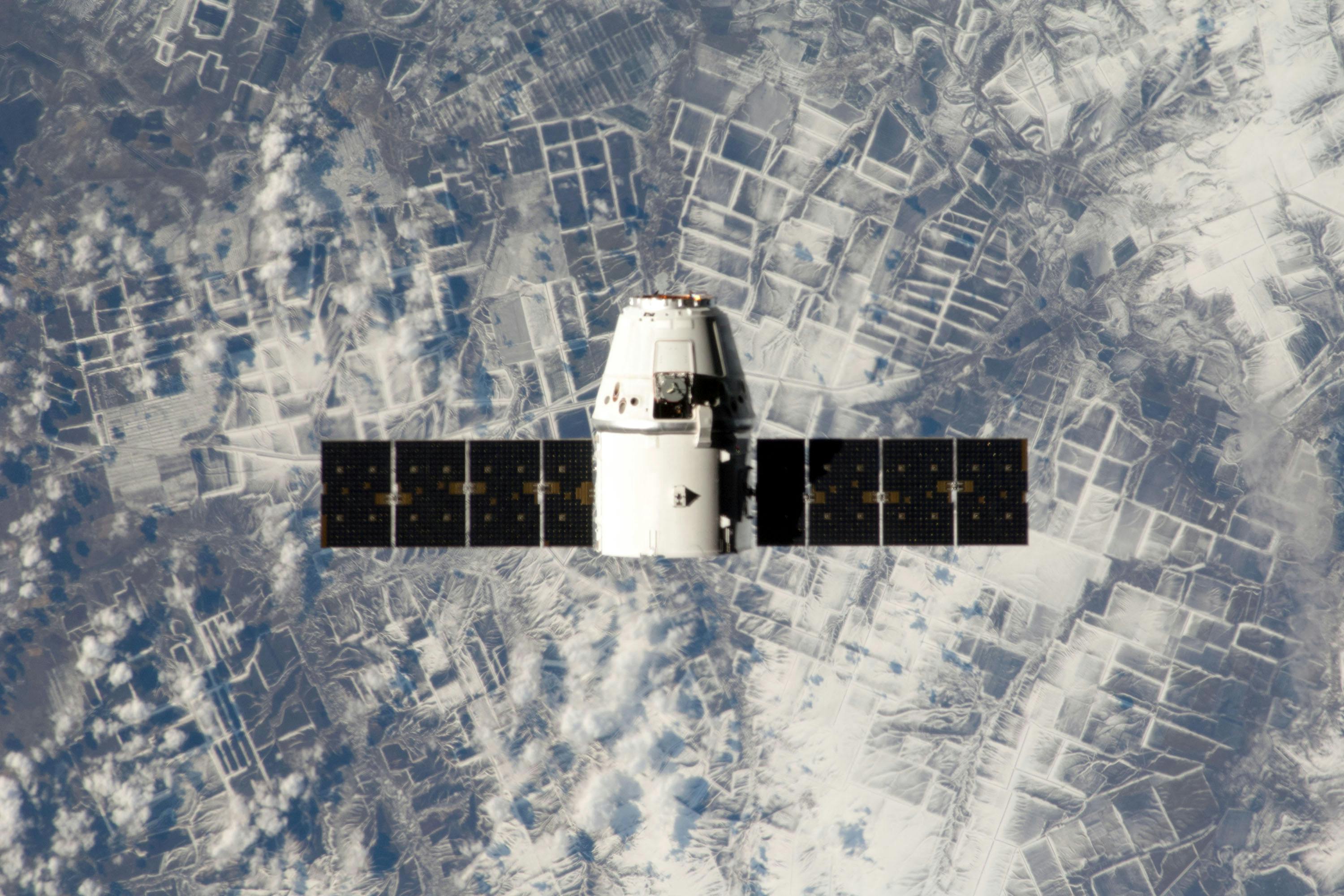
At 12:19 a.m. EDT on March 10, 2026, a Falcon 9 rocket lifted off from Space Launch Complex 40 at Cape Canaveral carrying a satellite that, by all conventional industry logic, probably shouldn’t exist. EchoStar 25 is a brand-new, high-power direct broadcast satellite (DBS) built to beam traditional television programming to small dishes on American rooftops - the first new DBS spacecraft for U.S. service that DISH Network has launched in sixteen years, since EchoStar XV went up in July 2010. It went to orbit roughly four months after the company’s attempted sale to DirecTV collapsed, while its parent company carried over $20 billion in debt, and in the same year it agreed to sell $40 billion worth of wireless spectrum because the FCC essentially forced its hand.
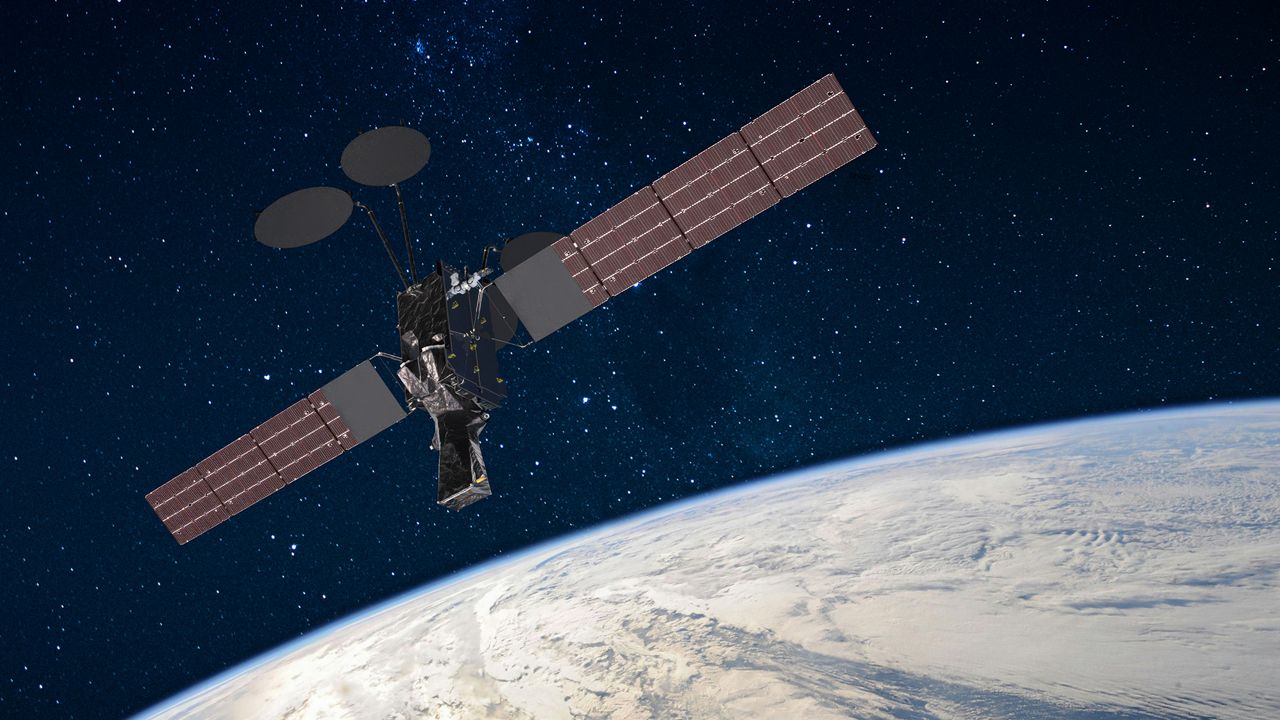
The satellite itself is a modern machine: a 6,500-kilogram spacecraft built on the most-flown commercial geostationary platform in history, packed with fifty-one active transponders and enough spot beams to cover every designated market area in the United States from a single orbital slot. EchoStar claims it’s the most capable DBS satellite ever built. And it’s heading to a geostationary perch at 110 degrees West to serve a direct-to-home (DTH) customer base that shrinks by roughly 600,000 subscribers per year.
This is the story of a satellite that sits at the junction of financial desperation, technological ambition, and a genuinely strange bet that traditional satellite TV still has a future. It involves a company that’s been split, merged, nearly sold, nearly bankrupt, and restructured multiple times - yet keeps ordering new hardware for geostationary orbit. The satellite’s manufacturer has been renamed three times since the contract was signed. And the company’s CEO once compared his corporate strategy to how a Seinfeld episode comes together in the last two minutes - while conceding that skeptics might call it “a strategy about nothing.”
The space industry loves narratives about the future. EchoStar 25 is a multi-hundred-million-dollar argument that the present still matters.
ECHOSTAR 25
activeThe Company That Won’t Stop Splitting and Merging
To understand EchoStar 25, you have to understand the corporate entity behind it, and that requires a tolerance for organizational complexity that would test most MBA programs.
Charlie Ergen co-founded what would become EchoStar in 1980, starting as a satellite TV distributor selling C-band dishes from the back of a truck in rural Colorado. The original company was called EchoSphere Corporation - EchoStar Communications wasn’t incorporated until 1993. The company launched its first satellite in 1995 and built DISH Network into the second-largest satellite TV provider in the United States. In 2008, Ergen split the company in two: DISH Network handled the pay-TV business, and EchoStar Corporation took the satellite and technology assets. The logic was that separating the regulated content business from the hardware business would unlock value for shareholders.
It didn’t work out that way. In August 2023, after years of parallel decline, the two companies announced they would merge back together. DISH Network became a wholly owned subsidiary of EchoStar on December 31, 2023. The reunion brought DISH’s satellite TV subscribers, the Sling TV streaming service, a half-built 5G wireless network, and approximately $20 billion in debt under one roof.
Nine months later, EchoStar agreed to sell DISH to rival DirecTV for one dollar. Not a typo - one dollar, plus DirecTV would assume $9.75 billion in DISH’s debt. The deal was framed as a lifeline for both companies in a shrinking market. DirecTV and DISH had tried to combine once before, in 2002, but regulators blocked it on antitrust grounds. Two decades of cord-cutting had made that concern moot - between them, the two companies had lost roughly 63% of their subscribers since the pay-TV peak in 2013.
The deal collapsed on November 21, 2024, when DISH bondholders refused to accept a debt exchange that would have cost them $1.57 billion in haircuts. DirecTV walked away. EchoStar was left holding the subscriber base it had tried to give away and the debt it had hoped to shed.
EchoStar 25 Ordered
EchoStar contracts Maxar Space Systems (now Lanteris, a subsidiary of Intuitive Machines) to build a new DBS satellite on the SSL-1300 platform.
EchoStar-DISH Merger Closes
DISH Network becomes a wholly owned subsidiary of EchoStar Corporation after 15 years apart.
DISH Sold to DirecTV for $1
EchoStar agrees to sell its pay-TV business to DirecTV, which would assume $9.75 billion in debt.
DirecTV Deal Collapses
Bondholders reject the debt exchange. DirecTV terminates the acquisition. EchoStar is back to square one.
EchoStar 26 Ordered
Despite financial uncertainty, EchoStar contracts Maxar for another DBS satellite, targeting 2028 delivery.
SpaceX Spectrum Deal Announced
EchoStar agrees to sell its AWS-4 and H-block spectrum licenses to SpaceX for $17 billion to fund Starlink Direct to Cell.
EchoStar 25 Launches
Falcon 9 delivers the satellite to geostationary transfer orbit from Cape Canaveral SLC-40.
Why Launch a Satellite for a Declining Business?
The obvious question: if satellite TV is in structural decline, why spend hundreds of millions of dollars on a new satellite?
The numbers make the case against it. DISH TV lost 636,000 subscribers in 2025 alone. By December, its satellite subscriber base stood at 5.02 million, down from 5.69 million a year earlier - and that was already down from roughly 8.5 million total pay-TV subscribers (including Sling TV) at the end of 2023. The U.S. pay-TV industry as a whole has shed more than a third of its customers since 2010.
But Ergen - who returned as EchoStar’s CEO in November 2025 - has been characteristically blunt about why the investment makes sense. He’s argued that satellite TV remains the preferred choice for millions of Americans, particularly in rural areas where broadband infrastructure can’t reliably support streaming. And the economics of the existing fleet make a replacement satellite essential regardless of the subscriber trend. DISH’s current satellites at the 110-degree West slot - EchoStar 10, EchoStar 11 (operating in inclined orbit, meaning it’s past its prime), and EchoStar 23 - are aging out. EchoStar 10 launched in 2006. EchoStar 14, which handles some of the same programming from 119 degrees West, launched in 2009. These spacecraft have finite lifespans, and letting them die without replacements would mean abandoning the subscribers who remain.
There’s also a capacity argument. According to EchoStar’s FCC filing, EchoStar 25 can consolidate the work of two existing spot beam satellites into a single spacecraft and serve all 212 designated market areas - the 210 Nielsen DMAs plus Puerto Rico and the U.S. Virgin Islands - from one orbital position. That’s not just replacement, it’s fleet consolidation. Fewer satellites means lower operational costs per subscriber, which buys time in a declining market.
The Satellite
EchoStar 25 is built on the Lanteris 1300 platform - a satellite bus that has been in continuous production since 1989 under a bewildering succession of corporate names. It started life as the FS-1300, built by Ford Aerospace’s satellite division. Ford sold that division to Loral, which became Space Systems/Loral (SS/L). SS/L was acquired by MacDonald Dettwiler (MDA), which rebranded as Maxar Technologies. In 2023, private equity firm Advent International bought Maxar and split it into two companies: the intelligence division became Vantor, and the satellite manufacturing operation kept the Maxar Space Systems name until October 2025, when Advent rebranded it as Lanteris Space Systems. Two months later, Intuitive Machines - a lunar lander company - announced it would buy Lanteris for $800 million. That acquisition closed on January 13, 2026, less than two months before EchoStar 25 launched.
The satellite that launched on March 10 was therefore ordered from Maxar Space Systems, built partly under the Maxar name and partly under the Lanteris name, and launched as a product of an Intuitive Machines subsidiary. The 1300 platform itself has been remarkably stable through all of this. With over 95 spacecraft on orbit, it’s the most-flown commercial geostationary satellite bus in history. NASA’s Psyche asteroid probe is built on a 1300 variant. So is SiriusXM’s SXM-10 radio satellite. It is, in the truest sense, a platform that has outlasted every company that has manufactured it.
The spacecraft carries a Ku-band direct broadcasting payload operating in the 12.2-12.7 GHz band for downlink (space-to-Earth) and 17.3-17.8 GHz for uplink (Earth-to-space). The transmitter section includes thirty-six 150-watt traveling wave tube amplifiers (TWTAs), nineteen 165-watt TWTAs, and two 35-watt TWTAs reserved for telemetry in contingency mode. Peak EIRP - the effective radiated power toward the ground - reaches 61 dBW for CONUS spot beams and 60.9 dBW for a dedicated Puerto Rico beam.
The satellite uses four SPT-100 stationary plasma thrusters for station-keeping - a type of Hall effect thruster that’s been a workhorse of geostationary satellites for decades. Two deployable solar arrays span over 30 meters tip-to-tip when fully unfurled, providing the electrical power to drive a communications payload that will serve roughly five million households.
After deployment into a geostationary transfer orbit by the Falcon 9’s second stage, EchoStar 25 will use a combination of chemical and electric propulsion to raise its orbit and reduce its inclination over the coming weeks. Its target is a geostationary slot at 110.0 degrees West longitude, positioned above the eastern Pacific off the coast of Mexico. From there, it has a clear line of sight to the entire continental United States, Alaska, Hawaii, and Puerto Rico.
A Satellite Built by Three Companies
The manufacturing history of EchoStar 25 doubles as a case study in how private equity reshapes the space industry. When EchoStar signed the contract in March 2023, the builder was Maxar Space Systems, headquartered in Palo Alto, California. Maxar had been a publicly traded company until Advent International took it private in a $6.4 billion deal earlier that year. Advent promptly split Maxar’s intelligence imaging business (rebranded as Vantor) from its satellite manufacturing arm, which initially kept the Maxar Space Systems name.
The rebranding to Lanteris came in October 2025 - widely interpreted as Advent preparing the company for sale. A month later, Intuitive Machines agreed to buy Lanteris for $800 million, positioning the lunar lander company as what it called a “multi-domain space prime.” The acquisition closed on January 13, 2026 - a combination of $450 million in cash and $350 million in Intuitive Machines stock.
For EchoStar 25, these ownership changes were largely cosmetic - the engineers in Palo Alto who built the satellite stayed put through all three corporate identities. But the acquisition chain matters for the broader industry. The 1300 platform, which powered the golden age of commercial geostationary communications, is now owned by a company whose original business was landing payloads on the Moon. It’s a useful indicator of where value in the space industry is migrating.
The Launch
SpaceX launched EchoStar 25 on Falcon 9 booster B1085, making its 14th flight. The booster had previously supported a diverse manifest including NASA’s Crew-9 mission, Firefly Aerospace’s Blue Ghost lunar lander, the Fram2 polar crewed mission, and seven Starlink deployment flights. Eight and a half minutes after liftoff, B1085 landed on the drone ship A Shortfall of Gravitas stationed in the Atlantic - the 583rd SpaceX booster landing overall and the 146th on that particular vessel.
The mission profile was standard for a geostationary transfer orbit delivery: the Falcon 9 flew due east from Cape Canaveral, and the second stage performed a long coast before deploying EchoStar 25 approximately 33 minutes after liftoff. The satellite separated into an elliptical transfer orbit with an initial inclination of about 26.9 degrees, which it will gradually reduce to near-zero as it maneuvers to its final geostationary position.
The 45th Weather Squadron had forecast 90% favorable conditions for the launch window, which opened at 11:14 p.m. EDT on March 9 and extended for roughly two and a half hours. Liftoff occurred at 12:19 a.m. on March 10, well within the window.
The Spectrum Fire Sale
You can’t fully appreciate EchoStar 25 without understanding what else EchoStar was doing while this satellite was being built.
On August 26, 2025, EchoStar agreed to sell approximately $23 billion in wireless spectrum licenses - specifically its 3.45 GHz and 600 MHz holdings, a total of 50 MHz of nationwide spectrum - to AT&T in an all-cash deal. The sale, still pending regulatory approval as of this writing, effectively ends EchoStar’s ambition to operate as a traditional mobile carrier with its own physical network infrastructure. The Boost Mobile brand would continue, but running on AT&T’s towers rather than EchoStar’s half-built 5G network.
Two weeks later, on September 8, EchoStar agreed to sell its AWS-4 and H-block spectrum licenses to SpaceX for $17 billion - split between $8.5 billion in cash and $8.5 billion in SpaceX stock. SpaceX also agreed to cover $2 billion in EchoStar debt interest payments through November 2027. The spectrum would feed SpaceX’s Starlink Direct to Cell service, enabling next-generation satellites with dramatically improved phone connectivity.
The spectrum sales came after months of FCC pressure. The commission had opened investigations into whether EchoStar was adequately utilizing its spectrum holdings, following complaints from SpaceX and others that the frequencies were sitting underused. Bloomberg reported that President Trump personally urged Ergen to sell. Within days of the deals being finalized, EchoStar had agreed to liquidate the bulk of its spectrum portfolio.
For EchoStar, the spectrum fire sale was both a retreat and a financial lifeline. The proceeds would pay down billions in debt and fund continued operations. The SpaceX stock component gave EchoStar a significant equity position in arguably the most valuable private company in the space industry. And while the sale killed EchoStar’s own direct-to-device satellite ambitions - the company canceled a $1.3 billion satellite contract with MDA Space the same day as the SpaceX deal - it also freed the company to focus on what it still does well: operating satellites and delivering television.
What EchoStar 25 Means
EchoStar 25 heading to 110 degrees West while its parent company sells spectrum, sheds debt, and restructures is a concise encapsulation of what’s happening in the satellite industry more broadly. The geostationary communications business is consolidating, not dying. Fewer operators are running more capable spacecraft to serve subscriber bases that are shrinking but still substantial. Five million DISH TV subscribers at roughly $100 per month still generates around $6 billion a year in revenue. That’s real money.
The satellite also represents a bet that fleet modernization pays for itself. By replacing two aging spacecraft with one more capable platform, EchoStar reduces its operational overhead and extends the timeline before it needs to launch another replacement. The 15-year design life of EchoStar 25 means it should remain operational until approximately 2041. And with EchoStar 26 already on order from Lanteris for 2028 delivery, the company is clearly planning for satellite TV to persist well into the 2030s.
Whether that bet pays off depends on factors largely outside EchoStar’s control: how quickly rural broadband improves, whether streaming services continue to fragment and raise prices, and whether the remaining pay-TV audience finds alternatives. For now, EchoStar 25 is doing what it was built to do - drifting toward its orbital slot, checking out its systems, and preparing to beam television to millions of dishes that haven’t been pulled off the roof yet.
In an industry obsessed with LEO mega-constellations and direct-to-cell and lunar infrastructure, EchoStar spent hundreds of millions of dollars to put a television satellite in geostationary orbit. It’s not flashy. It won’t disrupt anything. It’s just a very large, very expensive machine doing a very specific job for customers that still want it.
Sometimes the most interesting hardware in orbit isn’t the most innovative. It’s the most stubborn.
References(14)
- EchoStar XXV Mission Overview - Spaceflight Now
- EchoStar 25 Success - Advanced Television
- Dish Launches First New Broadcast Satellite in 16 Years - Astronomy.com
- EchoStar 25 Satellite Details - Gunter's Space Page
- EchoStar Corporation Completes Merger with DISH Network - EchoStar IR
- DirecTV Terminates Dish Deal - Axios
- EchoStar Bets on TV Amid FCC Mobile Scrutiny - SpaceNews
- EchoStar Spectrum Sale to SpaceX - EchoStar IR
- EchoStar Spectrum Sale to AT&T - EchoStar IR
- Intuitive Machines Completes Acquisition of Lanteris - Intuitive Machines
- DISH & Sling TV Lost 636,000 Subscribers in 2025 - Cord Cutters News
- Maxar 1300 Series Platform Overview - Maxar Technologies
- EchoStar 25 FCC Filing Discussion - SatelliteGuys
- Charlie Ergen Returns as CEO, SpaceX Stake Grows - Deadline

Theodore Kruczek