· deep dive · 9 min read
Australian Space Centre Cape York
When your landlord won't sign the lease, you move. How Equatorial Launch Australia abandoned Arnhem Land and pivoted to Queensland - and what it means for Australia's equatorial launch ambitions.
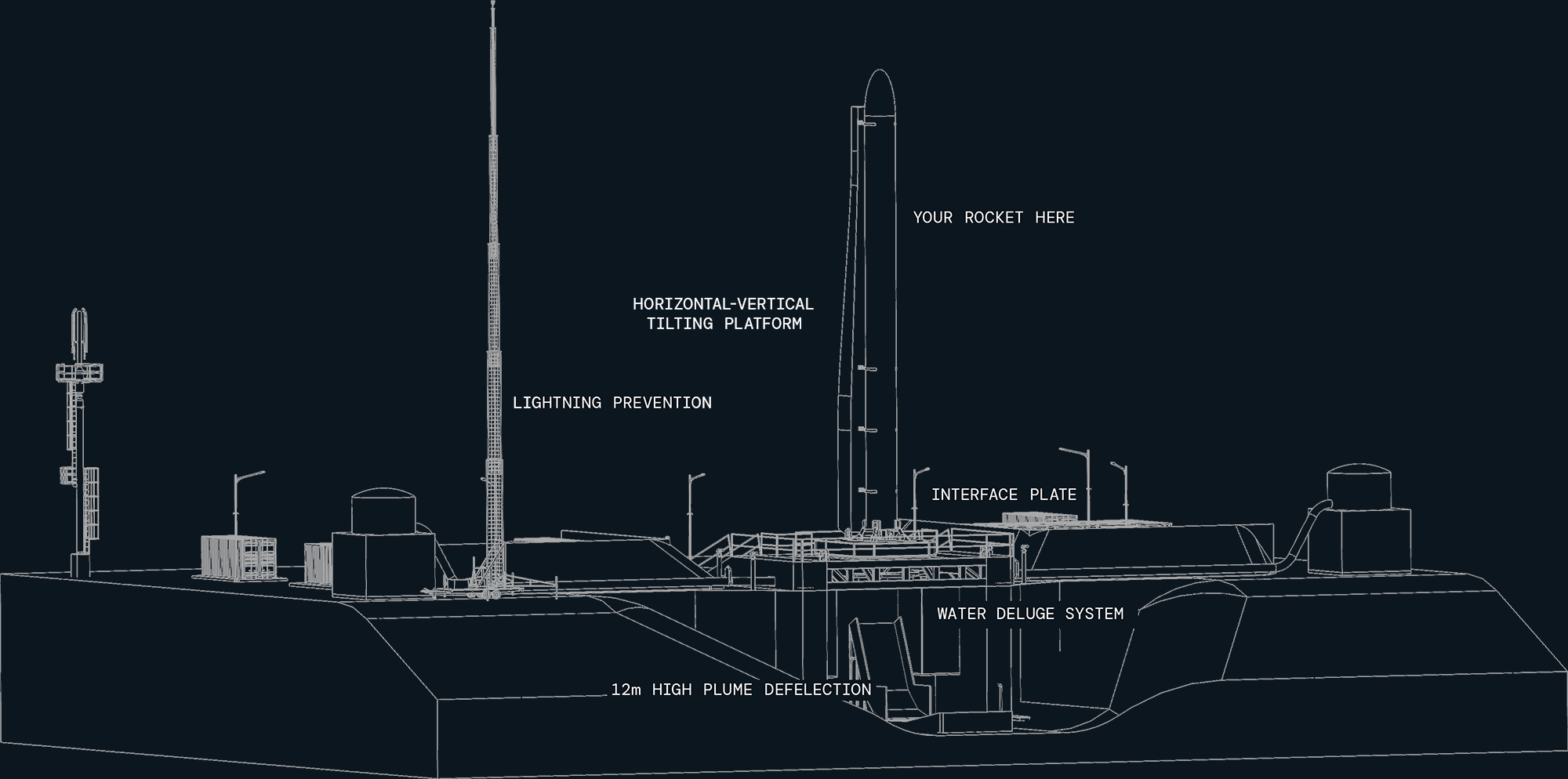
On December 9, 2024, Equatorial Launch Australia announced it would “immediately cease operations” at the Arnhem Space Centre in the Northern Territory. The decision came after three years of lease negotiations went nowhere, forcing the company that hosted NASA’s first Australian launches since 1995 to abandon $100 million in planned investment and start over in Queensland. The launch industry is used to rocket failures. Real estate failures are rarer - and sometimes more damaging.
The Arnhem Space Centre had history. In June and July 2022, NASA launched three Black Brant IX suborbital sounding rockets from the site - the first commercial space launches from Australian soil and NASA’s first launches from Australia in nearly three decades. ELA had built launch infrastructure, established relationships with the local Gumatj Aboriginal Corporation, and attracted international customers including South Korea’s Innospace.
Then the Northern Land Council stopped returning calls.
The Lease That Never Came
ELA’s formal lease application was submitted January 1, 2022. The Northern Land Council (NLC), which administers Aboriginal land in the Northern Territory, was responsible for approving the Head Lease required for facility expansion. Three years later, no lease.
Lease Application Submitted
ELA files formal Head Lease application with Northern Land Council
First NASA Launch
X-ray Quantum Calorimeter (XQC) mission successfully launches from Arnhem
Second NASA Launch
SISTINE mission launches, targeting Alpha Centauri
Third NASA Launch
DEUCE mission completes the NASA campaign
Four Missed Deadlines
NLC misses its own specified approval deadlines four times throughout the year
Contract Crisis
Another missed deadline threatens breach of customer contracts and funding round
Operations Cease
ELA announces immediate cessation of Arnhem operations and pivot to Queensland
Despite appeals from ELA, the Northern Territory Chief Minister’s Department, and the Gumatj Corporation (ELA’s direct landlord and project partner), the NLC never issued the lease and never explained the delays.
The forced relocation doesn’t necessarily speak to ELA’s credibility as a launch provider - though it probably hints at their financing situation. What matters more is what they did next: the pivot to find a suitable location within their price range demonstrates business competence and adaptability. In a capital-intensive industry, the ability to make hard decisions quickly when circumstances demand it is actually a positive sign.
What Was Lost
The Arnhem Space Centre represented significant investment in a remote region:
Beyond the numbers, the loss included local job creation in East Arnhem, STEM education opportunities for regional students, and proven launch capabilities. Those three NASA missions - the X-ray Quantum Calorimeter on June 26, SISTINE on July 6, and DEUCE on July 11, 2022 - established Arnhem as a validated launch location. That operational experience is now stranded infrastructure.
The Gumatj Corporation lost a major development opportunity on their traditional lands. The Northern Territory lost what could have been a signature space industry asset.
The Gumatj Corporation had been an exemplary partner throughout our time at Arnhem.
For space industry observers, the practical impact was delayed launch activity. Innospace launches originally planned for Arnhem are now rescheduled for the new Queensland site. The facility that hosted NASA’s 2022 missions sits abandoned.
Enter Cape York
Within days of the December announcement, ELA identified a new site near Weipa on Queensland’s Cape York Peninsula. Working with the Queensland Government, they began planning and regulatory clearances for contracted launches - originally targeting Q3 2025.
The new facility is named the “Australian Space Centre Cape York” - the trademark-compliant version of the broader Australian space brand that Arnhem originally carried. ELA has since reported securing a 40-year lease at the new location.
Weipa offers similar geographic advantages to Arnhem, though the pivot comes with tradeoffs:
Site Comparison: Arnhem vs Cape York
| Arnhem Space Centre | Cape York | |
|---|---|---|
| Latitude | 12.3°S | ~12.5°S |
| Location | Northern Territory | Queensland |
| Lease Status | Blocked by NLC | 40-year secured |
| Infrastructure | Existing (abandoned) | New build required |
| NASA History | 3 launches (2022) | None yet |
- Latitude
- 12.3°S
- Location
- Northern Territory
- Lease Status
- Blocked by NLC
- Infrastructure
- Existing (abandoned)
- NASA History
- 3 launches (2022)
- Latitude
- ~12.5°S
- Location
- Queensland
- Lease Status
- 40-year secured
- Infrastructure
- New build required
- NASA History
- None yet
Both sites offer proximity to the equator for efficient launches toward equatorial and low-inclination orbits, ocean downrange for safety, and remoteness from populated areas. Queensland’s regulatory environment and land access processes are presumably less complicated than what ELA experienced in the Northern Territory.
Starting over means new environmental approvals, different logistics and supply chains, relationship building with new local communities, and infrastructure that has to be built from scratch rather than expanded.
The Competition Angle
ELA’s pivot to Queensland creates an interesting competitive situation. Space Centre Australia, a separate venture with former Prime Minister Scott Morrison as Advisory Board Chairman, is also developing launch facilities near Weipa. Their “Atakani Space Centre” project - named after the Luthigh word for “lily pad” - has been courting defense and commercial customers with ambitious plans for integrated launch capability.
In August 2025, Space Centre Australia announced they’d signed a binding term sheet with Mokwiri RNTBC and the Luthiggi Traditional Landowners for approximately 300 square kilometers at Billy’s Lagoon, about 40 kilometers east of Weipa. That’s the largest spaceport land commitment in Australian history, with projected initial operational readiness around 2029.
But multiple facilities in the same region isn’t necessarily a problem. Cape Canaveral hosts multiple launch complexes operated by different companies - two facilities near Weipa with one or two pads each isn’t dramatically different. More importantly, these companies aren’t building to support current launch demand. They’re building to match the launch demand they expect in 2030 and 2040. Starlink has completely changed perceptions of how many launches a single commercial customer might require. The Australian equatorial market might well support multiple facilities if global launch demand continues to grow.
Timeline Reality Check
ELA’s original target was contracted launches in Q3 2025. That timeline has slipped - the company’s messaging now points toward 2026 for first launches from the new Cape York facility.
This isn’t surprising. Starting over at a new site requires site finalization, environmental and regulatory approvals, infrastructure construction, customer schedule coordination, and range safety certification. Even with an experienced team, these steps take time.
Space Centre Australia’s Atakani Space Centre targets initial operations around 2029 with full-scale commercial launches thereafter. That’s a more conservative timeline that may prove more realistic.
Australia’s Sovereign Space Ambitions
Australia appears to be pursuing entirely self-sufficient launch capability in both polar and equatorial orbits. The combination of Southern Launch (for polar launches from South Australia) and equatorial facilities at Cape York reflects a strategic goal of comprehensive domestic access to space. This isn’t just about commercial opportunity - it’s about national capability and independence.
Launches from near the equator are more efficient for geostationary transfer orbits - the rockets get a boost from Earth’s rotation. For certain military and commercial missions, this efficiency matters. Australia’s geographic position also provides launch windows that don’t overlap with US or European sites, creating scheduling flexibility.
The Pacific test range concept - using Australia as a launching point with downrange tracking toward the deep Pacific - has attracted defense interest for years. Whether ELA or Space Centre Australia operationalizes that capability first, the strategic value exists.
Lessons for the Industry: The Land Problem
ELA’s Arnhem experience illustrates a non-technical risk that launch site developers ignore at their peril: land access.
Rockets are complicated. Getting permission to launch rockets is sometimes more complicated. ELA did everything right with their direct landlords (Gumatj Corporation) and with government stakeholders (Northern Territory Chief Minister’s Department). They still couldn’t get the lease they needed from the land council responsible for final approval.
Other launch sites face similar risks. Community relationships, indigenous land rights, environmental concerns, and bureaucratic processes can all derail projects that look technically and commercially sound. The regulatory environment matters as much as the orbital mechanics.
Current Status
As of late 2025, ELA operates as the Australian Space Centre Cape York with a secured 40-year lease at the Weipa-area site. The company is processing regulatory approvals with the Queensland Government while maintaining customer relationships with Innospace, Sirius Space Services, and others during the transition. Launch activity is now targeted for 2026.
The Q3 2025 original target has slipped by roughly a year, which is typical for the kind of forced relocation ELA experienced. The fundamentals remain sound; only the timeline has adjusted.
What to Watch
Geographic Shift: Cape York sits at similar latitude to Arnhem but different longitude. Anyone tracking Australian launch activity should update their maps to the new Weipa-area site.
Timeline Uncertainty: Plan for 2026 operations with flexibility. Build in a 6-12 month buffer for realistic scheduling given the relocation challenges.
Vehicle Diversity: ELA hosts multiple rocket companies (Innospace, Sirius Space Services, and others). Expect varied vehicle characteristics when operations begin.
Competition Monitoring: Track both ELA and Space Centre Australia developments. One or both may become operational; knowing which matters for planning.
Suborbital Activity: Initial operations likely include suborbital/technology demonstration missions before orbital attempts.
Conclusion
ELA’s forced pivot from Arnhem to Cape York represents both setback and resilience. The company lost years of investment and development but maintained customer relationships and quickly identified an alternative site.
Whether Queensland proves more hospitable than the Northern Territory remains to be seen. The geographic advantages that made Arnhem attractive exist at Cape York too. The question is whether ELA can build the necessary infrastructure, secure the necessary approvals, and execute the necessary launches before competitors or financial pressures intervene.
Australia’s equatorial launch story continues, just from a different location. Add Weipa to the map, plan for 2026, and watch for announcements about which Australian facility actually achieves equatorial operations first.
The rockets don’t care where they launch from. The real estate, apparently, matters quite a lot.
References(8)
- Equatorial Launch Australia Shifts Focus to New Queensland Spaceport - SpaceDaily
- Equatorial Launch Australia to Move Spaceport to Queensland - ELA Official
- ELA to Move Operations from Arnhem Land to Cape York - Cape York Weekly
- Equatorial Launch Shifts Spaceport from NT to QLD - Innovation Australia
- NASA Conducting Suborbital Rocket Missions in Australia - NASA
- Space Centre Australia Announces North Queensland Spaceport - Space & Defense
- Historic Indigenous Partnership Secures Australia's Largest Spaceport Land Lease - Space Connect
- Equatorial Launch Australia Official Website

Theodore Kruczek