· deep dive · 11 min read
The End of Free Skies | FAA Starts Charging for Rocket Launches
On April 22, 2026, the FAA published a final rule implementing per-launch user fees for commercial space transportation — the first time the U.S. government has charged payload-based fees for rocket launches. Starting at 25 cents per pound with a $30,000 cap, the fees are modest today. By 2033, they won't be.
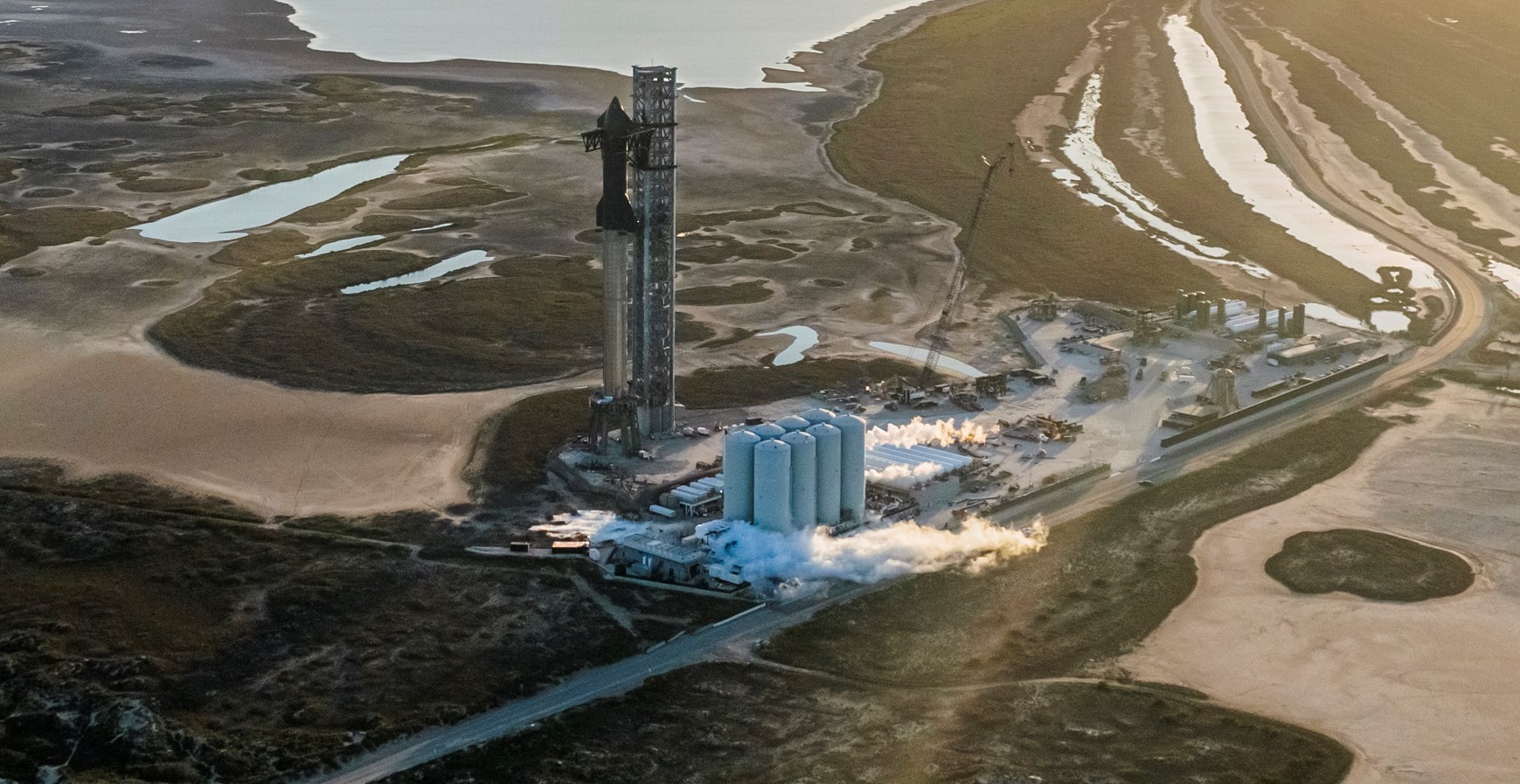
For the entire history of American commercial spaceflight, the act of launching a rocket has been free — at least from the federal government’s perspective. Companies paid for their vehicles, their propellant, their range services, and their insurance. They navigated a licensing process that could take months. But the FAA never sent them an invoice for the launch itself. That era ended on April 22, 2026, when the Federal Aviation Administration published a final rule in the Federal Register establishing per-launch user fees for commercial space transportation.
The fees are small. At 25 cents per pound of payload and a cap of $30,000 per launch, the 2026 rate amounts to a rounding error on most mission budgets. A Falcon 9 launch costs $74 million; the maximum fee represents four hundredths of a percent of that price. But the principle matters more than the price. For the first time, the United States government is treating access to space not as a public good it subsidizes through regulatory infrastructure, but as a service it charges for — and the fee schedule through 2033 makes clear that today’s modest rates are just the opening bid.
$0.25 /lb
Per-Pound Launch Fee (2026)
Capped at $30,000 per launch or reentry. By 2033, the rate climbs to $1.50 per pound with a $200,000 cap — a sixfold increase in seven years.
Why Now
The immediate catalyst is legislation. The One Big Beautiful Bill Act, signed by President Trump on July 4, 2025, included a provision directing the FAA to establish payload-based fees for commercial launches and reentries. The April 2026 final rule (Federal Register 2026-07789) is the implementation of that directive. But the legislative language did not appear in a vacuum. It appeared because the FAA’s Office of Commercial Space Transportation — known as AST — was drowning.
AST is the division responsible for licensing every commercial launch and reentry in the United States. It reviews safety analyses, evaluates environmental impacts, monitors compliance, and coordinates with the Space Force on range scheduling. It is, in practical terms, the gatekeeper for American commercial spaceflight. And for the past three years, the volume of launches walking through that gate has been surging while the number of people staffing it has stayed essentially flat.
Commercial space launch activity in the United States has increased 52.7% since fiscal year 2023. SpaceX alone conducted 157 licensed launches in the most recent reporting year. Rocket Lab added another 64. New entrants are working toward their own licenses. The demand curve is steep and accelerating, driven by constellation deployments, national security missions, and the broadening commercial market for space access.
AST’s budget has not kept pace. In FY2026, the office received $39.646 million — actually a 5.6% decrease from the previous year. The FAA’s FY2027 budget request proposes a 43.3% increase to $56.844 million, but that request has to survive the appropriations process. In the meantime, the new user fees provide a revenue stream that flows directly to AST, bypassing the annual budget fight and giving the office a funding mechanism that scales with the industry it regulates.
How the Fees Work
The mechanics are straightforward. At least 60 days before a licensed launch, the company must report its payload weight to the FAA. AST calculates the fee based on the per-pound rate for that calendar year, subject to the annual cap, and issues a payment notification. The company has 30 days to pay. The fees apply to all launches conducted under existing licenses, not just new ones — there is no grandfathering.
The 60-day reporting requirement is worth noting separately from the fee itself. It creates a structured, mandatory disclosure of payload mass well ahead of launch, which has value for space situational awareness independent of whatever revenue the fee generates. Knowing what is going up, how much it weighs, and when it is going — with enough lead time to act on that information — is exactly the kind of data that regulatory infrastructure needs as launch cadence continues to climb.
| Year | Per-Pound Rate | Cap Per Launch |
|---|---|---|
| 2026 | $0.25 | $30,000 |
| 2027 | $0.35 | $55,000 |
| 2028 | $0.50 | $75,000 |
| 2029 | $0.65 | $100,000 |
| 2030 | $0.80 | $125,000 |
| 2031 | $1.00 | $150,000 |
| 2032 | $1.25 | $175,000 |
| 2033 | $1.50 | $200,000 |
The escalation schedule tells the real story. The rate increases roughly ten cents per pound per year, and the cap climbs from $30,000 to $200,000 over seven years. For a company like SpaceX — launching heavy payloads at a cadence that would have been unimaginable a decade ago — the 2026 fees are genuinely trivial. But the 2033 fees start to create noticeable line items, especially for operators launching smaller vehicles where margins are thinner and per-mission economics are tighter.
What It Means for SpaceX
SpaceX is the company most directly affected by the new fees, simply because it launches more often and lifts more mass than anyone else. Each Starlink mission carries between 25 and 29 satellites with a total payload mass in the range of 14,400 to 16,700 kilograms — roughly 31,700 to 36,800 pounds. At 25 cents per pound, that works out to approximately $8,000 to $9,200 per launch before hitting the $30,000 cap. Since most Starlink launches fall below the cap on payload cost alone, SpaceX will pay somewhere in that range per mission.
Across a full year of Starlink launches — which currently number over a hundred — the total comes to roughly $1 million annually. Against SpaceX’s revenue and the $74 million sticker price of a Falcon 9 launch, this is not a material cost. It is closer to a nuisance fee, the kind of thing that gets absorbed into the operations budget without anyone in Hawthorne losing sleep.
The 2033 picture is different. At $1.50 per pound, a Starlink launch would generate a fee of $47,500 to $55,000 — still below the $200,000 cap, but five to six times the 2026 rate. If launch cadence continues to grow, and if Starship begins carrying substantially heavier payloads under commercial licenses, the annual total could climb into the tens of millions. That still may not matter to SpaceX, but it would matter to the FAA’s budget in a meaningful way.
The Smaller Operator Question
The fee structure’s real pressure point is not SpaceX. It is the next tier of launch providers — companies like Rocket Lab, Relativity Space, Firefly Aerospace, and the growing roster of small-launch startups trying to build sustainable businesses on thinner margins with lighter payloads.
Rocket Lab, as the second-most-active licensed launcher with 64 launches, will accumulate meaningful annual totals even at low per-launch rates. The company’s Electron rocket lifts roughly 300 kg to sun-synchronous orbit, so each launch will be well under the cap — but 64 launches at even modest per-launch fees add up. The larger Neutron vehicle, currently in development, will carry heavier payloads and generate proportionally higher fees.
The fee structure is progressive in the sense that heavier payloads generate higher fees, but regressive in the sense that the cap benefits the heaviest launchers most. A Falcon Heavy launch carrying 63,800 kg to low Earth orbit would generate a per-pound fee of roughly $35,000 in 2026 — just above the $30,000 cap. A Starship launch carrying 150,000 kg would generate a theoretical fee of over $82,000, but would also be capped at $30,000. The cap is, in effect, a volume discount for mass.
A Philosophical Shift
Beyond the dollars, the rule represents something more fundamental: the normalization of space access as a regulated commercial service rather than a frontier activity the government underwrites. For decades, the implicit bargain was that the government would bear the cost of regulatory infrastructure because commercial space was nascent, risky, and strategically important enough to warrant public investment in its growth. The fees signal that the FAA — and Congress — have concluded that the industry has matured past that point.
This is not unprecedented in transportation. Airlines pay user fees. Shipping companies pay port fees. The Federal Highway Administration is funded in part by fuel taxes that function as user fees for road infrastructure. The logic of the One Big Beautiful Bill provision is that commercial space transportation should join this model: the companies that use the regulatory system should pay for the regulatory system.
The counterargument — which industry groups have made — is that commercial space is still in a growth phase where government-imposed costs, however small, send the wrong signal and could influence where companies choose to base operations. Launch sites in other countries, particularly those with less regulatory overhead, become marginally more attractive when the U.S. adds fees that other jurisdictions do not. Whether a $30,000 fee actually changes anyone’s launch site calculus is debatable, but the principle of the argument has resonance in an industry where companies are already evaluating international launch options.
What This Means for Space Situational Awareness
For KeepTrack users and anyone focused on tracking objects in orbit, the new fee structure has an underappreciated upside. The revenue flowing to AST funds the regulatory infrastructure that coordinates launch activities, manages airspace closures, and ensures that new objects entering orbit are properly cataloged and tracked. As launch cadence increases — and it will — that infrastructure needs to scale with it.
The 60-day payload reporting requirement is particularly valuable. Accurate, advance knowledge of what is being launched, its mass, and its intended orbit feeds directly into the conjunction assessment and space traffic management processes that keep the catalog current. Today, much of this information flows through voluntary coordination and post-launch tracking. A mandatory, fee-linked reporting requirement creates a structured data pipeline that benefits everyone who depends on knowing what is in orbit.
More FAA funding also means more capacity to process licenses, which means fewer bottlenecks in the launch approval pipeline. One of the persistent concerns in the commercial space industry has been that AST’s limited staffing could become a de facto throttle on launch cadence — not because launches are unsafe, but because the office simply cannot process applications fast enough. If the fee revenue allows AST to hire and retain the technical staff it needs, the result could be faster licensing, more launches, and better regulatory oversight simultaneously.
The Space Force awarded $13.7 billion in National Security Space Launch contracts to SpaceX, Blue Origin, and ULA in April 2025. Those launches will add to AST’s workload alongside the commercial manifest. The fees ensure that at least the commercial side of that workload comes with funding attached.
One Big Beautiful Bill signed
Legislation directs the FAA to establish payload-based fees for commercial space launches and reentries.
NSSL Phase 3 contracts awarded
Space Force awards $13.7 billion in launch contracts to SpaceX, Blue Origin, and ULA — adding to the regulatory workload AST must manage.
FAA final rule published
Federal Register 2026-07789 establishes the fee structure: $0.25/lb with a $30,000 cap for 2026, escalating annually through 2033.
First fees collected
Companies begin reporting payload weights 60 days ahead of launch. FAA calculates and collects first per-launch fees.
Full fee schedule in effect
Rate reaches $1.50/lb with a $200,000 cap — six times the initial rate. Impact on smaller operators becomes meaningful.
The Precedent That Matters
The most important thing about the 2026 fee schedule is not the 2026 fee schedule. It is the fact that the mechanism now exists. Congress has established the principle that commercial space launches carry a per-payload user fee, and the FAA has built the administrative apparatus to calculate, assess, and collect it. Once that infrastructure is in place, adjusting the rate upward is a matter of rulemaking, not legislation.
The 2033 endpoint of the current schedule — $1.50 per pound, $200,000 cap — is not necessarily the final destination. If launch cadence continues its current trajectory, and if AST’s budget needs continue to grow, there will be pressure to extend the escalation schedule beyond 2033 or raise the cap further. The fee could evolve from a cost-recovery mechanism into something that resembles a tax on space access, with all the policy debates that implies.
For now, the fees are what they are: a modest, capped charge that funds a regulatory office struggling to keep pace with the industry it oversees. The rockets will keep flying. The Starlink satellites will keep deploying. The launch manifests will keep growing. But from April 2026 forward, every one of those launches will carry a new line item — small today, uncertain tomorrow — that marks the moment the United States decided that the sky is no longer free.
References(8)
- Commercial Space Launch Fees Final Rule - Federal Aviation Administration, Federal Register 2026-07789, April 22, 2026
- One Big Beautiful Bill Act - Public Law, signed July 4, 2025
- FAA Office of Commercial Space Transportation (AST) Budget Justification - FY2027 Budget Request
- Commercial Space Transportation: 2025 Annual Compendium - FAA Office of Commercial Space Transportation
- National Security Space Launch Phase 3 Contract Awards - U.S. Space Force, April 2025
- Falcon 9 Launch Services Pricing - SpaceX, 2026
- Rocket Lab Electron and Neutron Vehicle Specifications - Rocket Lab
- FAA FY2026 Enacted Budget and FY2027 Request - Department of Transportation Budget Documents

Theodore Kruczek