


· deep dive · 10 min read
Pentagon Pulls the Plug on GPS OCX | The $8 Billion Ground System That Never Worked
On April 17, 2026, the U.S. Space Force officially cancelled the Next Generation Operational Control System after sixteen years of development, cost overruns, and testing failures. The $8 billion program was supposed to unlock the military's encrypted GPS signal. Instead, the satellites are flying with capabilities the ground can't command.
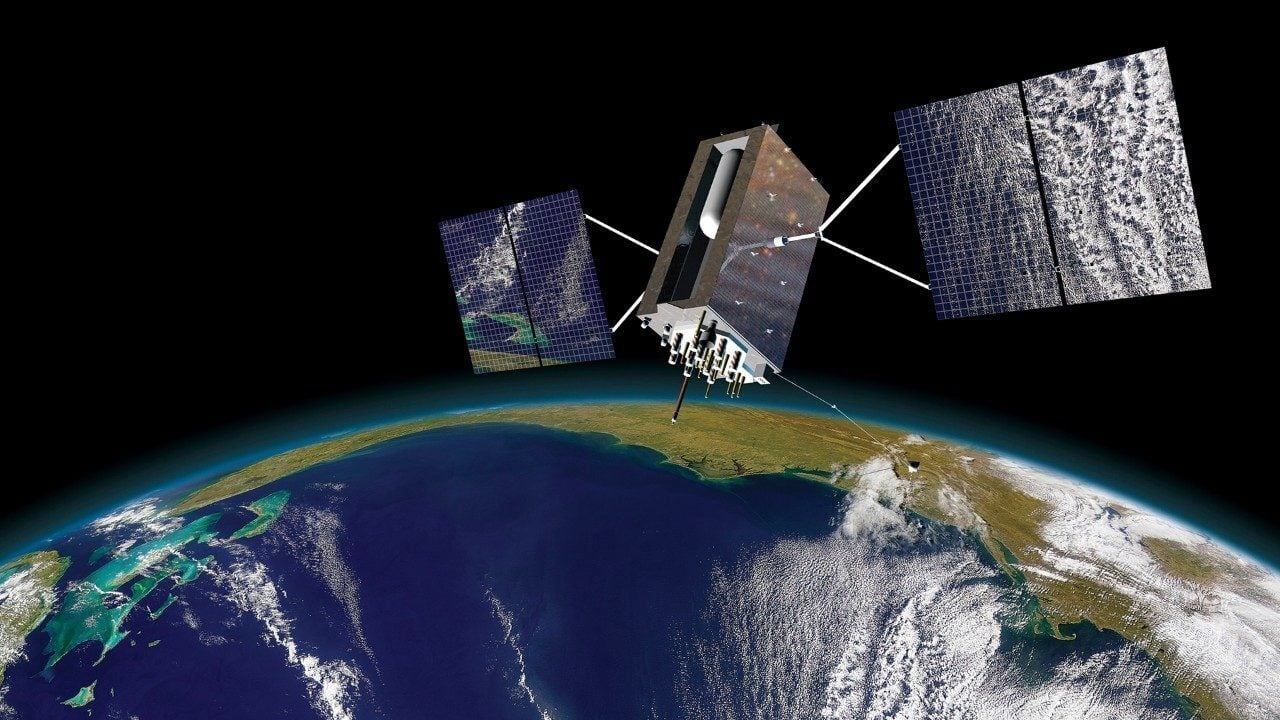
On April 17, 2026, the U.S. Space Force did something the Pentagon almost never does: it killed a program that had consumed more than eight billion dollars over sixteen years. The Next Generation Operational Control System - OCX - was supposed to be the brain of a modernized GPS constellation, giving the military encrypted navigation signals that could punch through jamming and spoofing in contested environments. Instead, it became one of the most expensive software failures in Department of Defense history.
The timing makes the cancellation especially pointed. Four days later, on April 21, the final GPS Block III satellite - SV10 - launched from Cape Canaveral aboard a Falcon 9. The constellation hardware is now complete. The satellites are broadcasting signals they were designed to send. But the ground system that was supposed to command and control those signals does not exist, and the Space Force has concluded it never will - at least not from the contractor that spent sixteen years trying to build it.
GPS OCX was not cancelled because the mission was no longer needed. It was cancelled because the system could not pass integrated testing after more than a decade of development and nearly double its original budget. The military’s encrypted GPS signal - M-Code - remains partially stranded in orbit.
What OCX Was Supposed to Do
The Global Positioning System is, at its core, a timing network. Thirty-one satellites in medium Earth orbit broadcast precisely synchronized signals that allow any receiver on Earth to calculate its position. The military has always maintained a separate, encrypted signal layer on top of the civilian service, but the legacy system - the Operational Control Segment, built in the 1980s and upgraded repeatedly - was aging out of supportability and lacked modern cybersecurity architecture.
OCX was the replacement. Contracted to Raytheon (now RTX) in the early 2010s, it was designed to do three things that the legacy ground system could not. First, provide full command and control for the GPS III satellite series, which introduced new signal structures and more powerful transmitters. Second, implement a modern cybersecurity framework that could defend the ground segment against nation-state-level cyberattack. Third - and most critically - enable M-Code.
M-Code is the military’s anti-jam, anti-spoof GPS signal. It uses Binary Offset Carrier (BOC) modulation to spread its energy away from the center of the GPS frequency band, separating the military signal from civilian L1 and L2 signals in a way that makes it far harder to jam one without affecting the other. M-Code is encrypted using the Modernized Navstar Security Algorithm (MNSA) and is received by a new class of Military GPS User Equipment (MGUE) that can acquire the signal directly - without first locking onto civilian GPS, which is the vulnerability that adversaries exploit.
The GPS III satellites have been broadcasting M-Code-capable signals since the first one launched in 2018. But broadcasting a signal and operationally commanding a constellation to use that signal are two different things. OCX was the missing link: the ground system that would manage M-Code key distribution, signal monitoring, satellite health, and the full operational loop that turns a signal in space into a capability a soldier can use.
Sixteen Years of Overruns
The story of OCX is a case study in how large defense software programs fail. It did not collapse in a single dramatic moment. It eroded, year after year, through compounding technical debt, shifting requirements, and an acquisition structure that rewarded schedule optimism over engineering realism.
Contract award
Raytheon wins the OCX contract. Projected cost under $4 billion, with delivery expected by 2016.
Missed delivery date
OCX fails to deliver on schedule. Costs trigger a Nunn-McCurdy breach - the automatic Pentagon review required when a program exceeds 25% of its baseline cost estimate.
Persistent development issues
GAO finds the program 'marred by poor acquisition decisions and a slow recognition of development problems.' Software defect rates remain persistently high. Cybersecurity feature integration proves far more difficult than anticipated.
Testing milestone reached
OCX completes a significant testing milestone, but fundamental development challenges remain unresolved.
Cost reaches $6.27 billion
Program cost nearly doubles from the $3.7 billion baseline. Total spending including augmentation contracts pushes past $8 billion.
Program cancelled
Space Force officially terminates OCX after integrated testing reveals unresolvable issues. AEP modernization selected as replacement path.
The Nunn-McCurdy breach in 2016 was a critical inflection point. Under federal law, when a major acquisition program’s unit cost grows more than 25% above its baseline estimate, the Secretary of Defense must certify to Congress that the program is essential to national security, that no alternatives can provide the same capability at less cost, and that the program has been restructured to reduce risk. OCX received that certification - the Pentagon decided it was too important to cancel and too far along to start over.
That decision bought Raytheon another decade. During that time, the Government Accountability Office issued a series of increasingly blunt assessments. The program suffered from what GAO characterized as a “persistently high software development defect rate.” Cybersecurity requirements - one of the program’s core selling points - turned out to be far more complex to implement than anyone had estimated. Each new testing phase uncovered integration problems between OCX and the broader GPS enterprise architecture.
$8B+
Total Program Cost
Nearly double the original $3.7 billion estimate. The January 2026 program cost alone reached $6.27 billion before augmentation contracts pushed the total past $8 billion.
By the time the Space Force pulled the plug in April 2026, OCX had consumed more money than the entire GPS III satellite procurement. The satellites - all ten of them - were designed, built, launched, and made operational in less time and for less money than it took to fail at building the software to control them.
”Insurmountable” - The Final Assessment
The Space Force’s cancellation statement was unusually direct by Pentagon standards. Officials said that “extensive system issues arose during the integrated testing of OCX with the broader GPS enterprise” and that “despite repeated collaborative approaches by the entire government and contractor team, the challenges of onboarding the system in an operationally relevant timeline proved insurmountable.”
Extensive system issues arose during the integrated testing of OCX with the broader GPS enterprise. Despite repeated collaborative approaches by the entire government and contractor team, the challenges of onboarding the system in an operationally relevant timeline proved insurmountable.
The word “insurmountable” is doing a lot of work in that sentence. Defense programs get restructured, descoped, and delayed all the time. They almost never get described as facing insurmountable challenges. The language signals that the Space Force reached a conclusion not just about schedule, but about the fundamental viability of the software architecture - that no amount of additional time or money would produce a system that could pass integrated testing and be trusted with operational GPS control.
The integrated testing failure is the key detail. OCX may have worked in isolation, in lab environments, against simulated satellite interfaces. What it could not do was function correctly when connected to the actual GPS constellation infrastructure - the real satellites, the real ground antennas, the real operational workflows. That is the gap that sixteen years and eight billion dollars could not close.
What Happens Now
The Space Force is not starting over with a clean-sheet design. Instead, it is modernizing the system it already has. The Architecture Evolution Plan (AEP) is the existing GPS ground control system - the one OCX was supposed to replace. It has been running the GPS constellation for decades, receiving incremental upgrades to extend its life while everyone waited for OCX.
Lockheed Martin received a $105 million contract for AEP modernization, which will cover command and control for the current GPS satellite fleet and early operations for the next generation: GPS IIIF.
| Element | Status | Details |
|---|---|---|
| GPS Block III (SV01–SV10) | Complete | 9 of 10 operational; SV10 launched April 21, 2026 |
| GPS III SV09 | Operational | Launched January 28, 2026; includes laser retroreflector array |
| GPS III SV10 | Just launched | Includes optical crosslink demonstration payload |
| GPS IIIF | In development | 22 satellites with fully digital L3Harris navigation payload |
| GPS IIIF launches | 2027–2037 | Next-generation constellation replacement cycle |
| Ground control (AEP) | Being modernized | Lockheed Martin $105M contract for AEP upgrades |
| Ground control (OCX) | Cancelled | RTX contract terminated April 17, 2026 |
GPS IIIF represents a significant leap: twenty-two satellites with a fully digital navigation payload built by L3Harris, compared to the analog-digital hybrid on the current Block III vehicles built by Lockheed Martin. The IIIF satellites are designed to be more flexible, more accurate, and easier to update via software. But they will need a ground system that can handle their expanded capabilities - and that ground system is now AEP-plus-upgrades rather than OCX.
The SV10 launch itself carried an interesting technology demonstration: an optical crosslink payload designed to test satellite-to-satellite laser communication. If operational crosslinks become standard on GPS IIIF, they would allow satellites to share navigation data directly rather than relying exclusively on ground uploads - a capability that could reduce dependence on ground infrastructure and improve accuracy in scenarios where ground stations are degraded or denied.
The M-Code Problem
The cancellation’s most consequential impact is on M-Code. The encrypted military signal has been a Department of Defense priority for over two decades, driven by the recognition that GPS - and by extension, the precision-guided weapons, drone navigation, and troop coordination that depend on it - is vulnerable to jamming and spoofing by peer adversaries.
M-Code: The Capability Gap
What's Working
- GPS III satellites already broadcast M-Code signals
- MGUE receivers are in development and testing
- BOC modulation provides inherent jam resistance
- Direct acquisition means no reliance on vulnerable civilian signals
- AEP modernization may eventually support partial M-Code operations
What's Missing
- No ground system can fully command M-Code operations
- Key distribution and signal monitoring require dedicated infrastructure
- AEP was never designed for M-Code - retrofitting adds complexity
- Timeline for full M-Code capability is now undefined
- Adversaries have had sixteen additional years to develop GPS countermeasures
The satellites are broadcasting. The receivers are being built. But the operational control loop - the part that manages encryption keys, monitors signal integrity, commands satellite payload modes, and ensures the whole system works as an integrated military capability - was OCX’s job. Without it, M-Code exists as a signal in space rather than a fielded military capability.
Whether AEP can be retrofitted to support M-Code operations, and on what timeline, is the question the Space Force has not yet answered publicly. The $105 million Lockheed Martin contract covers basic AEP modernization, not a full M-Code ground capability. The gap between “keep the existing constellation running” and “deliver the encrypted military signal the constellation was redesigned to provide” is substantial, and filling it will likely require additional contracts, additional time, and additional money.
Why Big Defense Software Programs Fail
OCX is not the first Pentagon software program to collapse under its own weight, and it will not be the last. The pattern is well-documented: an ambitious requirements set is locked in early, the contract is structured around hardware-era assumptions about development phases and milestones, the software complexity turns out to be far greater than anyone estimated, cybersecurity requirements compound the integration burden, and the program enters a cycle of restructuring, re-baselining, and schedule extension that never converges on a working product.
The GAO’s finding that OCX was “marred by poor acquisition decisions and a slow recognition of development problems” could be copy-pasted into the post-mortem of a dozen other programs. The F-35’s Autonomic Logistics Information System, the Army’s Future Combat Systems network, the FAA’s NextGen automation upgrades - all followed variants of the same trajectory: early optimism, mid-program crisis, cost explosion, and either cancellation or radical descoping.
What made OCX especially painful is that it was not an optional capability. GPS is the backbone of American military operations. Every precision-guided munition, every drone flight plan, every synchronized maneuver depends on GPS timing and positioning. The vulnerability of civilian GPS signals to jamming - demonstrated repeatedly in exercises, in Ukraine, and in the Middle East - is not theoretical. OCX was supposed to close that vulnerability. Instead, it widened the window during which the vulnerability remained open.
What KeepTrack Users Should Know
For anyone tracking the GPS constellation in KeepTrack, the immediate picture is straightforward: the satellites are healthy, the constellation is complete, and SV10’s launch today fills the final Block III slot. You can find all ten GPS III satellites in KeepTrack’s catalog and watch their orbital positions in real time.
The deeper story is about what those satellites can and cannot do. Every GPS III satellite you see in KeepTrack is carrying M-Code hardware that is waiting for a ground system to fully activate it. The cancellation of OCX means that activation is delayed indefinitely. The AEP modernization path will keep the constellation operational, but the full modernized capability - the reason the Block III satellites were built in the first place - remains out of reach until a new ground solution materializes.
As GPS IIIF satellites begin launching in 2027, KeepTrack’s catalog will grow with the next generation of navigation spacecraft. Those satellites will carry even more advanced capabilities, and the question of whether the ground infrastructure can keep pace with the space segment will only become more pressing. OCX was supposed to answer that question. Its cancellation means the answer is still being written.
References(10)
- U.S. Space Force OCX Cancellation Statement - Department of Defense, April 17, 2026
- GPS Next Generation Operational Control System (OCX): Program Cost and Schedule Assessment - Government Accountability Office, GAO-26-107
- Lockheed Martin AEP Modernization Contract Award - Space Systems Command, April 2026
- GPS III Space Vehicle 10 Launch - Space Launch Delta 45, Cape Canaveral, April 21, 2026
- GPS III Space Vehicle 09 Launch and Laser Retroreflector - Space Systems Command, January 2026
- Military GPS User Equipment (MGUE) and M-Code Overview - U.S. Space Force Fact Sheet
- Nunn-McCurdy Breach Certification for OCX - Under Secretary of Defense for Acquisition, 2016
- GPS Program Update - Civil GPS Service Interface Committee, 2025
- Defense Acquisitions: Assessments of Selected Weapon Programs - GAO Annual Report, 2024
- GPS IIIF Program Overview - L3Harris Technologies

Theodore Kruczek


