· deep dive · 12 min read
SpaceMobile-006 (BlueBird 6)
The largest commercial antenna ever deployed in low Earth orbit belongs to a company most people have never heard of. AST SpaceMobile's BlueBird 6 is either the future of cellular connectivity or the most ambitious overreach in telecom history - and it just finished unfolding.
On Christmas Eve 2025, an Indian LVM3 rocket lifted off from Sriharikota carrying the heaviest payload ever launched from Indian soil on a domestic vehicle. Fifteen minutes later, a 5,850-kilogram satellite designated SpaceMobile-006 separated into low Earth orbit, beginning what its manufacturer calls “a breakthrough moment.” The satellite is better known as BlueBird 6 - the first of AST SpaceMobile’s next-generation Block 2 spacecraft, and the opening move in one of the most ambitious constellation deployments in commercial space history.
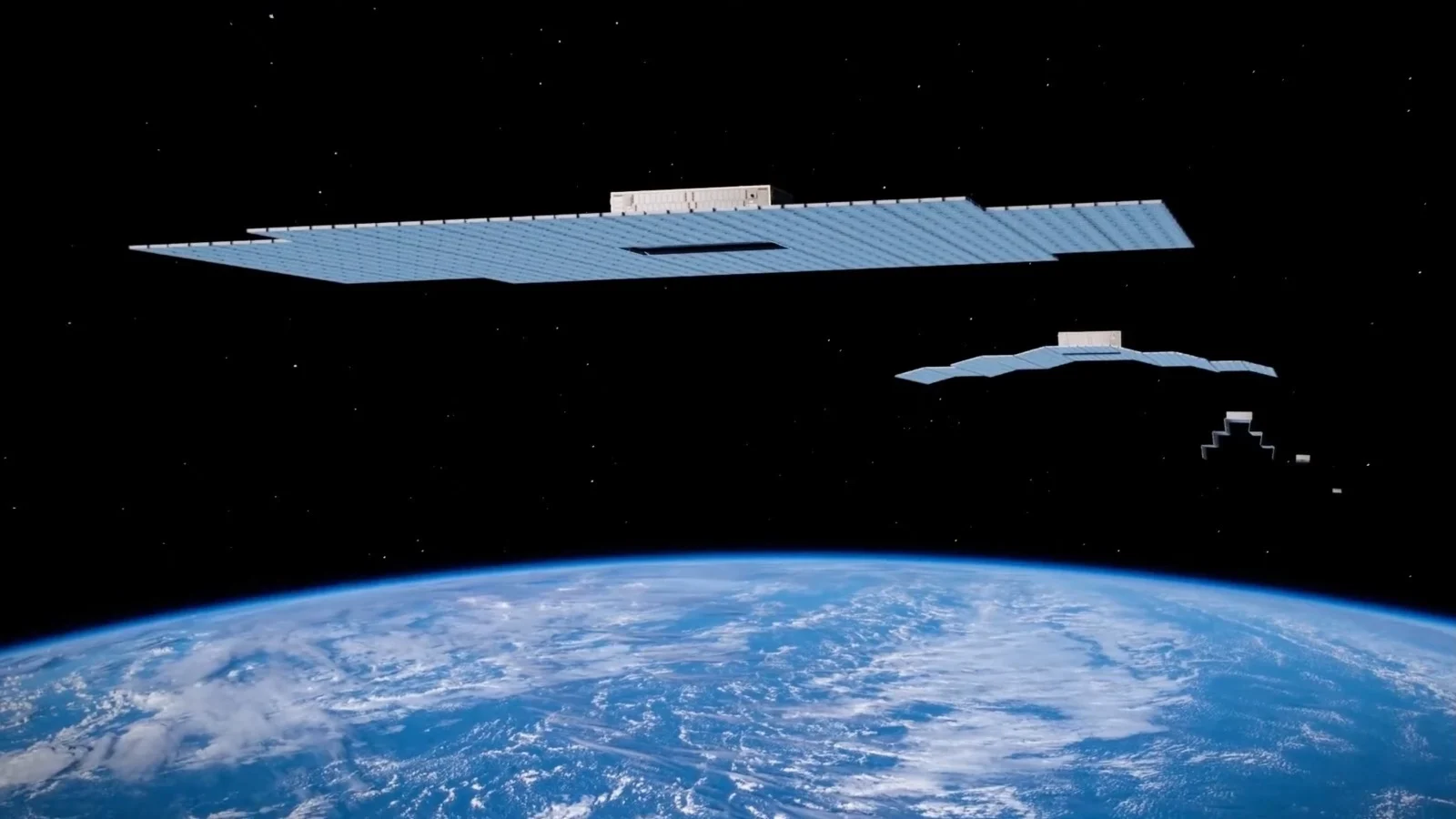
What makes BlueBird 6 remarkable isn’t its orbit, which is thoroughly ordinary at roughly 519 kilometers altitude. It’s what happens after it gets there. On February 11, 2026, AST SpaceMobile confirmed that BlueBird 6 had successfully unfolded a phased array antenna spanning approximately 2,400 square feet - about 223 square meters, or roughly the floor area of a modest apartment. That antenna is now the largest commercial communications array ever deployed in low Earth orbit, and its job is something that would have sounded absurd a decade ago: beaming full 4G and 5G cellular broadband directly to your unmodified smartphone from space.
No special equipment. No satellite phone. No dish on your roof. Just your regular phone, connected to a cell tower that happens to be orbiting at 27,000 kilometers per hour.
AST SpaceMobile is betting its entire business on this premise, and BlueBird 6 is where the bet transitions from demonstration to deployment. Whether it pays off will depend on physics, manufacturing speed, launch availability, and the willingness of regulators to let a constellation of billboard-sized satellites transmit on frequencies that were never designed to come from space.
SpaceMobile-006 (BlueBird 6)
activeThe Physics Problem
The fundamental challenge of direct-to-device satellite communications is deceptively simple: smartphones have tiny antennas and weak transmitters. A typical cell phone puts out about 200 milliwatts of signal power. From 500 kilometers away, that signal is vanishingly faint by the time it reaches orbit. Conventional communications satellites solve this problem by requiring users to aim large dishes or specialized terminals at the sky. Starlink, for all its engineering brilliance, still needs a pizza-box-sized phased array terminal on your roof.
AST SpaceMobile’s solution is to flip the equation. Instead of a big antenna on the ground, you put a really big antenna in space. The bigger the satellite’s receiver, the more of that faint phone signal it can capture. Engineers call this the “link budget” - the accounting of gains and losses between transmitter and receiver. BlueBird 6’s 223-square-meter antenna gives it enough aperture to close the link budget with an ordinary handheld device, something Starlink’s much smaller satellites physically cannot do at broadband speeds.
This is why BlueBird 6 is the size it is. The antenna isn’t large because AST SpaceMobile wanted to set a record. It’s large because the physics demands it.
The satellite’s processing capability matches the antenna’s ambition. Each Block 2 BlueBird is designed around the AST5000, a proprietary application-specific integrated circuit (ASIC) that the company says represents 150 person-years of R&D effort. The chip supports 10 GHz of processing bandwidth - ten times the capacity of the earlier Block 1 BlueBirds - and enables peak data rates of 120 Mbps per coverage cell, with over 2,000 cells per satellite covering roughly 2,400 square kilometers of ground area.
Those are impressive numbers on paper, and the earlier BlueWalker 3 prototype did demonstrate the concept works - completing the first-ever space-to-phone voice call using unmodified Samsung Galaxy S22 handsets in April 2023, followed by video calls and data speeds reaching 21 Mbps. But BlueWalker 3 was a single prototype covering a single spot on Earth. Going from “it works” to “it works at scale” is where most ambitious space companies go to die.
From Midland to Sriharikota
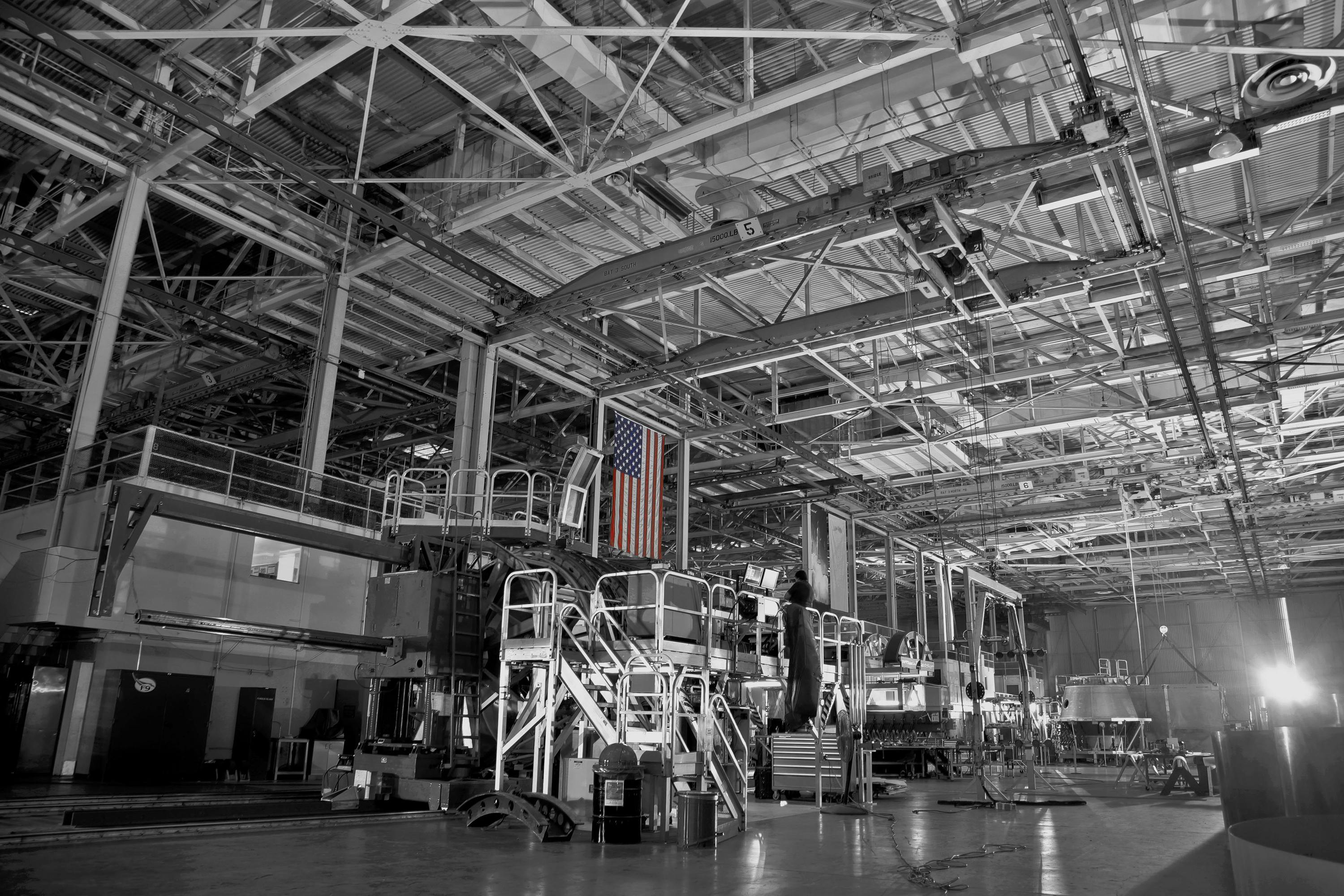
BlueBird 6 was assembled, integrated, and tested at AST SpaceMobile’s facilities in Midland, Texas - a city better known for oil than orbital hardware. The company’s manufacturing footprint now exceeds 500,000 square feet across multiple locations, and it claims 95% vertical integration, meaning nearly everything from the phased array microns to the satellite bus is built in-house.
That vertical integration is deliberate. When your satellites weigh nearly six metric tons and feature deployable antennas the size of a tennis court, outsourcing key subsystems introduces dependencies that can derail a production schedule. AST SpaceMobile’s CEO Abel Avellan - a Venezuelan-born satellite industry veteran who previously built and sold Emerging Markets Communications for $550 million - has structured the company to control its own manufacturing destiny.
The choice of India’s LVM3 as the launch vehicle for BlueBird 6 reflects both practical constraints and strategic thinking. At roughly 6,100 kilograms, BlueBird 6 pushed the LVM3 to its limits - ISRO chairman V. Narayanan noted it was the heaviest satellite ever lifted by an Indian rocket. The LVM3, previously known as the GSLV Mk III, has steadily built commercial credibility through OneWeb constellation deployments and now represents a viable alternative to SpaceX for heavy LEO payloads. The launch was brokered through NewSpace India Limited (NSIL), ISRO’s commercial arm, deepening the US-India space cooperation that both governments have been cultivating.
The satellite reached its target orbit at approximately 519 kilometers altitude in a 53-degree inclination - placing it in the same orbital regime as Starlink’s densest shell. The near-circular orbit (eccentricity of just 0.00095) keeps BlueBird 6 at a consistent altitude, important for maintaining steady link performance with ground-based phones. From this altitude, the satellite completes roughly 15 orbits per day, circling Earth every 95 minutes.
A Company Built in Seven Years
AST SpaceMobile’s trajectory from founding to constellation deployment has been remarkably fast by space industry standards, though punctuated by the delays that afflict every hardware company operating at the edge of the possible.
AST & Science Founded
Abel Avellan founds the company in Midland, Texas after selling Emerging Markets Communications for $550 million.
BlueWalker 1 Launch
First test satellite, built by NanoAvionics, validates basic satellite-to-phone link concept on an ISRO PSLV.
SPAC Merger and Nasdaq Listing
Company goes public as AST SpaceMobile (ASTS) after merging with New Providence Acquisition Corp, raising $462 million.
BlueWalker 3 Launch
Prototype satellite with 693 sq ft phased array launches on SpaceX Falcon 9. Array unfolds in November 2022.
First Space-to-Phone Call
World's first voice call between unmodified smartphones via satellite, using Samsung Galaxy S22 handsets and AT&T spectrum.
BlueBirds 1-5 Launch
Five Block 1 commercial satellites launch together on a SpaceX Falcon 9, each with 693 sq ft arrays.
BlueBird 6 Launch
First Block 2 satellite launches on ISRO LVM3 from Sriharikota. 3.5x larger and 10x the capacity of Block 1.
BlueBird 6 Array Deployed
2,400 sq ft antenna successfully unfolds - the largest commercial communications array in LEO history.
The Block 1 BlueBirds (1 through 5), launched in September 2024, were essentially scaled-up versions of the BlueWalker 3 prototype - useful for validating manufacturing processes and beginning carrier integration tests, but limited in capacity. Block 2 is where the commercial service actually begins. BlueBird 6’s 2,400-square-foot array is 3.5 times larger than the Block 1 satellites’ 693-square-foot antennas, and the AST5000 ASIC delivers ten times the processing bandwidth. This isn’t an incremental upgrade. It’s a generational leap.
The Constellation Ramp
AST SpaceMobile’s deployment plan calls for 45 to 60 Block 2 satellites in orbit by the end of 2026, launched at a cadence of roughly one mission every one to two months. The company has said that approximately 45 satellites would provide near-continuous coverage across the continental United States, with 60 satellites delivering full continuous service.
BlueBird 7 - identical to BlueBird 6 - was shipped to Cape Canaveral and encapsulated inside Blue Origin’s New Glenn rocket in February 2026. The NG-3 mission will use a flight-proven booster (the one that successfully landed after delivering NASA’s ESCAPADE Mars probes in November 2025) and represents AST SpaceMobile’s first launch on New Glenn. The vehicle’s seven-meter fairing can accommodate up to eight Block 2 BlueBirds per mission, which is critical to hitting the deployment cadence the company needs.
Whether that cadence materializes is an open question. Analysts at Light Reading noted in January 2026 that even in the best case, AST SpaceMobile might launch around 30 satellites by year-end - well short of the 60-satellite target. The bottleneck isn’t manufacturing capacity so much as launch availability. Blue Origin is still early in New Glenn’s operational life, SpaceX has its own manifest priorities, and each satellite needs to be individually tested before shipping.
The carrier partnerships backing this deployment are substantial. AST SpaceMobile has agreements with over 50 mobile network operators representing nearly 3 billion subscribers worldwide, including AT&T, Verizon, Vodafone, Rakuten, Google, American Tower, Bell, and stc Group. AT&T and AST SpaceMobile announced plans to launch a beta satellite service for select commercial and FirstNet users in the first half of 2026. The Saudi telecom giant stc committed a $175 million prepayment in October 2025. These aren’t memoranda of understanding - they’re revenue commitments, and they total over $1.2 billion in aggregate.
The company’s FY2025 financials reflect this transition. AST SpaceMobile reported $82 million in revenue for 2025 - its first year of meaningful commercial income - driven by MNO prepayments and US government contracts. The company also secured a prime contract position on the Missile Defense Agency’s SHIELD program, extending its technology into military applications. As of early 2026, AST SpaceMobile maintained approximately $2.1 billion in liquidity, providing runway through the critical Block 2 deployment period.
Few Satellites, Loud Satellites
There’s a tension built into AST SpaceMobile’s design philosophy that the company would probably prefer people didn’t think about too much. The same enormous antenna that makes direct-to-device connectivity physically possible also makes each satellite extraordinarily visible - and audible in the radio spectrum.
A 2023 study published in Nature documented the optical brightness of BlueWalker 3 through an international observation campaign. Astronomers found that after the satellite’s 64-square-meter antenna deployed, its brightness jumped from magnitude 6 (the threshold of naked-eye visibility) to magnitude 0.4 - brighter than 99% of stars and comparable to Procyon and Betelgeuse. That’s roughly 900 times brighter than the magnitude 7 limit recommended by the International Astronomical Union to protect ground-based astronomy.
BlueWalker 3’s antenna was 64 square meters. BlueBird 6’s is 223 square meters.
The optical brightness problem is compounded by radio frequency interference concerns. AST SpaceMobile’s satellites transmit on terrestrial cellular frequencies - the same bands used by ground-based towers. Those frequencies sit close to bands allocated for radio astronomy, and existing regulatory protections don’t extend to transmissions from space. Radio astronomers have warned that direct-to-device constellations could fundamentally compromise their ability to observe, particularly at facilities in designated radio-quiet zones.
AST SpaceMobile has taken some steps to address these concerns. The company signed a coordination agreement with the National Science Foundation, committed to anti-reflective coatings on future satellites, and has demonstrated that roll-tilting maneuvers can reduce BlueWalker 3’s apparent brightness. But the fundamental arithmetic is challenging: a constellation of 60+ satellites, each with antenna arrays the size of a small apartment, operating in frequencies close to radio astronomy bands, represents a qualitatively different challenge than even the largest Starlink deployments.
The company’s standard response emphasizes that its constellation will number in the low hundreds rather than the tens of thousands required by Starlink. That’s true, and it matters - fewer satellites means fewer streaks across telescope exposures. But each of those satellites is orders of magnitude brighter than a Starlink spacecraft, and the radio interference question is categorically different from anything the astronomy community has dealt with before.
Block 1 vs Block 2 BlueBird
| BlueBird Block 1 (1-5) | BlueBird Block 2 (6+) Current Gen | |
|---|---|---|
| Array Size | 693 sq ft (64 m²) | 2,400 sq ft (223 m²) |
| Launch Mass | ~1,500 kg | ~5,850 kg |
| Processing Bandwidth | 1 GHz | 10 GHz |
| Peak Data Rate | 120 Mbps | 120 Mbps |
| Satellites per Launch | 5 (Falcon 9) | Up to 8 (New Glenn) |
| Launch Vehicle | SpaceX Falcon 9 | LVM3, New Glenn, Falcon 9 |
- Array Size
- 693 sq ft (64 m²)
- Launch Mass
- ~1,500 kg
- Processing Bandwidth
- 1 GHz
- Peak Data Rate
- 120 Mbps
- Satellites per Launch
- 5 (Falcon 9)
- Launch Vehicle
- SpaceX Falcon 9
- Array Size
- 2,400 sq ft (223 m²)
- Launch Mass
- ~5,850 kg
- Processing Bandwidth
- 10 GHz
- Peak Data Rate
- 120 Mbps
- Satellites per Launch
- Up to 8 (New Glenn)
- Launch Vehicle
- LVM3, New Glenn, Falcon 9
The D2D Landscape
AST SpaceMobile isn’t operating in a vacuum - though it might prefer to be. SpaceX’s Starlink direct-to-cell service, launched in partnership with T-Mobile, began offering text messaging in 2025, with voice and data capabilities planned. By early 2026, Starlink had around 350 satellites with D2C capability in orbit, roughly 90% of the number needed for full coverage.
But Starlink’s D2C approach and AST’s are fundamentally different technologies aimed at the same market. Starlink’s satellites are small and numerous, using compact antennas that can currently support only low-bandwidth services like SMS - adequate for emergency texting but nowhere near broadband. AST SpaceMobile’s satellites are enormous and far fewer, but each one can support full cellular broadband including voice, video, and high-speed data. The companies aren’t just competing on business models; they’re competing on physics.
SpaceX has publicly questioned AST SpaceMobile’s approach. In 2024, SpaceX filed concerns with the FCC about AST’s orbital debris profile and the sustainability of deploying such large objects in LEO. AST SpaceMobile fired back, accusing SpaceX of trying to “intimidate and bully” competitors. The FCC, for its part, authorized AST to deploy 20 additional satellites in August 2025 and granted special temporary authority for carrier testing - regulatory wins that suggest the agency isn’t siding with SpaceX on this one.
The competitive question really comes down to timing and capability. Can AST SpaceMobile deploy enough satellites fast enough to offer continuous service before Starlink’s D2C capability matures to broadband? Or will SpaceX’s unmatched launch cadence allow it to simply out-deploy the competition, even with individually less capable satellites?
What’s Actually in Orbit
As of late March 2026, BlueBird 6 (SpaceMobile-006, NORAD ID 67232) is in a 512 x 525 kilometer orbit at 53 degrees inclination, completing about 15.18 orbits per day. Its array is fully deployed and the satellite is in the commissioning phase - validating the phased array performance, beamforming system, and integration with partner networks.
The satellite’s orbit places it in the same inclination band as the earlier Block 1 BlueBirds and the BlueWalker 3 prototype, allowing AST SpaceMobile to build coverage density in its initial service area. The 53-degree inclination provides coverage from roughly 53 degrees north to 53 degrees south latitude, encompassing the continental United States, Europe, Japan, and most of the world’s population.
BlueBird 7 awaits launch on New Glenn from Cape Canaveral, with an increasing number of subsequent satellites - BlueBirds 8 through 29 - in various stages of production in Midland. The manufacturing pipeline, if it holds, represents an unprecedented production rate for satellites of this size and complexity.
Whether AST SpaceMobile can actually deliver on its deployment timeline will determine whether BlueBird 6 is remembered as the satellite that launched a global cellular network from space, or as an impressively large piece of hardware that proved the concept before the company ran out of runway. The physics works. The question now is everything else.
References(12)
- AST SpaceMobile Announces Successful Orbital Launch of BlueBird 6 - Business Wire (December 2025)
- Indian Rocket Launches AST SpaceMobile's Next-Gen BlueBird 6 Satellite - SpaceNews
- AST SpaceMobile Successfully Completes Unfolding of BlueBird 6 - Business Wire (February 2026)
- AST SpaceMobile Encapsulates BlueBird 7 for New Glenn Mission - SatNews
- AST SpaceMobile Risks Missing 2026 Satellite Launch Target - Light Reading
- The High Optical Brightness of the BlueWalker 3 Satellite - Nature (2023)
- Astronomers Raise Interference Concerns from AST SpaceMobile Satellite - SpaceNews
- AT&T and AST SpaceMobile Advance Satellite-to-Cell Expansion - SatNews
- New Glenn-3 to Launch AST SpaceMobile's BlueBird Satellite - Blue Origin
- AST SpaceMobile Q4 2025 SEC Filing (Form 8-K)
- Blue Origin Ramps Up New Glenn Manufacturing - NASASpaceFlight
- BlueBird Block 1 Specifications - Gunter's Space Page

Theodore Kruczek