· space brief · 6 min read
Space Brief 2 Sep 2025
Today's brief covers key topics such as SpaceX's latest Starlink launch, the European Space Agency's new initiatives, and Space Force's integration of AI into its operations.

📄Top Stories
SpaceX has expanded its Starlink network with the successful launch of 28 additional satellites. Meanwhile, the U.S. Space Force is incorporating AI into everyday operations, and the European Space Agency is embarking on new satellite missions to bolster Europe’s footing in space exploration.
📰Detailed Coverage
SpaceX Expands Starlink Network in Latest Falcon 9 Launch
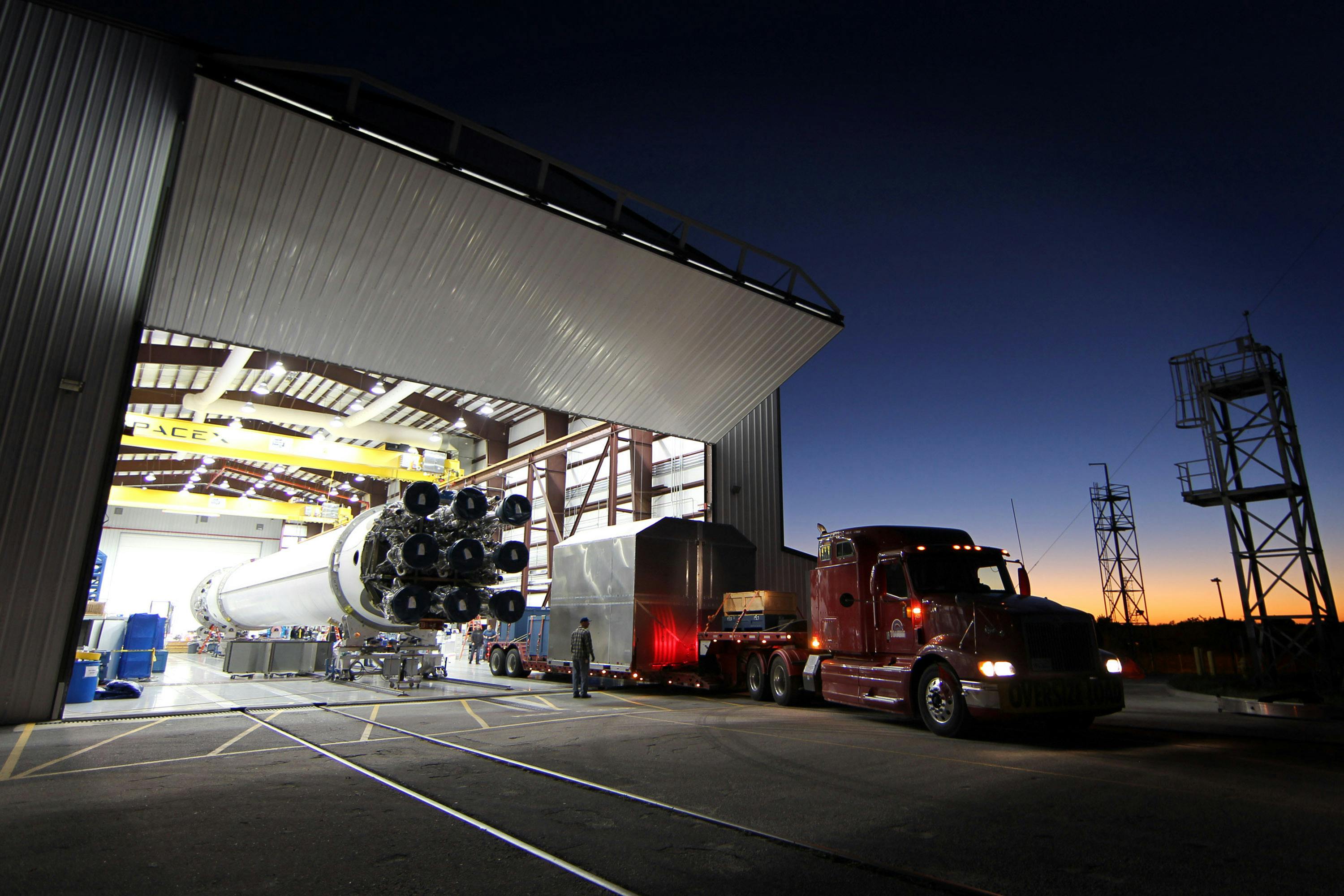
SpaceX launched another batch of 28 Starlink satellites into low-Earth orbit as part of its mission to create a global high-speed internet network. The launch took place at Cape Canaveral Space Force Station, utilizing a Falcon 9 rocket. The mission was deemed a success with the first stage booster landing back for potential reuse, which highlights SpaceX’s ongoing commitment to lowering the cost of space access.
This expansion not only underscores the growing complexity of satellite constellations but also enhances our live tracking capabilities Explore with our Web App. The addition of these satellites helps bridge digital divides worldwide, presenting both opportunities and challenges in satellite management.
Read the full story: SpaceDaily
Space Force Integrates AI into Daily Operations
The U.S. Space Force is taking significant strides in incorporating artificial intelligence (AI) into its regular activities. Through a series of “AI Challenges,” analogous to hackathons, the military branch aims to harness AI for optimizing logistics and operational efficiency. This approach is pivotal in maintaining national security and enhancing response times.
By embedding AI into military operations, the Space Force can significantly improve resource management and precision in satellite tracking and data analysis, vital for maintaining strategic advantages in space.
Read the full story: SpaceNews
European Space Agency Embarks on Flight Ticket Initiative
The European Space Agency (ESA) has officially launched its Flight Ticket Initiative, confirming the first five missions to test and validate emerging European space technologies. These missions are split between Avio’s Vega-C rocket launches from French Guiana and Isar Aerospace efforts, with the objective of strengthening Europe’s independent access to space.
This move is in alignment with ESA’s strategy to bolster the continent’s aerospace sector by fostering innovation and competition. Such initiatives are central to Europe maintaining a competitive edge in space exploration and monitoring.
Read the full story: SpaceDaily
European Customer Leases SI Imaging Services’ SpaceEye-T
SI Imaging Services of South Korea has entered a lucrative contract to lease the capacity of its high-resolution Earth-observation satellite, SpaceEye-T, to a European customer. This satellite, which entered orbit earlier this year, offers impressive imaging capabilities at 25 centimeters per pixel, supporting applications in environmental monitoring and urban planning.
Such collaborations highlight the growing trend of international partnerships in space technology, underlining the importance of satellite tracking and data exchange in addressing global challenges.
Read the full story: SpaceNews
Colorado Helicopters Aid NASA’s Artemis Moon Missions
NASA is leveraging the rugged terrain of Colorado to simulate landing conditions for its Artemis lunar missions, utilizing military helicopters to perfect the final descent phase. This training aims to ensure the safe landing of astronauts on the Moon by dealing with the inherent risks of lunar surface operations.
The integration of terrestrial training with space missions underscores the complexity and interdisciplinary nature of modern space exploration efforts, poised to achieve humanity’s return to the Moon.
Read the full story: Space.com
🛰️Satellite Spotlight
- Satellite Name: COSMOS 2297
- NORAD ID: 23404
- Launch Date: November 24, 1994
- Mission: Signals Intelligence (SIGINT) satellite designed for monitoring and collecting electronic emissions.
- Orbit: Low Earth Orbit (LEO)
- Operator: GRUR (Russian military)
- Fun Fact: COSMOS 2297 is part of the Tselina-2 series, renowned for its sophisticated electronic surveillance capabilities.
Track this satellite in real-time on our web app: Track COSMOS 2297
🌌Space Weather
Next 24 Hours
-
Radio Blackouts Probability
- Minor: 60
- Major: 20
- Risk: None
-
Solar Radiation
- Probability: 60
- Risk: None
-
Geomagnetic Storming
- Scale: 3
- Impact: strong
- Activity: High
-
Impact Summary
- No risk of radio blackouts expected in the next 24 hours, making this a stable period for satellite communication and operations.
- No risk of solar radiation storms, which is beneficial for space missions and sensitive electronics.
- High geomagnetic activity with strong geomagnetic storms anticipated, potentially affecting satellite drag and operational conditions for satellite owner/operators.
- Geomagnetic outlook indicates heightened chances of G3 (Strong) storming today, with potential for G4 (Severe) conditions; users of ground-based radars and telescopes should remain vigilant.
- By tomorrow, conditions expected to moderate, with CME influences diminishing.
Long Term Forecast
- Impact Summary
- Solar activity anticipated to remain low with intermittent chances for M-class flares through September, which may lead to minor disruptions in satellite operations.
- Enhanced greater than 10 MeV proton flux levels are expected initially but will likely return to background levels after early September, reducing radiation risks for sensitive satellites.
- Elevated greater than 2 MeV electron flux at geosynchronous orbit could pose threats to satellite electronics during peak periods, especially around early and mid-September.
- Geomagnetic activity forecast shows that conditions will be active, with G2 and G3 storm levels likely; operators should prepare for fluctuations that might impact existing satellite operations.
- Following the initial high activity, a trend toward quieter conditions is expected mid-late September, allowing for better operational stability.
🚀 Upcoming Space Launches
September 3
- SpaceX Falcon 9:
- Starlink Group 17-8 from Vandenberg Space Force Base, CA, USA (02:33 UTC) A batch of 24 satellites for the Starlink mega-constellation - SpaceX’s project for a space-based Internet communication system.
- SpaceX Falcon 9:
- Starlink Group 10-22 from Cape Canaveral Space Force Station, FL, USA (11:06 UTC) A batch of 28 satellites for the Starlink mega-constellation - SpaceX’s project for a space-based Internet communication system.
September 4
- SpaceX Falcon 9:
- Starlink Group 10-57 from Kennedy Space Center, FL, USA (11:18 UTC) A batch of 28 satellites for the Starlink mega-constellation - SpaceX’s project for a space-based Internet communication system.
September 6
- SpaceX Falcon 9:
- Starlink Group 17-9 from Vandenberg Space Force Base, CA, USA (15:42 UTC) A batch of 24 satellites for the Starlink mega-constellation - SpaceX’s project for a space-based Internet communication system.
September 8
- SpaceX Falcon 9:
- Nusantara Lima from Cape Canaveral Space Force Station, FL, USA (00:00 UTC) Nusantara Lima is an Indonesian geostationary communications satellite with a capacity of more than 160 Gbps.
September 10
- SpaceX Falcon 9:
- SDA Tranche 1 Transport Layer B from Vandenberg Space Force Base, CA, USA (00:00 UTC) Classified mission launched by the Space Development Agency (SDA) for Tranche 1 Transport Layer.
September 11
- Russian Federal Space Agency (ROSCOSMOS) Soyuz 2.1a:
- Progress MS-32 (93P) from Baikonur Cosmodrome, Republic of Kazakhstan (13:49 UTC) Progress resupply mission to the International Space Station.
September 15
- SpaceX Falcon 9:
- Cygnus CRS-2 NG-23 from Cape Canaveral Space Force Station, FL, USA (22:00 UTC) This is the 23rd flight of Northrop Grumman’s uncrewed resupply spacecraft Cygnus and its 22nd flight to the International Space Station under the Commercial Resupply Services contract with NASA.
September 23
- SpaceX Falcon 9:
- IMAP & others from Kennedy Space Center, FL, USA (00:00 UTC) IMAP (Interstellar Mapping and Acceleration Probe) is a NASA mission to study interactions between solar wind and local interstellar medium. Carrying a suite of 10 scientific instruments, IMAP investigates particle acceleration, their composition, and advances space weather forecasting models. Secondary payloads include Lunar Trailblazer, SWFO-L1, GLIDE mission, and Solar Cruiser.
September 25
- United Launch Alliance Atlas V 551:
- Project Kuiper (KA-03) from Cape Canaveral Space Force Station, FL, USA (00:00 UTC) Project Kuiper is a mega constellation of satellites offering broadband internet access, managed by Kuiper Systems LLC, a subsidiary of Amazon. It will comprise 3,276 satellites in three orbital layers at altitudes of 590 km, 610 km, and 630 km.
Note: Launch dates and times are subject to change due to technical or weather considerations.

Maurice Stellarski