· space brief · 5 min read
Space Brief 5 Sep 2025
Today's Space Brief delves into key military developments in space, including the Space Force's pioneering officer training and innovative small satellite communication strategies.

📰Top Stories
Space Force Graduates First Class of Officers for a ‘Contested’ Space Era
In a significant milestone, the U.S. Space Force has graduated its first class of officers from a new year-long program focusing on the growing “great power competition” in space. This training aims to prepare leaders for operations in a space domain that is becoming increasingly contested, laying the groundwork for future engagements in outer space. This strategic move underscores the military’s commitment to maintaining a technological edge in orbital environments.
Read the full story: SpaceNews
Space Force’s Pioneering Move with Small Satellites for Geostationary Communications
The Space Force is embarking on a groundbreaking mission with its Protected Tactical Satcom-Global (PTS-G) program, which seeks to deploy small satellites in the geostationary belt for enhanced communications. This marks the military’s first major effort to create small satellite constellations for global connectivity, potentially revolutionizing military communication strategies by increasing resilience and flexibility.
Read the full story: SpaceNews
DIA Invests in Advanced Space and Missile Analysis Facility
The Defense Intelligence Agency (DIA) has initiated the second phase of its intelligence campus expansion with the construction of a new analysis facility. This development in Huntsville, Alabama will enhance the U.S.’s ability to conduct detailed space and missile defense analyses. The facility represents a critical leap in capabilities, ensuring comprehensive assessment of foreign missile and space activity.
Read the full story: SpaceWar
SECNAV’s Strategic Pivot: Consolidating Navy’s Unmanned Offices
In an effort to streamline operations, the Secretary of the Navy has announced the consolidation of various unmanned systems offices. This move aims to optimize resources and pause all robotic contracting activities temporarily. This is part of a broader Defense Department initiative to consolidate operations and enhance efficiency across the board, particularly in emerging technologies.
Read the full story: Breaking Defense
Turkish Defense Firms Eye Global Markets
Prominent Turkish defense companies are showcasing their cutting-edge technologies and capabilities, aiming to expand their influence in the international defense market. This includes advancements in defense technology that could have implications for global military and satellite capabilities.
Read the full story: Breaking Defense
🛰️Satellite Spotlight
- Satellite Name: SKYNET 5B
- NORAD ID: 32294
- Launch Date: November 14, 2007
- Mission: Military communication
- Orbit: Geostationary Orbit (GEO)
- Operator: UK Ministry of Defence (PARA)
- Fun Fact: SKYNET 5B is part of the UK’s military satellite communication system, designed to provide secure and resilient communication for armed forces and other users.
Track this satellite in real-time on our web app: Track SKYNET 5B
🌌Space Weather
Next 24 Hours
-
Radio Blackouts Probability
- Minor: 55
- Major: 10
- Risk: None
-
Solar Radiation
- Probability: 10
- Risk: None
-
Geomagnetic Storming
- Scale: 1
- Impact: minor
- Activity: Moderate
-
Impact Summary
- No risk of radio blackouts, ensuring stable communication for satellites and terrestrial operations.
- No risk of solar radiation storms, mitigating hazards for satellite operators.
- Moderate geomagnetic activity may cause minor disturbances in high-frequency radio communications and pose risks for satellite drag in low Earth orbit (LEO).
- G1 (Minor) geomagnetic storm levels likely on 05-06 Sep due to recurrent coronal hole high-speed stream (CH HSS) influences.
- Slight chance for greater than 10 MeV proton event (S1 levels) until 06 Sep, influenced by potential flares from active region AR 4197.
- Expect low solar activity with chances for M-class flares (R1-R2) and a slight chance for X-class flares (R3) mainly due to AR 4197.
Long Term Forecast
- Impact Summary
- Forecasted low solar activity through 27 Sep with varying chances for M-class flares (R1-R2).
- Slight enhancement of greater than 10 MeV proton flux may occur but should remain below 10 pfu level initially.
- A chance for exceeding the 10 pfu threshold on 01-02 Sep as the halo coronal mass ejection (CME) from 30 Aug approaches Earth.
- Moderate levels of greater than 2 MeV electron flux expected on specific days with high levels anticipated during coronal hole (CH) high-speed stream influences.
- Geomagnetic activity projected to reach G2 (Moderate) on 01 Sep, G3 (Strong) on 02 Sep, with active conditions following until 03 Sep.
- Active conditions likely on 06-10 Sep and 15-19 Sep due to CH HSS influences, while quieter periods expected on several days throughout September.
🚀Upcoming Space Launches
September 5
- China Aerospace Science and Technology Corporation Long March 3C/YZ-1:
- Unknown Payload from Xichang Satellite Launch Center, People’s Republic of China (02:26 UTC)
- SpaceX Falcon 9 Block 5:
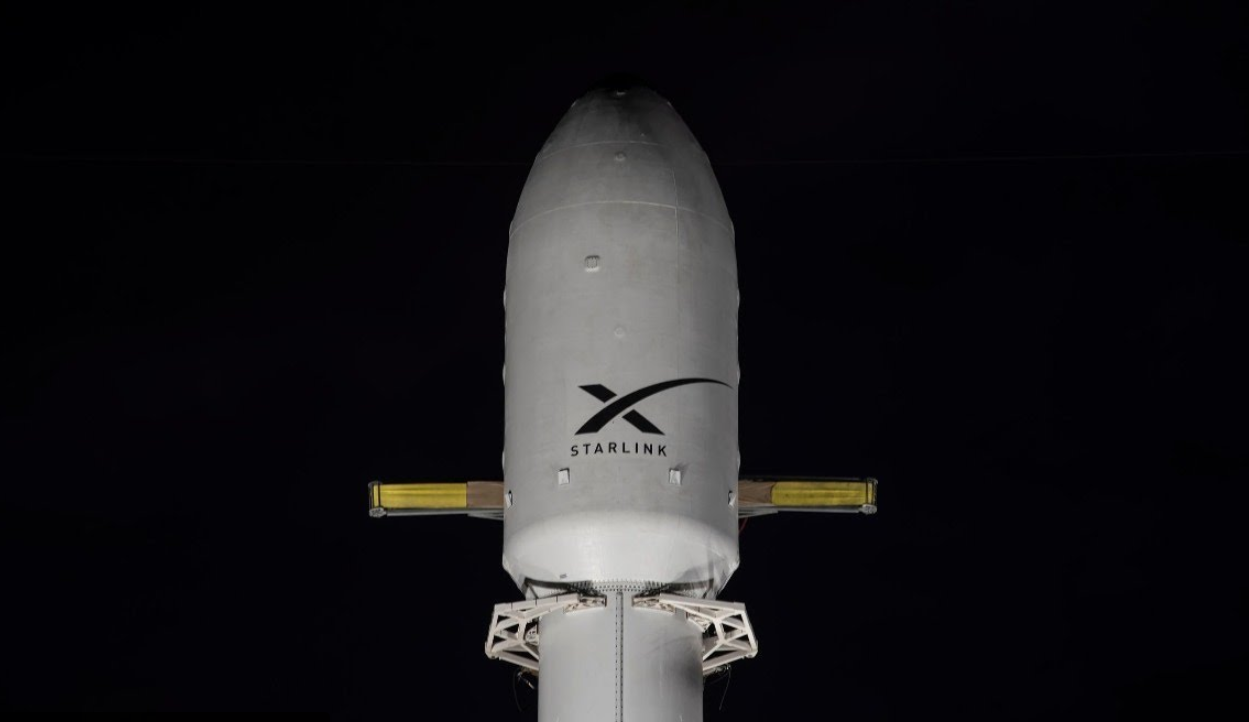
- Starlink Group 10-57 from Kennedy Space Center, FL, USA (10:56 UTC)
- A batch of 28 satellites for the Starlink mega-constellation - SpaceX’s project for a space-based Internet communication system.
- Galactic Energy Ceres-1:
- Unknown Payload from Jiuquan Satellite Launch Center, People’s Republic of China (11:28 UTC)
September 6
- SpaceX Falcon 9 Block 5:
- Starlink Group 17-9 from Vandenberg SFB, CA, USA (15:42 UTC)
- A batch of 24 satellites for the Starlink mega-constellation - SpaceX’s project for a space-based Internet communication system.
- China Aerospace Science and Technology Corporation Long March 6A:
- Unknown Payload from Taiyuan Satellite Launch Center, People’s Republic of China (16:26 UTC)
September 9
- SpaceX Falcon 9 Block 5:
- Nusantara Lima from Cape Canaveral SFS, FL, USA (00:02 UTC)
- Nusantara Lima is an Indonesian geostationary communications satellite with a capacity of more than 160 Gbps.
September 10
- SpaceX Falcon 9 Block 5:
- SDA Tranche 1 Transport Layer B from Vandenberg SFB, CA, USA (14:12 UTC)
- Classified mission launched by the Space Development Agency (SDA) for Tranche 1 Transport Layer.
September 11
- Russian Federal Space Agency (ROSCOSMOS) Soyuz 2.1a:
- Progress MS-32 (93P) from Baikonur Cosmodrome, Republic of Kazakhstan (15:54 UTC)
- Progress resupply mission to the International Space Station.
September 13
- SpaceX Falcon 9 Block 5:
- Starlink Group 17-10 from Vandenberg SFB, CA, USA (15:41 UTC)
- A batch of satellites for the Starlink mega-constellation - SpaceX’s project for a space-based Internet communication system.
September 15
- SpaceX Falcon 9 Block 5:
- Cygnus CRS-2 NG-23 from Cape Canaveral SFS, FL, USA (21:49 UTC)
- This is the 23rd flight of the Northrop Grumman’s uncrewed resupply spacecraft Cygnus and its 22nd flight to the International Space Station under the Commercial Resupply Services contract with NASA.
Note: Launch dates and times are subject to change due to technical or weather considerations.

Maurice Stellarski