· space brief · 5 min read
Space Brief 8 Sep 2025
Today's highlights include China's Yaogan-40 satellite launch, military contracts for rocket studies, and SpaceX's 500th booster landing.

📰Top Stories
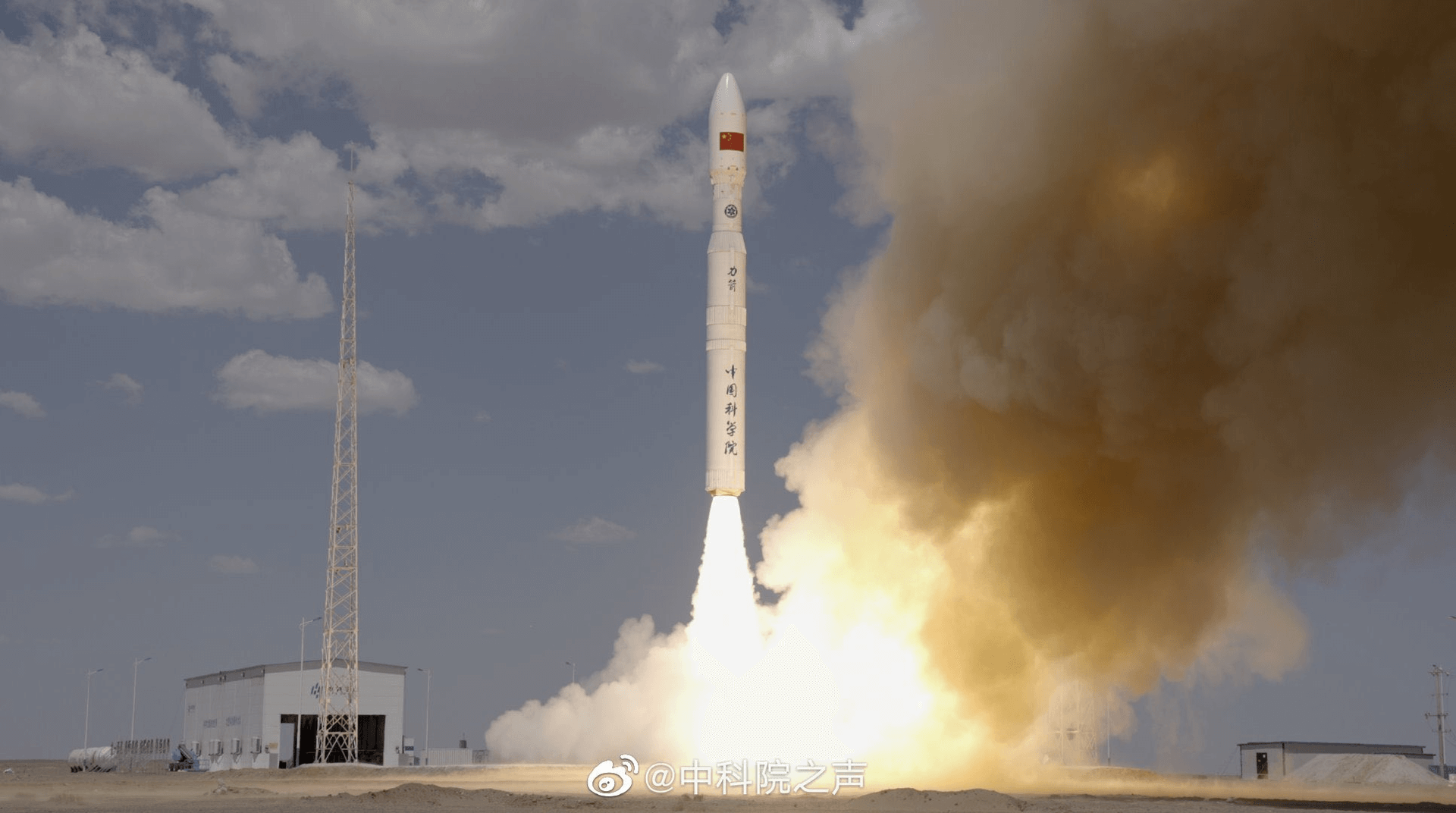
China Expands Satellite Fleet with New Yaogan-40 Launch
China has successfully launched the third set of Yaogan-40 satellites into polar orbit using a Long March 6A rocket from the Taiyuan Satellite Launch Center. This marks the 52nd launch for China this year, enhancing their remote sensing capabilities. The mission further boosts China’s satellite constellation aimed at Earth observation and reconnaissance.
Read the full story: SpaceNews
Blue Origin and Anduril Secure Rocket Cargo Study Contracts
The U.S. Air Force Research Laboratory has awarded significant contracts to Blue Origin and Anduril to advance studies in rocket payload delivery systems. This initiative, part of the Global Agile Logistics program, emphasizes rapid deployment capabilities in military operations. Blue Origin receives $1.3 million, while Anduril is awarded $1 million to explore innovative logistics solutions.
Read the full story: SpaceNews
Global Invacom Launches Advanced XRJ Transceiver for Defense
Global Skyware, a branch of Global Invacom, has unveiled the XRJ transceiver aimed at enhancing satellite communications in government and defense sectors. Operating on the extended Ka-band, it offers variants delivering up to 25 Watts, making it versatile for different orbits including GEO, MEO, and LEO.
Read the full story: SpaceWar
SpaceX Achieves Milestone with 500th Booster Landing
In a remarkable feat, SpaceX has completed its 500th successful booster landing during a Starlink mission. The Falcon 9 rocket, launching from NASA’s Kennedy Space Center, carried 28 Starlink satellites into low Earth orbit, highlighting SpaceX’s proficiency in reusable rocket technology.
Read the full story: SpaceDaily
First Reusable US Launcher Prepares for European Debut
Astrobotic Technology and Andoya Space have finalized an agreement to position reusable rocket operations at Norway’s Andoya Spaceport. Commencing in 2026, this partnership ensures multi-campaign launches, introducing advanced space access capabilities in Europe.
Read the full story: SpaceDaily
🛰️Satellite Spotlight
- Satellite Name: COSMOS 2368
- NORAD ID: 26042
- Launch Date: December 27, 1999
- Mission: This satellite serves as an early warning system to detect missile launches and other significant threats.
- Orbit: Highly Elliptical Orbit (HEO)
- Operator: PVO (Russian Air Defence Forces)
- Fun Fact: COSMOS 2368 is equipped with advanced sensors that enable it to provide critical data for national security, making it a key asset in military satellite operations.
Track this satellite in real-time on our web app: Track COSMOS 2368
🌌Space Weather
Next 24 Hours
-
Radio Blackouts Probability
- Minor: 25
- Major: 1
- Risk: None
-
Solar Radiation
- Probability: 1
- Risk: None
-
Geomagnetic Storming
- Scale: 0
- Impact: none
- Activity: Low
-
Impact Summary
- Next 24 hours: No risk of radio blackouts.
- No risk of solar radiation storms.
- Geomagnetic outlook: No G1 (Minor) or greater geomagnetic storms are expected.
- Radiation outlook: No S1 (Minor) or greater solar radiation storms are forecast.
- No significant active region activity favorable for radiation storm production is predicted.
Long Term Forecast
- Impact Summary
- Forecast of Solar and Geomagnetic Activity from 08 September to 04 October: Solar activity is expected to be mostly low, with chances for moderate (R1-R2/Minor-Moderate) activity due to multiple complex regions both on the visible disk and those returning from the Sun’s farside.
- No proton events are forecast at geosynchronous orbit.
- The greater than 2 MeV electron flux at geosynchronous orbit is expected to reach high levels over 08-11 Sep and 20-21 Sep due to recurrent coronal hole high-speed streams (CH HSSs).
- Geomagnetic field activity is likely to vary from quiet to G1 (Minor) geomagnetic storm levels.
- G1 conditions are expected on 15 Sep; active conditions may occur on 08 Sep, 14 Sep, 16 Sep, 28-29 Sep, and 03-04 Oct; unsettled conditions on 09-10 Sep, 17-19 Sep, and 30 Sep.
- All increases in geomagnetic activity are anticipated due to multiple recurrent CH HSSs, while the remainder of the period is expected to be mostly quiet.
🚀Upcoming Space Launches
September 8
- China Rocket Co. Ltd. Smart Dragon 3:
- Unknown Payload from Oriental Spaceport mobile launch ship (19:39 UTC)
- Details TBD; probably Geely Constellation Group 05.
September 9
-
SpaceX Falcon 9 Block 5:
- Nusantara Lima from Cape Canaveral Space Force Station, FL, USA (00:02 UTC)
- Nusantara Lima is an Indonesian geostationary communications satellite with a capacity of more than 160 Gbps.
-
China Aerospace Science and Technology Corporation Long March 7A:
- Unknown Payload from Wenchang Space Launch Site, People’s Republic of China (01:52 UTC)
- Details TBD.
September 10
- SpaceX Falcon 9 Block 5:
- SDA Tranche 1 Transport Layer B from Vandenberg Space Force Base, CA, USA (14:12 UTC)
- Classified mission launched by the Space Development Agency (SDA) for Tranche 1 Transport Layer.
September 11
- Russian Federal Space Agency (ROSCOSMOS) Soyuz 2.1a:
- Progress MS-32 (93P) from Baikonur Cosmodrome, Republic of Kazakhstan (15:54 UTC)
- Progress resupply mission to the International Space Station.
September 13
-
Russian Space Forces Soyuz 2.1b/Fregat:
- Glonass-K1 No. 18 from Plesetsk Cosmodrome, Russian Federation (02:30 UTC)
- Glonass-K are the third generation of satellite design for GLONASS satellite navigation system, offering improved accuracy, power consumption, and design life.
-
SpaceX Falcon 9 Block 5:
- Starlink Group 17-10 from Vandenberg Space Force Base, CA, USA (15:41 UTC)
- A batch of satellites for the Starlink mega-constellation - SpaceX’s project for space-based Internet communication system.
September 14
- SpaceX Falcon 9 Block 5:
- Cygnus CRS-2 NG-23 from Cape Canaveral Space Force Station, FL, USA (22:11 UTC)
- This is the 23rd flight of the Northrop Grumman’s uncrewed resupply spacecraft Cygnus and its 22nd flight to the International Space Station under the Commercial Resupply Services contract with NASA.
September 23
- SpaceX Falcon 9 Block 5:
- IMAP & others from Kennedy Space Center, FL, USA (11:32 UTC)
- IMAP (Interstellar Mapping and Acceleration Probe) is a NASA mission to study interactions between solar wind and local interstellar medium, along with several secondary payloads including Lunar Trailblazer and Solar Cruiser.
Note: Launch dates and times are subject to change due to technical or weather considerations.

Maurice Stellarski