


· space brief · 5 min read
Space Brief 21 Sep 2025
Today's Space Brief covers a significant signals intelligence launch, a record-breaking satellite deployment in China, a glimpse into the newest stealth drone, a potential delay for NASA's lunar lander, and more exciting updates from satellite world.
📰Top Stories
HawkEye 360 Advances With Operational Cluster 12
HawkEye 360 Inc. has successfully launched and activated its latest trio of satellites, Cluster 12, marking a major milestone in its signals intelligence network. Launched on June 26 via Rocket Lab’s Electron rocket, Cluster 12 is now fully operational, enhancing global signal intelligence capabilities for various customers. This addition further strengthens HawkEye 360’s growing satellite constellation.
Read the full story: Space War
Shandong Sets New Record with 115 Satellites Deployed
In a landmark collaboration within China’s commercial space industry, Shandong province conducted a record deployment of 115 satellites from an offshore platform via the Smart Dragon-3 Y7 rocket on September 9. The operation emphasizes the region’s growing role in sea-based launches and satellite manufacturing, positioning Shandong as a significant hub for aerospace growth.
Read the full story: Space Daily
Lockheed’s Vectis Drone Revealed by Skunk Works
Lockheed Martin’s Skunk Works has unveiled the Vectis stealth drone, signaling a potential game-changer for future aerial operations. While not tied to any specific military program, the drone is speculated to have roles in the upcoming Air Force’s Collaborative Combat Aircraft initiative. The Vectis aims for its maiden flight in 2027, showcasing pioneering stealth technology.
Read the full story: Breaking Defense
Planet’s Pelican-3 Captures First Light
Planet Labs has announced the successful capture of first light images from its Pelican-3 satellite, focusing on Turin, Italy. Part of a recent SpaceX Falcon 9 launch, Pelican-3 is being calibrated for full operation. This new addition will enhance Plant’s Earth imaging capabilities, already critical for a diverse range of global monitoring services.
Read the full story: Space Daily
SpaceX Prepares for Starlink-10 27 Launch
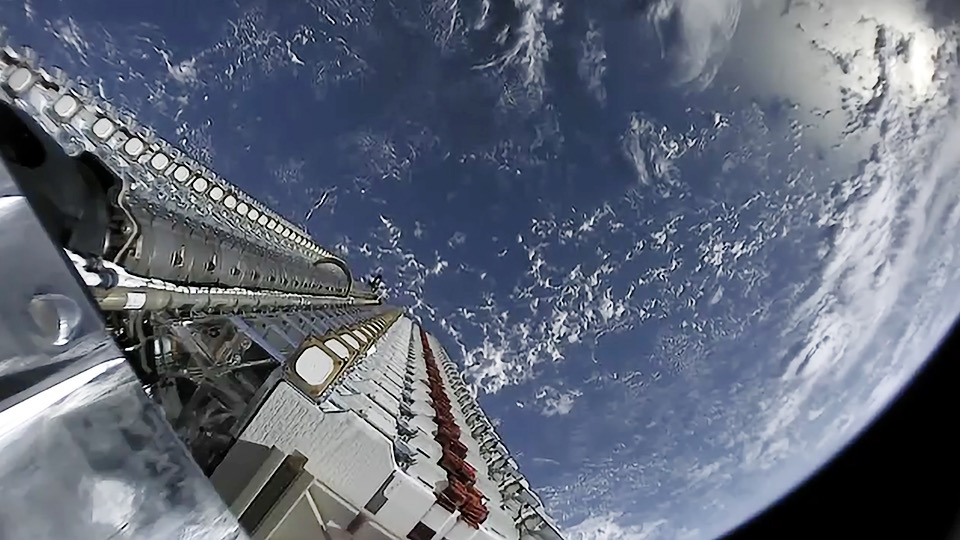
SpaceX is set to conduct its 280th orbital launch from Cape Canaveral with the deployment of 28 new Starlink satellites. Scheduled for liftoff from Launch Complex 40, this mission further extends SpaceX’s global internet service, promising enhanced connectivity worldwide. This continual expansion highlights the rapid evolution of SpaceX’s satellite network.
Read the full story: Spaceflight Now
Concerns Over NASA Starship Lunar Lander Timeline
NASA’s safety advisory board has raised alarms over the potential delays of SpaceX’s Starship lunar lander. Originally destined to support the Artemis 3 mission in 2027, the board speculates that operational setbacks could push the timeline further, urging stakeholders to address technical and procedural challenges swiftly.
Read the full story: Space News
🛰️Satellite Spotlight
- Satellite Name: SAPPHIRE (NO-45)
- NORAD ID: 26932
- Launch Date: September 30, 2001
- Mission: SAPPHIRE is designed for research purposes, equipped with experimental infrared horizon sensors, a voice synthesizer, and a digital camera.
- Orbit: Low Earth Orbit (LEO)
- Operator: US Naval Academy / STAN
- Fun Fact: SAPPHIRE was launched from KODAK on an Athena-1 vehicle and features a unique hexagonal prism shape that enhances its functionality for the mission.
Track this satellite in real-time on our web app: Track SAPPHIRE (NO-45)
🌌Space Weather
Next 24 Hours
-
Radio Blackouts Probability
- Minor: 40
- Major: 5
- Risk: None
-
Solar Radiation
- Probability: 5
- Risk: None
-
Geomagnetic Storming
- Scale: 0
- Impact: none
- Activity: Low
-
Impact Summary
- Next 24 hours: No risk of radio blackouts or solar radiation storms. A G1 (Minor) geomagnetic storm is likely on 22 Sep due to negative polarity coronal hole high-speed stream (CH HSS) effects. No significant active region activity is expected to produce radiation storms, maintaining a mainly quiet environment.
Long Term Forecast
- Impact Summary
- From 15 September to 11 October 2025, solar activity will remain low with the possibility of isolated M-class flares. Geosynchronous orbit will not experience proton events. An increase in electrons is expected due to recurring CH HSS activities on specific dates, indicating potential elevated risk for satellite operations. Geomagnetic activities forecasted include G2 (Moderate) conditions on 15 Sep and G1 (Minor) conditions on several dates, necessitating monitoring for satellite communication disruptions and drag on low Earth orbit (LEO) satellites.
🚀 Upcoming Space Launches
September 21
- SpaceX Falcon 9 Block 5:
- Starlink Group 10-27 from Cape Canaveral Space Launch Complex 40 (09:20 UTC)
- A batch of 28 satellites for the Starlink mega-constellation, SpaceX’s project for space-based Internet communication.
September 22
-
SpaceX Falcon 9 Block 5:
- NROL-48 from Vandenberg Space Force Base Space Launch Complex 4E (17:23 UTC)
- Eleventh batch of reconnaissance satellites for the National Reconnaissance Office, providing imaging and other reconnaissance capabilities.
-
Rocket Lab HASTE:
- JENNA from Wallops Flight Facility Rocket Lab Launch Complex 2 (23:45 UTC)
- Sub-orbital launch under Rocket Lab’s Hypersonic Accelerator Suborbital Test Electron (HASTE) program.
September 23
-
China Rocket Co. Ltd. Smart Dragon 3:
- Unknown Payload from Oriental Spaceport mobile launch ship (08:10 UTC)
- Details TBD.
-
SpaceX Falcon 9 Block 5:
- IMAP & others from Kennedy Space Center Launch Complex 39A (11:32 UTC)
- A NASA mission to study interactions between solar wind and the local interstellar medium with additional satellites for space weather and geocorona observation.
September 25
-
SpaceX Falcon 9 Block 5:
- Starlink Group 10-15 from Cape Canaveral Space Launch Complex 40 (08:36 UTC)
- A batch of 28 satellites for the Starlink mega-constellation, SpaceX’s project for space-based Internet communication.
-
United Launch Alliance Atlas V 551:
- Project Kuiper (KA-03) from Cape Canaveral Space Launch Complex 41 (12:09 UTC)
- Launch of satellites for Amazon’s Project Kuiper, a mega constellation offering broadband internet access.
September 26
-
SpaceX Falcon 9 Block 5:
- Starlink Group 17-11 from Vandenberg Space Force Base Space Launch Complex 4E (01:57 UTC)
- A batch of 24 satellites for the Starlink mega-constellation, SpaceX’s project for space-based Internet communication.
-
China Aerospace Science and Technology Corporation Long March 2D:
- Unknown Payload from Jiuquan Satellite Launch Center Launch Area 4 (19:15 UTC)
- Details TBD.
September 28
- SpaceX Falcon 9 Block 5:
- Starlink Group 11-20 from Vandenberg Space Force Base Space Launch Complex 4E (23:32 UTC)
- A batch of satellites for the Starlink mega-constellation, SpaceX’s project for space-based Internet communication.
Note: Launch dates and times are subject to change due to technical or weather considerations.

Maurice Stellarski


