· space brief · 4 min read
Space Brief 22 Sep 2025
Today's edition highlights the operational deployment of HawkEye 360's Cluster 12, Shandong's record satellite launch, Planet Labs' latest imaging achievements, SpaceX's Starlink launches, and more.

📰Top Stories
HawkEye 360 Boosts Signals Intelligence with Cluster 12
HawkEye 360 Inc. has successfully launched its latest trio of satellites, known as Cluster 12, which is now fully operational. These satellites, launched aboard a Rocket Lab Electron rocket in June, have been integrated into HawkEye’s satellite network to enhance their signals intelligence capabilities for global customers. This marks a significant expansion of their constellation. Read the full story
Shandong Sets Record with Launch of 115 Spacecraft
Shandong province in China continues to expand its influence in the commercial space sector with the deployment of 115 spacecraft from an offshore platform. This recent launch of the Smart Dragon-3 Y7 marks Shandong’s second such mission in a month, underscoring its emerging role as a hub for satellite deployment and manufacturing. Read the full story
Planet Labs Pelican-3 Captures First Light
Planet Labs has captured its first light image from the Pelican-3 satellite, featuring the city of Turin, Italy. The satellite, part of a constellation expansion, was launched on the SpaceX Falcon 9 mission in August and is currently in its calibration phase before full operations begin. Read the full story
SpaceX’s Starlink Network Grows with Latest Launch
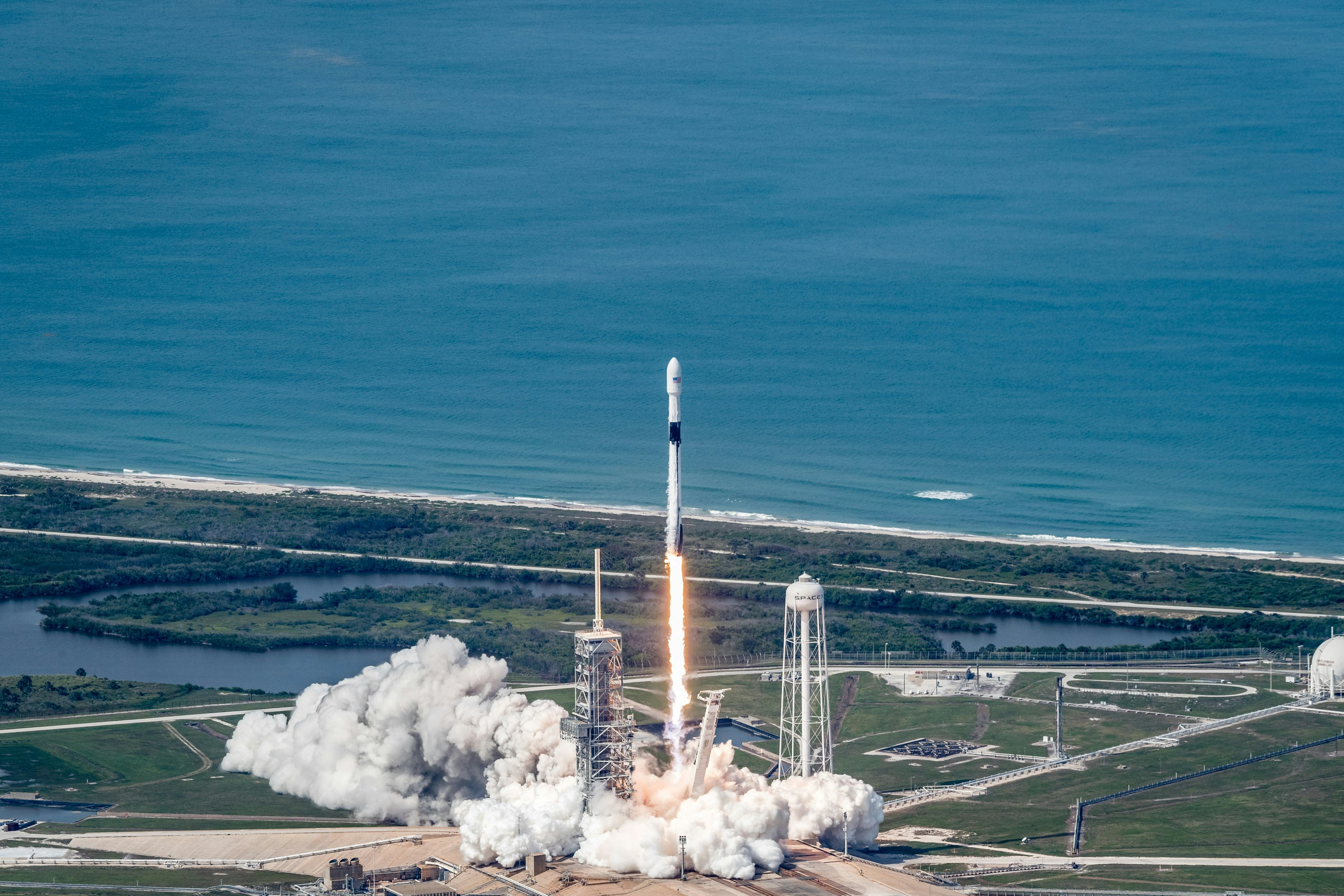
SpaceX continues its prolific launch schedule with its 119th Falcon 9 mission this year, deploying 28 new Starlink internet satellites from Florida’s Space Coast. This marks SpaceX’s 280th orbital launch and reinforces their expanding internet constellation. Read the full story - Video
SpaceX Delivers Starlink Satellites in Sunrise Launch
The recent Starlink 10-27 mission saw a successful lift-off from Cape Canaveral, deploying 28 Starlink satellites into orbit. The launch occurred at 6:53 a.m. EDT, enhancing the global coverage of SpaceX’s satellite internet service. Read the full story
Lockheed’s Skunk Works Unveils Vectis Stealth Drone
Lockheed Martin’s Skunk Works division has introduced the Vectis stealth drone, with a first flight anticipated in 2027. While designed independently, it may become part of the US Air Force’s Collaborative Combat Aircraft program, highlighting its potential military applications. Read the full story
🛰️Satellite Spotlight
- Satellite Name: PICO-01D007
- NORAD ID: 58690
- Launch Date: November 11, 2023
- Mission: This CubeSat is designed for Internet of Things (IoT) communication, facilitating connectivity for various applications.
- Orbit: Low Earth Orbit (LEO)
- Operator: APOGEO
- Fun Fact: PICO-01D007 is equipped with an advanced hyperspectral imager, enhancing its capability for specific data collection beyond basic communication.
Track this satellite in real-time on our web app: Track PICO-01D007
🌌Space Weather
Next 24 Hours
-
Radio Blackouts Probability
- Minor: 40
- Major: 5
- Risk: None
-
Solar Radiation
- Probability: 5
- Risk: None
-
Geomagnetic Storming
- Scale: 1
- Impact: minor
- Activity: Moderate
-
Impact Summary
- Next 24 hours: No risk of radio blackouts, and no risk of solar radiation storms.
- Moderate geomagnetic activity with a minor geomagnetic storm (G1) expected, potentially impacting satellite operations.
- Geomagnetic outlook indicates a chance for R1-R2 (Minor to Moderate) radio blackouts due to active region flares.
Long Term Forecast
- Impact Summary
- From 22 September to 18 October, solar activity is anticipated to remain low, with isolated M-class flares possible.
- No proton events expected at geosynchronous orbit, but high electron flux is forecasted on select dates.
- Geomagnetic activity likely at G1 (Minor) storm levels on 22 September, with unsettled to active conditions expected intermittently through the outlook period.
- Operators should prepare for potential impacts to satellite communications and geomagnetic effects on their systems during active periods.
🚀Upcoming Space Launches
September 22
-
SpaceX Falcon 9:
- NROL-48 from Vandenberg Space Force Base, California, USA (17:23 UTC)
Eleventh batch of satellites for a reconnaissance satellite constellation built by SpaceX and Northrop Grumman for the National Reconnaissance Office to provide imaging and other reconnaissance capabilities.
- NROL-48 from Vandenberg Space Force Base, California, USA (17:23 UTC)
-
Rocket Lab:
- JENNA from Wallops Flight Facility, Virginia, USA (23:45 UTC)
Sub-orbital launch under Rocket Lab’s Hypersonic Accelerator Suborbital Test Electron (HASTE) program.
- JENNA from Wallops Flight Facility, Virginia, USA (23:45 UTC)
September 23
-
China Rocket Co. Ltd.:
- Unknown Payload from Sea Launch (08:10 UTC)
Details TBD.
- Unknown Payload from Sea Launch (08:10 UTC)
-
SpaceX Falcon 9:
- IMAP & others from Kennedy Space Center, Florida, USA (11:32 UTC)
IMAP (Interstellar Mapping and Acceleration Probe) is a NASA mission to study interactions between solar wind and the local interstellar medium. The launch also includes the space weather satellite SWFO-L1 for NOAA and the GLIDE mission.
- IMAP & others from Kennedy Space Center, Florida, USA (11:32 UTC)
September 25
-
SpaceX Falcon 9:
- Starlink Group 10-15 from Cape Canaveral Space Force Station, Florida, USA (08:36 UTC)
A batch of 28 satellites for the Starlink mega-constellation - SpaceX’s project for space-based Internet communication system.
- Starlink Group 10-15 from Cape Canaveral Space Force Station, Florida, USA (08:36 UTC)
-
United Launch Alliance Atlas V 551:
- Project Kuiper (KA-03) from Cape Canaveral Space Force Station, Florida, USA (12:09 UTC)
Project Kuiper is a mega constellation of satellites in Low Earth Orbit managed by Kuiper Systems LLC, a subsidiary of Amazon, to offer broadband internet access.
- Project Kuiper (KA-03) from Cape Canaveral Space Force Station, Florida, USA (12:09 UTC)
September 26
-
SpaceX Falcon 9:
- Starlink Group 17-11 from Vandenberg Space Force Base, California, USA (01:57 UTC)
A batch of 24 satellites for the Starlink mega-constellation - SpaceX’s project for space-based Internet communication system.
- Starlink Group 17-11 from Vandenberg Space Force Base, California, USA (01:57 UTC)
-
China Aerospace Science and Technology Corporation Long March 2D:
- Unknown Payload from Jiuquan Satellite Launch Center, People’s Republic of China (19:15 UTC)
Details TBD.
- Unknown Payload from Jiuquan Satellite Launch Center, People’s Republic of China (19:15 UTC)
September 28
- SpaceX Falcon 9:
- Starlink Group 10-59 from Cape Canaveral Space Force Station, Florida, USA (07:30 UTC)
A batch of satellites for the Starlink mega-constellation - SpaceX’s project for space-based Internet communication system.
- Starlink Group 10-59 from Cape Canaveral Space Force Station, Florida, USA (07:30 UTC)
Note: Launch dates and times are subject to change due to technical or weather considerations.

Maurice Stellarski