· space brief · 4 min read
Space Brief 5 Oct 2025
Today's brief covers significant advancements in national security space launches, ongoing rocket developments, and critical updates from the space industry.
📰Top Stories
SpaceX Secures Major National Security Launches
SpaceX has landed a significant share of the National Security Space Launch (NSSL) contracts for fiscal year 2026, with the U.S. Space Force awarding the company five out of seven missions. This development highlights SpaceX’s growing dominance in the defense sector, with United Launch Alliance receiving the remaining two missions. The launches are crucial for continuing to enhance U.S. national security capabilities in space.
Read the full story: SpaceNews
Four Falcon Heavy Rockets for National Defense
In a significant announcement, SpaceX has been tasked with launching four Falcon Heavy rockets as part of the U.S. Space Force’s recent national security missions awards. This decision underscores SpaceX’s critical role in U.S. defense infrastructure, tasked with deploying sensitive payloads supporting national protection efforts.
Read the full story: SpaceFlight Now
Gilmour Space Gears Up for Return to Launch
Despite a brief first orbital launch attempt, Gilmour Space Technologies is planning a comeback next year. The Australian company remains optimistic, emphasizing that the initial attempt provided valuable data to inform their future launches, moving forward with the Eris rocket.
Read the full story: SpaceNews
Rocket Lab’s Neutron Development Nears Milestone
Rocket Lab CEO Peter Beck discussed the progress of Neutron, the company’s medium-lift rocket project. With the maiden flight anticipated soon, Rocket Lab is focusing on developing this versatile rocket to compete in the bustling commercial launch market.
Read the full story: NASASpaceFlight.com
Podcast Highlights NASA Shutdown Concerns
Episode 180 of “This Week In Space” Podcast dives into the impacts of NASA’s temporary shutdown. Rod Pyle and Tariq Malik explore critical headlines, including issues surrounding the dismantling of the space shuttle Discovery, sparking debate on space heritage preservation.
Read the full story: Space.com
🛰️Satellite Spotlight
- Satellite Name: COSMOS 1946 [GLONASS]
- NORAD ID: 19163
- Launch Date: May 21, 1988
- Mission: Navigation satellite as part of the GLONASS system, which is Russia’s equivalent to GPS.
- Orbit: Medium Earth Orbit (MEO)
- Operator: Unknown
- Fun Fact: COSMOS 1946 was part of the Uragan navigation system and played a crucial role in enhancing satellite-based positioning capabilities for military and civilian uses.
Track this satellite in real-time on our web app: Track COSMOS 1946 [GLONASS]
🌌Space Weather
Next 24 Hours
-
Radio Blackouts Probability
- Minor: 60
- Major: 15
- Risk: None
-
Solar Radiation
- Probability: 10
- Risk: None
-
Geomagnetic Storming
- Scale: 0
- Impact: none
- Activity: Low
-
Impact Summary
- Next 24 hours: No risk of radio blackouts or solar radiation storms. Geomagnetic outlook suggests periods of minor geomagnetic storms due to coronal hole high-speed stream influences and slow-moving coronal mass ejections (CMEs) arriving from the Sun.
Long Term Forecast
- Impact Summary
- Forecast from 29 September to 25 October indicates low solar activity with a chance for isolated M-class flares. No proton events are expected at geosynchronous orbit. High levels of electron flux are expected on specific days, with periods of unsettled to active geomagnetic conditions influenced by coronal hole high-speed streams. Generally quiet conditions will prevail on most other days.
🚀 Upcoming Space Launches
October 7
- SpaceX Falcon 9 Block 5:
- Starlink Group 10-59 from Cape Canaveral SFS, FL, USA (04:10 UTC)
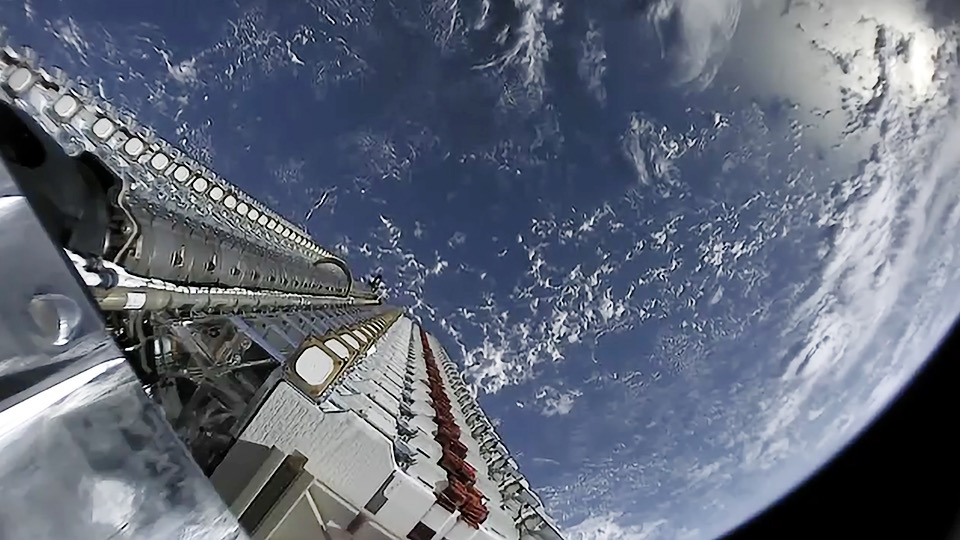
A batch of 28 satellites for the Starlink mega-constellation - SpaceX’s project for space-based Internet communication system.
- Starlink Group 10-59 from Cape Canaveral SFS, FL, USA (04:10 UTC)
October 8
- SpaceX Falcon 9 Block 5:
- Starlink Group 11-17 from Vandenberg SFB, CA, USA (01:00 UTC)
A batch of satellites for the Starlink mega-constellation - SpaceX’s project for space-based Internet communication system.
- Starlink Group 11-17 from Vandenberg SFB, CA, USA (01:00 UTC)
- Blue Origin New Shepard:
- NS-36 from Corn Ranch, Van Horn, TX, USA (12:30 UTC)
NS-36 is the 15th crewed flight for the New Shepard program and the 36th in the New Shepard program’s history.
- NS-36 from Corn Ranch, Van Horn, TX, USA (12:30 UTC)
October 10
- SpaceX Falcon 9 Block 5:
- Project Kuiper (KF-03) from Cape Canaveral SFS, FL, USA (01:34 UTC)
Third of a three launches contract for Amazon’s Kuiper low Earth orbit satellite internet constellation, with 24 satellites on board.
- Project Kuiper (KF-03) from Cape Canaveral SFS, FL, USA (01:34 UTC)
- Long March 8A:
- Unknown Payload from Wenchang Space Launch Site, People’s Republic of China (03:11 UTC)
October 12
- SpaceX Falcon 9 Block 5:
- Starlink Group 10-52 from Cape Canaveral SFS, FL, USA (08:11 UTC)
A batch of satellites for the Starlink mega-constellation - SpaceX’s project for space-based Internet communication system.
- Starlink Group 10-52 from Cape Canaveral SFS, FL, USA (08:11 UTC)
- SpaceX Falcon 9 Block 5:
- Starlink Group 11-19 from Vandenberg SFB, CA, USA (19:59 UTC)
A batch of satellites for the Starlink mega-constellation - SpaceX’s project for space-based Internet communication system.
- Starlink Group 11-19 from Vandenberg SFB, CA, USA (19:59 UTC)
October 13
- SpaceX Starship:
- Flight 11 from SpaceX Starbase, TX, USA (23:15 UTC)
11th test flight of the two-stage Starship launch vehicle.
- Flight 11 from SpaceX Starbase, TX, USA (23:15 UTC)
October 14
- SpaceX Falcon 9 Block 5:
- SDA Tranche 1 Transport Layer C from Vandenberg SFB, CA, USA (23:11 UTC)
Tranche 1 Transport Layer C is one of six missions by the United States Space Force Space Development Agency (SDA) for the Proliferated Warfighter Space Architecture (PWSA) Tranche 1 Transport Layer constellation, which will provide assured, resilient, low-latency military data and connectivity worldwide to the full range of warfighter platforms from Low Earth Orbit satellites. This launch carries 21 satellites manufactured by Lockheed Martin.
- SDA Tranche 1 Transport Layer C from Vandenberg SFB, CA, USA (23:11 UTC)
October 15
- SpaceX Falcon 9 Block 5:
- Starlink Group 10-17 from Cape Canaveral SFS, FL, USA (16:21 UTC)
A batch of satellites for the Starlink mega-constellation - SpaceX’s project for space-based Internet communication system.
- Starlink Group 10-17 from Cape Canaveral SFS, FL, USA (16:21 UTC)
Note: Launch dates and times are subject to change due to technical or weather considerations.

Maurice Stellarski