


· space brief · 5 min read
Space Brief 20 Oct 2025
Today's Space Brief highlights Innospace's upcoming orbital launch, SpaceX's record-setting Starlink mission, China's Thousand Sails constellation, Atomic-6's new space armor, and developments in SpaceX's West Coast facilities.
📰Top Stories
Innospace Poised for Orbital Milestone
South Korean launch startup Innospace has received governmental approval for its first orbital launch attempt, potentially slated for the end of the month. This marks a pivotal moment for the company as it aims to establish a foothold in the competitive space launch industry. The mission will be closely watched, especially in satellite tracking circles, for its impact on regional satellite deployment capabilities.
Read the full story: SpaceNews
SpaceX Sets Rocket Reuse Record with Starlink Launch
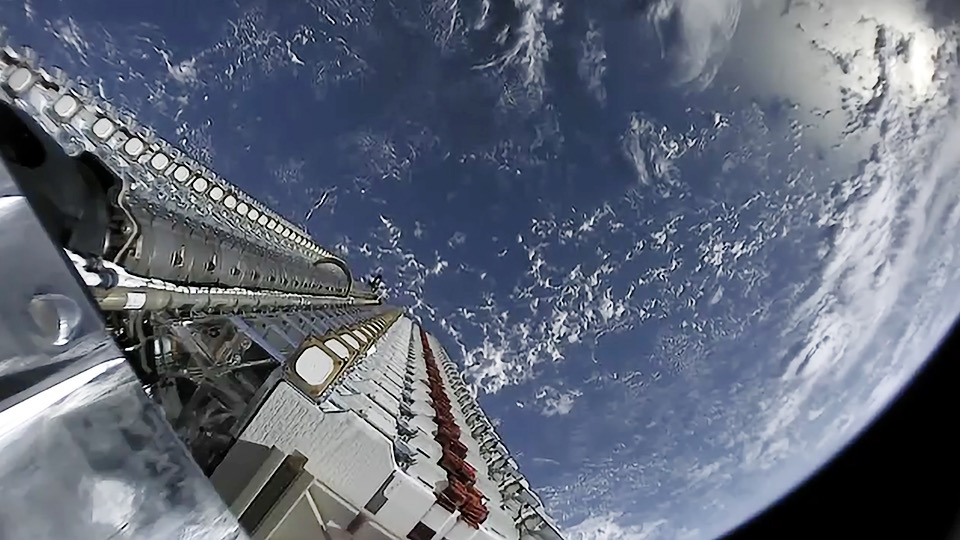
A SpaceX Falcon 9 rocket has set a new standard in rocket reusability by flying for the 31st time during a Starlink satellite launch. This mission underscores the company’s commitment to lowering costs and increasing launch frequency, paving the way for sustained growth in global satellite internet coverage.
Read the full story: Space.com
Atomic-6 Introduces Space Armor Tiles
Atomic-6 has launched an innovative product: Space Armor tiles, designed to protect spacecraft and astronauts from high-speed debris. These cutting-edge tiles provide RF-permeable protection without creating secondary debris, establishing a new benchmark in spacecraft shielding technology.
Read the full story: SpaceDaily
Starlink Expansion Continues with New Launch
SpaceX’s recent Starlink mission marks the 50th launch from the Vandenberg Space Force Base this year. The deployment of 28 more satellites reflects the company’s strategic expansion of its satellite internet service, enhancing global connectivity and data availability.
Read the full story: Spaceflight Now
China Resumes Thousand Sails Constellation Launches
China has recommenced launches for the Thousand Sails constellation, reflecting the country’s accelerating cadence of orbital missions. This launch from the Taiyuan Satellite Launch Center carries strategic and international payloads, emphasizing China’s ambitions in the global satellite market.
Read the full story: SpaceNews
SpaceX SLC-6 Redevelopment Gets Approval
SpaceX has received the green light for the redevelopment of its SLC-6 launch complex, a critical move aimed at expanding commercial spaceflight operations from the West Coast. This redevelopment is poised to enhance SpaceX’s launch capacity and flexibility, enabling more frequent and varied missions.
Read the full story: NASA Spaceflight
🛰️Satellite Spotlight
- Satellite Name: YAOGAN-43 01D
- NORAD ID: 60461
- Launch Date: August 16, 2024
- Mission: The precise mission details are classified, but YAOGAN satellites are primarily used for reconnaissance and military applications.
- Orbit: Low Earth Orbit (LEO)
- Operator: ZZB (China)
- Fun Fact: YAOGAN-43 01D is designed with solar arrays and batteries for power, optimizing its operational capabilities in its critical mission.
Track this satellite in real-time on our web app: Track YAOGAN-43 01D
🌌Space Weather
Next 24 Hours
-
Radio Blackouts Probability
- Minor: 25
- Major: 5
- Risk: None
-
Solar Radiation
- Probability: 1
- Risk: None
-
Geomagnetic Storming
- Scale: 0
- Impact: none
- Activity: Low
-
Impact Summary
- No risk of radio blackouts, providing stable communication for satellite operators and users.
- No risk of solar radiation storms, ensuring safety for astronauts and satellite electronics.
- Geomagnetic outlook shows no G1 (Minor) or greater geomagnetic storms expected, which is favorable for ground-based radars and telescopes.
- Overall, the activity is low with no significant transient or recurrent solar wind features forecast.
Long Term Forecast
- Moderate solar activity is expected from October 31 to November 15, impacting satellite operations positively.
- Low levels of solar activity are anticipated from October 20 to October 30, and November 14-15, minimizing potential communication disruptions.
- High levels of greater than 2 MeV electron flux at geosynchronous orbit anticipated from October 21-25 and October 29 to November 15, which could impact satellite drag and operations.
- Geomagnetic activity is likely to reach G1-G2 (Minor-Moderate) storm levels on October 28-30, November 8-9, and November 15, which could interfere with satellite communications and navigation systems.
- Isolated active periods expected on October 20, October 31, and November 7, possibly causing localized impacts on systems dependent on stable space weather conditions.
- Quiet to unsettled levels are likely on the remaining days, promoting stable operations for satellite users and operators.
🚀Upcoming Space Launches
October 22
- SpaceX Falcon 9 Block 5:
- Starlink Group 11-5 from Vandenberg Space Force Base, California, USA (14:00 UTC) A batch of 28 satellites for the Starlink mega-constellation - SpaceX’s project for space-based Internet communication system.
October 23
- SpaceX Falcon 9 Block 5:
- SpainSat NG II from Cape Canaveral Space Force Station, Florida, USA (01:30 UTC) Second of two new-generation satellites built by Airbus to provide secure communications to the Spanish government, its allies, and various international organizations.
October 25
-
SpaceX Falcon 9 Block 5:
- Starlink Group 11-12 from Vandenberg Space Force Base, California, USA (14:00 UTC) A batch of 28 satellites for the Starlink mega-constellation - SpaceX’s project for space-based Internet communication system.
-
SpaceX Falcon 9 Block 5:
- Starlink Group 10-21 from Cape Canaveral Space Force Station, Florida, USA (14:27 UTC) A batch of 29 satellites for the Starlink mega-constellation - SpaceX’s project for space-based Internet communication system.
October 27
- SpaceX Falcon 9 Block 5:
- Starlink Group 11-21 from Vandenberg Space Force Base, California, USA (21:12 UTC) A batch of 28 satellites for the Starlink mega-constellation - SpaceX’s project for space-based Internet communication system.
October 28
- SpaceX Falcon 9 Block 5:
- Starlink Group 10-37 from Cape Canaveral Space Force Station, Florida, USA (13:14 UTC) A batch of 29 satellites for the Starlink mega-constellation - SpaceX’s project for space-based Internet communication system.
October 31
-
United Launch Alliance Atlas V 551:
- ViaSat-3 F2 (ViaSat-3 EMEA) from Cape Canaveral Space Force Station, Florida, USA (00:00 UTC) The ViaSat-3 is a series of three Ka-band satellites expected to provide vastly superior capabilities in terms of service speed and flexibility for a satellite platform. Each ViaSat-3 class satellite is expected to deliver more than 1-Terabit per second of network capacity, and to leverage high levels of flexibility to dynamically direct capacity to where customers are located.
-
SpaceX Falcon 9 Block 5:
- Starlink Group 11-25 from Vandenberg Space Force Base, California, USA (00:00 UTC) A batch of satellites for the Starlink mega-constellation - SpaceX’s project for space-based Internet communication system.
Note: Launch dates and times are subject to change due to technical or weather considerations.

Maurice Stellarski


