


· space brief · 5 min read
Space Brief 17 Nov 2025
Today's highlights include key advancements for the Dream Chaser, SpaceX's record launches, Moon mission crowding concerns, and updates in European space policy.
📰Top Stories
Dream Chaser Completes Key Tests Ahead of First Flight
Sierra Space has achieved significant milestones in testing its Dream Chaser vehicle, positioning it for both civil and national security missions. The multipurpose spaceplane, known for its versatility in space transportation, aims to expand its role across various sectors, demonstrating its test-readiness and future potential in upcoming flights.
Read the full story: SpaceNews
Record Doubleheader: SpaceX Launches 2 Falcon 9 Rockets from Florida
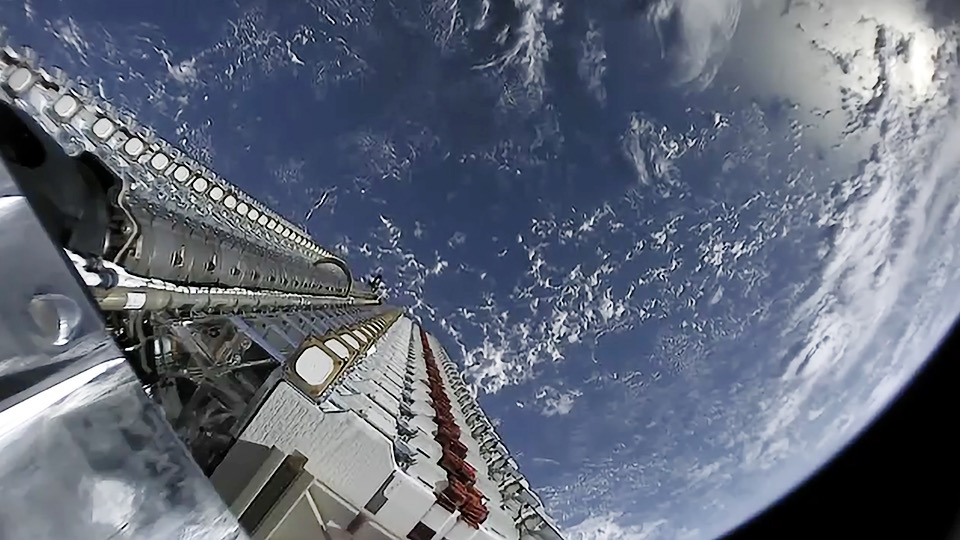
SpaceX achieved a remarkable feat by launching two Falcon 9 rockets within three and a half hours, deploying a total of 58 Starlink satellites. This accomplishment underscores SpaceX’s robust operational cadence, marking the 98th mission from Florida this year and setting a new benchmark for rapid successive launches.
Read the full story: SpaceDaily
With More Moon Missions on the Horizon, Avoiding Crowding and Collisions Will Be a Growing Challenge
As space agencies and private companies ramp up lunar missions, the risk of spatial crowding and potential collisions increases. This surge in activity calls for enhanced coordination and innovative strategies to avoid overlap and ensure safe, efficient lunar explorations.
Read the full story: Space.com
OHB Raises Concerns About Planned European Space Joint Venture
In the competitive landscape of European space ventures, OHB has expressed reservations about a collaborative endeavor among its rivals. This comes amidst increased European investment in space, highlighting the dynamic and sometimes contentious interaction between competition and cooperation in the sector.
Read the full story: SpaceNews
ESA’s Impact Featured in Key UK Space Policy Report
The European Space Agency’s contributions were prominently highlighted in a UK House of Lords report, emphasizing the strategic importance of ESA-UK cooperation. This report, part of a broader analysis of the UK’s space economy, suggests proactive measures to leverage mutual benefits and address industry challenges.
Read the full story: SpaceDaily
FAA Ends Commercial Launch Curfew
In a move likely to boost commercial space activities, the FAA has lifted curfews on launch timings, previously affected by airspace management issues during government shutdowns. This decision is poised to facilitate more flexible launch schedules and support the growing demands of the commercial space sector.
Read the full story: SpaceNews
🛰️Satellite Spotlight
- Satellite Name: YAOGAN-43 01H
- NORAD ID: 60465
- Launch Date: August 16, 2024
- Mission: Designed for reconnaissance and possibly Earth observation, this satellite plays a crucial role in supporting the strategic interests of its operator.
- Orbit: Low Earth Orbit (LEO)
- Operator: ZZB
- Fun Fact: The YAOGAN series of satellites are known for their advanced imaging capabilities, which are vital for both military and scientific applications.
Track this satellite in real-time on our web app: Track YAOGAN-43 01H
🌌Space Weather
Next 24 Hours
-
Radio Blackouts Probability
- Minor: 55
- Major: 15
- Risk: None
-
Solar Radiation
- Probability: 10
- Risk: None
-
Geomagnetic Storming
- Scale: 1
- Impact: minor
- Activity: Moderate
-
Impact Summary
- Next 24 hours: No risk of radio blackouts or solar radiation storms.
- Moderate geomagnetic activity is expected with minor geomagnetic storms likely due to a combination of a recent CME and a negative polarity coronal hole.
- A slight chance of S1 or greater solar radiation storms exists due to potential from Region 4274 as it rotates further around the Sun’s west limb.
- R1-R2 (Minor-Moderate) radio blackouts are likely, with a slight chance for R3 (Strong) blackouts due to flare potential from Region 4274.
Long Term Forecast
- Impact Summary
- From 17 November to 13 December, solar activity is likely to see R1 (Minor) levels and could increase to R1-R3 (Minor-Strong) levels during the end of November to early December.
- No proton events are expected at geosynchronous orbit, but high levels of electron flux are anticipated during specific periods influenced by coronal holes.
- Geomagnetic activity could range from quiet to G2 (Moderate) levels, with G1 conditions expected on 17 November and G2 levels likely on 26 November, 3 December, and 13 December.
- Unsettled to active conditions are anticipated on several days, primarily driven by coronal hole high-speed streams, while mostly quiet levels are expected on other specified days.
🚀Upcoming Space Launches
November 17
- SpaceX Falcon 9:
- Sentinel-6B from Vandenberg Space Force Base, California, USA (05:12 UTC) The Sentinel-6 mission, also known as Jason Continuity of Service (Jason-CS), continues the global sea surface height data record in partnership with NASA, NOAA, ESA, and EUMETSAT.
- Rocket Lab HASTE:
- VAN from Wallops Flight Facility, Virginia, USA (12:45 UTC) Sub-orbital launch under Rocket Lab’s Hypersonic Accelerator Suborbital Test Electron (HASTE) program.
November 18
- SpaceX Falcon 9:
- Starlink Group 6-94 from Cape Canaveral Space Force Station, Florida, USA (23:29 UTC) A batch of 29 satellites for the Starlink mega-constellation, SpaceX’s project for space-based Internet communication system.
November 19
- China Aerospace Long March 2C/YZ-1S:
- Unknown Payload from Jiuquan Satellite Launch Center, People’s Republic of China (03:52 UTC)
- China Aerospace Long March 8A:
- Unknown Payload from Wenchang Space Launch Site, People’s Republic of China (12:51 UTC)
- SpaceX Falcon 9:
- Transporter 15 (Dedicated SSO Rideshare) from Vandenberg Space Force Base, California, USA (18:18 UTC) Dedicated rideshare flight to a sun-synchronous orbit with numerous small satellites for commercial and government customers.
November 20
- SpaceX Falcon 9:
- Starlink Group 6-78 from Kennedy Space Center, Florida, USA (19:05 UTC) A batch of satellites for the Starlink mega-constellation, SpaceX’s project for space-based Internet communication system.
November 21
- China Aerospace Long March 3B/E:
- Unknown Payload from Xichang Satellite Launch Center, People’s Republic of China (10:47 UTC)
November 22
- Innospace HANBIT-Nano:
- Spaceward from Alcântara Space Center, Federative Republic of Brazil (18:00 UTC) Maiden orbital launch attempt for the South Korean startup Innospace, featuring multiple small satellites from Brazil and India.
- SpaceX Falcon 9:
- Starlink Group 6-79 from Cape Canaveral Space Force Station, Florida, USA (23:41 UTC) A batch of satellites for the Starlink mega-constellation, SpaceX’s project for space-based Internet communication system.
Note: Launch dates and times are subject to change due to technical or weather considerations.

Maurice Stellarski


