· space brief · 5 min read
Space Brief 19 Nov 2025
Today's Space Brief covers the latest developments in space debris detection, Ursa Major's defense push, and SpaceX's Starlink launch. Additionally, insights into microreactors for military bases, US Cyber Command updates, and gravitational wave discoveries are highlighted.

📰Top Stories
Advanced Radar for Micro-Debris Detection
With low Earth orbit (LEO) becoming increasingly congested, the space industry is focusing on technology to detect micro-debris to enable safer satellite operations. With over 10,000 active satellites and millions of smaller fragments, the potential for collisions is a growing concern. New advancements in radar are crucial for identifying and managing these threats to maintain a sustainable space environment.
Read the full story: SpaceNews
Ursa Major’s $100 Million Defense Pivot
Ursa Major has secured $100 million in new capital to enhance their defense offerings, focusing on liquid engines for hypersonic vehicles and solid rocket motors. This funding round supports their strategic shift towards defense contracts, capitalizing on the expanding market for military propulsion systems.
Read the full story: SpaceNews
SpaceX’s Starlink Nighttime Launch
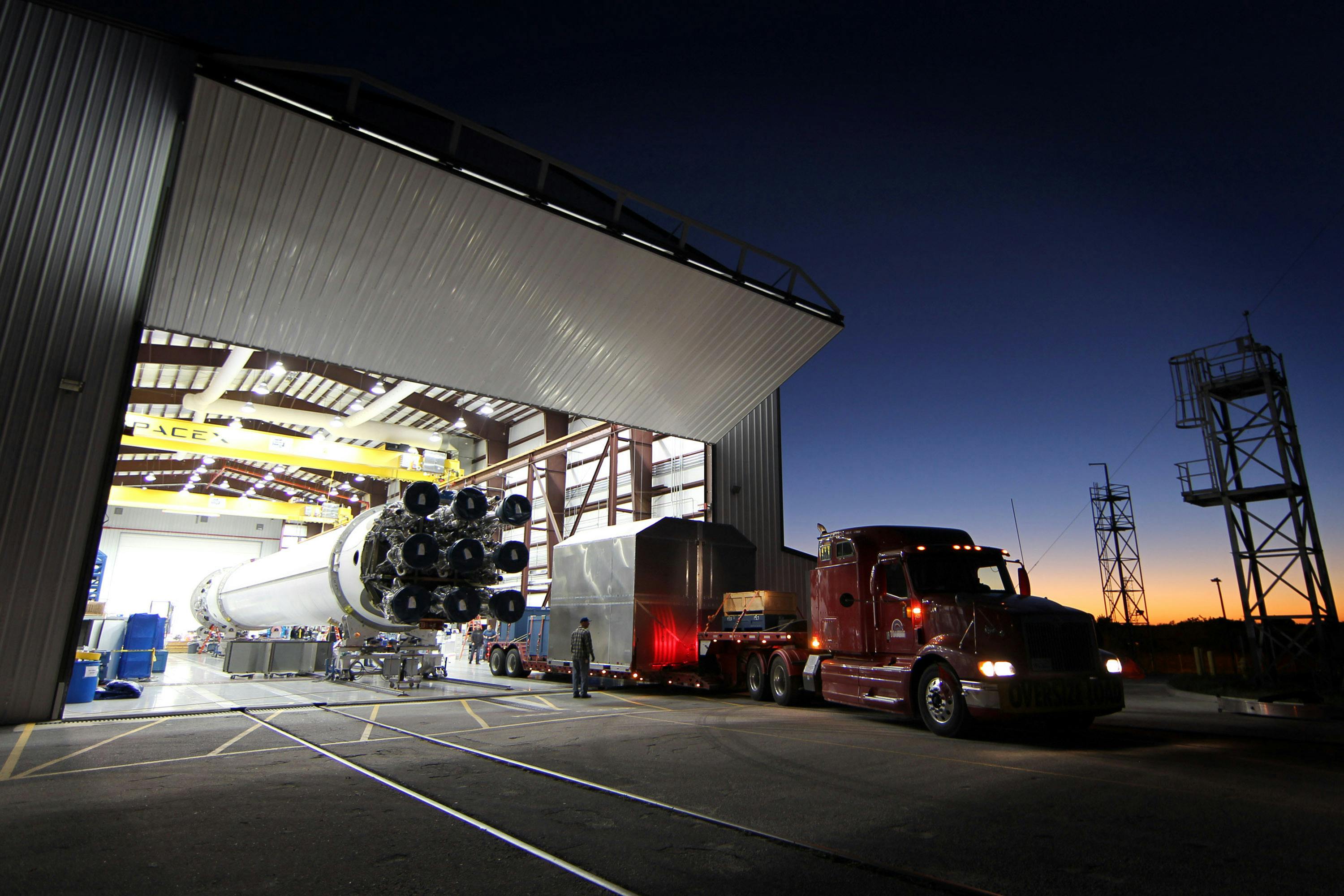
A SpaceX Falcon 9 rocket successfully launched another batch of Starlink satellites into orbit from Cape Canaveral. The mission is part of SpaceX’s ongoing efforts to expand its global internet service, with this nighttime launch adding to the growing constellation of Starlink satellites providing broadband connectivity across the world.
Read the full story: Space.com
Microreactors for Military Bases
The Department of Defense, through its Defense Innovation Unit, is seeking industry proposals for nuclear microreactors. These reactors are intended to supply power to domestic military bases, with the Army identifying initial sites for deployment. The Janus Program aims to enhance energy resilience and reduce dependence on external power sources.
Read the full story: Breaking Defense
US Cyber Command and Army Aviation Updates
This week’s update in the realm of military training and operations includes a focus on the US Cyber Command developments and advancements in the Army’s Flight School Next program. These efforts are paving the way for enhanced cyber capabilities and helicopter pilot training efficiencies.
Read the full story: Breaking Defense
Record-Breaking Gravitational Wave Campaign
The LIGO, Virgo, and KAGRA collaborations concluded their latest observation run, yielding an unprecedented 250 new gravitational wave detections. This two-year-long O4 campaign represents the most extensive cross-collaborative effort in gravitational wave astronomy to date, marking significant advances in our understanding of these cosmic phenomena.
Read the full story: SpaceDaily
🛰️Satellite Spotlight
- Satellite Name: COSMOS 1359
- NORAD ID: 13162
- Launch Date: May 6, 1982
- Mission: Military Communication
- Orbit: LEO (Low Earth Orbit)
- Operator: GUKOS
- Fun Fact: COSMOS 1359 was part of the Strela satellite system, designed specifically for secure military communication.
Track this satellite in real-time on our web app: Track COSMOS 1359
🌌Space Weather
Next 24 Hours
-
Radio Blackouts Probability
- Minor: 15
- Major: 1
- Risk: None
-
Solar Radiation
- Probability: 1
- Risk: None
-
Geomagnetic Storming
- Scale: 0
- Impact: none
- Activity: Low
-
Impact Summary
- Next 24 hours: No risk of radio blackouts.
- No risk of solar radiation storms.
- Geomagnetic outlook: No G1 (Minor) or greater geomagnetic storms are expected.
- No significant transient or recurrent solar wind features forecasted.
- Radiation outlook: No S1 (Minor) or greater solar radiation storms are anticipated.
- Slight chance for R1-2 (Minor-Moderate) radio blackouts may persist through 21 Nov due to isolated M-class flare activity from AR 4284.
Long Term Forecast
- Impact Summary
- Forecast for 17 November - 13 December 2025 indicates solar activity likely at R1 (Minor) levels on 12-27 Nov and 13 Dec, with increases to R1-R3 (Minor-Strong) levels expected on 28-30 Nov and 01-12 Dec due to old Region 4274’s return.
- No proton events predicted at geosynchronous orbit.
- Greater than 2 MeV electron flux is expected to reach high levels over specific dates, influenced by coronal holes.
- Geomagnetic activity is expected to fluctuate from quiet to G2 (Moderate) storm levels.
- G1 (Minor) conditions likely on 17 Nov due to effects from a negative polarity coronal hole high-speed stream (CH HSS) and residual effects from a CME.
- G2 (Moderate) levels anticipated on 26 Nov, 03 Dec, and 13 Dec, also influenced by CH HSS.
- Unsettled to active conditions are likely on several dates due to CH HSS influence, while mostly quiet levels expected on select days.
🚀Upcoming Space Launches
November 20
- SpaceX Falcon 9 Block 5:
- Transporter 15 (Dedicated SSO Rideshare) from Vandenberg Space Force Base, CA, USA (18:18 UTC) Dedicated rideshare flight to a sun-synchronous orbit with dozens of small microsatellites and nanosatellites for commercial and government customers.
November 21
-
SpaceX Falcon 9 Block 5:
- Starlink Group 6-78 from Kennedy Space Center, FL, USA (03:01 UTC) A batch of 29 satellites for the Starlink mega-constellation - SpaceX’s project for space-based Internet communication system.
-
China Aerospace Science and Technology Corporation Long March 3B/E:
- Unknown Payload from Xichang Satellite Launch Center, People’s Republic of China (10:47 UTC) Details TBD.
November 22
-
SpaceX Falcon 9 Block 5:
- Starlink Group 6-79 from Cape Canaveral SFS, FL, USA (06:59 UTC) A batch of 29 satellites for the Starlink mega-constellation - SpaceX’s project for space-based Internet communication system.
-
Innospace HANBIT-Nano:
- Spaceward from Alcântara Space Center, Federative Republic of Brazil (18:00 UTC) Maiden orbital launch attempt for the South Korean startup Innospace and its HANBIT-Nano small launch vehicle. The mission includes five small satellites from various institutions and companies.
-
SpaceX Falcon 9 Block 5:
- Starlink Group 11-15 from Vandenberg Space Force Base, CA, USA (21:44 UTC) A batch of satellites for the Starlink mega-constellation - SpaceX’s project for space-based Internet communication system.
November 23
- SpaceX Falcon 9 Block 5:
- Starlink Group 11-30 from Vandenberg Space Force Base, CA, USA (08:00 UTC) A batch of 28 satellites for the Starlink mega-constellation - SpaceX’s project for space-based Internet communication system.
Note: Launch dates and times are subject to change due to technical or weather considerations.

Maurice Stellarski