


· space brief · 5 min read
Space Brief 25 Dec 2025
Today's highlights include the Pentagon's report on China's military buildup, Innospace's upcoming launch plans, Starlink's rapid growth, China's significant space strides in 2025, and India's successful deployment of BlueBird 6.
📰Top Stories
Pentagon Highlights Concerns Over China’s Military Buildup
A recent Pentagon report indicates that the United States faces growing vulnerabilities due to China’s expanding military capabilities. The assessment reveals that in 2024, China tested critical components for potential invasion operations targeting Taiwan, which included exercises to strike sea and land targets and disrupt U.S. forces in the Pacific. These developments underline the strategic importance of monitoring satellite movements and military activities in the region.
Read the full story: Breaking Defense
Innospace Eyes 2026 for Second Launch Following Setback
South Korea’s Innospace has announced plans to attempt a second launch of its Hanbit-Nano rocket after its debut flight failed shortly after liftoff on December 22. This effort is scheduled for the first half of 2026 and marks a significant step toward establishing South Korea as a competitive player in the small rocket market.
Read the full story: SpaceNews
Starlink Surges Past 9 Million Users
Starlink has rapidly eclipsed 9 million active users, marking another milestone for SpaceX’s satellite internet service only weeks after reaching 8 million. This growth trajectory, driven by adding over 20,000 new users daily, showcases the expanding global demand for high-speed satellite internet services.
Read the full story: TESLARATI
China’s Record Year in Space: Launches, Reusable Rockets, and More
In 2025, China achieved significant milestones in its space program, including setting records for the number of launches, advancements in reusable rocket technology, and overcoming a human spaceflight emergency. These accomplishments, alongside progress in lunar hardware tests, highlight China’s growing influence in the international space race.
Read the full story: Space.com
India Successfully Launches AST SpaceMobile’s BlueBird 6
An Indian LVM3 rocket has successfully deployed AST SpaceMobile’s BlueBird 6 satellite, part of a series featuring the largest commercial communications antenna ever put in low Earth orbit (LEO). This development marks a pivotal moment in the rollout of next-generation direct-to-device communication technologies.
Read the full story: SpaceNews
🛰️Satellite Spotlight
- Satellite Name: OPS 4467 A
- NORAD ID: 00812
- Launch Date: June 18, 1964
- Mission: This satellite was launched for meteorology, serving to collect vital weather data.
- Orbit: Low Earth Orbit (LEO)
- Operator: National Reconnaissance Office / Systems and Analytics Framework Support Program (NRO/SAFSP)
- Fun Fact: Originally part of a classified program, OPS 4467 A was one of the early examples of using satellites for meteorological observations, paving the way for modern weather satellites.
Track this satellite in real-time on our web app: Track OPS 4467 A
🌌Space Weather
Next 24 Hours
-
Radio Blackouts Probability
- Minor: 30
- Major: 5
- Risk: None
-
Solar Radiation
- Probability: 1
- Risk: None
-
Geomagnetic Storming
- Scale: 0
- Impact: none
- Activity: Low
-
Impact Summary
- No risk of radio blackouts in the next 24 hours.
- No risk of solar radiation storms; conditions remain stable.
- Geomagnetic outlook indicates no G1 (Minor) or greater geomagnetic storms expected, ensuring smooth satellite operations.
- Radiative environment remains safe, with no significant solar activity for radiation storm production expected.
- Slightly increasing chance for R1-R2 (Minor-Moderate) radio blackouts over the next three days could prompt caution for communication operations.
Long Term Forecast
- Impact Summary
- Solar activity is projected to remain at low to moderate levels from December 22 to January 17, 2026.
- No proton events expected at geosynchronous orbit, ensuring a stable environment for satellite systems.
- Higher electron flux levels anticipated on specific days (25-29 Dec, 1-6 Jan, and 14-17 Jan), which could influence satellite performance.
- Geomagnetic activity may reach G2 (Moderate) storm levels on December 30, with G1 (Minor) levels on selected days, which might affect satellite communications and navigation systems.
- Regular monitoring recommended during active periods to anticipate impacts on ground-based radars and telecommunications.
Upcoming Space Launches
December 25
-
Russian Federal Space Agency (ROSCOSMOS) Soyuz 2.1a:
- Obzor-R No.1 from Plesetsk Cosmodrome, Russian Federation (14:00 UTC) The Russian Obzor-R is an X-band radar earth observation satellite designed for imaging with a ground resolution of 500 m.
-
China Aerospace Science and Technology Corporation Long March 8A:
- Unknown Payload from Wenchang Space Launch Site, People’s Republic of China (23:18 UTC) Details TBD.
December 26
-
China Rocket Co. Ltd. Smart Dragon 3:
- Unknown Payload from Haiyang Oriental Spaceport (06:26 UTC) Possibly an Earth observation satellite for Pakistan’s SUPARCO.
-
China Aerospace Science and Technology Corporation Long March 3B/E:
- Fengyun-4C from Xichang Satellite Launch Center, People’s Republic of China (16:00 UTC) This mission involves China’s geostationary meteorological satellite program, Fengyun-4.
December 28
-
SpaceX Falcon 9 Block 5:
- CSG-3 from Vandenberg SFB, CA, USA (02:08 UTC) An Earth observation satellite for the Italian Space Agency, using synthetic aperture radars operating in the X-band.
-
Russian Federal Space Agency (ROSCOSMOS) Soyuz 2.1b/Fregat-M:
- AIST-2T 01 & 02 from Vostochny Cosmodrome, Siberia, Russian Federation (13:18 UTC) A pair of Russian optical earth observation satellites, launching with 50 small satellite ride-share payloads, including 3 from Iran.
December 30
- China Aerospace Science and Technology Corporation Long March 7A (To Be Confirmed):
- Unknown Payload from Wenchang Space Launch Site, People’s Republic of China (21:00 UTC) Details TBD.
December 31
-
Galactic Energy Ceres-2:
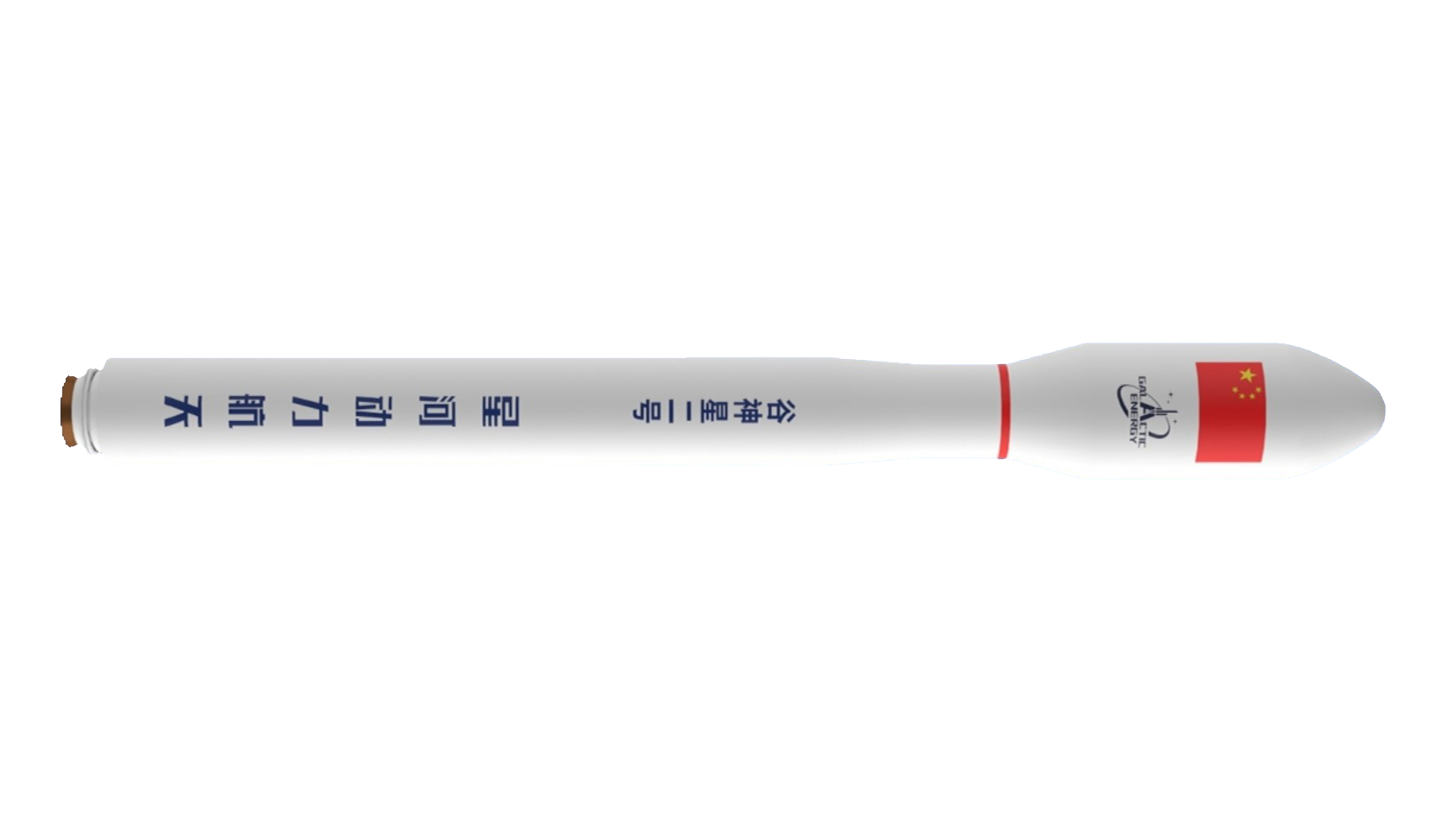
- Demo Flight from Jiuquan Satellite Launch Center, People’s Republic of China (00:00 UTC) First test launch of Galactic Energy’s Ceres-2 rocket.
-
CAS Space Kinetica 2:
- Demo Flight from Jiuquan Satellite Launch Center, People’s Republic of China (00:00 UTC) First test launch of CAS Space’s Kinetica-2 rocket.
-
Space Pioneer Tianlong-3:
- Demo Flight from Jiuquan Satellite Launch Center, People’s Republic of China (00:00 UTC) First test launch of Space Pioneer’s Tianlong-3 rocket.
Note: Launch dates and times are subject to change due to technical or weather considerations.

Maurice Stellarski


