· space brief · 5 min read
China Files Plans for 200,000-Satellite Megaconstellation With ITU | KeepTrack Space Brief
China files ITU paperwork for megaconstellations totaling nearly 200,000 satellites. SpaceX launches first rideshare mission of 2026 from Vandenberg. NASA plans ISS crew medical evacuation.

📰Top Stories
China Eyes Global Dominance with Megaconstellation Plans
China has filed plans with the International Telecommunication Union to deploy nearly 200,000 satellites as part of its ambitious megaconstellation projects. These filings suggest China is setting the stage for extensive non-geostationary satellite networks, potentially boosting its space industry while posing challenges in terms of orbital congestion and space traffic management. The move could significantly redefine satellite tracking dynamics globally.
Read the full story: SpaceNews
Kepler’s Innovative Partnership with OroraTech
OroraTech and Kepler have announced a multi-year partnership focused on deploying thermal sensors in Kepler’s optical communications constellation. The first batch of SAFIRE Gen4 sensors launched on January 11 aboard a Falcon 9, marking the beginning of a groundbreaking initiative aimed at enhancing Earth monitoring capabilities through advanced thermal sensing technologies.
Read the full story: SpaceNews
SpaceX Twilight Rideshare Mission Liftoff
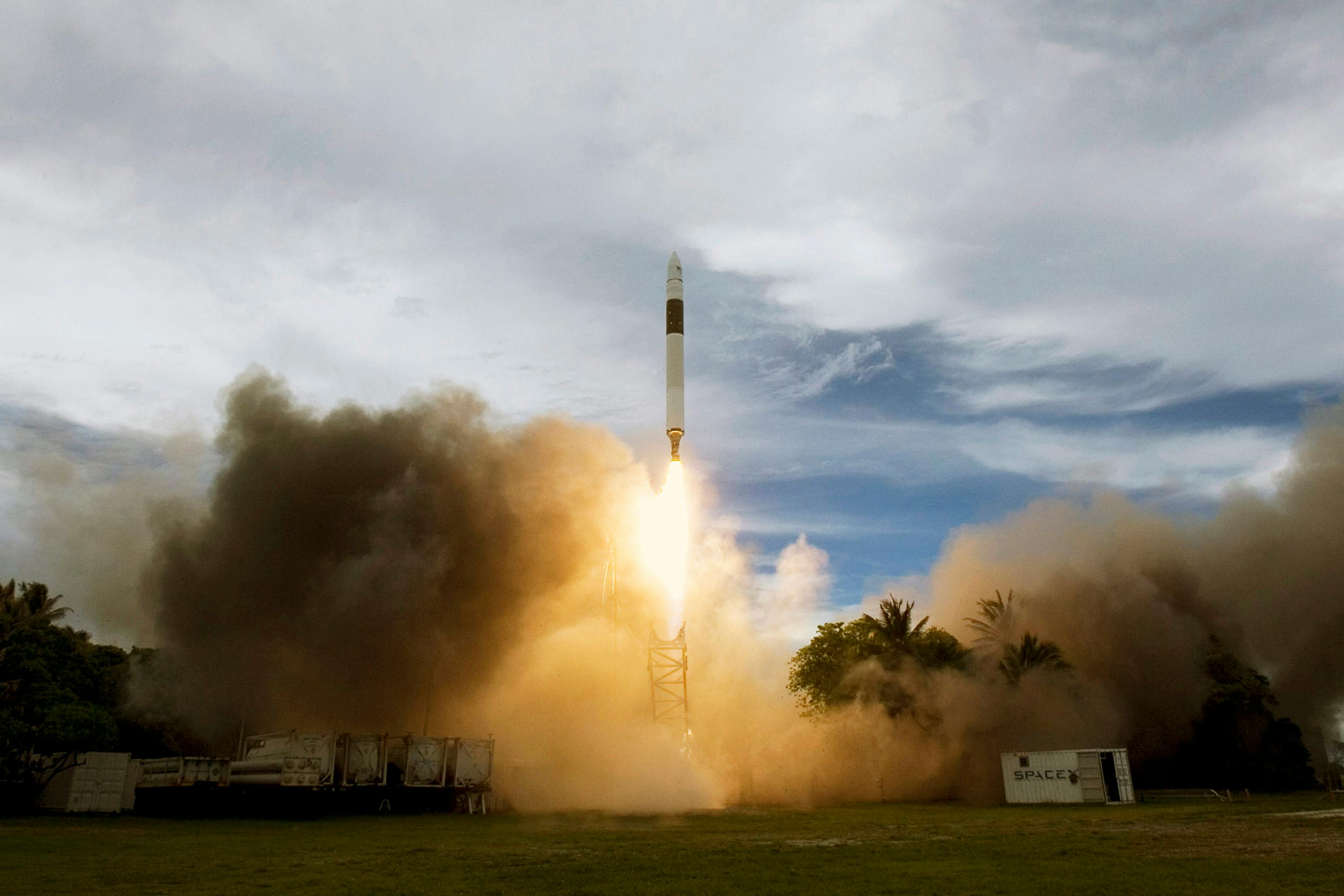
SpaceX launched its first rideshare mission of 2026 from Vandenberg, a continuation of its unprecedented launch cadence. The mission, named ‘Twilight,’ successfully lifted multiple satellites into orbit, contributing to SpaceX’s expanding role in facilitating affordable access to space for varied commercial and scientific payloads.
Read the full story: NASASpaceFlight.com
NASA and Commercial Satellites Embark on SpaceX Rideshare
A SpaceX Falcon 9 launched a NASA astrophysics mission along with several commercial satellites. This mission exemplifies the diverse payload capabilities of the SpaceX rideshare model, drawing attention from both scientific and commercial partners interested in leveraging shared launches to reduce costs.
Read the full story: SpaceNews
Medical Concerns Prompt ISS Astronaut Evacuation
NASA is preparing for the early return of astronauts from the International Space Station due to medical reasons affecting a Crew-11 member. This decision underscores the importance of maintaining health and safety standards in the demanding environment of space.
Read the full story: Space.com
Oregon’s High Desert Welcomes Astronomy Enthusiasts
Amidst the breathtaking dark skies of Oregon’s high desert, the largest collection of public telescopes in the U.S. offers an exceptional opportunity for astronomical observation. This site is a must-visit for space enthusiasts and those eager to explore the universe from Earth’s vantage point.
Read the full story: Space.com
🛰️Satellite Spotlight
- Satellite Name: GSAT0216 (GALILEO 20)
- NORAD ID: 43056
- Launch Date: December 12, 2017
- Mission: The satellite is part of the Galileo navigation system, aimed at providing high-precision global positioning services.
- Orbit: Medium Earth Orbit (MEO)
- Operator: GSAEU (European Union Agency for the Space Programme)
- Fun Fact: GSAT0216 is one of the Galileo satellites designed to offer an alternative to GPS, improving accuracy for users worldwide.
Track this satellite in real-time on our web app: Track GSAT0216 (GALILEO 20)
🌌Space Weather
Next 24 Hours
-
Radio Blackouts Probability
- Minor: 15
- Major: 1
- Risk: None
-
Solar Radiation
- Probability: 1
- Risk: None
-
Geomagnetic Storming
- Scale: 0
- Impact: none
- Activity: Low
-
Impact Summary
- Next 24 hours: No risk of radio blackouts.
- No risk of solar radiation storms.
- Geomagnetic outlook indicates G1 (Minor) and G2 (Moderate) geomagnetic storms are likely on 12 Jan due to ongoing influence from a CME that left the Sun on 08 Jan.
- No significant active region activity for radiation storm production is forecasted.
Long Term Forecast
- Forecast of Solar and Geomagnetic Activity 12 January - 07 February 2026 indicates solar activity is likely to remain low.
- There is a chance for R1 (Minor) conditions and a slight chance for R2/R3 (Moderate/Strong) levels due to multiple active regions.
- No proton events are expected at geosynchronous orbit.
- High levels of greater than 2 MeV electron flux are likely during specified periods due to recurrent coronal holes.
- Geomagnetic activity may reach G1 (Minor) storm levels on 12 and 29 Jan, with unsettled to active conditions on several dates throughout the period.
- The remainder of the outlook is expected to be mostly quiet.
🚀 Upcoming Space Launches
January 12
- Indian Space Research Organization PSLV-DL:
- EOS-N1 and others from Satish Dhawan Space Centre, India (04:15 UTC) Small Earth observation satellite from NewSpace India Limited for an “Indian strategic user”, along with 18 other ride-share payloads.
- SpaceX Falcon 9 Block 5:
- Starlink Group 6-97 from Cape Canaveral SFS, FL, USA (17:42 UTC) A batch of 29 satellites for the Starlink mega-constellation - SpaceX’s project for space-based Internet communication system.
January 13
- China Aerospace Science and Technology Corporation Long March 8A:
- Unknown Payload from Wenchang Space Launch Site, People’s Republic of China (15:38 UTC) Details TBD.
January 14
- SpaceX Falcon 9 Block 5:
- Starlink Group 6-98 from Cape Canaveral SFS, FL, USA (18:01 UTC) Another batch of 29 satellites for the Starlink mega-constellation.
January 15
- China Aerospace Science and Technology Corporation Long March 3B/E:
- Unknown Payload from Xichang Satellite Launch Center, People’s Republic of China (16:00 UTC) Details TBD.
- Galactic Energy Ceres-1S:
- Unknown Payload from Haiyang Oriental Spaceport (19:30 UTC) Details TBD.
January 17
- Isar Aerospace Spectrum:
- Flight Two from Andøya Spaceport (00:00 UTC) Second test flight of the Isar Spectrum launch vehicle, carrying several cubesats as part of the European Space Agency’s “Boost!” program.
- Galactic Energy Ceres-2:
- Demo Flight from Jiuquan Satellite Launch Center, People’s Republic of China (03:00 UTC) First test launch of Galactic Energy’s Ceres-2 rocket.
- SpaceX Falcon 9 Block 5:
- NROL-105 from Vandenberg SFB, CA, USA (04:18 UTC) Twelfth batch of satellites for a reconnaissance satellite constellation for the National Reconnaissance Office to provide imaging and reconnaissance capabilities.
Note: Launch dates and times are subject to change due to technical or weather considerations.

Maurice Stellarski