· space brief · 4 min read
Seismic Networks Now Track Space Junk, Pentagon Faces Golden Dome Cost Challenges | KeepTrack Space Brief
Johns Hopkins researchers use seismic networks to track space debris in near real-time. Pentagon faces Golden Dome production scale challenges. SpaceX launches 25 Starlink sats in seventh 2026 mission.

📰Top Stories
Seismic Networks: A Novel Approach to Space Junk Tracking
Researchers from Johns Hopkins University and Imperial College London have demonstrated a groundbreaking use of seismic networks, traditionally used for detecting earthquakes, to track space debris as it reenters the Earth’s atmosphere. This innovative method could significantly enhance our ability to monitor potentially hazardous debris in near real-time, highlighting the importance of interdisciplinary research in addressing contemporary challenges in space safety.
Read the full story: SpaceDaily
SpaceX Boosts Starlink Network with 25 New Satellites
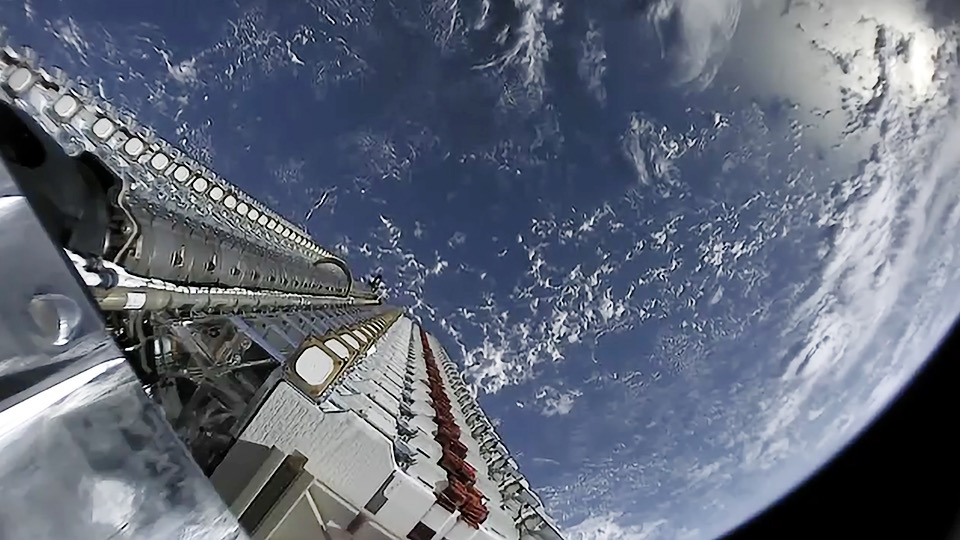
SpaceX has launched its latest mission to expand its Starlink satellite constellation, sending 25 satellites into polar low Earth orbit. The mission marks the company’s seventh Starlink launch of the year, underscoring SpaceX’s commitment to increasing global broadband access through a rapidly expanding network of satellites.
Read the full story: Spaceflight Now
Pentagon Faces Missile Defense Economic Challenges
In light of the new Golden Dome initiative, Gen. Michael Guetlein emphasizes that effective deterrence now hinges more on production scale and economic efficiency rather than solely on advanced technology. This shift could reshape defense strategies, prompting the Pentagon to revisit its approach to missile defenses amid changing economic landscapes.
Read the full story: SpaceNews
NASA and DOE Join Forces for Lunar Reactor Development
NASA and the Department of Energy are collaborating to develop nuclear reactors for the lunar surface, an endeavor crucial for sustaining long-term human presence on the moon. This partnership marks a significant step forward in leveraging nuclear technology to support future lunar exploration missions.
Read the full story: SpaceNews
Elon Musk Discusses Scale Potentials for SpaceX and Tesla
Elon Musk has shared insights about the exponential growth potential of SpaceX and Tesla, citing the non-linear expansion possibilities within these industries. His remarks highlight the strategic visions driving these companies toward transformative innovations in space travel and sustainable energy.
Read the full story: TESLARATI
🛰️Satellite Spotlight
- Satellite Name: ORBVIEW 2 (SEASTAR)
- NORAD ID: 24883
- Launch Date: August 1, 1997
- Mission: This satellite’s primary purpose is Earth observation, specifically monitoring ocean color and biological productivity.
- Orbit: Low Earth Orbit (LEO)
- Operator: ORBI
- Fun Fact: Although it was planned for a 5-year mission, ORBVIEW 2 exceeded expectations by operating for 13 years!
Track this satellite in real-time on our web app: Track ORBVIEW 2 (SEASTAR)
🌌Space Weather
Next 24 Hours
-
Radio Blackouts Probability
- Minor: 45
- Major: 5
- Risk: None
-
Solar Radiation
- Probability: 5
- Risk: None
-
Geomagnetic Storming
- Scale: 0
- Impact: none
- Activity: Low
-
Impact Summary
- Next 24 hours: No risk of radio blackouts expected; communication systems will remain stable.
- No solar radiation storms are predicted, ensuring minimal risk for satellite operations.
- Geomagnetic conditions are low, but a G1 (Minor) geomagnetic storm may occur on January 28, influenced by negative polarity coronal hole high-speed stream (CH HSS).
- Watch for potential R1-R2 (Minor-Moderate) radio blackouts between January 26-28, which could briefly disrupt high-frequency communications.
Long Term Forecast
- Impact Summary
- From January 26 to February 21, low solar activity is anticipated, with occasional chances for M-class flares (R1-R2/Minor-Moderate).
- No proton events are forecasted at geosynchronous orbit, providing a stable environment for satellite operations.
- High levels of greater than 2 MeV electron flux are expected on January 26 and January 28-31, as well as February 1-3, February 6-12, and February 15-21, which may affect satellite systems sensitive to electron flux.
- Geomagnetic activity is likely to reach G1 (Minor) storm levels on January 28 and February 13, with additional active periods expected, which could impact navigational systems.
- Overall, quiet and settled conditions are expected for most of the forecast period, providing a relatively predictable environment for space operations.
🚀Upcoming Space Launches
January 27
-
SpaceX Falcon 9 Block 5:
- GPS III SV09 from Cape Canaveral Space Force Station (04:42 UTC) Ninth of ten GPS III missions.
-
Rocket Lab Electron:
- Bridging The Swarm (NeonSat-1A) from Rocket Lab Launch Complex 1, Mahia Peninsula, New Zealand (22:45 UTC) The NeonSat-1A will test constellation capabilities for South Korea’s Earth observation satellites.
January 29
- SpaceX Falcon 9 Block 5:
- Starlink Group 17-19 from Vandenberg Space Force Base (15:17 UTC) A batch of 25 satellites for the Starlink mega-constellation.
January 30
- SpaceX Falcon 9 Block 5:
- Starlink Group 6-101 from Cape Canaveral Space Force Station (04:00 UTC) A batch of 29 satellites for the Starlink mega-constellation.
January 31
-
China Aerospace Science and Technology Corporation Long March 7A:
- Unknown Payload from Wenchang Space Launch Site (00:00 UTC)
-
China Rocket Co. Ltd. Smart Dragon 3:
- Unknown Payload from Haiyang Oriental Spaceport (00:00 UTC) Possibly an Earth observation satellite for SUPARCO, Pakistan.
February 1
- SpaceX Falcon 9 Block 5:
- Starlink Group 6-103 from Cape Canaveral Space Force Station (23:04 UTC) A batch of 29 satellites for the Starlink mega-constellation.
February 2
-
United Launch Alliance Vulcan VC4S:
- USSF-87 from Cape Canaveral Space Force Station (00:00 UTC) This mission will launch two Geosynchronous Space Situational Awareness Program (GSSAP) satellites to near-geosynchronous orbit.
-
SpaceX Falcon 9 Block 5:
- Starlink Group 17-32 from Vandenberg Space Force Base (15:17 UTC) A batch of 24 satellites for the Starlink mega-constellation.
Note: Launch dates and times are subject to change due to technical or weather considerations.

Maurice Stellarski