


· space brief · 5 min read
Senate Passes $839B Defense Bill, L3Harris Doubles Down on Space Business | KeepTrack Space Brief
Senate clears $839B defense spending bill ensuring Pentagon space domain funding. L3Harris reaffirms space sector commitment amid Golden Dome expansion. York Space raises $629M in public offering.
📰Top Stories
York Space Goes Public Amid Growing Pentagon Demand
York Space has successfully gone public, raising $629 million to expand its satellite manufacturing capabilities. This move aligns with increasing defense budgets in the U.S., highlighting the growing demand for satellite technology within defense sectors. York Space’s expansion signifies their commitment to meeting the rising needs for advanced satellite systems driven by Pentagon contracts.
Read the full story: SpaceNews
L3Harris Reaffirms Space Sector Focus
L3Harris has emphasized its dedication to enhancing its space business even as it expands its missile sector operations. The company is set to receive more satellite orders, fueled by opportunities under the Golden Dome initiative, positioning itself as a key player in the rapidly evolving space industry.
Read the full story: SpaceNews
Fireside Chat with Space Force Gen. Shawn Bratton
Gen. Shawn Bratton of the U.S. Space Force shared insights into the strategic direction of space operations during a detailed conversation with SpaceNews. The discussion provided a closer look at ongoing initiatives and the future of military space activities, reflecting a strategic focus on ensuring space security and operational readiness.
Read the full story: SpaceNews
Senate Clears Major Defense Spending Bill
The U.S. Senate has passed an $839 billion defense spending bill, handing it back to the House for final approval. The bill ensures continued funding for the Pentagon, promising to avert a government shutdown while bolstering defense capabilities, including in the space domain.
Read the full story: Breaking Defense
U.S. Approves Significant Arms Sales to Middle Eastern Allies
The United States has authorized weapon sales worth $6.7 billion to Israel and $9 billion in Patriot missiles to Saudi Arabia. These sales include advanced systems like Apache helicopters and Joint Light Tactical Vehicles, emphasizing strategic alliances and the importance of regional security cooperation.
Read the full story: Breaking Defense
Trump’s Comments Stir Debate Over Canadian Military Contracts
Recent statements by Donald Trump regarding Canadian jets have sparked discussions about their impacts on Pentagon contracts. The U.S. military’s dependence on Canadian airframes for various operations underscores the intertwined nature of North American defense strategies.
Read the full story: Breaking Defense
🛰️Satellite Spotlight
- Satellite Name: INTELSAT 512
- NORAD ID: 16101
- Launch Date: September 28, 1985
- Mission: INTELSAT 512 was designed for communication purposes, equipped with a total of 26 C-band and 6 Ku-band transponders to facilitate telecommunication services across various regions.
- Orbit: GEO (Geostationary Orbit)
- Operator: INTEL
- Fun Fact: INTELSAT 512 was part of the INTELSAT VA series and operated successfully for 9 years, playing a crucial role in the expansion of global satellite communication capabilities.
Track this satellite in real-time on our web app: Track INTELSAT 512
🌌Space Weather
Next 24 Hours
-
Radio Blackouts Probability
- Minor: 15
- Major: 1
- Risk: None
-
Solar Radiation
- Probability: 1
- Risk: None
-
Geomagnetic Storming
- Scale: 0
- Impact: none
- Activity: Low
-
Impact Summary
- Next 24 hours: No risk of radio blackouts anticipated.
- No risk of solar radiation storms is expected.
- Geomagnetic outlook shows no G1 (Minor) or greater geomagnetic storms predicted.
- No significant solar wind features are expected in the forecast.
- There’s a minimal chance for R1-2 (Minor-Moderate) radio blackouts due to isolated M-class activity until February 2.
Long Term Forecast
- Impact Summary
- From January 26 to February 21, solar activity is expected to remain predominantly low with some probabilities for M-class flares (R1-R2/Minor-Moderate).
- No proton events are predicted at geosynchronous orbit.
- High levels of the greater than 2 MeV electron flux at geosynchronous orbit are expected on January 26, January 28-31, February 1-3, February 6-12, and February 15-21.
- Geomagnetic activity is likely to reach G1 (Minor) storm levels on January 28 and February 13.
- Active periods may occur on January 29 and February 4-5, and February 14-21, influenced by multiple recurrent coronal hole high-speed streams (CH HSSs).
- Quiet to unsettled conditions are anticipated for the remainder of the outlook period.
🚀Upcoming Space Launches
February 2
- Russian Space Forces Soyuz 2.1a/Fregat-M:
- Kosmos (Unknown Payload) from Plesetsk Cosmodrome, Russian Federation (15:00 UTC) Unknown classified payload(s) for the Russian military.
- SpaceX Falcon 9 Block 5:
- Starlink Group 17-32 from Vandenberg SFB, CA, USA (15:17 UTC) A batch of 25 satellites for the Starlink mega-constellation - SpaceX’s project for space-based Internet communication system.
February 3
- SpaceX Falcon 9 Block 5:
- Starlink Group 6-103 from Cape Canaveral SFS, FL, USA (22:12 UTC) A batch of 29 satellites for the Starlink mega-constellation - SpaceX’s project for space-based Internet communication system.
February 6
- SpaceX Falcon 9 Block 5:
- Starlink Group 17-33 from Vandenberg SFB, CA, USA (17:05 UTC) A batch of 25 satellites for the Starlink mega-constellation - SpaceX’s project for space-based Internet communication system.
February 7
- SpaceX Falcon 9 Block 5:
- Starlink Group 6-104 from Cape Canaveral SFS, FL, USA (09:41 UTC) A batch of 29 satellites for the Starlink mega-constellation - SpaceX’s project for space-based Internet communication system.
February 9
- NASA SLS Block 1:
- Artemis II from Kennedy Space Center, FL, USA (04:20 UTC) Artemis II is the first crewed mission as part of the Artemis program. Artemis II will send a crew of 4 - 3 Americans and 1 Canadian around the moon and return them back to Earth. The mission will test the core systems of NASA’s Orion spacecraft.
February 10
- SpaceX Falcon 9 Block 5:
- Starlink Group 17-34 from Vandenberg SFB, CA, USA (14:00 UTC) A batch of 25 satellites for the Starlink mega-constellation - SpaceX’s project for space-based Internet communication system.
February 11
- SpaceX Falcon 9 Block 5:
- Crew-12 from Cape Canaveral SFS, FL, USA (11:00 UTC) SpaceX Crew-12 is the twelfth crewed operational flight of a Crew Dragon spacecraft to the International Space Station as part of NASA’s Commercial Crew Program.
February 12
- United Launch Alliance Vulcan VC4S:
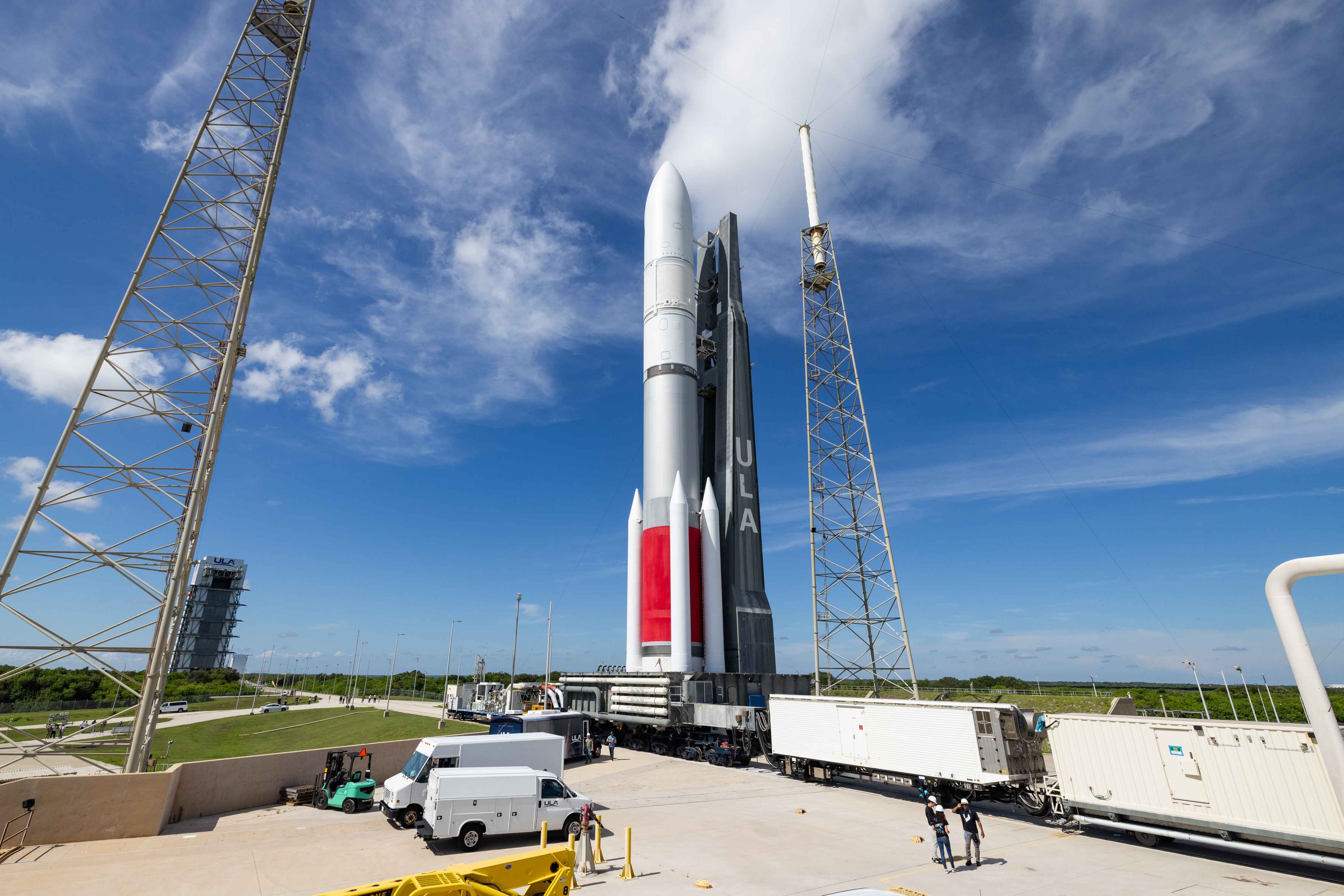
- USSF-87 from Cape Canaveral SFS, FL, USA (00:00 UTC) USSF-87 will launch two identical Geosynchronous Space Situational Awareness Program (GSSAP) satellites, GSSAP-7 and GSSAP-8, directly to a near-geosynchronous orbit. Data from the GSSAP will contribute to timely and accurate orbital predictions, enhancing space flight safety including satellite collision avoidance.
Note: Launch dates and times are subject to change due to technical or weather considerations.

Maurice Stellarski


