· space brief · 4 min read
SpaceX Acquires xAI, Starlink Bypasses Iran Internet Blackouts | KeepTrack Space Brief
SpaceX acquires xAI to develop orbital data centers. Starlink terminals bypass Iran's government internet blackouts. Blue Origin escalates defense procurement criticism.

📰Top Stories
SpaceX Makes Strides with Starlink and New Acquisitions
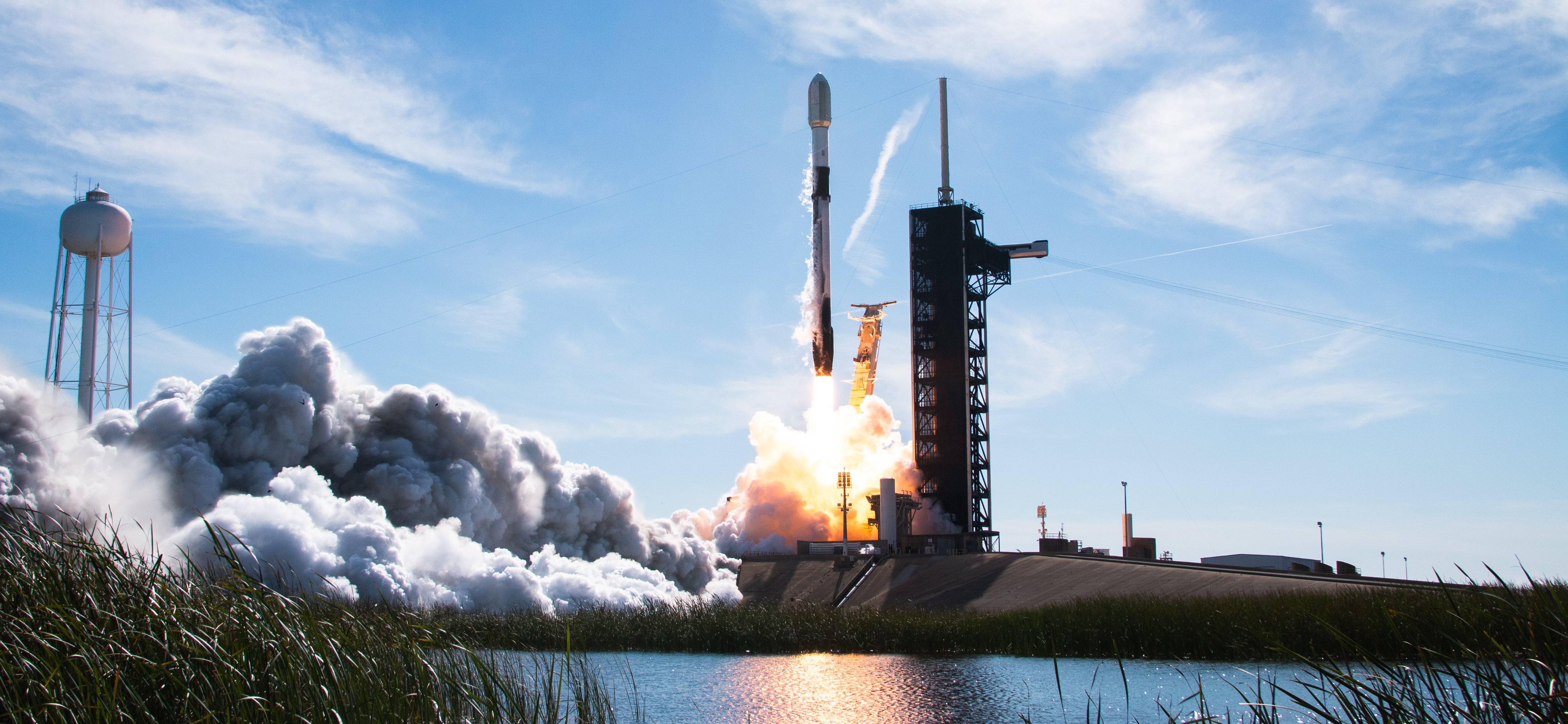
SpaceX recently launched 25 Starlink satellites aboard a Falcon 9 rocket from California’s Vandenberg Space Force Base. This move bolsters their growing constellation aimed at enhancing global internet access. Notably, SpaceX has acquired the AI firm xAI, led by Elon Musk, with ambitions to develop orbital data centers. Such advancements showcase the company’s ongoing influence in space innovation and infrastructure.
Read the full stories: Space.com and SpaceNews
Starlink’s Role in Digital Sovereignty Debates
In a remarkable turn of events, Starlink terminals enabled Iranian protesters to bypass government-initiated internet blackouts. This has sparked discussions on digital sovereignty as Starlink’s involvement challenges state control over telecommunications and empowers individuals with alternative connectivity solutions.
Read the full story: SpaceNews
Blue Origin’s Critique of Defense Procurement Processes
David Hegseth of Blue Origin has upped the ante in criticizing traditional defense procurement processes, echoing concerns from the Pentagon about delays in deliveries and contractor actions. This scrutiny underscores the ongoing tension between innovation in the defense sector and legacy bureaucratic structures.
Read the full story: SpaceNews
Reassessing Nuclear Nonproliferation Policies
As global security dynamics shift, Henry Sokolski argues for a renewed U.S. nuclear nonproliferation policy. After a 16-year hiatus, the need for comprehensive strategies addressing current challenges and geopolitical realities is highlighted.
Read the full story: Breaking Defense
Challenges in Pentagon Time Management
The Pentagon faces increased pressure to align digital engineering with manufacturing needs as geopolitical threats evolve. A focus on reindustrialization and efficient use of time could sharpen defense responses, though complexities remain in adapting traditional frameworks to modern needs.
Read the full story: Breaking Defense
🛰️Satellite Spotlight
- Satellite Name: SWAS
- NORAD ID: 25560
- Launch Date: December 6, 1998
- Mission: The Submillimeter Wave Astronomy Satellite (SWAS) is designed for astronomical observations, particularly focusing on submillimeter waves to study the universe’s composition and evolution.
- Orbit: Low Earth Orbit (LEO)
- Operator: NASA’s Goddard Space Flight Center (GSFC)
- Fun Fact: SWAS was one of the first satellites dedicated to studying submillimeter wave astronomy, which allows scientists to observe celestial phenomena that are invisible in other wavelengths.
Track this satellite in real-time on our web app: Track SWAS
🌌Space Weather
Next 24 Hours
-
Radio Blackouts Probability
- Minor: 80
- Major: 40
- Risk: None
-
Solar Radiation
- Probability: 50
- Risk: None
-
Geomagnetic Storming
- Scale: 0
- Impact: none
- Activity: Low
-
Impact Summary
- No risk of radio blackouts, ensuring uninterrupted communication for satellite operators.
- No risk of solar radiation storms, reducing concerns for ground-based telescopes and reconnaissance.
- Geomagnetic activity is at low levels, minimizing any potential drag impacts to Low Earth Orbit (LEO) satellites.
Long Term Forecast
- Moderate to high solar activity is expected through February, with M-class flares likely.
- A high chance for X-class flares exists from February 2-10, posing risks for satellite communication disruptions.
- The greater than 10 MeV proton flux may reach S1-S2 (Minor-Moderate) storm levels early in February, potentially affecting operational satellites.
- The geomagnetic field is likely to remain mostly quiet initially, but there will be unsettled periods that may influence satellite drag and operations throughout the month.
🚀Upcoming Space Launches
February 5
- SpaceX Falcon 9:
- Starlink Group 6-103 from Cape Canaveral Space Force Station (21:20 UTC) A batch of 29 satellites for the Starlink mega-constellation—SpaceX’s project for space-based Internet communication.
February 6
- SpaceX Falcon 9:
- Starlink Group 17-33 from Vandenberg Space Force Base (17:05 UTC) A batch of 25 satellites for the Starlink mega-constellation—SpaceX’s project for space-based Internet communication.
February 7
- China Aerospace Science and Technology Corporation Long March 2F/G:
- Chinese Reusable Space Vehicle from Jiuquan Satellite Launch Center (03:48 UTC) Probable 4th flight of the Chinese spaceplane capable of returning to Earth.
February 8
- SpaceX Falcon 9:
- Starlink Group 6-104 from Cape Canaveral Space Force Station (10:46 UTC) A batch of 29 satellites for the Starlink mega-constellation—SpaceX’s project for space-based Internet communication.
February 10
- SpaceX Falcon 9:
- Starlink Group 17-34 from Vandenberg Space Force Base (14:07 UTC) A batch of 25 satellites for the Starlink mega-constellation—SpaceX’s project for space-based Internet communication.
February 11
- SpaceX Falcon 9:
- Crew-12 from Cape Canaveral Space Force Station (11:00 UTC) SpaceX Crew-12 is the twelfth crewed operational flight of a Crew Dragon spacecraft to the International Space Station as part of NASA’s Commercial Crew Program.
February 12
-
United Launch Alliance Vulcan VC4S:
- USSF-87 from Cape Canaveral Space Force Station (00:00 UTC) USSF-87 will launch two identical Geosynchronous Space Situational Awareness Program (GSSAP) satellites directly to a near-geosynchronous orbit.
-
Khrunichev State Research and Production Space Center Proton-M/Blok DM-03:
- Elektro-L No.5 from Baikonur Cosmodrome (08:56 UTC) Elektro-L is a series of meteorological satellites designed to capture real-time images of clouds and Earth’s surface.
-
Arianespace Ariane 64:
- Amazon Leo (LE-01) from Guiana Space Centre (16:45 UTC) This mission will deploy 32 satellites as part of Amazon’s Project Kuiper, a mega constellation offering broadband internet access.
Note: Launch dates and times are subject to change due to technical or weather considerations.

Maurice Stellarski