


· space brief · 4 min read
Space Force Awards $54.5M to Starfish Space for GEO Servicing | KeepTrack Space Brief
Space Force awards $54.5M to Starfish Space for GEO satellite servicing vehicle. Artemis II heads to launch pad for first crewed Moon flyby in 54 years. Crew-12 confirmed.
📰Top Stories
Space Force Awards $54.5 Million Contract to Starfish Space
Starfish Space has secured a $54.5 million contract from the U.S. Space Force for a GEO (geostationary Earth orbit) servicing vehicle. The contract underscores the strategic shift towards servicing and extending the life of military satellites using Starfish’s Otter spacecraft. The vehicle will focus on satellite relocation and life extension, enhancing existing satellite infrastructure.
Read the full story: SpaceNews
First Crewed Moon Flyby In 54 Years: Artemis II
NASA is set to make history with Artemis II, preparing for the first crewed moon flyby since the Apollo era. The Space Launch System rocket has been transported to the launch pad at Kennedy Space Center. This mission will test systems required for future lunar landings, aiming to pave the way for sustainable exploration missions.
Read the full story: SpaceDaily
NASA Confirms First Flight to ISS Since Medical Evacuation
NASA will launch Crew-12 to the International Space Station (ISS), marking the first crewed mission to the ISS since an emergency medical evacuation. Set to launch on a SpaceX Falcon 9 rocket, this mission aims to continue vital research work and sustainment aboard the ISS.
Read the full story: SpaceDaily
SpaceX Resumes Falcon 9 Flights with Starlink Satellite Launch
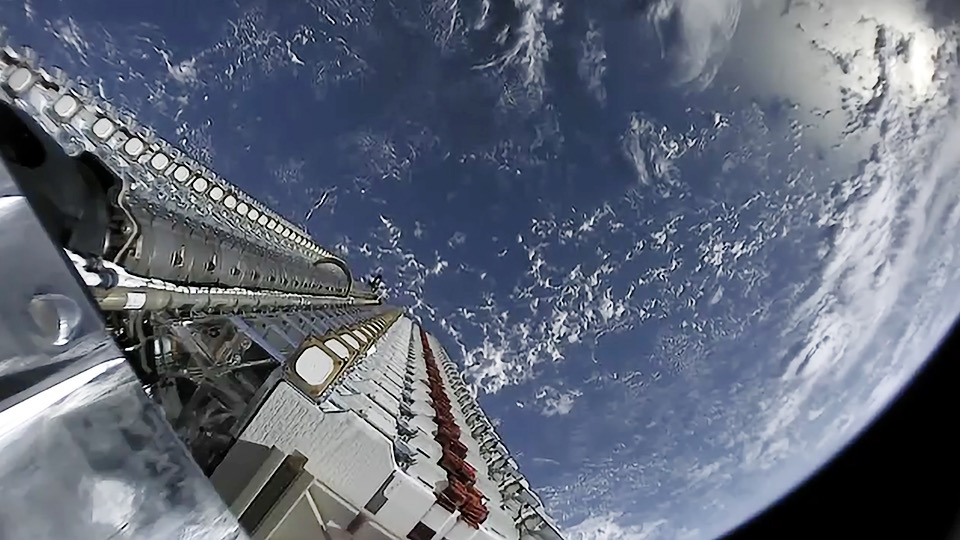
After resolving an upper stage issue, SpaceX successfully launched a Falcon 9 rocket carrying 25 Starlink satellites from Vandenberg Space Force Base. This mission highlights SpaceX’s continual efforts to expand its satellite internet constellation and showcases advancements in launch recovery and reuse.
Read the full story: Space.com
Mars Reconnections: Curiosity Rover Back in Communication
Following a solar conjunction that interrupted communications, the Curiosity rover has resumed operations on Mars. The rover team has begun planning new scientific tasks, using the break to focus on analyzing Martian geology and preparing for upcoming exploration milestones.
Read the full story: SpaceDaily
🛰️Satellite Spotlight
- Satellite Name: MESON-1
- NORAD ID: 59131
- Launch Date: March 4, 2024
- Mission: Satellite deployment
- Orbit: LEO (Low Earth Orbit)
- Operator: ATOMOS
- Fun Fact: MESON-1’s innovative design includes solar cells and batteries, allowing it to operate efficiently in the challenging environment of space while deploying its payload, Quark.
Track this satellite in real-time on our web app: Track MESON-1
🌌Space Weather
Next 24 Hours
-
Radio Blackouts Probability
- Minor: 75
- Major: 25
- Risk: None
-
Solar Radiation
- Probability: 25
- Risk: None
-
Geomagnetic Storming
- Scale: 1
- Impact: minor
- Activity: Moderate
-
Impact Summary
- No risk of radio blackouts for satellite communication users.
- No risk of solar radiation storms; minimal impact on ground-based radars and telescopes.
- Moderate geomagnetic activity might affect communications and navigation systems.
- Minor geomagnetic storms could cause slight fluctuations in satellite orbits, but no significant disruptions are expected.
Long Term Forecast
- Impact Summary
- Moderate to high solar activity expected through February, with M-class flares possibly affecting satellite operations.
- Increased chances of X-class flares early in February could lead to radio blackouts and communication disruptions.
- Geomagnetic activity is predicted to fluctuate, with some days likely experiencing minor storm conditions affecting satellite tracking and operations.
- Expect recurrent geomagnetic impacts later in February, particularly from CH HSS influences, which could interfere with satellite communications and increase drag on LEO satellites.
Upcoming Space Launches
February 11
- China Rocket Co. Ltd. Smart Dragon 3:
- Unknown Payload from Haiyang Oriental Spaceport (06:26 UTC) Possibly an Earth observation satellite for the Pakistan government’s SUPARCO.
- SpaceX Falcon 9:
- Crew-12 from Cape Canaveral SFS, FL, USA (11:01 UTC) SpaceX Crew-12 is the twelfth crewed operational flight of a Crew Dragon spacecraft to the International Space Station as part of NASA’s Commercial Crew Program.
- SpaceX Falcon 9:
- Starlink Group 17-34 from Vandenberg SFB, CA, USA (14:07 UTC) A batch of 24 satellites for the Starlink mega-constellation – SpaceX’s project for space-based Internet communication system.
February 12
- United Launch Alliance Vulcan VC4S:
- USSF-87 from Cape Canaveral SFS, FL, USA (08:00 UTC) USSF-87 will launch two identical Geosynchronous Space Situational Awareness Program (GSSAP) satellites GSSAP-7 and GSSAP-8 directly to a near-geosynchronous orbit.
- Khrunichev State Research and Production Space Center Proton-M/Blok DM-03:
- Elektro-L No.5 from Baikonur Cosmodrome, Republic of Kazakhstan (08:52 UTC) Electro-L is a series of meteorological satellites developed for the Russian Federal Space Agency for real-time cloud imaging and data collection.
- Arianespace Ariane 64:
- Amazon Leo (LE-01) from Guiana Space Centre, French Guiana (16:45 UTC) Amazon Leo, formerly known as Project Kuiper, is a mega constellation of 3,276 satellites in Low Earth Orbit offering broadband Internet access.
February 14
- Firefly Aerospace Firefly Alpha:
- Stairway to Seven from Vandenberg SFB, CA, USA (00:50 UTC) Firefly Alpha’s Flight 7 will test and validate key systems ahead of Firefly’s Block II configuration upgrade following its April 2025 launch failure.
- SpaceX Falcon 9:
- Starlink Group 6-103 from Cape Canaveral SFS, FL, USA (05:00 UTC) A batch of 29 satellites for the Starlink mega-constellation – SpaceX’s project for space-based Internet communication system.
- SpaceX Falcon 9:
- Starlink Group 17-13 from Vandenberg SFB, CA, USA (22:00 UTC) A batch of 25 satellites for the Starlink mega-constellation – SpaceX’s project for space-based Internet communication system.
Note: Launch dates and times are subject to change due to technical or weather considerations.

Maurice Stellarski


