· space brief · 5 min read
China Plans First One-Year Human Spaceflight Mission | KeepTrack Space Brief
China confirms first one-year human spaceflight and Pakistani astronaut for Tiangong. Air Force develops X-68A missile-launching drone. Poland unveils $51B defense spending plan.

📰Top Stories
Space Force Envisions Future Human Presence in Orbit
Amidst burgeoning commercial infrastructure and cislunar aspirations, the U.S. Space Force is not planning to deploy troops in orbit but acknowledges the evolving context of space operations. While officials stress no current plans for orbital military presence, the ideas surrounding cislunar space are reshaping strategic discussions about human roles in space.
Read the full story: SpaceNews
U.S. Air Force’s X-68A: A Missile That Launches Missiles
The U.S. military is advancing with the development of the X-68A, an experimental aircraft resembling a cruise missile with the unique ability to launch its own missiles. This novel concept aims to enhance current military capabilities by introducing flexible and dynamic deployment options.
Read the full story: Space.com
China’s Ambitious One-Year Human Spaceflight Mission
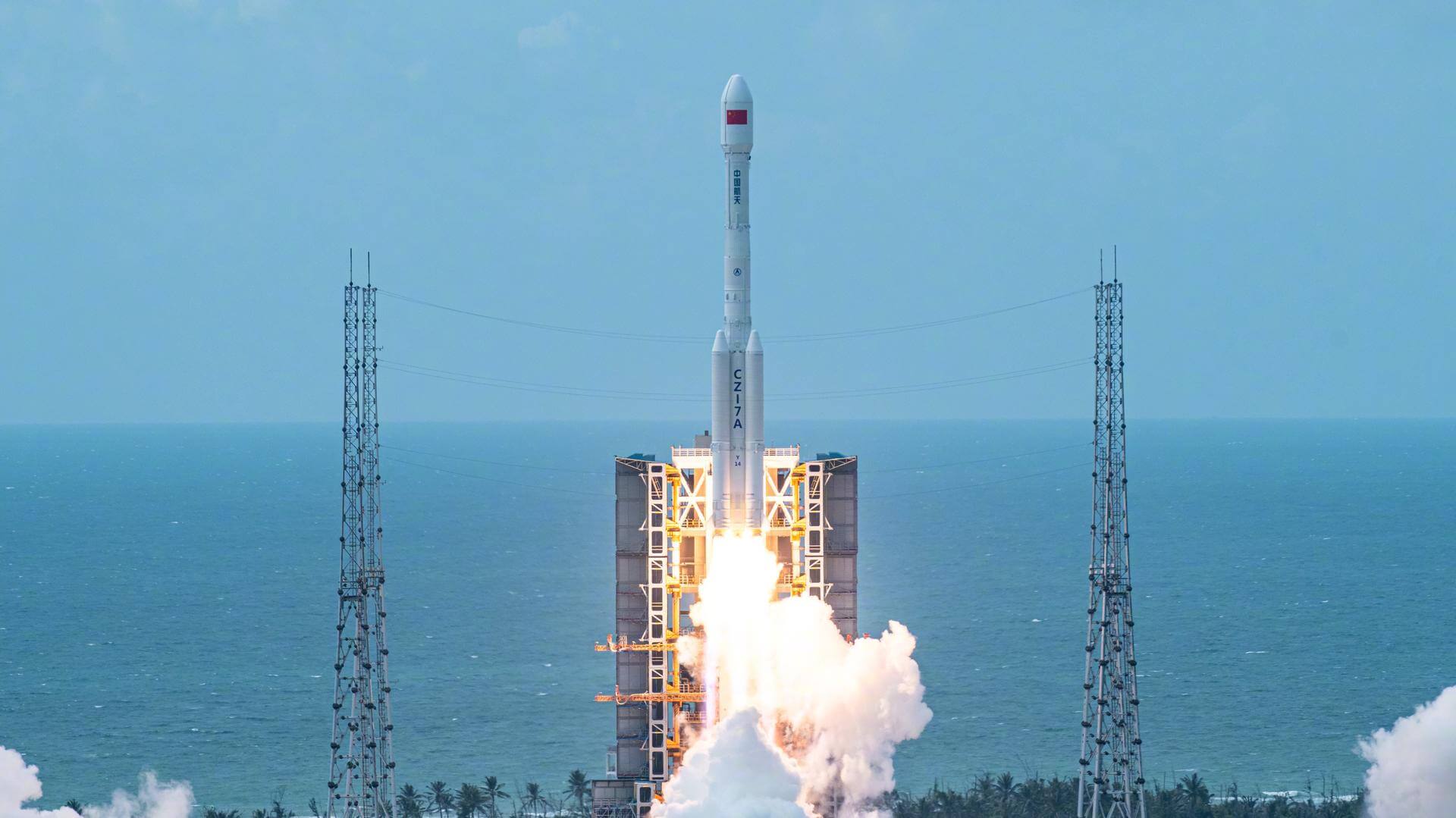
China is set to commence its first one-year human spaceflight mission, marking a significant milestone in its space program. This year will also see the Tiangong space station hosting its first international astronaut—a pivotal move to strengthen international collaboration in space.
Read the full story: SpaceNews
Poland’s $51 Billion Defense Spending Unveiled
Poland has disclosed its detailed defense spending facilitated by EU SAFE loans, totaling $51 billion from 2026-2030. The allocation supports various systems including advanced artillery, cybersecurity tools, and ground combat technologies, positioning Poland as a key player in regional defense.
Read the full story: Breaking Defense
Potential Changes in U.S. Army’s XM30 Bradley Replacement
Breaking Defense reports potential shake-ups in the competition to replace the Bradley fighting vehicle with the XM30. A new request for information (RFI) suggests intentions to expedite or overhaul the program, reflecting the Army’s shifting priorities and strategic needs.
Read the full story: Breaking Defense
Singapore to Enhance Maritime Surveillance with Gulfstream Aircraft
Singapore is fortifying its maritime surveillance capabilities by acquiring three Gulfstream G550-MSA aircraft. This acquisition is a continuation of Singapore’s strategic investment in maritime security amidst increasing regional maritime challenges.
Read the full story: Breaking Defense
🛰️Satellite Spotlight
- Satellite Name: OPS 8180 (STP RADSAT)
- NORAD ID: 06217
- Launch Date: October 2, 1972
- Mission: The OPS 8180 satellite is dedicated to technology, science, and infrared astronomy, contributing valuable data to various research fields.
- Orbit: Low Earth Orbit (LEO)
- Operator: SAMSO (Systems Acquisition Management Support Office)
- Fun Fact: OPS 8180 was launched as part of the United States’ pursuit of advancements in infrared technology, showcasing early attempts to enhance satellite observational capabilities.
Track this satellite in real-time on our web app: Track OPS 8180
🌌Space Weather
Next 24 Hours
-
Radio Blackouts Probability
- Minor: 25
- Major: 5
- Risk: None
-
Solar Radiation
- Probability: 1
- Risk: None
-
Geomagnetic Storming
- Scale: 0
- Impact: none
- Activity: Low
-
Impact Summary
- Next 24 hours: No risk of radio blackouts.
- No risk of solar radiation storms.
- Geomagnetic outlook: No G1 (Minor) or greater geomagnetic storms are expected.
- Radiation outlook: No S1 (Minor) or greater solar radiation storms are expected.
- No significant active region activity favorable for radiation storm production is forecast.
- Radio blackout outlook indicates a chance for R1-R2 (Minor-Moderate) radio blackouts over 28 Feb - 02 Mar.
Long Term Forecast
- Forecast of Solar and Geomagnetic Activity from 23 February - 21 March 2026 indicates solar activity is expected to be very low, with a good chance for C-class flares and a slight chance for M-class flares (R1/R2-Minor/Moderate) throughout the period.
- No proton events are expected at geosynchronous orbit.
- Greater than 2 MeV electron flux at geosynchronous orbit is expected to reach high levels on specific dates due to anticipated influence of multiple recurrent coronal holes.
- Geomagnetic field activity is expected to reach G2 (Moderate) levels on 21 Mar, with possible G1 (Minor) storms on several dates throughout the forecast period.
- Increased geomagnetic activity is anticipated from multiple recurrent coronal hole high-speed streams, while the remainder of the period is likely to remain mostly quiet.
🚀Upcoming Space Launches
March 1
-
Firefly Aerospace Alpha:
- Stairway to Seven from Vandenberg SFB, CA, USA (00:50 UTC) Firefly Alpha’s Flight 7 will be a test flight, returning to flight after its April 2025 launch failure. It will validate key systems aimed at enhancing reliability and manufacturability for future upgrades.
-
Space One KAIROS:
- Flight 3 from Spaceport Kii, Japan (02:00 UTC) Third flight of the KAIROS launch vehicle carrying five satellites: TATARA-1R, SC-Sat1a, HErO, AETS-1, and Nutsat-3 (TASA/Taiwan).
-
SpaceX Falcon 9 Block 5:
- Starlink Group 17-23 from Vandenberg SFB, CA, USA (08:00 UTC) A batch of 25 satellites for SpaceX’s Starlink project providing global internet coverage.
March 2
- SpaceX Falcon 9 Block 5:
- Starlink Group 10-41 from Cape Canaveral SFS, FL, USA (00:07 UTC) Deployment of 29 satellites for the global Starlink internet constellation.
March 4
-
SpaceX Falcon 9 Block 5:
- Starlink Group 10-40 from Cape Canaveral SFS, FL, USA (06:58 UTC) Another launch with 29 satellites for the Starlink program.
-
SpaceX Falcon 9 Block 5:
- Starlink Group 17-18 from Vandenberg SFB, CA, USA (21:00 UTC) Launch carrying 25 satellites for the Starlink internet project.
March 8
- SpaceX Falcon 9 Block 5:
- Starlink Group 17-31 from Vandenberg SFB, CA, USA (10:58 UTC) Deployment of 25 satellites for continuous expansion of the Starlink constellation.
March 10
- SpaceX Falcon 9 Block 5:
- EchoStar 25 from Cape Canaveral SFS, FL, USA (03:14 UTC) EchoStar 25 is a direct broadcast satellite, enabling high-quality content delivery across North America powered by a high-power, multi-spot beam payload.
Note: Launch dates and times are subject to change due to technical or weather considerations.

Maurice Stellarski