· space brief · 6 min read
PrSM Used in Combat for First Time & Space Force Demands More Troops | KeepTrack Space Brief
CENTCOM confirms first-ever combat use of PrSM against Iranian targets. Space Force VP calls for aggressive end strength growth. Artemis II boosters on pad.
📰Top Stories
Space Force Pushes for Major Expansion in Personnel and Training
At a Senate Armed Services subcommittee hearing, U.S. Space Force Vice Chief of Space Operations Gen. Michael Bratton made a direct case for significantly growing the service branch, stating that the Space Force “must aggressively increase its end strength and infrastructure.” The testimony underscores growing concerns within the Pentagon about whether the youngest military branch has the trained personnel needed to manage an increasingly contested orbital environment. As adversaries like China and Russia expand their own space capabilities — including anti-satellite weapons and electronic warfare systems — Space Force leaders argue that current staffing levels are insufficient to defend U.S. assets in orbit and support joint warfighting operations from space.
Read the full story: SpaceNews
CENTCOM Confirms First-Ever Combat Use of PrSM Precision Strike Missile
U.S. Central Command (CENTCOM) has confirmed the first-ever combat use of the Precision Strike Missile (PrSM) in operations against Iranian targets. In a social media post, CENTCOM described the weapon as providing “an unrivaled deep strike capability,” marking a significant operational milestone for the Army’s next-generation long-range precision fire system. The PrSM is designed to replace the legacy ATACMS missile and can engage targets at ranges exceeding 500 kilometers, with future variants expected to reach even farther. Its combat debut signals a shift in U.S. long-range strike doctrine and raises important questions about inventory levels and production capacity heading into an already tense operational environment.
Read the full story: Breaking Defense
White House Summons Defense Executives to Discuss Munitions Production Amid Iran Strikes
As U.S. military strikes against Iran continue, the White House has invited top defense industry executives to discuss accelerating munitions production. While Gen. Dan Caine stated the U.S. currently has “sufficient precision munitions for the task at hand,” lawmakers are already considering a substantial supplemental funding package to replenish missile stockpiles. The discussions reflect a broader concern that has persisted since the Ukraine conflict began: the U.S. defense industrial base may not be capable of sustaining high-tempo precision strike operations over a prolonged period. Space-based intelligence, surveillance, and reconnaissance (ISR) assets play a critical role in targeting for these strikes, making orbital awareness directly relevant to the ongoing campaign.
Read the full story: Breaking Defense
Northrop Grumman Solid Rocket Boosters Installed for Artemis II Crewed Lunar Mission
Two Northrop Grumman five-segment solid rocket boosters have been integrated onto NASA’s Space Launch System (SLS) at Launch Pad 39B at Kennedy Space Center, marking a major milestone in preparations for the Artemis II mission — the first crewed lunar flight of the Artemis era. Each booster stands 177 feet tall and generates 3.6 million pounds of thrust at liftoff, making them the most powerful solid rocket boosters ever flown. Artemis II is targeted for early 2026 and will carry four astronauts on a lunar flyby trajectory, paving the way for the eventual crewed lunar landing under Artemis III. You can track the SLS and associated spacecraft objects using KeepTrack’s satellite tracking tools as launch preparations continue.
Read the full story: SpaceDaily
Pentagon’s $152 Billion Reconciliation Spending Plan Draws Congressional Scrutiny
The Pentagon’s plan to obligate the full $152 billion in reconciliation funding before the end of the fiscal year is raising red flags on Capitol Hill, with critics arguing the compressed timeline will lead to wasteful or poorly planned spending. The proposed spending diverges significantly from the department’s formal budget request, prompting concerns that funds could flow to projects without adequate oversight or strategic justification. Defense analysts note that rushing procurement of this scale — covering everything from shipbuilding to munitions and space systems — risks locking in contracts that may not align with long-term force structure priorities. Space Force modernization programs could be among those caught in the political crossfire if the supplemental framework is restructured.
Read the full story: Breaking Defense
Trump Signals Possible U.S. Navy Escort Operations in Strait of Hormuz
President Trump has indicated that U.S. Navy vessels could be deployed to escort oil tankers through the Strait of Hormuz, one of the world’s most critical maritime chokepoints. The statement comes amid heightened tensions in the region following U.S. strikes on Iran. The Navy previously conducted similar escort operations under Operation Prosperity Guardian in the Red Sea to protect commercial shipping from Houthi attacks. Any Strait of Hormuz escort mission would rely heavily on space-based assets for navigation, communications, and real-time maritime domain awareness (MDA), underscoring once again how orbital infrastructure underpins modern naval operations.
Read the full story: Breaking Defense
🛰️Satellite Spotlight
- Satellite Name: NSS-11 (GE-1A)
- NORAD ID: 26554
- Launch Date: October 1, 2000
- Mission: Provides fixed satellite service communications for Europe, Africa, and the Middle East using Ku-band transponders
- Orbit: Geostationary (GEO)
- Operator: AMC Global/GE Capital (GECAP)
- Fun Fact: NSS-11 has been operating continuously for over 25 years in geostationary orbit—far exceeding its original design lifetime—making it one of the most durable communication satellites in service today.
Track this satellite in real-time on our web app: Track NSS-11
🚀 Upcoming Space Launches
March 5
- Space One KAIROS:
- KAIROS Flight 3 from Spaceport Kii, Japan (02:10 UTC) ⚠️ Launch Failure — The third flight of the KAIROS launch vehicle was intended to carry five small satellites: TATARA-1R, SC-Sat1a, HErO, AETS-1, and Nutsat-3 (TASA/Taiwan) to Sun-Synchronous Orbit.
March 7
- SpaceX Falcon 9 Block 5:
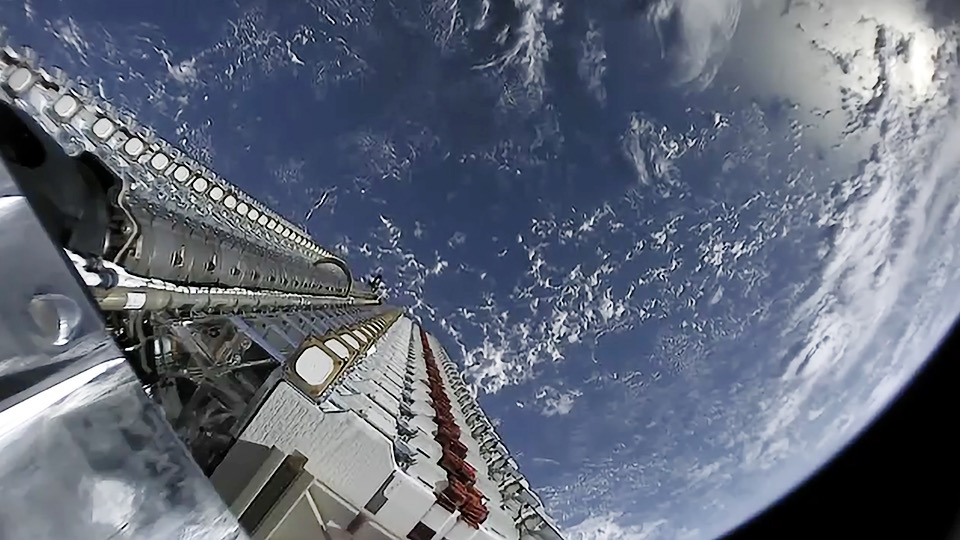
- Starlink Group 17-18 from Vandenberg Space Force Base, California (10:58 UTC) A batch of 25 satellites for the Starlink mega-constellation, expanding SpaceX’s space-based internet communication network into low Earth orbit.
March 10
- SpaceX Falcon 9 Block 5:
- EchoStar 25 from Cape Canaveral Space Force Station, Florida (03:14 UTC) A high-power direct broadcast satellite built on the Maxar 1300 platform, designed to deliver television and content services across North America for DISH Network via geostationary orbit.
- SpaceX Falcon 9 Block 5:
- Starlink Group 17-31 from Vandenberg Space Force Base, California (10:58 UTC) A batch of 25 satellites for the Starlink mega-constellation, expanding SpaceX’s space-based internet communication network into low Earth orbit.
March 12
- SpaceX Falcon 9 Block 5:
- Starlink Group 10-48 from Cape Canaveral Space Force Station, Florida (10:00 UTC) A batch of 29 satellites for the Starlink mega-constellation, expanding SpaceX’s space-based internet communication network into low Earth orbit.
March 14
- SpaceX Falcon 9 Block 5:
- Starlink Group 17-24 from Vandenberg Space Force Base, California (02:37 UTC) A batch of 25 satellites for the Starlink mega-constellation, expanding SpaceX’s space-based internet communication network into low Earth orbit.
March 15
- SpaceX Falcon 9 Block 5:
- Starlink Group 10-46 from Cape Canaveral Space Force Station, Florida (11:09 UTC) A batch of 29 satellites for the Starlink mega-constellation, expanding SpaceX’s space-based internet communication network into low Earth orbit.
March 19
- Isar Aerospace Spectrum:
- Onward and Upward from Andøya Spaceport, Norway (20:00 UTC) (To Be Confirmed) The second test flight of the Spectrum launch vehicle, carrying five cubesats and one non-separable experiment as part of the European Space Agency’s “Boost!” program. Payloads include CyBEEsat (TU Berlin), TriSat-S (University of Maribor), Platform 6 (EnduroSat), FramSat-1 (NTNU), SpaceTeamSat1 (TU Wien Space Team), and the Let It Go non-separable experiment by Dcubed.
March 22
- Russian Federal Space Agency (ROSCOSMOS) Soyuz 2.1a:
- Progress MS-33 (94P) from Baikonur Cosmodrome, Republic of Kazakhstan (11:59 UTC) (To Be Confirmed) An uncrewed Progress cargo resupply mission to the International Space Station, delivering supplies, equipment, and propellant to the orbiting laboratory.
Note: Launch dates and times are subject to change due to technical or weather considerations.

Maurice Stellarski