· space brief · 7 min read
Firefly Alpha Returns to Flight After Anomaly | KeepTrack Space Brief
Firefly Aerospace launches return-to-flight Firefly Alpha on March 10 after Flight 6 anomaly. SpaceX also launches EchoStar 25 GEO satellite and multiple Starlink batches this week.
Top Stories
Rocket Factory Augsburg Targets Summer 2026 for Debut Launch
German startup Rocket Factory Augsburg has two stages on-site at its launch facility and is targeting its first launch this summer. RFA has been developing its RFA ONE rocket, a kerosene-fueled small launch vehicle, since 2018. Getting two stages to the pad is a concrete step past the hardware integration phase.
This will be the first orbital attempt from a German commercial launch provider if it proceeds on schedule. Small sat operators and defense customers looking for European launch independence will be watching this one closely.
Read the full story: SpaceNews
SpaceX Launches 25 More Starlink Satellites from Vandenberg
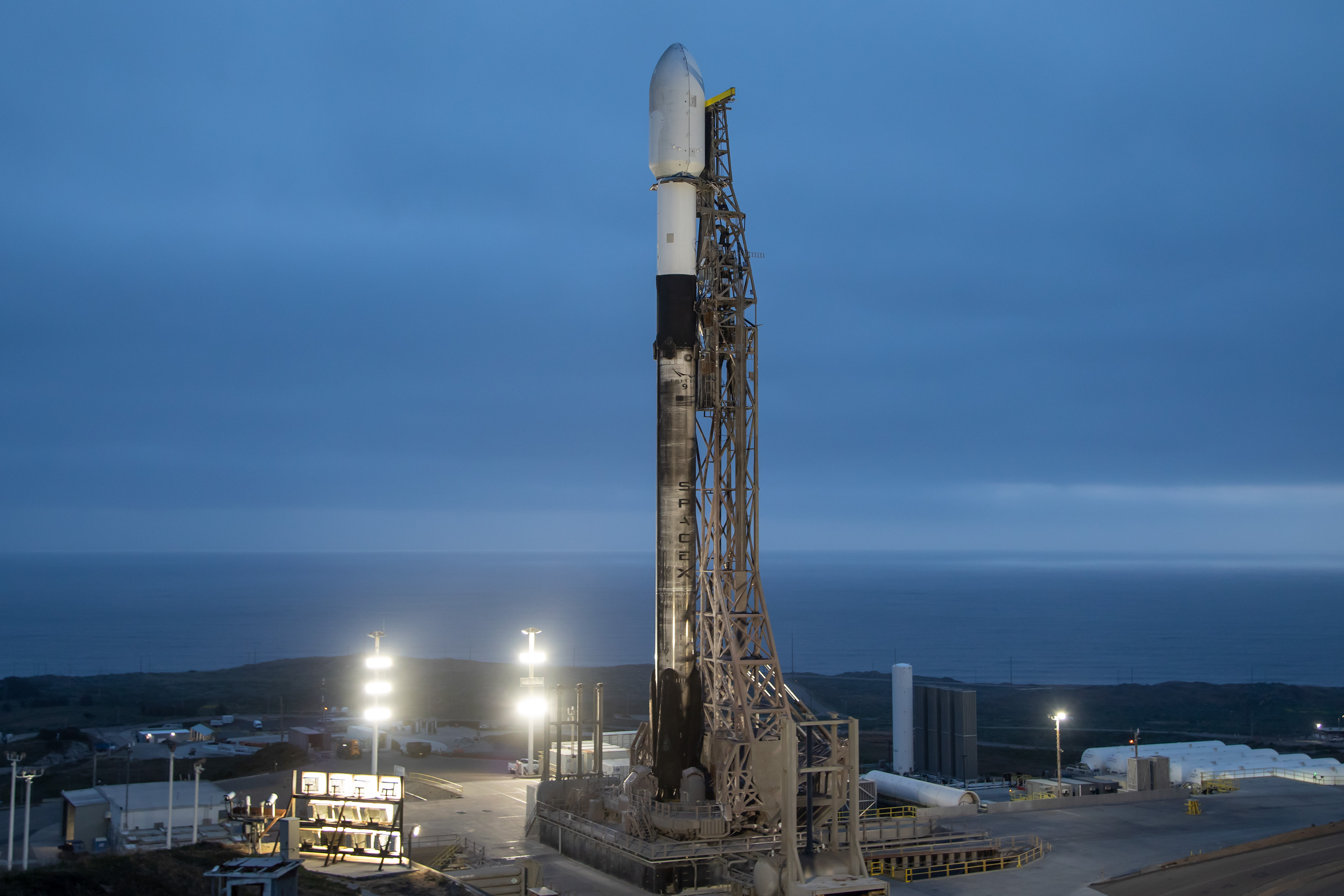
A Falcon 9 lifted off from Space Launch Complex 4 East at Vandenberg Space Force Base on March 8, 2026, carrying 25 Starlink satellites. The booster was B1097. This was the Group 17-18 mission, part of SpaceX’s ongoing v2 Mini constellation build-out.
As these satellites reach operational altitude, they’ll appear in KeepTrack’s catalog. You can track the Starlink constellation directly at Track Starlink and monitor deployment progress as TLEs update.
Read the full story: Space.com
U.S. Space Power Concentration in Private Hands Draws Scrutiny
A new analysis argues that the U.S. has moved past relying on commercial space as a convenience — private firms now hold critical leverage over launch access, ISS logistics, and lunar operations. The piece raises the question of what happens to national space capability if one or more of those firms fails, pivots, or becomes politically complicated.
This isn’t a hypothetical. The ISS crew rotation schedule, GPS augmentation services, and military launch manifests all run through a small number of commercial providers. DoD and NASA have limited redundancy if that access breaks down unexpectedly.
Read the full story: Space.com
Unmanned Air and Sea Platforms on Display at World Defense Show 2026
Several American unmanned systems — both aerial and maritime — were on the floor at World Defense Show 2026 in Saudi Arabia. Breaking Defense’s Agnes Helou got hands-on access to the hardware. The show is a major venue for U.S. defense firms to pitch systems to Gulf state customers.
The specific platforms weren’t detailed in the summary, but unmanned maritime and aerial systems increasingly operate in conjunction with space-based ISR assets — making orbital tracking infrastructure directly relevant to their operational picture.
Read the full story: Breaking Defense
Study: Space Weather May Be Smearing Alien Radio Signals Past SETI Detectors
A new study suggests interstellar plasma and space weather effects could disperse narrowband radio signals enough that SETI’s current detectors miss them entirely. The signals would still arrive — just spread across a wider frequency range than the narrowband filters are looking for.
This has methodological implications for SETI survey design. It also connects to well-understood signal propagation physics used in satellite communications, where plasma dispersion in the ionosphere is a known factor in link budget calculations.
Read the full story: Space.com
Satellite of the Day
Cosmos 2559
Cosmos 2559 is a Russian Earth observation satellite operated by B1440, launched on June 27, 2023, aboard a Soyuz-2-1B rocket from the Vostochny Cosmodrome. Part of Russia’s extensive Cosmos satellite program—one of the most prolific designation series in spaceflight history—this spacecraft carries optical imaging capabilities for remote sensing missions. With a near-polar sun-synchronous orbit, Cosmos 2559 maintains consistent lighting geometry for high-quality Earth observation data collection.
The satellite’s Box+2 panel configuration and 80 kg mass make it a relatively compact platform, typical of modern Russian remote sensing constellations. Operating at an inclination of 97.52°, it provides global coverage with particular emphasis on high-latitude regions. Cosmos satellites serve multiple civilian and defense applications including land monitoring, disaster assessment, and geospatial intelligence, contributing to Russia’s comprehensive Earth observation infrastructure.
| Detail | Value |
|---|---|
| NORAD ID | 57183 |
| Operator | B1440 (Russia) |
| Launch Date | June 27, 2023 |
| Orbit | Sun-synchronous, 97.52° inclination |
| Purpose | Earth observation |
| Status | Active |
Track this satellite in real-time: Track Cosmos 2559
Upcoming Space Launches
March 10
-
Firefly Aerospace Firefly Alpha:
- Stairway to Seven from Space Launch Complex 2W, Vandenberg Space Force Base, CA, USA (00:50 UTC) Return-to-flight mission for Firefly Alpha following an anomaly during Alpha Flight 6. The rocket will carry a “test demo” payload while also validating new systems ahead of the Block 2 configuration debut on Alpha Flight 8. The expendable two-stage small launch vehicle, with a 1,000 kg payload capacity to low Earth orbit, first flew in September 2021. Watch Live Launch Preview
-
SpaceX Falcon 9 Block 5:
- EchoStar 25 from Space Launch Complex 40, Cape Canaveral Space Force Station, FL, USA (03:14 UTC) SpaceX will launch EchoStar’s EchoStar 25 direct broadcast satellite into geosynchronous transfer orbit. The mission is a collaboration between EchoStar, its subsidiary Dish, and Lanteris Space Systems (a subsidiary of Intuitive Machines). Booster B1085 will fly for the 14th time, targeting a landing on the drone ship A Shortfall of Gravitas in the Atlantic Ocean. Watch Live
March 12
-
SpaceX Falcon 9 Block 5:
- Starlink Group 10-48 from Space Launch Complex 40, Cape Canaveral Space Force Station, FL, USA (10:00 UTC) Batch of 25 Starlink V2 Mini Optimized satellites to low Earth orbit. Watch Live Launch Preview
-
SpaceX Falcon 9 Block 5:
- Starlink Group 17-31 from Space Launch Complex 4E, Vandenberg Space Force Base, CA, USA (10:58 UTC) Batch of 25 Starlink V2 Mini Optimized satellites to low Earth orbit. Watch Live Launch Preview
March 15
- SpaceX Falcon 9 Block 5:
- Starlink Group 10-46 from Space Launch Complex 40, Cape Canaveral Space Force Station, FL, USA (11:11 UTC) Batch of 25 Starlink V2 Mini Optimized satellites to low Earth orbit. Watch Live
March 16
- SpaceX Falcon 9 Block 5:
- Starlink Group 17-24 from Space Launch Complex 4E, Vandenberg Space Force Base, CA, USA (02:37 UTC) Batch of 25 Starlink V2 Mini Optimized satellites to low Earth orbit. Watch Live
March 18
- SpaceX Falcon 9 Block 5:
- Starlink Group 10-33 from Space Launch Complex 40, Cape Canaveral Space Force Station, FL, USA (10:57 UTC) Batch of 25 Starlink V2 Mini Optimized satellites to low Earth orbit. Watch Live
March 19
-
SpaceX Falcon 9 Block 5:
- Starlink Group 17-15 from Space Launch Complex 4E, Vandenberg Space Force Base, CA, USA (14:00 UTC) Batch of 25 Starlink V2 Mini Optimized satellites to low Earth orbit. Watch Live
-
Isar Aerospace Spectrum:
- Onward and Upward from Orbital Launch Pad, Andøya Spaceport, Norway (20:00 UTC) Second test flight of Isar Aerospace’s Spectrum small launch vehicle, carrying six payloads: CyBEEsat (TU Berlin), TriSat-S (University of Maribor), Platform 6 (EnduroSat), FramSat-1 (NTNU), SpaceTeamSat1 (TU Wien Space Team), and “Let it Go” from Dcubed. Exolaunch is managing payload integration and deployment. Spectrum is a German-developed small launch vehicle with a 1,000 kg capacity to low Earth orbit. Watch Live
March 22
- Russian Federal Space Agency (ROSCOSMOS) Soyuz 2.1a:
- Progress MS-33 (94P) from Site 31/6, Baikonur Cosmodrome, Republic of Kazakhstan (11:59 UTC) Uncrewed Progress cargo resupply mission to the International Space Station.
March 24
- Rocket Lab Electron:
- Daughter Of The Stars (LEO-PNT Pathfinder A) from Rocket Lab Launch Complex 1, Mahia Peninsula, New Zealand (TBD) The European Space Agency’s LEO-PNT (Low Earth Orbit Positioning, Navigation and Timing) demonstration mission. Two Pathfinder A satellites, built by Thales Alenia Space and GMV, will be deployed to a 510 km orbit to assess how a low Earth orbit constellation can complement Europe’s Galileo and EGNOS navigation systems. Electron is a small-lift vehicle powered by nine electric-pump-fed Rutherford engines, capable of carrying up to 300 kg to low Earth orbit.
Schedule Changes
- SpaceX Falcon 9 Block 5 | Starlink Group 17-18 has been removed from the upcoming launch calendar following a successful launch. The mission status was updated from Go for Launch to Launch Successful.
Note: Launch dates and times are subject to change due to technical or weather considerations.

Maurice Stellarski