· space brief · 9 min read
Van Allen Probe A Reenters After 14 Years; NASA Designates Starliner Type A Mishap | KeepTrack Space Brief
NASA's 590 kg Van Allen Probe A reentered March 10 after 14 years studying Earth's radiation belts. Meanwhile, Boeing Starliner classified as Type A mishap after leaving astronauts stranded on ISS.
Top Stories
Van Allen Probe A Reenters After 14 Years in Orbit
NASA’s Van Allen Probe A, weighing approximately 590 kg (1,300 lbs), reentered Earth’s atmosphere on March 10 after nearly 14 years in orbit. The Space Force provided the reentry estimate. Some hardware was expected to survive to the surface, though odds of ground impact in a populated area were low.
Van Allen Probe A launched in 2012 to study Earth’s radiation belts alongside its twin, Probe B. Neither spacecraft was designed for a controlled deorbit, making their eventual uncontrolled reentries a known end-of-life scenario from the start. You can review reentry tracking methods in the KeepTrack glossary.
Read the full story: Space.com
Anduril Acquires ExoAnalytic Solutions
Anduril Industries is acquiring ExoAnalytic Solutions, a commercial space surveillance firm that operates a global network of ground-based optical telescopes. The deal brings ExoAnalytic’s space object tracking data and sensor infrastructure directly under Anduril’s defense technology portfolio.
ExoAnalytic runs one of the larger commercial Space Situational Awareness networks, with telescopes distributed across multiple continents. Folding that capability into Anduril positions the company to compete more directly for Space Force and intelligence community SSA contracts. For KeepTrack users, commercial optical networks like ExoAnalytic’s feed into the broader catalog that underpins satellite tracking data.
Read the full story: SpaceNews
BAE Systems Hypersonic Tracking Satellites Pass Early Design Review
Space Force’s medium Earth orbit missile detection program, with satellites designed by BAE Systems, cleared an early design review. The program targets hypersonic missile tracking, filling a sensor gap that GEO-based infrared systems struggle with due to geometry and revisit constraints.
MEO offers better persistence and coverage geometry for tracking fast, maneuvering threats compared to either LEO or GEO. Passing this review moves the program into more detailed design work. No launch dates were disclosed.
Read the full story: SpaceNews
Viasat Wins $14M Navy Satcom Contract for C-37 Executive Jets
Viasat secured a $14 million, two-year contract to provide in-flight satellite communications for U.S. Navy C-37 executive aircraft. The C-37s transport senior Navy and government leaders and require secure, reliable connectivity across global routes.
The contract reflects continued demand for high-grade satcom on VIP military transport platforms, where connectivity requirements are stricter than standard ISR or logistics aircraft.
Read the full story: SpaceNews
NASA Designates 2024 Starliner Crewed Flight a Type A Mishap
NASA formally classified Boeing’s 2024 Starliner crewed test flight — which left astronauts Butch Wilmore and Suni Williams stranded aboard the ISS for months — as a Type A mishap, the agency’s most serious category. NASA leadership has stated the most troubling failure was not purely technical.
The designation triggers formal investigation and corrective action requirements. Boeing’s Commercial Crew Program standing is already under pressure with SpaceX’s Crew Dragon handling astronaut rotation missions in the interim. The Type A classification adds regulatory and contractual weight to an already difficult program recovery.
Read the full story: SpaceNews
Starlab Fully Books Commercial Payload Space Ahead of NASA Award Decision
Starlab Space has sold out all commercial payload capacity on its planned commercial space station, still in development. The Voyager-Airbus joint venture is waiting on NASA’s next funding decision under the Commercial Low Earth Orbit Destinations program.
Booking payload space this early — before the station has a confirmed launch date — reflects demand from pharmaceutical, materials science, and research customers looking to lock in microgravity access post-ISS. Whether Starlab secures the NASA funding needed to close its business case is still unresolved.
Read the full story: SpaceNews
Air Force Pursues Broad Battery and Energy Storage Research Program
The U.S. Air Force is pursuing wide-ranging battery and energy storage research, with the Department of Energy running a parallel effort called JOULES-1K targeting advanced battery technologies. The Air Force framing suggests the research scope extends across multiple platform types and applications.
Energy storage is a constraint on satellite operational lifetime, directed energy weapon duty cycles, and autonomous platform endurance. Advances from programs like these feed into both ground and space system design over a multi-year horizon.
Read the full story: Breaking Defense
Satellite of the Day
BEIDOU-3 M13
BEIDOU-3 M13, also known as Beidou DW 37, is part of China’s BeiDou Navigation Satellite System—the country’s homegrown alternative to GPS. Operated by the China National Space Administration (CNSA) and manufactured by the China Academy of Space Technology (CAST), this satellite was launched on September 19, 2018, from the Xichang Satellite Launch Center aboard a Chang Zheng 3B/YZ-1 rocket. With a launch mass of 1,014 kilograms and a designed operational lifetime of 12 years, M13 is one of the medium Earth orbit (MEO) satellites that forms the backbone of the BeiDou constellation.
The BeiDou system has grown into a fully functional global positioning network rivaling GPS in coverage and accuracy. BEIDOU-3 M13 operates at a 56.54° inclination, which provides excellent coverage of the Asia-Pacific region and beyond. Like other satellites in the third-generation BeiDou constellation, it carries advanced navigation payloads and relies on dual deployable solar arrays for power. This satellite exemplifies China’s strategic push toward space autonomy and represents a significant achievement in establishing a multi-billion-dollar indigenous navigation infrastructure.
| Detail | Value |
|---|---|
| NORAD ID | 43622 |
| Operator | CNSA |
| Launch Date | September 19, 2018 |
| Orbit | Medium Earth Orbit, 56.54° inclination |
| Purpose | Navigation |
| Status | Active |
Track this satellite in real-time: Track BEIDOU-3 M13
Upcoming Space Launches
March 12
-
SpaceX Falcon 9 Block 5 | Starlink Group 10-48:
- Starlink Group 10-48 from Space Launch Complex 40, Cape Canaveral Space Force Station, FL, USA (10:00 UTC) 29 Starlink V2 Mini Optimized satellites launched to low Earth orbit. Watch Live
-
China Aerospace Science and Technology Corporation Long March 8A | Unknown Payload:
- Unknown Payload from Commercial LC-1, Wenchang Space Launch Site, People’s Republic of China (19:40 UTC) The Long March 8A is an enhanced variant of the Long March 8, capable of delivering up to 9,800 kg to low Earth orbit. It features an upgraded liquid hydrogen/liquid oxygen second stage and can accommodate a 5.2-metre payload fairing. Payload details have not been disclosed.
-
China Aerospace Science and Technology Corporation Long March 2D | Unknown Payload:
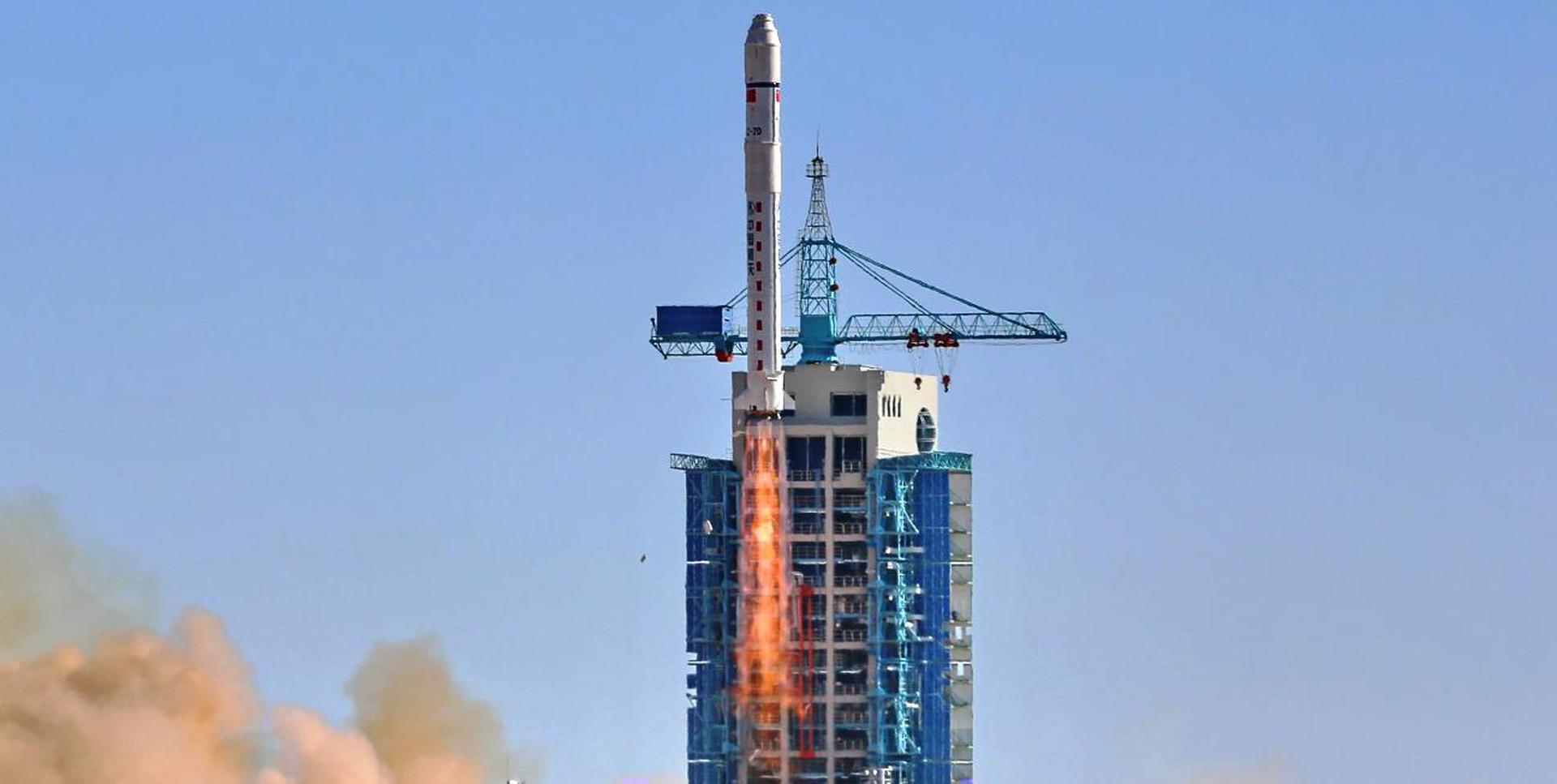
- Unknown Payload from Launch Complex 3 (LC-3/LA-1), Xichang Satellite Launch Center, People’s Republic of China (22:25 UTC) The Long March 2D is a two-stage orbital carrier rocket capable of delivering up to 3,500 kg to low Earth orbit, primarily used for LEO and sun-synchronous orbit missions. Payload details have not been disclosed.
March 13
- SpaceX Falcon 9 Block 5 | Starlink Group 17-31:
- Starlink Group 17-31 from Space Launch Complex 4E, Vandenberg Space Force Base, CA, USA (10:58 UTC) 29 Starlink V2 Mini Optimized satellites launched to low Earth orbit. Watch Live
March 15
-
SpaceX Falcon 9 Block 5 | Starlink Group 10-46:
- Starlink Group 10-46 from Space Launch Complex 40, Cape Canaveral Space Force Station, FL, USA (11:11 UTC) 29 Starlink V2 Mini Optimized satellites launched to low Earth orbit. Watch Live
-
China Aerospace Science and Technology Corporation Long March 6A | Unknown Payload:
- Unknown Payload from Launch Complex 9A, Taiyuan Satellite Launch Center, People’s Republic of China (13:14 UTC) The Long March 6A is China’s first rocket equipped with solid rocket boosters, augmenting a liquid-fuelled core stage with two YF-100 engines. It can lift up to 530 tonnes at launch and was first flown in March 2022. Payload details have not been disclosed.
March 17
- SpaceX Falcon 9 Block 5 | Starlink Group 17-24:
- Starlink Group 17-24 from Space Launch Complex 4E, Vandenberg Space Force Base, CA, USA (02:37 UTC) 29 Starlink V2 Mini Optimized satellites launched to low Earth orbit. Watch Live
March 18
- SpaceX Falcon 9 Block 5 | Starlink Group 10-33:
- Starlink Group 10-33 from Space Launch Complex 40, Cape Canaveral Space Force Station, FL, USA (10:57 UTC) 29 Starlink V2 Mini Optimized satellites launched to low Earth orbit. Watch Live
March 19
-
SpaceX Falcon 9 Block 5 | Starlink Group 17-15:
- Starlink Group 17-15 from Space Launch Complex 4E, Vandenberg Space Force Base, CA, USA (14:00 UTC) 29 Starlink V2 Mini Optimized satellites launched to low Earth orbit. Watch Live
-
Rocket Lab Electron | Eight Days A Week (StriX Launch 8):
- Eight Days A Week (StriX Launch 8) from Rocket Lab Launch Complex 1, Mahia Peninsula, New Zealand (17:45 UTC) The eighth StriX-series synthetic aperture radar satellite for Japanese Earth imaging company Synspective, deployed to sun-synchronous orbit. Electron is a small-lift, electrically pump-fed launch vehicle capable of delivering up to 300 kg to low Earth orbit.
-
Isar Aerospace Spectrum | Onward and Upward:
- Onward and Upward from Orbital Launch Pad, Andøya Spaceport (20:00 UTC) The second test flight of Isar Aerospace’s Spectrum rocket, carrying six payloads: CyBEEsat (TU Berlin), TriSat-S (University of Maribor), Platform 6 (EnduroSat), FramSat-1 (NTNU), SpaceTeamSat1 (TU Wien Space Team), and the “Let it Go” experiment from Dcubed. Exolaunch is managing payload integration and deployment. Spectrum is a small launch vehicle capable of delivering up to 1,000 kg to low Earth orbit. Previously delayed from January 21 due to a pressurisation valve issue. Watch Live
March 22
- Russian Federal Space Agency (ROSCOSMOS) Soyuz 2.1a | Progress MS-33 (94P):
- Progress MS-33 (94P) from 31/6, Baikonur Cosmodrome, Republic of Kazakhstan (11:59 UTC) Uncrewed Progress resupply mission delivering cargo and supplies to the International Space Station.
March 24
- Rocket Lab Electron | Daughter Of The Stars (LEO-PNT Pathfinder A):
- Daughter Of The Stars (LEO-PNT Pathfinder A) from Rocket Lab Launch Complex 1, Mahia Peninsula, New Zealand (00:00 UTC) The European Space Agency’s Low Earth Orbit Positioning, Navigation and Timing (LEO-PNT) demonstration mission will deploy two Pathfinder A satellites built by Thales Alenia Space and GMV to a 510 km orbit. The mission will assess how a low Earth orbit satellite constellation can complement the Galileo and EGNOS navigation systems in higher orbits, supporting Europe’s sovereign global navigation capability.
Schedule Changes
- New launch added: Rocket Lab Electron | Eight Days A Week (StriX Launch 8) — scheduled for March 19, 2026 at 17:45 UTC from Rocket Lab Launch Complex 1, Mahia Peninsula, New Zealand. The mission will deploy a synthetic aperture radar satellite for Japanese Earth imaging company Synspective into sun-synchronous orbit.
Note: Launch dates and times are subject to change due to technical or weather considerations.

Maurice Stellarski