· space brief · 8 min read
Rocket Lab Wins $190M Pentagon Hypersonic Contract | KeepTrack Space Brief
Rocket Lab secures $190M Pentagon deal for 20 hypersonic test flights over 4 years using Electron. Five missions annually trackable via Space-Track.
Top Stories
Rocket Lab Gets $190M Pentagon Contract for 20 Hypersonic Test Flights
Rocket Lab has secured a $190 million contract with the Pentagon to conduct 20 hypersonic flight missions over four years. The deal positions Electron as a dedicated testbed for U.S. hypersonic weapon development at a pace of roughly five flights per year.
Hypersonic test vehicles typically reach altitudes trackable by ground-based radar and space surveillance networks. Objects from these missions may appear briefly in Space-Track data depending on trajectory and classification.
Read the full story: SpaceNews
South Korea’s Defense Constellation Takes Shape After Solar Array Deal
A solar array supply contract signed March 18 clears a path for South Korea’s first national security satellite demonstrator, potentially launching in the second half of 2027. The deal provides the clearest timeline yet for a program that has been largely opaque.
Once deployed, South Korean defense satellites will join a growing list of Asian military constellations worth monitoring. KeepTrack users tracking regional ISR assets can use the satellite browser to filter objects by country of origin.
Read the full story: SpaceNews
China Picks New Asteroid Target for December 2027 Kinetic Impact Mission
China has selected a new near-Earth asteroid as the target for its first planetary defense kinetic impactor test, with a launch scheduled for December 2027. The mission will attempt to physically deflect the asteroid and measure the result — the same basic approach NASA used with DART in 2022.
The spacecraft will be trackable after launch. Users interested in deep space objects and planetary defense missions can follow related catalog entries via KeepTrack’s deep space view.
Read the full story: SpaceNews
Army to Take Full THAAD Control from MDA by 2027
The U.S. Army is working through a transfer plan with the Missile Defense Agency to assume full operational control of the THAAD missile defense program by 2027. Lt. Gen. Frank Lozano confirmed the two organizations are finalizing a memorandum of understanding to govern the handoff.
THAAD batteries are forward-deployed in South Korea, Guam, and the Middle East. The program transfer has no immediate effect on current deployments but shifts long-term acquisition and sustainment responsibility to Army.
Read the full story: Breaking Defense
Pentagon Replacing Anthropic with OpenAI and Google Gemini
The Pentagon has already deployed OpenAI across its systems in recent weeks and plans to follow with Google Gemini, according to Undersecretary for Research and Engineering Emil Michael. The shift comes after the Department of Defense ended its arrangement with Anthropic.
Michael described the transition as low-risk, saying the department is “pretty confident” in its AI vendor pipeline. No timeline was given for the Gemini rollout.
Read the full story: Breaking Defense
Estonia’s Defense Industry Revenue Up 347% Since 2021, Now at $842M
Estonian defense firms are on track to post $842 million in sales revenue for 2025 — a 347 percent increase from 2021, according to figures shared exclusively with Breaking Defense. Drone systems are driving the bulk of that growth.
Estonia’s defense expansion reflects a broader NATO flank buildup, with unmanned systems increasingly central to Baltic defense planning. The figures reinforce how rapidly smaller European nations are scaling domestic defense production capacity.
Read the full story: Breaking Defense
Pentagon FY27 Budget Could Hit $1.5 Trillion — But the Math Is Unclear
The Trump administration has not confirmed whether a potential $1.5 trillion FY27 Pentagon budget would be structured as a base budget request, a supplemental for Iran operations, or a split between both. The distinction matters significantly for how Congress would process and authorize the funds.
Rep. Rob Wittman indicated congressional support exists for an Iran war supplemental, but the administration has not laid out the specific numbers publicly. Until a formal request is submitted, the $1.5 trillion figure remains unconfirmed.
Read the full story: Breaking Defense
Satellite of the Day
ATHENA
The ATHENA satellite is a compact experimental communication platform built by MAXSS/SFLIN for PNTV, launching on September 3, 2020, aboard a Vega rocket from the Guiana Space Center. Weighing just 138 kg and configured on an SSL-100 bus, this small but capable spacecraft was designed to demonstrate advanced communication technologies in orbit, specifically leveraging an E-band transponder for its experimental payload. E-band (71–76 GHz and 81–86 GHz) communications are of particular interest for next-generation satellite systems due to their higher bandwidth capacity and potential for secure, directional links.
Operating in a sun-synchronous orbit at 97.2° inclination, ATHENA was originally planned for a two-year mission demonstrating how experimental communication architectures could perform in the space environment. The satellite’s compact box-shaped design and reliance on solar arrays and batteries make it representative of the growing class of small, focused experimental platforms that are becoming increasingly important for testing new technologies before they’re deployed on larger, costlier systems. For space domain awareness specialists, ATHENA remains an interesting case study in how universities and research institutions use small satellites to bridge the gap between ground testing and operational deployment.
| Detail | Value |
|---|---|
| NORAD ID | 46275 |
| Operator | PNTV (US) |
| Launch Date | September 3, 2020 |
| Orbit | Sun-synchronous, 97.2° inclination |
| Purpose | Experimental Communication |
| Launch Vehicle | Vega |
| Launch Mass | 138 kg |
Track this satellite in real-time: Track ATHENA
Upcoming Space Launches
March 19
-
SpaceX Falcon 9 Block 5:
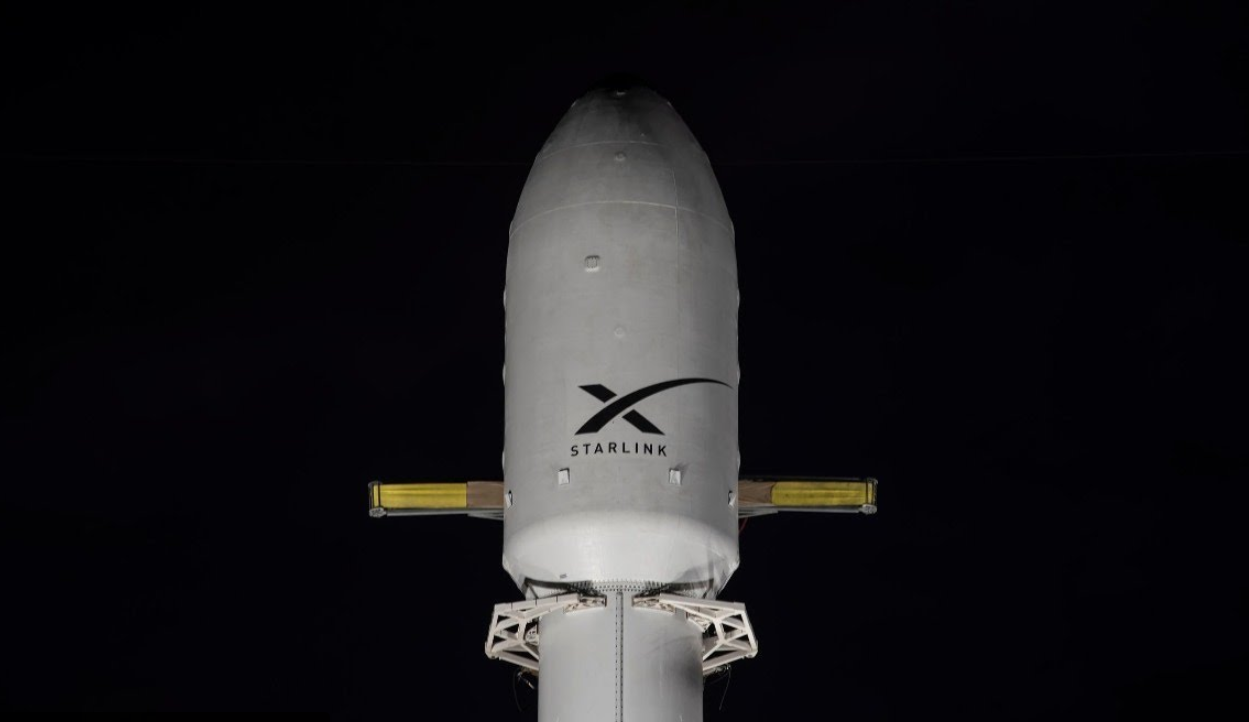
- Starlink Group 10-33 from Space Launch Complex 40, Cape Canaveral Space Force Station, FL, USA (10:35 UTC) SpaceX Falcon 9 launching 29 Starlink V2 Mini Optimized satellites to low Earth orbit. Booster tail number 1077 flies for its 27th time, targeting a landing on drone ship Just Read the Instructions in the Atlantic Ocean. Watch Live Launch Preview
-
Russian Federal Space Agency (ROSCOSMOS) Soyuz 2.1b/Fregat-M:
- 16 x Rassvet-3 from Plesetsk Cosmodrome, Russian Federation (11:00 UTC) A batch of 16 Rassvet-3 low Earth orbit communications satellites for the Russian Byuro-1440 (Bureau 1440) constellation, designed to provide broadband high-speed internet access across Russia. Payload identities are uncertain.
March 20
-
Rocket Lab Electron:
- Eight Days A Week (StriX Launch 8) from Rocket Lab Launch Complex 1, Mahia Peninsula, New Zealand (18:10 UTC) Rocket Lab Electron launching the eighth Strix synthetic aperture radar (SAR) satellite for Japan-based Earth-observation company Synspective. The roughly 100kg-class satellite has an expected operational life of approximately five years. This is the latest in a 27-launch dedicated Electron contract procured by Synspective for its StriX constellation. Launch Preview
-
SpaceX Falcon 9 Block 5:
- Starlink Group 17-15 from Space Launch Complex 4E, Vandenberg Space Force Base, CA, USA (21:48 UTC) SpaceX Falcon 9 launching 29 Starlink V2 Mini Optimized satellites to low Earth orbit. Booster tail number 1077 flies for its 27th time, targeting a landing on drone ship Just Read the Instructions. Watch Live Launch Preview
March 22
-
Russian Federal Space Agency (ROSCOSMOS) Soyuz 2.1a:
- Progress MS-33 (94P) from Site 31/6, Baikonur Cosmodrome, Republic of Kazakhstan (11:59 UTC) Soyuz 2.1a launching the uncrewed Progress MS-33 resupply spacecraft to the International Space Station. Launch Preview
-
SpaceX Falcon 9 Block 5:
- Starlink Group 10-62 from Space Launch Complex 40, Cape Canaveral Space Force Station, FL, USA (14:43 UTC) SpaceX Falcon 9 launching 29 Starlink V2 Mini Optimized satellites to low Earth orbit. Watch Live Launch Preview
-
China Rocket Co. Ltd. Smart Dragon 3:
- Unknown Payload from Haiyang Oriental Spaceport, Haiyang Offshore Launch Location, China (15:39 UTC) Smart Dragon-3 is a solid-fuel orbital rocket developed by a subsidiary of the state-owned CASC group for the commercial launch market. Payload details are currently unknown.
March 23
- Isar Aerospace Spectrum:
- Onward and Upward from Orbital Launch Pad, Andøya Spaceport, Norway (20:00 UTC) Second test flight of Isar Aerospace’s Spectrum rocket, carrying six payloads: CyBEEsat (TU Berlin), TriSat-S (University of Maribor), Platform 6 (EnduroSat), FramSat-1 (NTNU), SpaceTeamSat1 (TU Wien Space Team), and a “Let it Go” experiment from Dcubed. Exolaunch is managing payload integration and deployment. Previously delayed from January 21 due to a pressurization valve issue. Watch Live Launch Preview
March 24
-
Rocket Lab Electron:
- Daughter Of The Stars (LEO-PNT Pathfinder A) from Rocket Lab Launch Complex 1, Mahia Peninsula, New Zealand (TBD) Rocket Lab Electron launching two pathfinder satellites — IOD-1 and IOD-2 — for the European Space Agency (ESA) on behalf of the Celeste LEO-PNT (Low Earth Orbit Position, Navigation, and Timing) programme. These are the first two satellites of a planned 11-satellite constellation, intended to explore how a low Earth orbit fleet can integrate with Galileo, EGNOS, and other Global Navigation Satellite System assets to improve resilience and service quality. Both satellites will be deployed into a 510 km circular orbit.
-
SpaceX Falcon 9 Block 5:
- Starlink Group 17-17 from Space Launch Complex 4E, Vandenberg Space Force Base, CA, USA (23:03 UTC) SpaceX Falcon 9 launching a batch of 25 Starlink satellites to low Earth orbit as part of SpaceX’s broadband internet mega-constellation. Watch Live
Schedule Changes
- Smart Dragon 3 | Unknown Payload has been newly added to the manifest, scheduled for launch on March 22 at 15:39 UTC from Haiyang Oriental Spaceport, China (status: Go for Launch).
- Falcon 9 Block 5 | Starlink Group 17-17 has been newly added to the manifest, scheduled for launch on March 24 at 23:03 UTC from Vandenberg Space Force Base, CA, USA (status: Go for Launch).
Note: Launch dates and times are subject to change due to technical or weather considerations.

Maurice Stellarski