· space brief · 8 min read
Artemis 2 Crew Arrives for April 1 Lunar Flyby Launch | KeepTrack Space Brief
Artemis 2 astronauts arrive at KSC for April 1 launch. Four-person crew will fly lunar free-return trajectory, first crewed lunar mission since Apollo 17 in 1972.

Top Stories
Artemis 2 Crew Arrives at KSC, April 1 Launch Holding
The four Artemis 2 astronauts arrived at Kennedy Space Center on March 27 for final pre-launch preparations. Launch is currently scheduled for April 1 at 6:24 p.m. EDT (2224 GMT). This will be the first crewed lunar flyby mission since Apollo 17 in 1972.
The Orion capsule and Space Launch System won’t be tracked as orbital objects — the trajectory is a free-return lunar flyby — but the mission will stress-test deep space communication and life support systems ahead of Artemis 3’s planned crewed lunar landing.
Read the full story: SpaceNews
SpaceX Transporter 16 to Orbit 119 Payloads on SSO Rideshare
SpaceX’s Transporter 16 mission will carry 119 payloads to Sun-synchronous orbit from Vandenberg Space Force Base. The mission continues SpaceX’s cadence of dedicated SSO rideshare flights, which have become the primary access route for small satellite operators targeting Earth observation and remote sensing orbits.
With 119 objects deploying into a shared orbital band, the post-launch conjunction environment will be dense. KeepTrack users can monitor the evolving catalog as NORAD assigns IDs post-deployment.
Read the full story: NASASpaceFlight
Starfish Space Replaces Docking Demo Partner After Pullout
Starfish Space has secured a new partner for its on-orbit docking demonstration after its original partner withdrew. The company is developing the Otter spacecraft, designed for satellite servicing and life extension. No details on the replacement partner or revised timeline were released.
On-orbit docking and servicing vehicles are becoming an active tracking concern — proximity operations in congested orbits require close monitoring of relative motion between the servicer and target. Keep an eye on Otter’s NORAD ID once it launches.
Read the full story: SpaceNews
How to Watch Artemis 2 Launch Live on April 1
NASA’s Artemis 2 lifts off April 1 at 6:24 p.m. EDT. The four-person crew will fly a lunar free-return trajectory — no orbital insertion, no landing. Coverage will be available via NASA TV and the agency’s app.
Read the full story: Space.com
Johns Hopkins Analyst Examines China’s Challenge to U.S. Space Leadership
Dr. Namrata Goswami of Johns Hopkins University joined the This Week in Space podcast (Episode 203) to assess China’s long-term space strategy and where it threatens U.S. dominance. China has been steadily expanding its crewed station operations, lunar program, and commercial launch cadence — all areas where the gap with the U.S. has narrowed over the past five years.
Read the full story: Space.com
Satellite of the Day
FORMOSAT-3 FM5 (COSMIC 1-5)
FORMOSAT-3 FM5, better known by its international designation COSMIC 1-5, is a compact Earth observation satellite operated by Taiwan’s National Space Organization (NSPO). Launched on April 15, 2006, aboard a Minotaur I rocket from Vandenberg Space Force Base, this 62-kilogram microsatellite was part of the COSMIC (Constellation Observing Meteor Ionosphere on Radio Occultation) constellation—a collaborative mission between Taiwan and the United States designed to study atmospheric dynamics and ionospheric phenomena. The satellite’s primary payload focuses on radio occultation measurements, which help scientists understand weather patterns, climate trends, and space weather effects.
What makes FORMOSAT-3 FM5 particularly noteworthy is its remarkable longevity: designed for a five-year mission, it far exceeded expectations by remaining operational for 14 years. This engineering success demonstrates the robustness of the COSMIC satellite bus design and has made it a valuable asset for long-term atmospheric and climate research. Operating in a polar orbit at 72° inclination, the satellite provided crucial data for meteorologists, space physicists, and climate scientists worldwide before eventually reaching the end of its operational life.
| Detail | Value |
|---|---|
| NORAD ID | 29049 |
| Operator | NSPO (Taiwan) |
| Launch Date | April 15, 2006 |
| Orbit | Polar, 72.02° inclination |
| Purpose | Earth observation |
| Status | Decayed |
Learn more about this satellite: View FORMOSAT-3 FM5
Upcoming Space Launches
March 29
- United Launch Alliance Atlas V 551:
- Amazon Leo (LA-05) from Space Launch Complex 41, Cape Canaveral SFS, FL, USA (07:53 UTC) A United Launch Alliance Atlas V rocket will launch a batch of broadband internet satellites for Amazon’s Project Kuiper low Earth orbit constellation. This is the sixth of nine Atlas V rockets purchased by Amazon to deploy its satellite internet network, aimed at delivering high-speed, low-latency broadband to underserved and remote areas globally. Watch Live Launch Preview
March 30
-
SpaceX Falcon 9 Block 5:
- Transporter 16 (Dedicated SSO Rideshare) from Space Launch Complex 4E, Vandenberg SFB, CA, USA (10:20 UTC) A SpaceX Falcon 9 rocket will launch dozens of satellites into Sun-synchronous orbit on this SmallSat rideshare mission, including 57 payloads manifested by German company Exolaunch and 19 payloads from Texas-based Seops Space. Watch Live Launch Preview
-
SpaceX Falcon 9 Block 5:
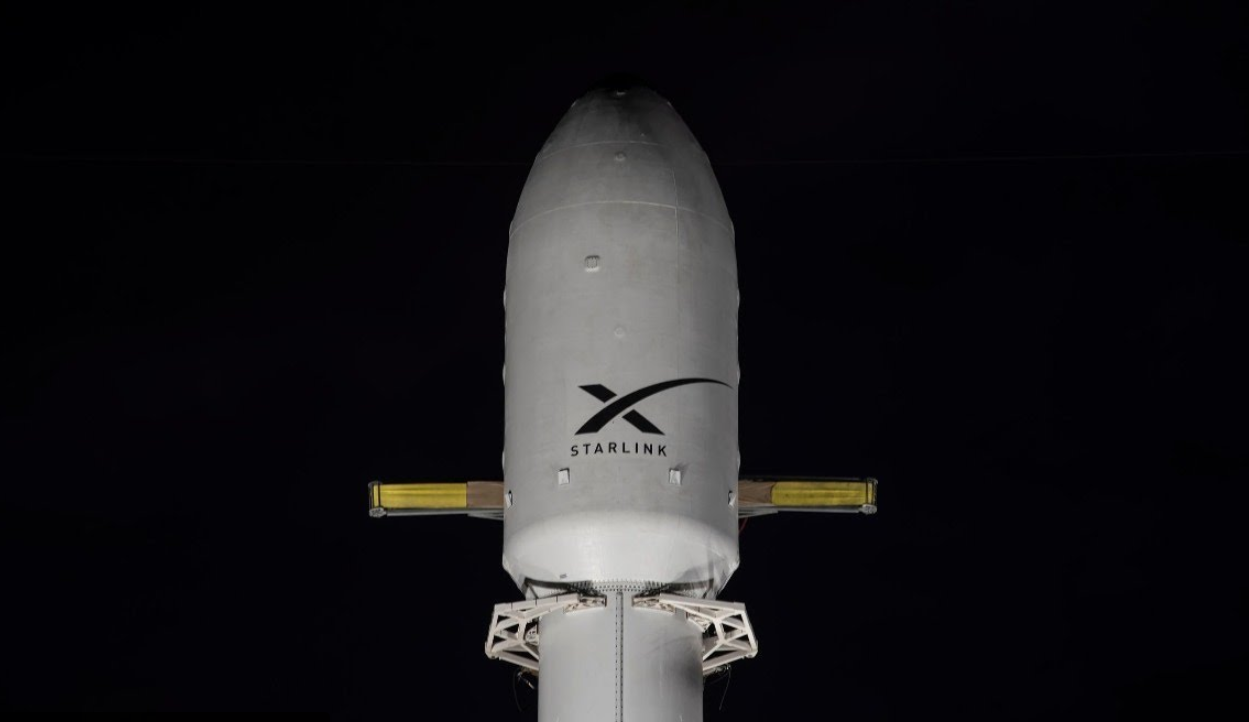
- Starlink Group 10-44 from Space Launch Complex 40, Cape Canaveral SFS, FL, USA (21:15 UTC) A SpaceX Falcon 9 rocket will launch 29 Starlink V2 Mini Optimized satellites into low Earth orbit. Booster 1067, flying for the 34th time, will target a landing on the drone ship Just Read the Instructions in the Atlantic Ocean. Watch Live Launch Preview
March 31
-
LandSpace Zhuque-2E:
- Unknown Payload from Launch Area 96A, Jiuquan Satellite Launch Center, People’s Republic of China (TBD) Details to be determined. Zhuque-2E is an enhanced medium-lift rocket powered by liquid oxygen and methane, capable of lifting 6,000 kg to low Earth orbit, featuring upgraded TQ-12A first-stage engines and a new TQ-15A second-stage engine.
-
Space Pioneer Tianlong-3:
- Demo Flight from Tianlong-3 Launch Pad, Jiuquan Satellite Launch Center, People’s Republic of China (TBD) First test launch of Space Pioneer’s Tianlong-3 reusable rocket. Reports indicate the mission may carry a batch of satellites for the SpaceSail/G60/Qianfan LEO communications constellation. The vehicle is capable of lifting 17,000 kg to low Earth orbit.
-
CAS Space Kinetica 2:
- Qingzhou Spacecraft Demo Flight from Launch Area 140, Jiuquan Satellite Launch Center, People’s Republic of China (TBD) First test launch of CAS Space’s Kinetica-2 rocket and Qingzhou cargo resupply spacecraft, intended for future cargo transport to the Chinese Tiangong Space Station under a commercial contract from the China Manned Space Engineering Office (CMSEO). The reusable vehicle can lift 12,000 kg to low Earth orbit.
-
Isar Aerospace Spectrum:
- Onward and Upward from Orbital Launch Pad, Andøya Spaceport, Norway (TBD) Isar Aerospace’s Spectrum small launch vehicle will fly its second test flight, carrying five CubeSats: CyBEEsat (TU Berlin), TriSat-S (University of Maribor), Platform 6 (EnduroSat), FramSat-1 (NTNU), and SpaceTeamSat1 (TU Wien Space Team), plus the “Let it Go” experiment from Dcubed. Payload integration and deployment is managed by Exolaunch. Watch Live Launch Preview
-
China Aerospace Science and Technology Corporation Long March 2C:
- Unknown Payload from Launch Area 94 (SLS-2 / 603), Jiuquan Satellite Launch Center, People’s Republic of China (TBD) Details to be determined.
-
Blue Origin New Glenn:
- BlueBird Block 2 #2 from Launch Complex 36A, Cape Canaveral SFS, FL, USA (TBD) Blue Origin’s New Glenn will deploy AST SpaceMobile’s BlueBird Block 2 FM2 satellite, featuring a communications array of up to 2,400 square feet — among the largest ever commercially deployed in low Earth orbit. Block 2 BlueBirds offer up to 10 times the bandwidth of Block 1 satellites, supporting voice, data, and video at peak speeds up to 120 Mbps.
-
China Aerospace Science and Technology Corporation Long March 12B:
- Demo Flight from Long March 12 Series Pad, Jiuquan Satellite Launch Center, People’s Republic of China (TBD) First test launch of CASC’s Long March 12B, a reusable orbital launch vehicle capable of lifting 20,000 kg to low Earth orbit. The rocket uses nine YF-102R engines on its reusable first stage, which is designed to land on a downrange pad in Minqin County, Gansu Province.
April 1
-
Russian Space Forces Soyuz 2.1a/Fregat-M:
- Meridian-M No.21L from 43/3 (43L), Plesetsk Cosmodrome, Russian Federation (02:00–12:00 UTC) Launch of a Meridian military and civilian communications satellite into elliptical orbit. Payload identity is uncertain. The Soyuz 2.1a features a digital flight control system and uprated engines enabling launches from a fixed platform with larger payload fairings.
-
National Aeronautics and Space Administration SLS Block 1:
- Artemis II from Launch Complex 39B, Kennedy Space Center, FL, USA (22:24 UTC) Artemis II is NASA’s first crewed mission under the Artemis program, sending four astronauts — three Americans and one Canadian — on a lunar flyby before returning to Earth. The mission will validate the Orion spacecraft’s life support systems and other crew-critical systems that could not be tested during the uncrewed Artemis I flight. The Space Launch System is the most powerful rocket NASA has ever built, with a lift capacity of 95,000 kg to low Earth orbit. Watch Live
April 2
-
RKK Energiya Soyuz-5:
- Demo Flight from 45/1, Baikonur Cosmodrome, Republic of Kazakhstan (11:00 UTC) Demonstration flight of Russia’s new Soyuz-5 (Irtysh) launch vehicle with a mass simulator payload. The two-stage rocket is powered by an RD-171MV engine on the first stage and two RD-0124MS engines on the second stage, capable of lifting 17,000 kg to low Earth orbit. It is intended to replace the Zenit-2 and Proton Medium vehicles.
-
SpaceX Falcon 9 Block 5:
- Starlink Group 10-58 from Space Launch Complex 40, Cape Canaveral SFS, FL, USA (11:52 UTC) A batch of 29 Starlink satellites for SpaceX’s space-based broadband internet mega-constellation. Watch Live
Schedule Changes
- Newly Added — National Aeronautics and Space Administration SLS Block 1 | Artemis II: Added to the manifest, scheduled for April 1, 2026 at 22:24 UTC from Kennedy Space Center, FL, with a status of Go for Launch.
- Newly Added — SpaceX Falcon 9 Block 5 | Starlink Group 10-58: Added to the manifest, scheduled for April 2, 2026 at 11:52 UTC from Cape Canaveral SFS, FL, with a status of Go for Launch.
- Rocket Lab Electron | Daughter Of The Stars (LEO-PNT Pathfinder A): Status changed from Go for Launch to Launch Successful — mission has flown and is excluded from the calendar above.
- Space Pioneer Tianlong-3 | Demo Flight: Status changed from Go for Launch to To Be Determined — the launch date is now uncertain.
Note: Launch dates and times are subject to change due to technical or weather considerations.

Maurice Stellarski