· space brief · 8 min read
Iran Struck U.S. Aircraft Despite 'Maxed Out' Defense | KeepTrack Space Brief
Iran successfully struck U.S. aircraft in Saudi Arabia despite maxed-out defensive posture. Space Force ISR and missile warning gaps exposed. Tracking impacts.
Top Stories
Space Force FY27 Budget Aligned to Rapid Capabilities Growth, Saltzman Says
Chief of Space Operations Gen. Chance Saltzman confirmed the FY27 budget will reflect Space Force’s need for accelerated capabilities growth. He said the White House, OMB, and DoD are all aligned on the service’s expansion requirements — an unusual degree of institutional consensus.
No specific funding figures were released, but Saltzman’s statement comes as Space Force personnel are actively supporting U.S. Central Command operations from three locations: forward positions in the Middle East, CENTCOM headquarters in Tampa, and Shaw Air Force Base in South Carolina.
Read the full story: Breaking Defense
Saltzman: Space Now Embedded in Active Combat Operations
Gen. Saltzman described space capabilities as “baked into” modern combat operations, with Space Force personnel directly supporting CENTCOM during ongoing Middle East operations. This is an operational posture, not a support role.
For KeepTrack users tracking military satellites, CENTCOM-supporting assets likely include missile warning, PNT, and communications constellations operating in GEO and MEO. The satellite tracking tool can be used to monitor known U.S. government satellites in those orbits.
Read the full story: SpaceNews
Switzerland Eyes Full Cancellation of Patriot Order, F-35 Sale at Risk
Switzerland is considering a “complete termination” of its Patriot missile defense order from the U.S. and has extended a payment freeze. Bern warned the dispute could affect its entire Foreign Military Sale portfolio with the U.S., including a pending F-35 purchase.
The breakdown is a concrete example of how U.S. defense export relationships are under strain. A collapsed Swiss FMS portfolio would affect Lockheed Martin, Raytheon, and Pratt & Whitney simultaneously.
Read the full story: Breaking Defense
Pentagon and Boeing to Triple Patriot PAC-3 Seeker Production
The Pentagon and Boeing announced a plan to triple production of Patriot PAC-3 missile seekers. The deal mirrors a seven-year framework agreement with PAC-3 prime contractor Lockheed Martin announced in January to expand interceptor output.
Tripling seeker production addresses a known bottleneck in PAC-3 manufacturing. Demand has outpaced supply since the Ukraine war accelerated drawdown of U.S. and allied interceptor stocks.
Read the full story: Breaking Defense
Iran Struck U.S. Aircraft in Saudi Arabia Despite “Maxed Out” Defensive Posture
Secretary of Defense Pete Hegseth stated the U.S. had “maxed out” its defensive posture before Iran successfully struck U.S. aircraft operating in Saudi Arabia. The Air Force’s current aircraft survivability strategy was built around a China threat model, and its applicability to an Iranian attack profile is now being questioned.
The strike raises direct questions about space-enabled ISR and missile warning gaps. If the defensive posture was saturated, that includes sensor and cueing chains that Space Force assets feed into.
Read the full story: Breaking Defense
Navy CNO: Iran Operations Are Mathematically Degrading China Deterrence
Adm. Daryl Caudle, Chief of Naval Operations, said he is “of course” concerned that sustained operations against Iran reduce U.S. capacity to deter China. His framing was blunt: “It’s a mathematical certainty that if you consume a fixed resource, then your ability to bring that to bear on another problem set is diminished by the amount you subtract it.”
The concern is not hypothetical. Carrier strike groups, munitions stocks, and space-based ISR support are all finite. Extended CENTCOM commitments directly reduce assets available for INDOPACOM contingencies.
Read the full story: Breaking Defense
Pentagon Awards Pratt & Whitney $6.6 Billion for F-35 Engine Production
The Pentagon awarded Pratt & Whitney a $6.6 billion contract covering F135 engines for two upcoming F-35 production lots. The award keeps the Joint Strike Fighter production line moving as the program approaches its fourth decade of development and fielding.
The contract comes as Switzerland’s potential F-35 cancellation and ongoing allied procurement decisions add uncertainty to long-term production planning for the platform.
Read the full story: Breaking Defense
Satellite of the Day
SPUTNIX-2
SPUTNIX-2 was a Russian technology demonstration satellite operated by Saint Petersburg Polytechnic University (SPBPU). Launched on August 9, 2022, aboard a Soyuz-2-1B rocket from Tyuratam Cosmodrome, this small 5-kilogram cubesat-class spacecraft was designed to test new technologies in orbital conditions. As part of Russia’s broader effort to develop indigenous small satellite capabilities, SPUTNIX-2 carried experimental payloads relevant to the country’s space technology roadmap during a period of significant geopolitical tension and international sanctions.
The satellite operated in a sun-synchronous near-polar orbit at approximately 97.35° inclination, a standard configuration for Earth observation and technology test missions. However, SPUTNIX-2 has since decayed from orbit, completing its mission lifecycle. Its relatively short operational period is typical for experimental technology demonstrators, which are often designed to validate specific systems before committing to longer-duration operational platforms.
| Detail | Value |
|---|---|
| NORAD ID | 53371 |
| Operator | SPBPU (Russia) |
| Launch Date | August 9, 2022 |
| Orbit | Sun-synchronous, 97.35° inclination |
| Purpose | Technology demonstration |
| Status | Decayed |
Learn more about this satellite: View SPUTNIX-2
Upcoming Space Launches
April 2
- SpaceX Falcon 9 Block 5:
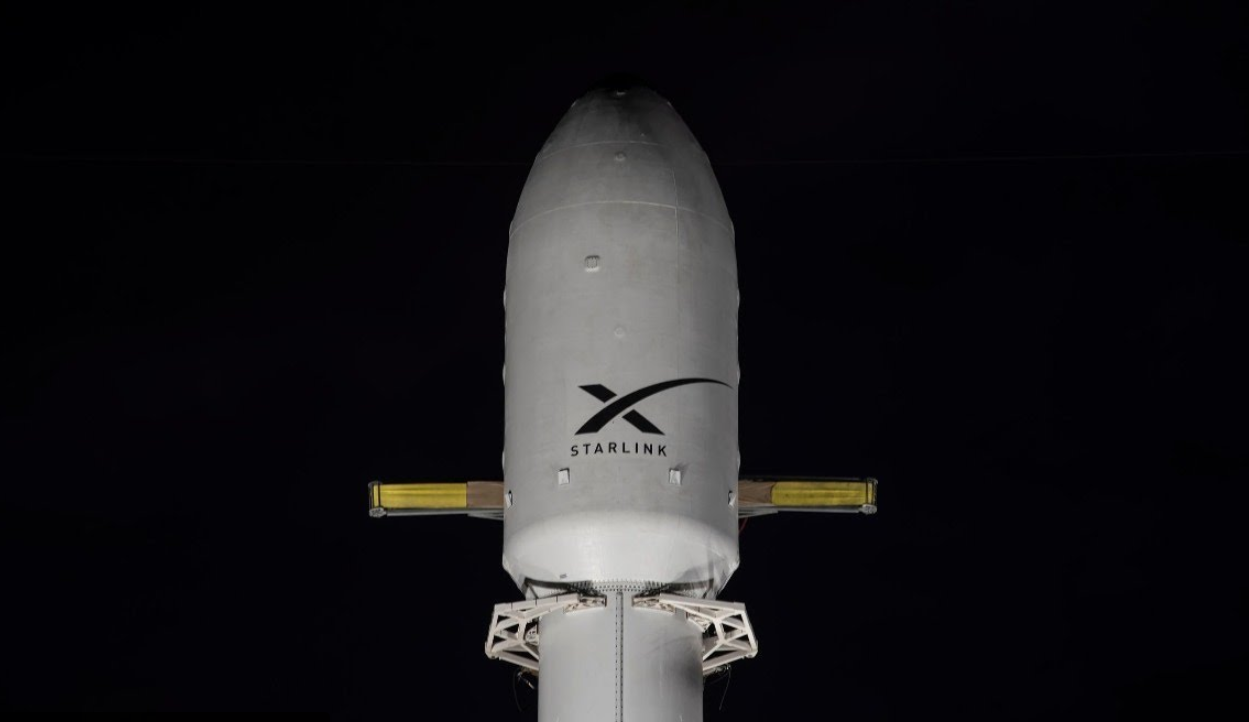
- Starlink Group 10-58 from Space Launch Complex 40, Cape Canaveral SFS, FL, USA (11:52 UTC) A SpaceX Falcon 9 rocket will launch 29 Starlink V2 Mini Optimized satellites into low Earth orbit. Watch Live Launch Preview
April 3
-
Space Pioneer Tianlong-3:
- Demo Flight from Jiuquan Satellite Launch Center, People’s Republic of China (03:52 UTC) First test launch of Space Pioneer’s Tianlong-3 rocket, a reusable vehicle capable of lifting 17,000 kg to low Earth orbit. Reports indicate this launch may carry a batch of satellites for the SpaceSail/G60/Qianfan LEO communications constellation. Launch Preview
-
RKK Energiya Soyuz-5:
- Demo Flight from Baikonur Cosmodrome, Republic of Kazakhstan (11:00 UTC) Demonstration flight for Russia’s new Soyuz-5 (Irtysh) launch vehicle, carrying a mass simulator. Developed under Project Feniks to replace the Zenit-2 and Proton Medium, the Soyuz-5 features an RD-171MV engine on its first stage and is capable of lifting 17,000 kg to low Earth orbit. The mission is conducted under the Russian Federal Space Agency (ROSCOSMOS). Launch Preview
April 4
-
United Launch Alliance Atlas V 551:
- Amazon Leo (LA-05) from Space Launch Complex 41, Cape Canaveral SFS, FL, USA (05:45 UTC) The sixth of nine Atlas V rockets contracted by Amazon will launch a batch of broadband internet satellites for Amazon’s Kuiper low Earth orbit constellation, aimed at delivering high-speed connectivity to underserved and remote areas globally. Watch Live Launch Preview
-
SpaceX Falcon 9 Block 5:
- Starlink Group 17-35 from Space Launch Complex 4E, Vandenberg SFB, CA, USA (23:03 UTC) A SpaceX Falcon 9 rocket will launch 29 Starlink V2 Mini Optimized satellites into low Earth orbit. Watch Live Launch Preview
April 7
-
Northrop Grumman Space Systems Minotaur IV:
- STP-S29A from Space Launch Complex 8, Vandenberg SFB, CA, USA (00:00 UTC) A U.S. Department of Defense Space Test Program mission delivering up to 200 kg of cubesats to low Earth orbit. The primary payload is STPSat-7, an ESPA-class satellite hosting multiple DoD technology demonstrations, including the U.S. Naval Research Laboratory’s LARADO instrument, which uses lasers to detect and characterize lethal non-trackable orbital debris.
-
China Aerospace Science and Technology Corporation Long March 8:
- Unknown Payload from Commercial LC-1, Wenchang Space Launch Site, People’s Republic of China (13:24 UTC) Details to be determined. The Long March 8 is capable of delivering up to 5,000 kg to a 700 km sun-synchronous orbit.
April 8
-
SpaceX Falcon 9 Block 5:
- Cygnus CRS-2 NG-24 from Space Launch Complex 40, Cape Canaveral SFS, FL, USA (12:51 UTC) The 24th flight of Northrop Grumman’s Cygnus uncrewed resupply spacecraft and its 23rd mission to the International Space Station under NASA’s Commercial Resupply Services contract. The Falcon 9 Block 5, a reusable two-stage rocket, supports reliable cargo delivery to the ISS. Watch Live
-
China Aerospace Science and Technology Corporation Long March 6A:
- Unknown Payload from Launch Complex 9A, Taiyuan Satellite Launch Center, People’s Republic of China (19:30 UTC) Details to be determined. The Long March 6A, China’s first rocket with solid rocket boosters, features two YF-100 engines on its first stage augmented by four solid boosters.
April 9
- SpaceX Falcon 9 Block 5:
- Starlink Group 17-21 from Space Launch Complex 4E, Vandenberg SFB, CA, USA (02:39 UTC) A SpaceX Falcon 9 rocket will launch 29 Starlink V2 Mini Optimized satellites into low Earth orbit. Watch Live
Schedule Changes
- New Launch Added — SpaceX Falcon 9 Block 5 | Cygnus CRS-2 NG-24: This mission has been newly added to the manifest and is confirmed Go for Launch on April 8, 2026 at 12:51 UTC from Cape Canaveral Space Force Station.
- New Launch Added — China Aerospace Science and Technology Corporation Long March 6A | Unknown Payload: This mission has been newly added and is confirmed Go for Launch on April 8, 2026 at 19:30 UTC from Taiyuan Satellite Launch Center.
- Status Update — NASA Space Launch System Block 1 | Artemis II: This mission has been marked Launch Successful and has been removed from the upcoming launches calendar.
- Status Update — China Aerospace Science and Technology Corporation Long March 8 | Unknown Payload: This mission has been upgraded from To Be Confirmed to Go for Launch, confirming its scheduled window on April 7, 2026.
Note: Launch dates and times are subject to change due to technical or weather considerations.

Maurice Stellarski