


· space brief · 6 min read
Artemis 2 Crew Returns After 50-Year Lunar Flyby | KeepTrack Space Brief
Artemis 2 astronauts completed first crewed lunar flyby since Apollo 17, traveling 690,000 miles aboard Orion. Four crew validated deep-space systems.
Top Stories
Artemis 2 Crew Back on Earth After First Crewed Lunar Flyby Since Apollo 17
The four Artemis 2 astronauts have returned to Earth after completing the first crewed lunar flyby mission in over 50 years. The mission sent Reid Wiseman, Victor Glover, Christina Koch, and Jeremy Hansen around the Moon aboard Orion, covering roughly 690,000 miles total.
No crewed lunar orbit was attempted — this was a free-return trajectory — but the mission validated Orion’s life support systems and deep-space abort procedures with humans aboard for the first time.
Read the full story: Space.com
Starship Ship 39 and Booster 19 Roll Out for Static Fire Testing
SpaceX has rolled out Ship 39 and Booster 19 to the Starbase launch site for static fire tests. This is the next hardware stack in the Starship flight cadence following the successful Artemis-related Orion return. Static fire results will determine the timeline for the next integrated flight test.
Read the full story: NASASpaceFlight
Rocket Lab Adds Three More Electron Launches for Japan’s iQPS Radar Constellation
Rocket Lab has secured a contract with Japanese SAR operator iQPS for three additional Electron launches. iQPS is building a commercial radar imaging constellation — these three missions expand on earlier Electron flights that already delivered iQPS satellites to low Earth orbit.
For users tracking Japan’s growing commercial SAR presence, iQPS satellites provide frequent revisit imaging with sub-meter resolution capability. Adding three more birds will increase the constellation’s coverage density and revisit rates.
Read the full story: SpaceNews
Sophia Space and Kepler Communications to Deploy Orbital Edge Compute Nodes in Late 2026
Sophia Space and Kepler Communications announced a partnership on April 13 to fly Sophia’s Orbital Data Center software on Kepler’s optical relay satellites starting in late 2026. The goal is a distributed in-space compute layer using Kepler’s laser inter-satellite links as the data backbone.
This is an early-stage demonstration, not an operational service. But if the optical link throughput holds up, it establishes a path to processing data on-orbit rather than downlinking raw sensor feeds — relevant for latency-sensitive defense and intelligence applications.
Read the full story: SpaceNews
August 12, 2026 Total Solar Eclipse Crosses Spain and Iceland
The next total solar eclipse crosses Spain and Iceland on August 12, 2026. The path of totality runs through the Balearic Islands, Valencia, and the Iberian Peninsula before tracking northward across Iceland. Maximum totality reaches roughly 2 minutes 18 seconds near the Spanish coast.
For satellite trackers, eclipse geometry matters — spacecraft in low Earth orbit passing through the umbra during the event will experience an abrupt thermal and power environment shift. The eclipse is also a useful calibration event for ground-based optical tracking systems along the path.
Read the full story: Space.com
Satellite of the Day
GLOBALSTAR M083
GLOBALSTAR M083 is a communication satellite that forms part of the Globalstar constellation, a network dedicated to providing mobile satellite communication services worldwide. Launched on July 13, 2011, from Tyuratam Cosmodrome (TYMSC) aboard a Soyuz-2-1A rocket, this satellite was manufactured by Thales Alenia Space using the ELiTeBus-1000 platform. The satellite carries 32 transponders total—16 operating in C-to-S-band and 16 in L-to-C-band—enabling it to relay voice, data, and messaging traffic for users across remote and underserved regions where terrestrial networks fall short.
With a designed operational lifetime of 15 years and solar arrays generating up to 2.4 kW at launch, M083 represents the reliability of mid-life constellation replenishment. Positioned in a near-polar orbit at 51.99° inclination, the satellite provides global coverage and has proven integral to Globalstar’s ability to maintain service continuity. Its relatively compact design—measuring 4 meters in length with 12-meter solar panel span when deployed—exemplifies efficient satellite engineering for commercial communication missions.
| Detail | Value |
|---|---|
| NORAD ID | 37739 |
| Operator | Globalstar (US) |
| Launch Date | July 13, 2011 |
| Orbit | Low Earth Orbit, 51.99° inclination |
| Purpose | Mobile satellite communication |
| Status | Active |
Track this satellite in real-time: Track GLOBALSTAR M083
Upcoming Space Launches
April 14
-
CAS Space Kinetica 1:
- Unknown Payload from Jiuquan Satellite Launch Center, People’s Republic of China (03:54 UTC) Details TBD.
-
SpaceX Falcon 9 Block 5:
- Starlink Group 10-24 from Cape Canaveral Space Force Station, FL, USA (06:13 UTC) A batch of 25 Starlink V2 Mini Optimized satellites launching to low Earth orbit. Watch Live Launch Preview
April 15
- SpaceX Falcon 9 Block 5:
- Starlink Group 17-27 from Vandenberg Space Force Base, CA, USA (02:00 UTC) A batch of 25 Starlink V2 Mini Optimized satellites launching to low Earth orbit. Watch Live Launch Preview
April 16
- Blue Origin New Glenn:
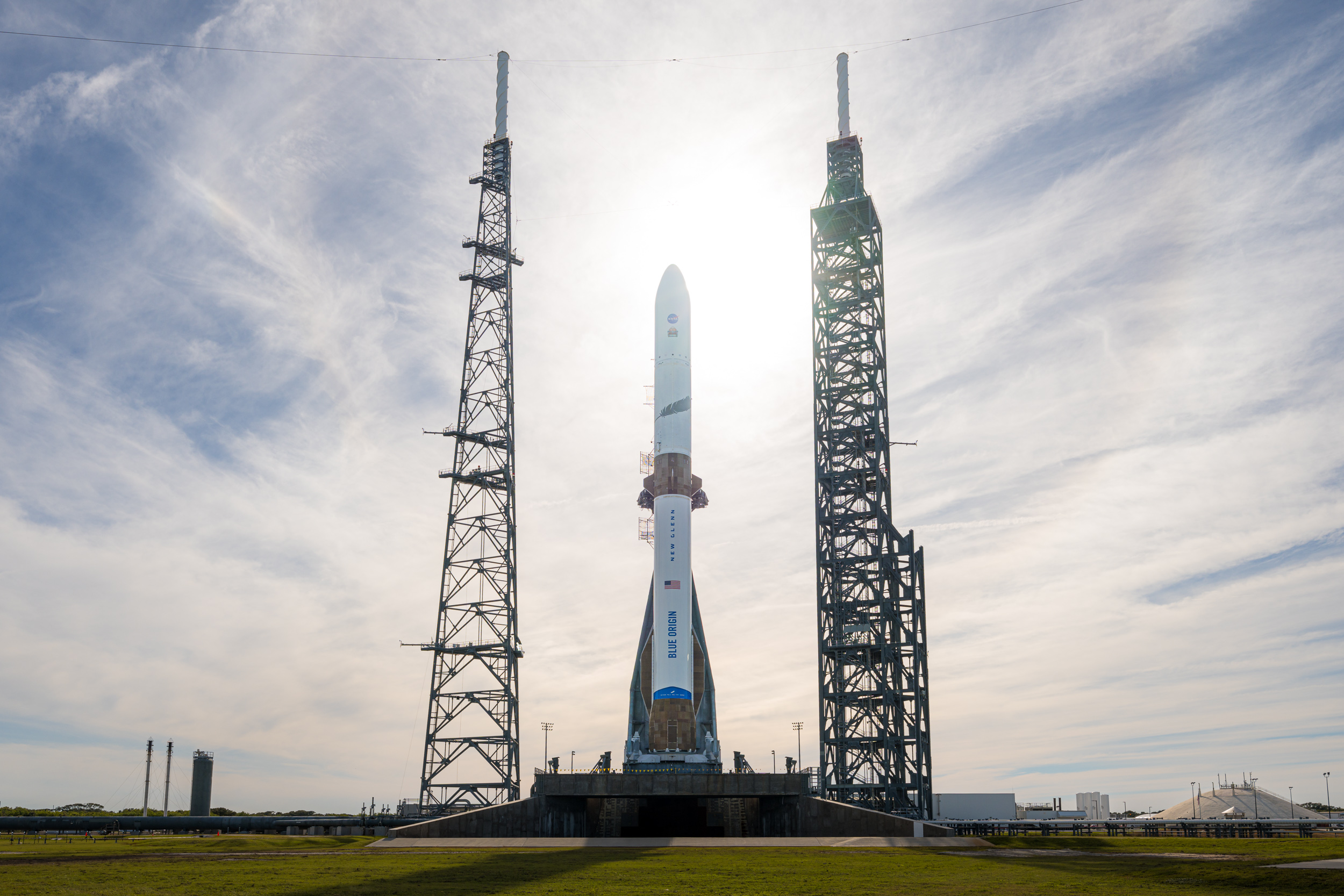
- BlueBird Block 2 #2 from Cape Canaveral Space Force Station, FL, USA (10:45 UTC) A Blue Origin New Glenn rocket will launch AST SpaceMobile’s BlueBird 7 satellite into low Earth orbit. This is the second satellite in AST SpaceMobile’s next-generation constellation, designed to support space-based cellular broadband for commercial and government customers. This will be the third flight of New Glenn to date.
April 17
- China Aerospace Science and Technology Corporation Long March 2D:
- Unknown Payload from Jiuquan Satellite Launch Center, People’s Republic of China (04:02 UTC) Details TBD.
April 18
- SpaceX Falcon 9 Block 5:
- Starlink Group 17-22 from Vandenberg Space Force Base, CA, USA (14:00 UTC) A batch of 25 Starlink V2 Mini Optimized satellites launching to low Earth orbit. Watch Live
April 22
-
SpaceX Falcon 9 Block 5:
- Starlink Group 17-14 from Vandenberg Space Force Base, CA, USA (02:00 UTC) A batch of 25 Starlink V2 Mini Optimized satellites launching to low Earth orbit. Watch Live
-
Agency for Defense Development South Korean ADD Solid-Fuel SLV:
- Demo Flight from Sea Launch Platform (05:00 UTC) First orbital full-version launch of the South Korean military small satellite launch vehicle, following two sub-orbital stage tests in 2022 and one orbital test flight in December 2023. Launch vehicle name is provisional.
April 23
- Rocket Lab Electron:
- Kakushin Rising (JAXA Rideshare) from Rocket Lab Launch Complex 1, Mahia Peninsula, New Zealand (TBD) A Japan Aerospace Exploration Agency-manifested rideshare carrying eight spacecraft to sun-synchronous orbit, including educational smallsats, an ocean monitoring satellite, a multispectral camera demonstrator, and OrigamiSat-2 — featuring a deployable antenna that unfurls to 25 times its packed size using origami folding techniques. The satellites were originally planned to fly on a Japanese Epsilon-S rocket before significant delays redirected them to Electron.
April 25
- Russian Federal Space Agency (ROSCOSMOS) Soyuz 2.1a:
- Progress MS-34 (95P) from Baikonur Cosmodrome, Republic of Kazakhstan (22:21 UTC) Progress resupply mission to the International Space Station.
Schedule Changes
- New launch added: Soyuz 2.1a | Progress MS-34 (95P) — A Russian Federal Space Agency Progress cargo resupply mission to the International Space Station, currently To Be Confirmed for launch on April 25, 2026 at 22:21 UTC from Baikonur Cosmodrome, Republic of Kazakhstan.
Note: Launch dates and times are subject to change due to technical or weather considerations.

Maurice Stellarski


