


· space brief · 7 min read
Space Force Requests $1.6B for New LEO Relay Network | KeepTrack Space Brief
Space Force scraps SDA transport layer, requests $1.6 billion for proliferated LEO SATCOM constellation. Roger Mason nominated to lead NRO.
Top Stories
Space Force Scraps SDA Transport Layer, Seeks $1.6B for New LEO Relay Network
The Space Force is moving away from the Space Development Agency’s transport layer in favor of a new architecture called the Space Data Network. The effort, previously referred to internally as MILNET, will be funded under a budget line labeled “proliferated LEO SATCOM.” The Space Force is requesting $1.6 billion in reconciliation funding to launch it.
This is a structural shift in how the military plans to route data through orbit. Analysts tracking LEO congestion should watch this closely — a new proliferated SATCOM constellation means more objects in already crowded orbital bands.
Read the full story: Breaking Defense
Trump Nominates Roger Mason to Lead NRO, Taps Hernandez-Baquero for Space Acquisition
Roger Mason, an industry executive, has been nominated to lead the National Reconnaissance Office, succeeding current director Christopher Scolese. Separately, Erich Hernandez-Baquero has been selected as the Space Force’s next acquisition chief. Both picks come from the defense industry.
The NRO operates the nation’s classified reconnaissance satellite fleet. Mason’s confirmation would put a commercial-background executive at the helm of the agency responsible for some of the most capable imaging and signals intelligence satellites in orbit.
Read the full story: Breaking Defense
Space Force Awards Kronos Contracts to Leidos and MapLarge for Battle Planning Software
The Space Force awarded contracts to Leidos and MapLarge under the Kronos program, which aims to replace legacy space battle management tools with commercial software. No contract values were disclosed in available reporting.
Kronos is part of a broader push to modernize how Space Force operators plan and execute orbital operations. The move toward commercial software mirrors similar efforts in other domains and could accelerate how quickly new capabilities reach operators.
Read the full story: SpaceNews
NRO Director Nomination: What It Means for Spy Satellite Leadership
Roger Mason’s nomination as NRO director is drawing attention beyond the personnel change itself. Mason would take over an agency managing a constellation of classified satellites that underpins U.S. intelligence collection globally. Scolese has led the NRO since 2019.
The nomination requires Senate confirmation. Until then, Scolese remains in place.
Read the full story: SpaceNews
Ukraine Becomes Italy’s 4th Largest Arms Importer in 2025
Ukraine received €349 million ($409 million) in Italian military exports in 2025, jumping from outside the top 10 buyers the prior year to fourth place. Italy is also in discussions on a drone deal with Kyiv.
While not a space story directly, shifts in European defense procurement affect which countries are investing in satellite-dependent systems — ISR, precision navigation, and secure SATCOM all feed into this demand picture.
Read the full story: Breaking Defense
Satellite of the Day
Luch-5B
Luch-5B is a Russian data relay satellite operated by the Khrunichev State Research and Production Space Center (KHRO). Launched on March 18, 2015, aboard a Proton-M/Briz-M rocket from Baikonur Cosmodrome, this torus-shaped spacecraft serves as part of Russia’s Luch (Луч, meaning “Beam”) constellation. The satellite acts as a communications relay, receiving data from scientific instruments and spacecraft in low Earth orbit and transmitting it to ground stations, enabling real-time command and telemetry capabilities for Russian space missions.
At nearly 12 metric tons, Luch-5B operates in a geostationary transfer orbit, positioning it to provide coverage over Russia and adjacent regions. The Luch system is Russia’s equivalent to NASA’s Tracking and Data Relay Satellite System (TDRSS), allowing for continuous communication with orbiting assets. This particular satellite has proven reliable since its deployment, making it a key component of Russia’s space infrastructure for both civilian and scientific missions.
| Detail | Value |
|---|---|
| NORAD ID | 40507 |
| Operator | Khrunichev State Research and Production Space Center (KHRO) |
| Launch Date | March 18, 2015 |
| Orbit | Geostationary transfer orbit, 49.41° inclination |
| Launch Mass | 11,900 kg |
| Purpose | Data relay and communications |
| Status | Active |
Track this satellite in real-time: Track Luch-5B
Upcoming Space Launches
April 24
- China Aerospace Science and Technology Corporation Long March 2D: Unknown Payload
- Unknown Payload from Xichang Satellite Launch Center, Launch Complex 3 (LC-3/LA-1), People’s Republic of China (06:25 UTC) Details pending. The Long March 2D is a two-stage Chinese carrier rocket capable of delivering up to 3,500 kg to low Earth orbit, in service since 1992. Launch Preview
April 25
-
Agency for Defense Development South Korean ADD Solid-Fuel SLV: Demo Flight
- Demo Flight from Sea Launch, ADD Offshore Launch Platform (05:00 UTC) The first orbital full-configuration flight of South Korea’s military small satellite launch vehicle, following two sub-orbital stage tests in 2022 and one partial orbital test flight in December 2023. Launch vehicle name is provisional. Launch Preview
-
China Aerospace Science and Technology Corporation Long March 6: Unknown Payload
- Unknown Payload from Taiyuan Satellite Launch Center, Launch Complex 16, People’s Republic of China (12:08 UTC) Details pending. Launch Preview
-
Russian Federal Space Agency (ROSCOSMOS) Soyuz 2.1a: Progress MS-34 (95P)
- Progress MS-34 (95P) from Baikonur Cosmodrome, 31/6, Republic of Kazakhstan (22:21 UTC) An uncrewed Russian Progress cargo spacecraft launches to resupply the International Space Station. Watch Live Launch Preview
April 27
- SpaceX Falcon Heavy: ViaSat-3 F3 (ViaSat-3 Asia-Pacific)
- ViaSat-3 F3 from Kennedy Space Center, Launch Complex 39A, FL, USA (14:21 UTC) A SpaceX Falcon Heavy will launch Viasat’s third and final satellite in its ViaSat-3 series into geosynchronous transfer orbit, providing broadband coverage over the Asia-Pacific region. The expendable core booster will not be recovered, while side boosters B1072 (second flight) and B1075 (22nd flight) will attempt return landings at Landing Zone 2 and Landing Zone 40 at Cape Canaveral Space Force Station. Watch Live
April 28
-
United Launch Alliance Atlas V 551: Amazon Leo (LA-06)
- Amazon Leo (LA-06) from Cape Canaveral Space Force Station, Space Launch Complex 41, FL, USA (00:52 UTC) A United Launch Alliance Atlas V 551 rocket will launch 29 broadband internet satellites for Amazon’s Project Kuiper low Earth orbit constellation. This is the seventh of nine Atlas V rockets contracted by Amazon to deploy its satellite internet network, aimed at delivering high-speed connectivity to underserved and remote areas worldwide. Watch Live
-
Arianespace Ariane 64: Amazon Leo (LE-02)
- Amazon Leo (LE-02) from Guiana Space Centre, Ariane Launch Area 4, French Guiana (08:51 UTC) An Arianespace Ariane 64 — the four-booster variant of the Ariane 6 family capable of lifting up to 21,650 kg to low Earth orbit — will launch a batch of broadband satellites for Amazon’s Project Kuiper constellation, supporting global low-latency internet coverage. Watch Live
April 26
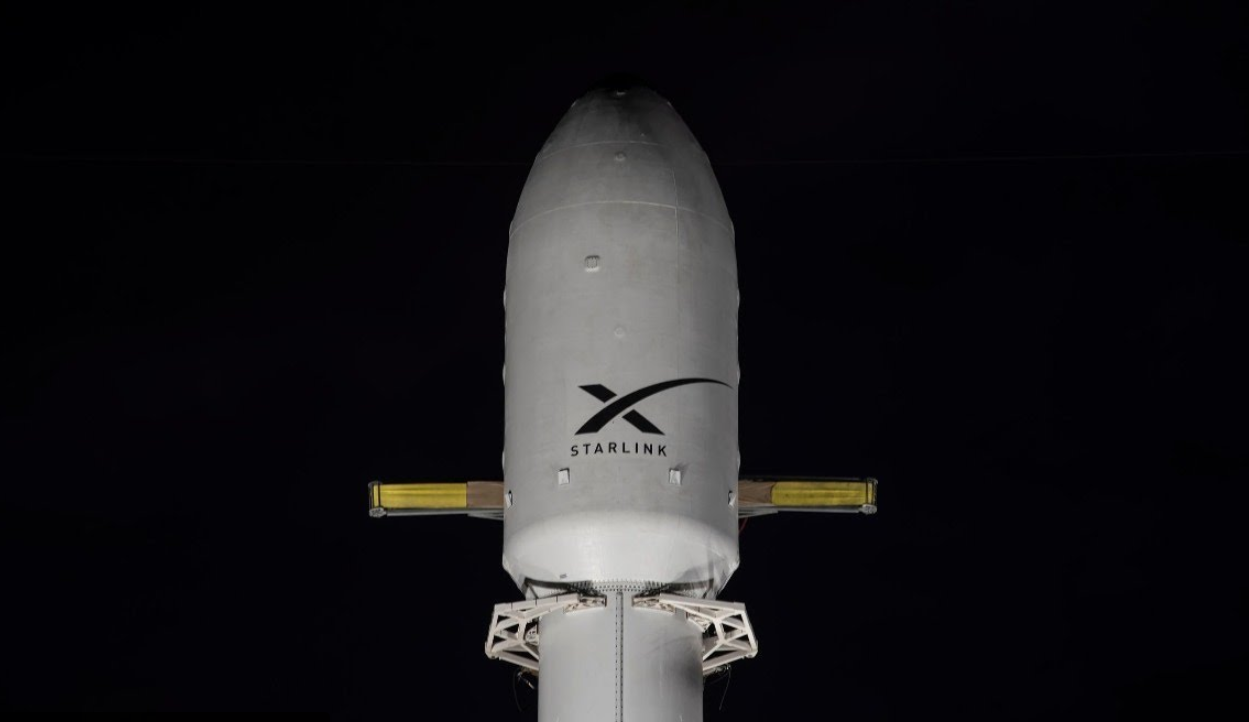
- SpaceX Falcon 9 Block 5: Starlink Group 17-16
- Starlink Group 17-16 from Vandenberg Space Force Base, Space Launch Complex 4E, CA, USA (14:00 UTC) A batch of 25 Starlink V2 Mini Optimized satellites into low Earth orbit. Booster B1100 will fly for the eighth time, targeting a landing on the drone ship Of Course I Still Love You in the Pacific Ocean. Watch Live Launch Preview
April 30
- Russian Space Forces Angara 1.2: Kosmos (Unknown Payload)
- Kosmos (Unknown Payload) from Plesetsk Cosmodrome, 35/1, Russian Federation (TBD) An Angara 1.2 rocket — the base configuration of Russia’s modular Angara launch family, capable of delivering up to 3,700 kg to low Earth orbit — will carry an unknown payload for the Russian military.
Schedule Changes
- New Launch Added: Angara 1.2 | Kosmos (Unknown Payload) has been added to the manifest, currently scheduled for no earlier than April 30, 2026 from Plesetsk Cosmodrome. The date and time are to be determined.
- Falcon 9 Block 5 | Starlink Group 17-14 has been removed from the upcoming calendar following a successful launch.
- Electron | Kakushin Rising (JAXA Rideshare) has been removed from the upcoming calendar following a successful launch.
Note: Launch dates and times are subject to change due to technical or weather considerations.

Maurice Stellarski

