· space brief · 9 min read
Pentagon Allocates $8B for Space-Based Moving Target Tracking | KeepTrack Space Brief
Pentagon requests $8 billion for space-based moving target tracking constellation in FY2027 budget. New NORAD IDs expected as Space Force expands orbital ISR capabilities.
Top Stories
Pentagon FY2027 Budget Requests $8B+ for Space-Based Moving Target Tracking
The FY2027 budget request dedicates more than $8 billion to space-based systems capable of tracking both ground and airborne moving targets. This formally codifies Space Force’s role in what has traditionally been an airborne ISR mission — persistent, wide-area targeting from orbit rather than from aircraft like JSTARS.
For satellite trackers, this budget line points toward a significant constellation expansion in low and medium Earth orbit optimized for moving target indicator (MTI) missions. Expect new NORAD IDs in that mission profile over the next several years.
Read the full story: SpaceNews
True Anomaly Raises $650M, Hits $2.2B Valuation on Golden Dome Interceptor Play
True Anomaly closed a $650 million funding round, pushing its valuation to $2.2 billion. The capital is explicitly tied to the company’s pursuit of Golden Dome contracts to build interceptor satellites — orbital systems designed to engage threats in space or from space.
This is one of the largest private raises targeting a space-domain awareness and offensive-defensive mission set. True Anomaly already has its Jackal inspector satellites on orbit. Interceptor development would move the company from observation into kinetic or directed-energy mission territory, a category closely monitored by the Space Surveillance Network.
Read the full story: SpaceNews
Analysts Warn Cislunar Space Could Become the Next Strategic Chokepoint
Defense and space policy experts are drawing direct comparisons between cislunar space — the volume between Earth and the Moon — and maritime chokepoints like the Strait of Hormuz. The argument: as lunar logistics grow, controlling cislunar transit lanes becomes a viable coercive strategy.
Unlike low Earth orbit, cislunar space has almost no persistent tracking infrastructure today. Objects in lunar transfer orbits and near-rectilinear halo orbits (NRHOs) are difficult to monitor with existing ground-based radar and optical networks. KeepTrack’s glossary covers cislunar tracking for users interested in how these orbital regimes differ from standard catalog objects.
Read the full story: Space.com
Army Opens Commercial Solicitation for EW and Signals Intelligence Capabilities
The U.S. Army released a Commercial Solutions Opening targeting rapid procurement of electronic warfare and signals intelligence tools. The goal is to build a capability library that unit commanders can draw from based on mission requirements and force structure.
This approach bypasses traditional acquisition timelines and is aimed at fielding commercially mature EW and SIGINT options faster. For the space community, EW and SIGINT capabilities increasingly have orbital components — ground-based emitter geolocation and RF signal collection are both areas where satellite data feeds into the mission.
Read the full story: Breaking Defense
Acting SecNav Cao Calls on Defense Industry to ‘Move Forward’ in First Public Remarks
Acting Secretary of the Navy Hung Cao used his first public speech in the role to push the defense industry toward faster execution. Cao stepped into the position recently and chose an industry-facing forum for his debut remarks.
No specific program decisions or contract announcements accompanied the speech, but the message tracks with broader Pentagon pressure on prime contractors to accelerate delivery timelines across shipbuilding and systems integration.
Read the full story: Breaking Defense
Pentagon Formally Requests $50M to Begin Renaming Itself the War Department
The Department of Defense submitted a legislative proposal to Congress requesting a name change to the Department of War — the department’s original name before 1947. The proposal estimates $50 million in FY2026 costs to initiate the transition.
The request faces strong Democratic opposition and requires congressional approval. The original Department of War was reorganized into the DoD under the National Security Act of 1947, the same legislation that created the Air Force and the CIA.
Read the full story: Breaking Defense
Australia Commits $2.3B AUD to HIMARS Long-Range Strike Purchase
Australia is buying HIMARS rocket artillery systems in a deal valued at $2.3 billion AUD, adding long-range precision strike depth to its ground forces. The purchase pairs with an expanded armored vehicle acquisition as part of a broader Army modernization push.
HIMARS is satellite-guided and depends on GPS signal integrity for precision targeting — a direct link between ground maneuver capability and space-based positioning infrastructure. Threats to GPS availability in a conflict scenario directly degrade this system’s effectiveness.
Read the full story: Breaking Defense
Satellite of the Day
PISAT
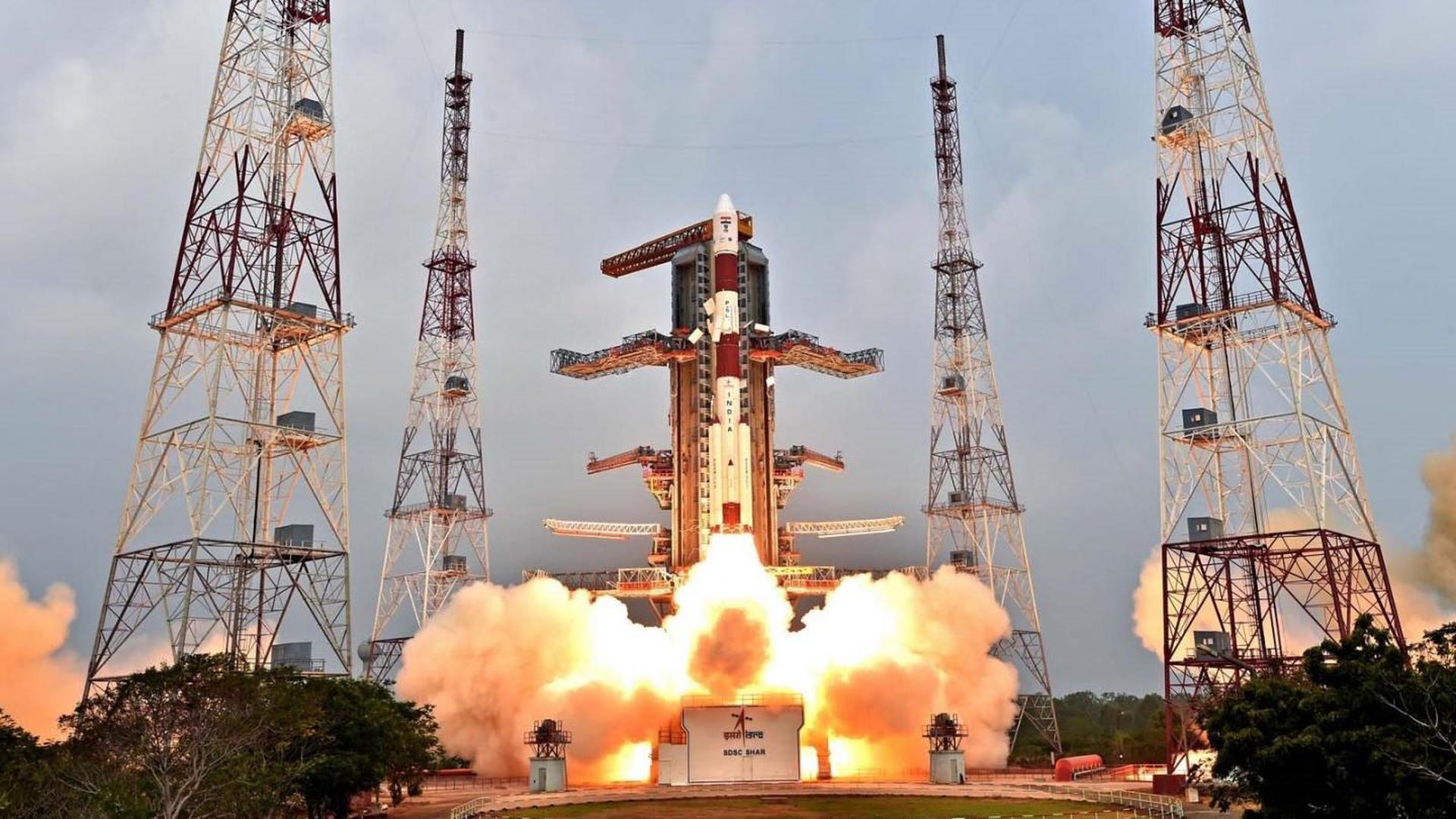
PISAT is a compact technology and Earth observation satellite developed and operated by PES University (PESU), an Indian academic institution. Launched on September 26, 2016, aboard a PSLV rocket from the Satish Dhawan Space Center, PISAT represents India’s growing involvement in student-led space missions. This tiny 5.25-kilogram cube satellite was designed to demonstrate Earth observation capabilities and test new technologies in the demanding space environment, making it part of the broader ecosystem of Indian nano-satellite programs that blend education with practical space exploration.
As a sun-synchronous orbiter with a near-polar inclination of 97.8°, PISAT travels over Earth’s polar regions, enabling consistent viewing angles for Earth observation tasks. Despite its diminutive size—just 25.6 centimeters per side—this satellite packs solar cells and onboard batteries to power its mission. PISAT exemplifies how educational institutions are contributing meaningfully to space domain awareness and remote sensing capabilities, proving that groundbreaking space work doesn’t always require massive, expensive platforms.
| Detail | Value |
|---|---|
| NORAD ID | 41784 |
| Operator | PESU (India) |
| Launch Date | September 26, 2016 |
| Orbit | Sun-synchronous, 97.8° inclination |
| Purpose | Technology, Earth observation |
| Status | Active |
Track this satellite in real-time: Track PISAT
Upcoming Space Launches
April 29
-
RKK Energiya Soyuz-5: (To Be Confirmed)
- Demo Flight from Baikonur Cosmodrome, Republic of Kazakhstan (11:00–13:00 UTC) Demonstration flight of Russia’s new Soyuz-5 (Irtysh) launch vehicle, carrying a mass simulator. The Soyuz-5 is designed to replace the Zenit-2 and Proton Medium, powered by an RD-171MV engine on its first stage and capable of lifting 17 tonnes to low Earth orbit. Launch Preview
-
SpaceX Falcon Heavy:
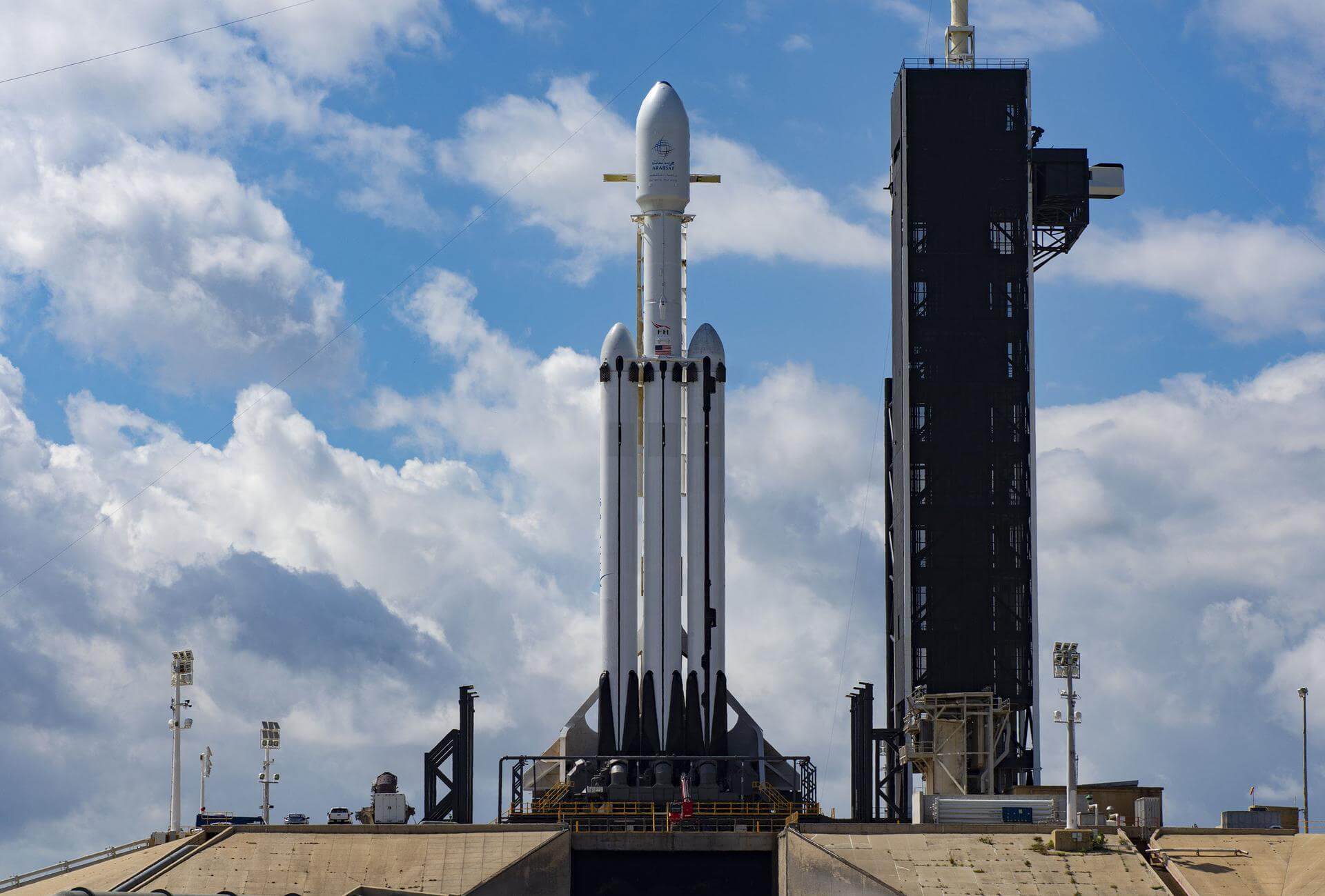
- ViaSat-3 F3 (ViaSat-3 Asia-Pacific) from Kennedy Space Center, FL, USA (14:13 UTC) The third and final satellite in Viasat’s global three-satellite broadband series, launching to geosynchronous transfer orbit. The Falcon Heavy’s two side boosters — B1072 (second flight) and B1075 (22nd flight) — will return to Landing Zone 2 and Landing Zone 40 at Cape Canaveral Space Force Station, while the core booster will be expended. Watch Live Launch Preview
April 30
-
LandSpace Zhuque-2E: (To Be Determined)
- Unknown Payload from Jiuquan Satellite Launch Center, People’s Republic of China (Time TBD) Details TBD. The Zhuque-2E is an enhanced methane/liquid oxygen medium-lift rocket capable of lifting 6,000 kg to low Earth orbit.
-
China Aerospace Science and Technology Corporation Long March 10B: (To Be Determined)
- Demo Flight from Wenchang Space Launch Site, People’s Republic of China (Time TBD) First test launch of the Long March 10B, a reusable medium-to-heavy lift vehicle powered by seven YF-100 series engines on its first stage and a single YF-219 methane/liquid oxygen engine on its second stage. The first stage is designed to be recovered via an arrestor net on a downrange recovery barge. Launch Preview
-
China Aerospace Science and Technology Corporation Long March 7A: (To Be Determined)
- Unknown Payload from Wenchang Space Launch Site, People’s Republic of China (Time TBD) Details TBD.
-
Russian Federal Space Agency (ROSCOSMOS) Soyuz 2.1b: (To Be Determined)
- 16 x Rassvet-3 from Plesetsk Cosmodrome, Russian Federation (Time TBD) A batch of 16 Rassvet-3 low Earth orbit communications satellites for the Russian Byuro-1440 (Bureau 1440) broadband internet constellation. Payload identities are uncertain.
-
Russian Space Forces Angara 1.2: (To Be Determined)
- Kosmos (Unknown Payload) from Plesetsk Cosmodrome, Russian Federation (Time TBD) Launch of an unknown satellite or satellites for the Russian military under the Kosmos designation.
-
SpaceX Falcon 9 Block 5:
- Starlink Group 17-36 from Vandenberg Space Force Base, CA, USA (02:00–06:00 UTC) A batch of 25 Starlink V2 Mini Optimized satellites. Booster B1071 will land on the drone ship Of Course I Still Love You in the Pacific Ocean. Watch Live
-
Arianespace Ariane 64:
- Amazon Leo (LE-02) from Guiana Space Centre, French Guiana (08:08 UTC) The second flight of an Ariane 64 rocket, carrying 32 Amazon Leo satellites (formerly Project Kuiper) to low Earth orbit. Designated VA268 by Arianespace and Leo Europe 02 (LE-02) by Amazon, this is the second of 18 contracted Ariane 64 launches in support of Amazon’s planned 3,276-satellite broadband constellation. Watch Live Launch Preview
May 1
- SpaceX Falcon 9 Block 5:
- Starlink Group 10-38 from Cape Canaveral Space Force Station, FL, USA (17:33–21:33 UTC) A batch of 25 Starlink V2 Mini Optimized satellites. Booster B1071 will land on the drone ship Of Course I Still Love You. Watch Live
May 3
- SpaceX Falcon 9 Block 5:
- CAS500-2 & Others from Vandenberg Space Force Base, CA, USA (06:59 UTC) A rideshare mission carrying 46 payloads, with the primary payload manifested by Korea Aerospace Industries. Booster B1071 will return to Vandenberg Space Force Base and land at Landing Zone 4. The full payload deployment sequence is expected to last approximately 2.5 hours after liftoff. Watch Live Launch Preview
May 6
- SpaceX Falcon 9 Block 5:
- Starlink Group 17-29 from Vandenberg Space Force Base, CA, USA (02:00–06:00 UTC) A batch of 25 Starlink V2 Mini Optimized satellites. Booster B1071 will land on the drone ship Of Course I Still Love You in the Pacific Ocean. Watch Live
May 12
- SpaceX Falcon 9 Block 5: (To Be Confirmed)
- Dragon CRS-2 SpX-34 from Cape Canaveral Space Force Station, FL, USA (23:00 UTC) The 34th SpaceX Commercial Resupply Services mission to the International Space Station under NASA’s second CRS contract. A Cargo Dragon 2 spacecraft will deliver supplies and science payloads to support ongoing research and investigations aboard the orbiting laboratory.
May 19
- Avio S.p.A Vega-C:
- Solar wind Magnetosphere Ionosphere Link Explorer (SMILE) from Guiana Space Centre, French Guiana (03:52 UTC) A joint mission between the European Space Agency (ESA) and the Chinese Academy of Sciences, SMILE will deploy to a highly elliptical Earth orbit 57 minutes after liftoff. Equipped with four science instruments, the spacecraft will study how Earth’s magnetosphere and ionosphere respond to the solar wind, advancing understanding of solar storms, geomagnetic storms, and space weather. Planned mission life is three years. Watch Live
May 22
- United Launch Alliance Atlas V 551: (To Be Determined)
- Amazon Leo (LA-07) from Cape Canaveral Space Force Station, FL, USA (Time TBD) Carrying 29 Amazon Leo satellites (formerly Project Kuiper) to low Earth orbit, this flight supports Amazon’s planned mega-constellation of 3,276 satellites across 98 orbital planes at altitudes of 590–630 km, aimed at providing global broadband internet access.
Schedule Changes
- New launch added: SpaceX Falcon 9 Block 5 | Dragon CRS-2 SpX-34 has been added to the manifest with a To Be Confirmed status, targeting May 12, 2026 at 23:00 UTC from Cape Canaveral Space Force Station.
- New launch added: United Launch Alliance Atlas V 551 | Amazon Leo (LA-07) has been added with a To Be Determined status, targeting May 22, 2026 from Cape Canaveral Space Force Station.
- Status change: RKK Energiya Soyuz-5 | Demo Flight has been upgraded from To Be Determined to To Be Confirmed, indicating increased confidence in the launch schedule.
Note: Launch dates and times are subject to change due to technical or weather considerations.

Maurice Stellarski