


· space brief · 8 min read
Pentagon Cancels OPIR Polar After Northrop Sensor Delivery | KeepTrack Space Brief
Pentagon cancels Next-Generation OPIR Polar program after Northrop Grumman delivered sensor payload. LEO and MEO alternatives deemed sufficient for missile-warning coverage.
Top Stories
Pentagon Cancels Next-Gen OPIR Polar Program After Sensor Delivery
Northrop Grumman delivered the sensor payload for the Next-Generation Overhead Persistent Infrared (OPIR) Polar satellite — then the Pentagon canceled the procurement. The Defense Department cited LEO and MEO-based alternatives as sufficient to replace polar missile-warning coverage, making the GEO-anchored polar slot redundant under the new architecture.
This is a direct shift away from traditional high-altitude missile-warning satellites toward distributed lower-orbit constellations. Tracking the existing OPIR constellation and its eventual replacements is something you can do in KeepTrack using the satellite tracking tools.
Read the full story: SpaceNews
Space Force Targets 2028 Demo for Space-Based Missile Interceptors Under Golden Dome
The Space Force has stood up a new program to develop space-based missile interceptors, with a capability demonstration target of 2028. The effort feeds directly into the Golden Dome missile defense initiative ordered by the Trump administration.
Space-based interceptors would require a dedicated orbital layer — likely in LEO — to achieve the coverage and response times needed for boost-phase intercept. No contractor selections or orbital parameters have been publicly disclosed yet.
Read the full story: Space.com
Space Force Tests Laser Crosslinks from MEO Using K2 Satellites
The Space Force is using K2 satellites in medium Earth orbit to experiment with laser communication crosslinks for missile-defense applications. The experiments aim to establish optical inter-satellite links from MEO — a regime that offers broader coverage than LEO but faster latency than GEO for time-sensitive fire-control data.
Laser comm crosslinks reduce dependence on ground relays and are harder to jam than RF links, making them a priority for contested-environment architecture. MEO-based laser links are technically harder to sustain than LEO crosslinks due to longer ranges and pointing precision requirements.
Read the full story: SpaceNews
Air Force Moving to Retire All 7 E-11 BACN Aircraft
The Air Force is seeking to scrap its entire E-11 Battlefield Airborne Communications Node fleet — seven aircraft total. The plan is to replace BACN capability with the emerging DAF Battle Network, a broader Department of the Air Force communications architecture.
The E-11 BACN aircraft serve as airborne communication relays, bridging waveforms across ground forces and aircraft in contested or mountainous terrain. Retiring them before the DAF Battle Network reaches operational maturity creates a gap worth watching.
Read the full story: Breaking Defense
Scott Kelly, Gaganyaan Astronauts Float “World Space Organization” Concept
Retired astronaut and former Navy captain Scott Kelly, speaking in New Delhi alongside India’s Gaganyaan astronauts ahead of the Artemis 2 mission, floated the idea of a “World Space Organization” to coordinate international human spacefaring. Kelly framed it partly as a joke — a real-world Starfleet — but the discussion reflects genuine momentum around multilateral space governance frameworks.
No formal proposal or founding members were announced. The conversation remains at the concept stage.
Read the full story: SpaceNews
Marines Plan Drone Wingman Operational Testing for 2029
Marine Corps officials confirmed at the Modern Day Marine conference in Washington that operational testing with drone wingmen could begin in 2029. The Corps is also evaluating whether Marines could run their own ISR missions in-house rather than relying on contractors.
The shift toward organic unmanned ISR has direct implications for how theater commanders coordinate with space-based surveillance assets. Reducing contractor dependency for ISR brings those missions under tighter military command and control.
Read the full story: Breaking Defense
Satellite of the Day
Transit 5B-5
Transit 5B-5 is a navigation satellite launched by the U.S. Navy in September 1972 as part of the Transit system, one of the earliest operational satellite navigation networks. Operated by NAVAIR (Naval Air Systems Command), this satellite provided Doppler-based position fixes for ships and submarines before being superseded by the GPS constellation. The Transit system was revolutionary for maritime navigation, offering global coverage and eliminating reliance on celestial navigation and ground-based radio systems.
Built by Johns Hopkins University’s Applied Physics Laboratory (APL) and launched aboard a Scout B-1 rocket from the Air Force Western Test Range, Transit 5B-5 was designed to operate in a polar orbit with a mass of 94 kg. The satellite’s simple but elegant design—essentially a 3-cylinder body with antennas—proved remarkably durable. While Transit satellites have long since decayed from orbit, they represent a critical milestone in space-based navigation that paved the way for modern GNSS systems.
| Detail | Value |
|---|---|
| NORAD ID | 06173 |
| Operator | NAVAIR (US Navy) |
| Launch Date | September 2, 1972 |
| Orbit | Polar, 90.0223° inclination |
| Purpose | Navigation |
| Status | Decayed |
Learn more about this satellite: View Transit 5B-5
Upcoming Space Launches
May 1
- SpaceX Falcon 9 Block 5:
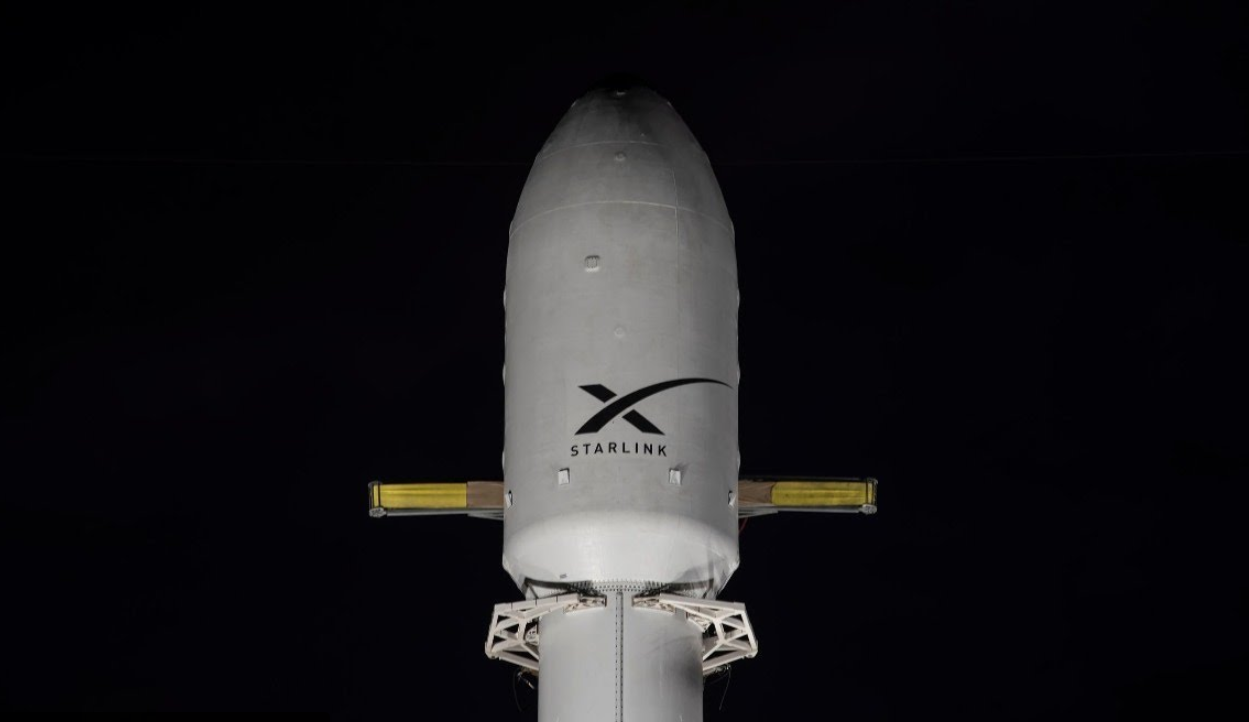
- Starlink Group 10-38 from Space Launch Complex 40, Cape Canaveral Space Force Station, FL, USA (17:33 UTC) 29 Starlink V2 Mini Optimized satellites launching to low Earth orbit. Booster B1069, flying for the 31st time, landed on drone ship A Shortfall of Gravitas in the Atlantic Ocean. Watch Live Launch Preview
May 3
- SpaceX Falcon 9 Block 5:
- CAS500-2 & Others from Space Launch Complex 4E, Vandenberg Space Force Base, CA, USA (06:59 UTC) A rideshare mission carrying 46 payloads, named for primary payload CAS500-2 manifested by Korea Aerospace Industries. The Falcon 9 Block 5 — a reusable two-stage rocket capable of carrying up to 22,800 kg to low Earth orbit — will fly booster B1071 on its 33rd flight, returning to land at Landing Zone 4 at Vandenberg. Payload deployment will continue for approximately 2.5 hours after liftoff. Watch Live Launch Preview
May 6
- SpaceX Falcon 9 Block 5:
- Starlink Group 17-29 from Space Launch Complex 4E, Vandenberg Space Force Base, CA, USA (02:00 UTC) 29 Starlink V2 Mini Optimized satellites launching to low Earth orbit. Watch Live
May 9
- SpaceX Falcon 9 Block 5:
- Starlink Group 17-37 from Space Launch Complex 4E, Vandenberg Space Force Base, CA, USA (14:00 UTC) 29 Starlink V2 Mini Optimized satellites launching to low Earth orbit. Watch Live
May 12
- SpaceX Falcon 9 Block 5:
- Dragon CRS-2 SpX-34 from Space Launch Complex 40, Cape Canaveral Space Force Station, FL, USA (23:16 UTC) The 34th Commercial Resupply Services mission to the International Space Station, conducted under NASA’s second Commercial Resupply Services contract. A Cargo Dragon 2 spacecraft will deliver supplies and science payloads — including critical materials supporting ongoing research aboard the orbiting laboratory. The Falcon 9 Block 5 is the workhorse of SpaceX’s reusable launch fleet, capable of carrying up to 22,800 kg to low Earth orbit.
May 19
- Avio S.p.A Vega-C:
- Solar wind Magnetosphere Ionosphere Link Explorer (SMILE) from Ariane Launch Area 1 (ELV), Guiana Space Centre, French Guiana (03:52 UTC) A joint mission between the European Space Agency and the Chinese Academy of Sciences, SMILE will study how Earth responds to the solar wind using four science instruments, advancing understanding of solar storms, geomagnetic storms, and space weather. The spacecraft deploys 57 minutes after liftoff into a highly elliptical Earth orbit, with a planned three-year mission life. The Vega-C — a 35-metre, 210-tonne rocket featuring three solid-propellant stages and a reignitable liquid upper stage — is making its return to flight on this mission. Watch Live
May 22
-
United Launch Alliance Atlas V 551:
- Amazon Leo (LA-07) from Space Launch Complex 41, Cape Canaveral Space Force Station, FL, USA (TBD) This launch carries 29 satellites for Amazon Leo (formerly Project Kuiper), a planned 3,276-satellite broadband internet constellation in low Earth orbit managed by Kuiper Systems LLC, a subsidiary of Amazon. Satellites will operate across 98 orbital planes at altitudes of 590–630 km. The Atlas V 551 is an expendable rocket powered by a Russian-built RD-180 engine on its first stage and an RL10 engine on its Centaur upper stage, capable of lifting up to 18,850 kg to low Earth orbit.
-
Rocket Lab Electron:
- Viva La Strix (StriX Launch 9) from Rocket Lab Launch Complex 1, Mahia Peninsula, New Zealand (09:30 UTC) The ninth StriX-series synthetic aperture radar satellite for Japanese Earth imaging company Synspective, launching to low Earth orbit. Rocket Lab’s Electron is a small-lift vehicle with a 300 kg capacity to low Earth orbit, uniquely powered by electric-pump-fed Rutherford engines.
May 31
- Rocket Lab Electron:
- The Grain Goddess Provides (iQPS Launch 7) from Rocket Lab Launch Complex 1, Mahia Peninsula, New Zealand (TBD) A synthetic aperture radar Earth observation satellite for Japanese imaging company iQPS, launching to low Earth orbit aboard Rocket Lab’s Electron small-lift launch vehicle.
Schedule Changes
- Rocket Lab Electron | Viva La Strix (StriX Launch 9) has been added to the manifest, scheduled for May 22, 2026 at 09:30 UTC, with a status of Go for Launch.
- Rocket Lab Electron | The Grain Goddess Provides (iQPS Launch 7) has been added to the manifest with a target date of May 31, 2026, currently listed as To Be Determined.
- Soyuz-5 | Demo Flight has been removed from the upcoming launch calendar following a successful launch.
- SpaceX Falcon 9 Block 5 | Dragon CRS-2 SpX-34 has been upgraded from To Be Confirmed to Go for Launch, confirming its May 12 launch date.
Note: Launch dates and times are subject to change due to technical or weather considerations.

Maurice Stellarski


