


· space brief · 9 min read
Golden Dome Missile Shield Costs Up to $1.2T Over 20 Years | KeepTrack Space Brief
CBO estimates Golden Dome national missile shield at $1.2 trillion over 20 years. Space-based intercept layer could add thousands of satellites to tracked orbital regimes.
Top Stories
CBO Estimates Golden Dome Missile Shield at Up to $1.2 Trillion Over 20 Years
The Congressional Budget Office put a $1.2 trillion, 20-year price tag on a Golden Dome-style national missile shield — but flagged the number as rough. DoD has not disclosed the architecture it envisions, which CBO said makes a precise estimate “impossible.”
The space-based intercept layer is central to most Golden Dome concepts under discussion. If that layer moves forward, it would represent one of the largest satellite constellation procurements in history — potentially adding thousands of objects to tracked orbital regimes.
Read the full story: Breaking Defense
Starlink Terminals Struggle in Baltic Woodlands During UGV Field Tests
Military ground robots operating in Latvia’s forested terrain ran into communication failures, with multiple users citing Starlink link degradation as the culprit. Dense tree canopy disrupts the line-of-sight geometry that Starlink terminals depend on.
This is a practical constraint worth tracking. Starlink’s low-Earth orbit constellation is optimized for open-sky coverage — elevation angles into dense forests can drop below the terminal’s operational threshold. Defense operators pushing UGVs into woodland environments will need either relay solutions or supplemental comms.
Read the full story: Breaking Defense
Australia’s Defense Budget Hits $45.2 Billion, Driven by AUKUS Ramp-Up
Australia’s 2026 defense budget comes in at $45.2 billion, a 6% increase over last year. AUKUS spending accounts for a growing share of that figure, covering submarine infrastructure, advanced capability programs, and interoperability investments with the US and UK.
Space and satellite capabilities are embedded across AUKUS Pillar II, which targets advanced technologies including space domain awareness. Australia has been expanding its ground-based tracking infrastructure and is a partner in several allied SSA-sharing arrangements.
Read the full story: Breaking Defense
Pentagon Puts Iran War Cost at $29B — Base Damage Not Yet Counted
Pentagon comptroller Jules Hurst put the cost of US military operations against Iran at $29 billion so far. That figure excludes damage to military bases, with Hurst stating DoD isn’t estimating repair costs yet because future posture decisions haven’t been made.
The omission of base damage is material. Several facilities struck during the conflict hosted space-related assets including satellite communications terminals and ISR ground infrastructure.
Read the full story: Breaking Defense
Hegseth Reverses Course on E-7 Wedgetail, Says Aircraft ‘Has a Future’
Defense Secretary Hegseth walked back the planned cancellation of the Boeing E-7 Wedgetail airborne early warning and control aircraft. The reversal follows pressure from lawmakers and what Hegseth described as a changed “mindset” at the Pentagon.
The Wedgetail is a key node in allied air battle management networks, including those that integrate space-based ISR feeds. Its retention keeps a proven C2 platform in the inventory as the US and partners work on next-generation architectures.
Read the full story: Breaking Defense
Analysts Read Russian Victory Parade as Sign of Strain, Not Strength
Chatham House analyst Timothy Ash assessed Russia’s May 9 Red Square parade as reflecting anxiety in Moscow rather than confidence. “The real nervousness now in Moscow about the sustainability of all this,” Ash said, pointing to force structure and equipment gaps visible in the display.
Western analysts have used open-source satellite imagery and orbital tracking data throughout the conflict to cross-reference claimed Russian military strength against observable ground truth — a use case directly relevant to the space domain awareness community.
Read the full story: Breaking Defense
Pentagon Releases New Declassified UAP Files
The US military released another tranche of declassified Unidentified Anomalous Phenomena records this week. The Breaking Defense podcast covered the release alongside a separate segment on allied training operations in northern Sweden.
The UAP disclosure process has drawn renewed interest from the space tracking community, since several reported incidents involve objects detected by radar and optical systems that also feed into space domain awareness networks. No objects from this release have been added to the public satellite catalog.
Read the full story: Breaking Defense
Satellite of the Day
QPS-SAR-5 (TSUKUYOMI-I)
The QPS-SAR-5, also known as TSUKUYOMI-I, is a compact Earth observation satellite operated by QPS (Quality Positioning Services), a Japanese company specializing in synthetic aperture radar (SAR) technology. Launched on December 15, 2023, aboard Rocket Lab’s Electron vehicle, this small satellite packs sophisticated X-band SAR capabilities into a remarkably efficient 120 kg package. The name “Tsukuyomi” references the Japanese moon deity, fitting for a satellite designed to observe Earth with precision regardless of weather or daylight conditions—one of SAR’s key advantages over optical systems.
What makes TSUKUYOMI-I particularly interesting is its role in QPS’s growing constellation of radar imaging satellites. With a hexagonal cylinder body measuring just 0.6 meters long and 0.8 meters in diameter, yet spanning 3.6 meters when fully deployed with its solar arrays and dish antenna, the satellite demonstrates the increasing capability of miniaturized space systems. Operating from a mid-inclination orbit of 42°, it provides regular coverage of mid-latitude regions and has already become operational, contributing to QPS’s mission of delivering rapid, all-weather Earth observation data for applications ranging from infrastructure monitoring to disaster response.
| Detail | Value |
|---|---|
| NORAD ID | 58578 |
| Operator | QPS (Japan) |
| Launch Date | December 15, 2023 |
| Orbit | LEO, 42.0° inclination |
| Purpose | Earth observation, synthetic aperture radar |
| Status | Active |
Track this satellite in real-time: Track QPS-SAR-5
Upcoming Space Launches
May 13
- SpaceX Falcon 9 Block 5:
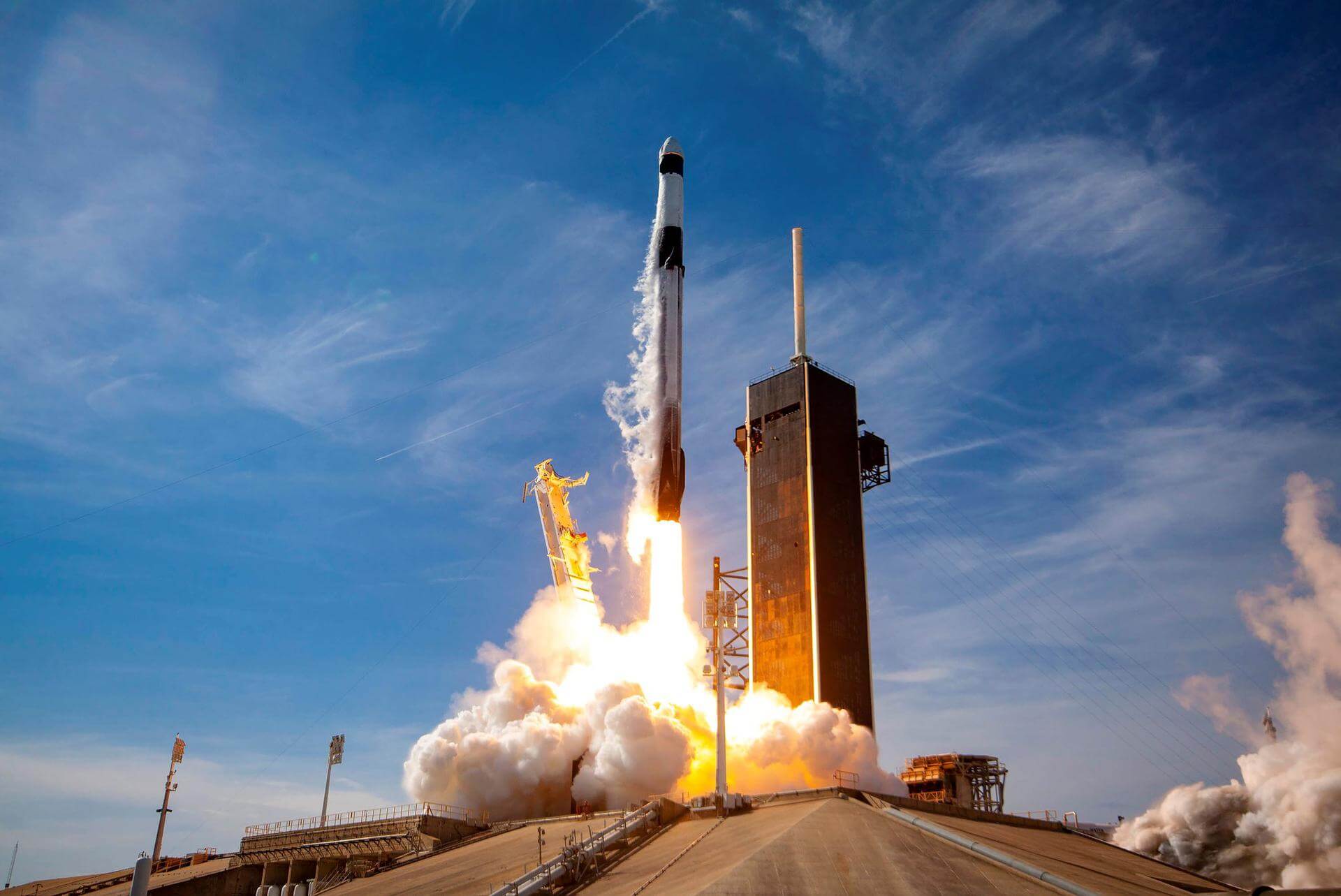
- Dragon CRS-2 SpX-34 from Space Launch Complex 40, Cape Canaveral SFS, FL, USA (22:50 UTC) NASA’s 34th Commercial Resupply Services mission, delivering thousands of pounds of science experiments and supplies to the International Space Station aboard Dragon spacecraft C209, flying for a sixth time. The Dragon will dock approximately 38 hours after liftoff. Watch Live
May 14
- LandSpace Zhuque-2E:
- Unknown Payload from Launch Area 96A, Jiuquan Satellite Launch Center, People’s Republic of China (02:52 UTC) Payload and mission details are to be determined. Zhuque-2E is an enhanced liquid oxygen/methane medium-lift rocket capable of delivering up to 6,000 kg to low Earth orbit.
May 15
-
CAS Space Kinetica 1:
- Unknown Payload from Launch Area 130, Jiuquan Satellite Launch Center, People’s Republic of China (04:24 UTC) Payload and mission details are to be determined. Kinetica 1 (Lijian-1) is China’s largest solid-propellant launch vehicle, capable of placing approximately 2,000 kg into low Earth orbit.
-
SpaceX Falcon 9 Block 5:
- Starlink Group 17-37 from Space Launch Complex 4E, Vandenberg SFB, CA, USA (14:00 UTC) Batch of 24 Starlink V2 Mini Optimized satellites to low Earth orbit. Booster B1097 flying for its ninth time will land on drone ship Of Course I Still Love You in the Pacific Ocean. Watch Live Launch Preview
May 17
- China Aerospace Science and Technology Corporation Long March 8:
- Unknown Payload from Commercial LC-1, Wenchang Space Launch Site, People’s Republic of China (14:34 UTC) Payload and mission details are to be determined. The Long March 8 is capable of delivering up to 5,000 kg to a 700 km Sun-synchronous orbit.
May 18
- SpaceX Falcon 9 Block 5:
- Globalstar 2-R Mission 1 (x9) from Space Launch Complex 40, Cape Canaveral SFS, FL, USA (12:35 UTC) Nine Globalstar HIBLEO-4 replenishment satellites will be launched to low Earth orbit, constituting the first of two missions to refresh the HIBLEO-4 fleet. Booster B1090, flying for its 12th time, will land on drone ship A Shortfall of Gravitas in the Atlantic Ocean. Watch Live
May 19
-
SpaceX Falcon 9 Block 5:
- Starlink Group 17-42 from Space Launch Complex 4E, Vandenberg SFB, CA, USA (02:11 UTC) Batch of 24 Starlink V2 Mini Optimized satellites to low Earth orbit. Booster B1097 flying for its ninth time will land on drone ship Of Course I Still Love You in the Pacific Ocean. Watch Live
-
Avio S.p.A Vega-C:
- Solar wind Magnetosphere Ionosphere Link Explorer (SMILE) from Ariane Launch Area 1 (ELV), Guiana Space Centre, French Guiana (03:52 UTC) A joint mission between the European Space Agency and the Chinese Academy of Sciences, SMILE will operate in a highly elliptical Earth orbit for three years, using four science instruments to study how Earth’s magnetosphere and ionosphere respond to the solar wind, improving understanding of geomagnetic storms and space weather. The spacecraft deploys 57 minutes after liftoff. Watch Live
-
SpaceX Starship:
- Flight 12 from Orbital Launch Pad 2, SpaceX Starbase, TX, USA (22:30 UTC) The 12th integrated flight test of the SpaceX Starship-Super Heavy launch system, and the first flight of a version 3 rocket configuration. The mission will fly a suborbital profile using Ship 39 and Booster 19 and continues SpaceX’s iterative development of the world’s largest and most powerful fully reusable launch vehicle, with a lift capacity of up to 100,000 kg to low Earth orbit.
May 21
- Indian Space Research Organization GSLV Mk II:
- GISAT-1A (EOS-05) from Satish Dhawan Space Centre Second Launch Pad, Satish Dhawan Space Centre, India (03:15 UTC) GISAT-1A is an Indian geostationary Earth observation satellite designed to enable continuous monitoring of the Indian subcontinent and provide rapid assessment of natural hazards and disaster events from geostationary orbit.
May 22
-
United Launch Alliance Atlas V 551:
- Amazon Leo (LA-07) from Space Launch Complex 41, Cape Canaveral SFS, FL, USA (00:00 UTC) A batch of 29 Amazon Kuiper broadband internet satellites bound for low Earth orbit. This is the penultimate Amazon Leo mission booked on an Atlas V rocket as part of the effort to build out the Kuiper low Earth orbit broadband constellation serving underserved and remote areas worldwide.
-
Rocket Lab Electron:
- Viva La StriX (StriX Launch 9) from Rocket Lab Launch Complex 1, Mahia Peninsula, New Zealand (09:30 UTC) The ninth dedicated Electron mission for Japanese company Synspective, carrying a StriX Synthetic Aperture Radar (SAR) Earth observation satellite to a circular 572 km orbit at 44.8-degree inclination.
May 31
- Rocket Lab Electron:
- The Grain Goddess Provides (iQPS Launch 7) from Rocket Lab Launch Complex 1, Mahia Peninsula, New Zealand (00:00 UTC) A synthetic aperture radar Earth observation satellite for Japanese Earth imaging company iQPS.
Schedule Changes
- Starship | Flight 12: Status upgraded from To Be Confirmed to Go for Launch, indicating SpaceX has cleared the vehicle for its 12th integrated flight test.
- Long March 6A | SpaceSail Polar Group 09: Status changed from Go for Launch to Launch Successful — mission has launched and has been removed from the upcoming launch calendar.
Note: Launch dates and times are subject to change due to technical or weather considerations.

Maurice Stellarski


