


· space brief · 9 min read
Blue Origin's New Glenn Destroyed in Static Fire Test at Cape Canaveral | KeepTrack Space Brief
Blue Origin's fourth New Glenn rocket exploded during static fire at LC-36, Cape Canaveral, destroying the fully stacked vehicle and pad infrastructure. Amazon Leo launch postponed indefinitely.
Top Stories
New Glenn Rocket Destroyed at LC-36 During Static Fire Test
Blue Origin’s fourth New Glenn vehicle exploded at Launch Complex 36, Cape Canaveral Space Force Station, at 9 p.m. EDT on May 28 during a planned static fire test. The explosion destroyed the fully stacked rocket, toppled a lightning tower, and caused additional infrastructure damage to the pad. No injuries were reported.
Blue Origin had been targeting June 4 for a launch carrying an Amazon Leo mission. That manifest is now off the table. The timeline for pad repairs and the future of the New Glenn program is unknown. This is the most serious hardware loss Blue Origin has publicly suffered to date.
Read the full story: Spaceflight Now
Operation Epic Fury Exposed Gaps in Space Force Distributed Ops and EW
Brig. Gen. Christopher Fernengel stated that Operation Epic Fury marked the first time U.S. space capabilities were targeted and destroyed in an operational context. He made the remarks May 29 and added that Space Force expects adversaries to continue targeting space assets.
The exercise surfaced concrete shortfalls: insufficient distributed operations infrastructure and a lack of electronic warfare sites. Those gaps are now driving near-term force structure decisions. For KeepTrack users tracking military satellites, this is a direct signal that the ground architecture supporting those assets is under active reassessment.
Read the full story: Breaking Defense
Space Force Building Nationwide Network of Resilient Operations Centers
Space Force is planning a distributed network of “resilient operations centers” across the United States. The stated purpose is continuity of military space missions if primary installations are attacked during a conflict.
The move is a direct response to threat assessments that treat existing centralized ground infrastructure as high-value targets. No facility count or timeline has been made public yet, but the program represents a structural shift away from the hub-and-spoke ground segment model Space Force has historically operated.
Read the full story: SpaceNews
Observable Space Raises $90M, Secures Space Force Contract for Optical Systems
Observable Space closed a $90 million funding round and won a U.S. Space Force contract for optical systems covering laser communications and space domain awareness. The company develops high-performance optical hardware targeting both data link and SSA applications.
The Space Force contract award alongside the raise suggests the company is moving toward fielded hardware, not just R&D. Optical-based space domain awareness is a growing priority for military customers who need passive, hard-to-jam sensor alternatives.
Read the full story: SpaceNews
New Glenn Explosion Details: Pad Infrastructure Damage Confirmed
NASASpaceFlight and SpaceExplored both confirmed the fourth New Glenn vehicle was fully stacked at the time of the static fire anomaly. The explosion damaged the launch pad’s infrastructure beyond the rocket itself. LC-36 is Blue Origin’s sole New Glenn launch site.
Pad turnaround time is unknown. Blue Origin has not issued a public statement beyond initial confirmation of the event. The loss of a fully stacked vehicle — not just an engine or stage — makes this a multi-year setback in any realistic scenario.
Read the full story: NASASpaceFlight
Lunar Mass Drivers Analyzed as Potential First-Strike Weapons
A new report argues that electromagnetic mass drivers placed on the moon — a technology SpaceX and others have proposed for lunar surface logistics — could function as first-strike weapons systems. The analysis focuses on the kinetic energy delivery potential of objects launched at Earth-crossing trajectories.
The report is not alleging anyone is building this now, but it raises arms control questions that no existing treaty framework addresses. As lunar infrastructure discussions move from concept to early planning, the military utility question is no longer theoretical.
Read the full story: Space.com
BAE Systems Wins Army Soft Kill APS Contract, Phase One at $20M
BAE Systems won the U.S. Army’s Soft Kill Active Protection System award. The first phase is valued at $20 million. The system is built around BAE’s Rapid Optical Observation and Kill (ROOK) program, which defeats incoming threats by jamming or confusing missile and drone guidance systems rather than intercepting them kinetically.
While this is a ground combat system rather than a space asset, ROOK’s optical jamming technology overlaps with directed energy and EW capabilities relevant to satellite protection discussions currently active inside Space Force.
Read the full story: Breaking Defense
Satellite of the Day
GSAT0201 (Galileo 5)
GSAT0201, commonly known as Galileo 5 or GalileoSat-5, is a medium Earth orbit navigation satellite operated by the Global Navigation Satellite System Agency of the European Union (GSAEU). Launched on August 22, 2014, aboard a Soyuz-ST-B rocket from French Guiana, this satellite is part of Europe’s Galileo constellation—a civilian-controlled alternative to GPS that provides global positioning, navigation, and timing services. Built by OHB, the satellite carries both Galileo Navigation payload and MEO SAR (Synthetic Aperture Radar) equipment, making it a versatile asset for both navigation and Earth observation purposes.
With a mass of 733 kg and a span of 14.5 meters when its solar arrays are deployed, GSAT0201 operates in a medium Earth orbit inclined at 48.9° and was designed with an expected operational lifetime of approximately 12 years. As part of the broader Galileo system, this satellite contributes to a constellation that provides centimeter-level positioning accuracy and serves critical infrastructure, emergency services, and scientific applications across Europe and globally. The inclusion of SAR capabilities alongside standard navigation functions underscores the multi-functional nature of modern satellite systems.
| Detail | Value |
|---|---|
| NORAD ID | 40128 |
| Operator | GSAEU (European Union) |
| Launch Date | August 22, 2014 |
| Orbit | Medium Earth Orbit, 48.9° inclination |
| Purpose | Navigation |
| Status | Active |
Track this satellite in real-time: Track GSAT0201
Upcoming Space Launches
May 29
-
SpaceX Falcon 9 Block 5 | Starlink Group 10-53:
- Starlink Group 10-53 from Space Launch Complex 40, Cape Canaveral Space Force Station, FL, USA (11:52 UTC) 29 Starlink V2 Mini Optimized satellites into low Earth orbit. Watch Live Launch Preview
-
United Launch Alliance Atlas V 551 | Amazon Leo (LA-07):
- Amazon Leo (LA-07) from Space Launch Complex 41, Cape Canaveral Space Force Station, FL, USA (23:33 UTC) A batch of 29 Amazon Kuiper broadband internet satellites will be delivered to low Earth orbit aboard an Atlas V 551 — one of the final Atlas V missions booked by Amazon. The Atlas V is powered by a Russian-built RD-180 engine on its first stage and an RL10 engine on its Centaur upper stage, and flies in the 551 configuration with five solid rocket boosters. Watch Live Launch Preview
May 30
-
SpaceX Falcon 9 Block 5 | Starlink Group 17-41:
- Starlink Group 17-41 from Space Launch Complex 4E, Vandenberg Space Force Base, CA, USA (14:00 UTC) 29 Starlink V2 Mini Optimized satellites into low Earth orbit. Watch Live Launch Preview
-
China Aerospace Science and Technology Corporation Long March 2D | Unknown Payload:
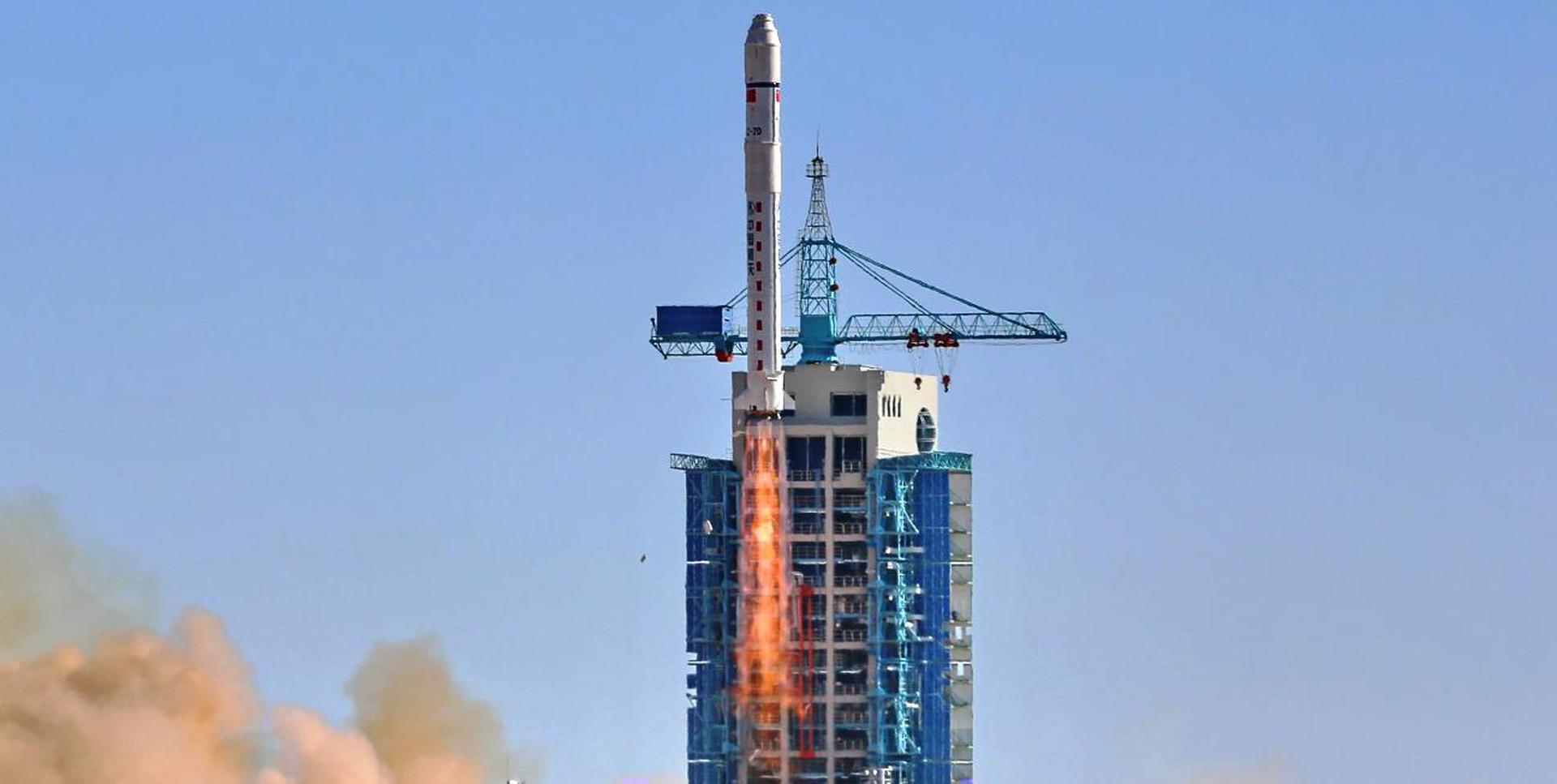
- Unknown Payload from Launch Complex 3 (LC-3/LA-1), Xichang Satellite Launch Center, People’s Republic of China (17:57 UTC) Payload details to be announced. The Long March 2D is a two-stage rocket capable of delivering up to 3,500 kg to low Earth orbit, primarily used for LEO and sun-synchronous orbit missions.
May 31
- Rocket Lab Electron | The Grain Goddess Provides (iQPS Launch 7):
- The Grain Goddess Provides from Rocket Lab Launch Complex 1, Mahia Peninsula, New Zealand (TBD) A synthetic aperture radar Earth observation satellite for Japanese Earth imaging company iQPS. The Electron is a small-lift rocket powered by electric-pump-fed Rutherford engines, designed for dedicated small satellite and cubesat missions.
June 1
- Agency for Defense Development South Korean ADD Solid-Fuel SLV | Demo Flight:
- Demo Flight from ADD Offshore Launch Platform, Sea Launch (05:00 UTC) A demonstration flight of South Korea’s solid-fuel small satellite launch vehicle, launched from an offshore platform. Launch Preview
June 3
-
SpaceX Falcon 9 Block 5 | Starlink Group 10-43:
- Starlink Group 10-43 from Space Launch Complex 40, Cape Canaveral Space Force Station, FL, USA (08:02 UTC) 29 Starlink V2 Mini Optimized satellites into low Earth orbit. Watch Live
-
SpaceX Falcon 9 Block 5 | Starlink Group 17-47:
- Starlink Group 17-47 from Space Launch Complex 4E, Vandenberg Space Force Base, CA, USA (14:00 UTC) 29 Starlink V2 Mini Optimized satellites into low Earth orbit. Watch Live
June 4
-
China Aerospace Science and Technology Corporation Long March 6A | Unknown Payload:
- Unknown Payload from Launch Complex 9A, Taiyuan Satellite Launch Center, People’s Republic of China (11:31 UTC) Payload details to be announced; likely SpaceSail Polar Orbit LEO communication satellites. The Long March 6A is China’s first rocket to feature solid rocket boosters, developed by the Shanghai Academy of Spaceflight Technology, and made its maiden flight from the newly built Launch Complex 9A in March 2022.
-
Blue Origin New Glenn | Amazon Leo (LN-01):
- Amazon Leo (LN-01) from Launch Complex 36A, Cape Canaveral Space Force Station, FL, USA (17:21 UTC) New Glenn will carry 48 Amazon Kuiper broadband satellites to low Earth orbit as part of the growing Amazon Leo constellation, which will ultimately consist of 3,276 satellites across three orbital layers at altitudes of 590, 610, and 630 km. New Glenn is Blue Origin’s heavy-lift, partially reusable 7-meter-diameter rocket that made its maiden flight in January 2025.
June 5
- China Aerospace Science and Technology Corporation Long March 8 | Unknown Payload:
- Unknown Payload from Commercial LC-1, Wenchang Space Launch Site, People’s Republic of China (05:00 UTC) Payload details to be confirmed; likely SpaceSail Polar Orbit LEO communication satellites. The Long March 8 can deliver up to 5,000 kg to a 700 km sun-synchronous orbit and is based on Long March 7 heritage hardware.
June 8
- SpaceX Falcon 9 Block 5 | Starlink Group 10-35:
- Starlink Group 10-35 from Space Launch Complex 40, Cape Canaveral Space Force Station, FL, USA (10:07 UTC) 29 Starlink V2 Mini Optimized satellites into low Earth orbit. Watch Live
June 10
- Indian Space Research Organization GSLV Mk II | GISAT-1A (EOS-05):
- GISAT-1A (EOS-05) from Satish Dhawan Space Centre Second Launch Pad, Satish Dhawan Space Centre, India (TBD) GISAT-1A is an Indian geostationary Earth observation satellite designed to provide continuous imaging of the Indian subcontinent and enable rapid monitoring of natural hazards and disasters. The GSLV Mk II is India’s largest operational launch vehicle, featuring an indigenous cryogenic upper stage and four liquid strap-on boosters.
Schedule Changes
- New addition: Long March 6A | Unknown Payload has been added to the manifest, scheduled for June 4 at 11:31 UTC from Launch Complex 9A at the Taiyuan Satellite Launch Center, People’s Republic of China. The payload is unspecified but is likely SpaceSail Polar Orbit LEO communication satellites.
Note: Launch dates and times are subject to change due to technical or weather considerations.

Maurice Stellarski


