


· space brief · 6 min read
New Glenn Destroyed After USSF Awards Blue Origin Task Order | KeepTrack Space Brief
Blue Origin's New Glenn rocket exploded hours after USSF and NRO awarded national security launch contract. Impact on NSSL competition unclear.
Top Stories
New Glenn Destroyed Hours After USSF and NRO Awarded Blue Origin a National Security Task Order
Blue Origin received a national security launch task order from U.S. Space Force and the National Reconnaissance Office — then lost its New Glenn rocket to an explosion shortly after. Both agencies stated they “remain committed partners with Blue Origin” following the incident.
The timing puts Blue Origin’s national security launch ambitions under immediate scrutiny. New Glenn was competing for a share of the NSSL launch market alongside ULA and SpaceX. The cause of the explosion has not been publicly detailed. Watch for updates on debris cataloging if any trackable fragments resulted from the anomaly.
Read the full story: SpaceNews
ULA Launches 29 Amazon Kuiper Satellites on Atlas 5 from Cape Canaveral
ULA’s Atlas 5 lifted off from pad 41 at Cape Canaveral Space Force Station at 7:53 p.m. EDT on May 29, carrying 29 Amazon Kuiper LEO satellites on the Leo Atlas 07 mission. This was the second-to-last Atlas 5 flight Amazon had booked with ULA.
Amazon has one Atlas 5 launch remaining after this mission. Kuiper constellation buildout is accelerating, adding to the growing population of broadband LEO satellites trackable alongside Starlink and OneWeb.
Read the full story: Spaceflight Now
SpaceX Closes May with 50th Starlink Mission of 2026
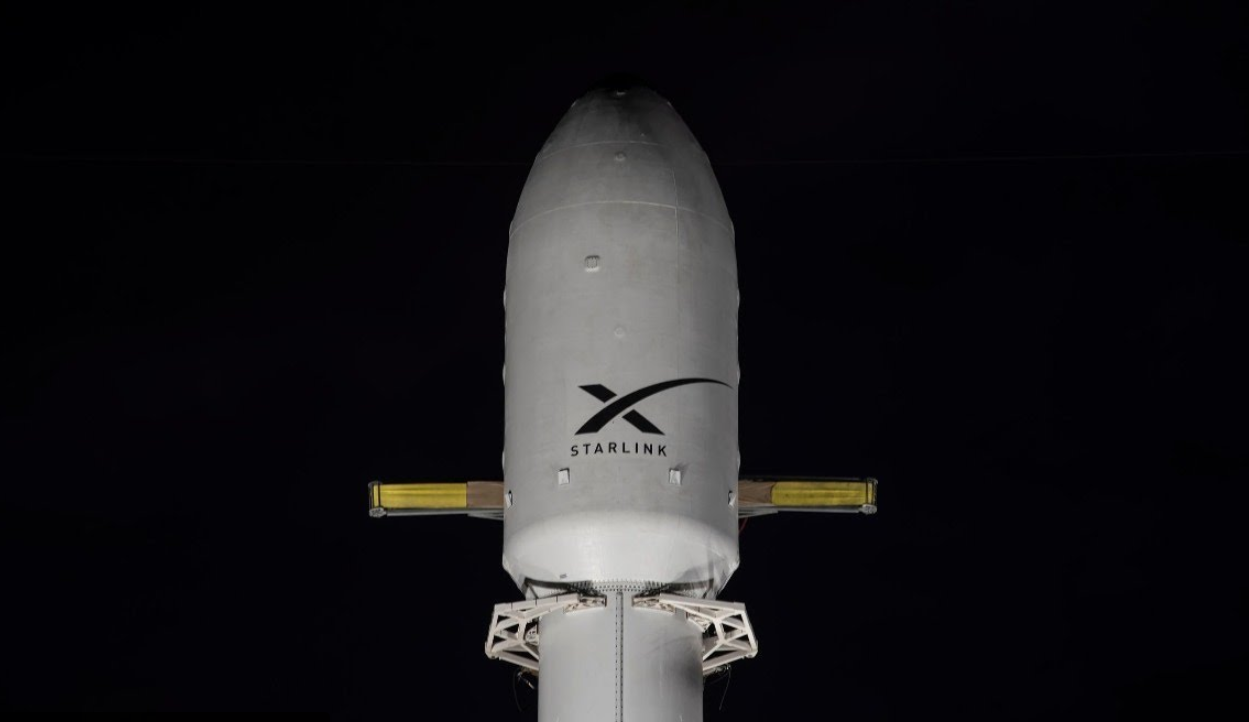
Starlink 17-41 lifted off from pad 4E at Vandenberg Space Force Base at 8:25 a.m. PDT on May 30. It was SpaceX’s 10th launch of May and the 50th Starlink mission of the year.
Fifty dedicated Starlink missions in five months puts SpaceX on pace to exceed last year’s cadence. The expanding constellation continues to dominate LEO object counts tracked by systems like KeepTrack.
Read the full story: Spaceflight Now
AUKUS Partners Sign Underwater Drone Agreement, Accelerate Submarine Handoff
Australia, the U.S., and UK signed a new agreement covering underwater drone cooperation under the AUKUS framework. Australia also revised its submarine acquisition plan — dropping plans to purchase a newly built Virginia-class submarine in favor of acquiring another ex-U.S. Navy boat.
The shift reflects schedule pressure and industrial capacity constraints in the U.S. submarine program. Underwater drone integration is now moving in parallel with the long-range submarine transfer timeline.
Read the full story: Breaking Defense
Satellite of the Day
HORYU-2
HORYU-2 is a compact technology demonstrator built by Kyoto University and launched aboard Japan’s H-IIA 202 rocket on May 17, 2012, from the Tanegashima Space Center. This tiny satellite—weighing just 7 kilograms with a box-shaped body measuring 0.3 meters across—represents the kind of innovative, low-cost space research that Japanese universities have become known for. Powered by solar cells and batteries, HORYU-2 operates in a sun-synchronous orbit, making it ideal for continuous Earth observation and technology validation missions.
The HORYU (which translates to “Phoenix” in Japanese) program exemplifies Japan’s commitment to accessible space education and research. By launching capable satellites at modest scales and costs, Kyoto University and similar institutions can test new technologies, train the next generation of space engineers, and contribute meaningful data to the scientific community—all without the expense of traditional larger satellites. HORYU-2 continues to serve as a testament to what’s possible when innovation meets constraint.
| Detail | Value |
|---|---|
| NORAD ID | 38340 |
| Operator | Kyoto University (KYUT) |
| Country | Japan |
| Launch Date | May 17, 2012 |
| Launch Vehicle | H-IIA 202 |
| Orbit | Sun-synchronous, 98.2° inclination |
| Purpose | Technology |
| Manufacturer | Kyoto University |
Track this satellite in real-time: Track HORYU-2
Upcoming Space Launches
June 3
-
SpaceX Falcon 9 Block 5: Starlink Group 10-43
- From Space Launch Complex 40, Cape Canaveral Space Force Station, FL, USA (08:02 UTC) A batch of 24 Starlink V2 Mini Optimized satellites launching to low Earth orbit. Watch Live
-
SpaceX Falcon 9 Block 5: Starlink Group 17-47
- From Space Launch Complex 4E, Vandenberg Space Force Base, CA, USA (14:00 UTC) A batch of 24 Starlink V2 Mini Optimized satellites launching to low Earth orbit. Watch Live
June 4
-
China Aerospace Science and Technology Corporation Long March 6A: Unknown Payload
- From Launch Complex 9A, Taiyuan Satellite Launch Center, People’s Republic of China (11:31 UTC) Details to be confirmed; likely SpaceSail Polar Orbit LEO communication satellites. The Long March 6A is China’s first rocket to feature solid rocket boosters, developed jointly by CASC and the Shanghai Academy of Spaceflight Technology.
-
Blue Origin New Glenn: Amazon Leo (LN-01)
- From Launch Complex 36A, Cape Canaveral Space Force Station, FL, USA (17:21 UTC) Carrying 48 satellites for Amazon’s Leo broadband internet constellation, formerly known as Project Kuiper. The constellation ultimately plans to deploy 3,276 satellites across three orbital shells between 590–630 km altitude to provide global high-speed internet access to underserved regions.
June 5
- China Aerospace Science and Technology Corporation Long March 8: Unknown Payload
- From Commercial LC-1, Wenchang Space Launch Site, People’s Republic of China (05:00 UTC) Details to be confirmed; likely SpaceSail Polar Orbit LEO communication satellites. The Long March 8 can deliver up to 8,100 kg to low Earth orbit and is capable of launching up to 5,000 kg to a 700 km sun-synchronous orbit.
June 8
-
Agency for Defense Development South Korean ADD Solid-Fuel SLV: Demo Flight
- From ADD Offshore Launch Platform, Sea Launch (05:00 UTC) A demonstration test flight of South Korea’s Agency for Defense Development solid-fuel space launch vehicle. Launch Preview
-
SpaceX Falcon 9 Block 5: Starlink Group 10-35
- From Space Launch Complex 40, Cape Canaveral Space Force Station, FL, USA (10:07 UTC) A batch of 24 Starlink V2 Mini Optimized satellites launching to low Earth orbit. Watch Live
June 10
-
Indian Space Research Organization GSLV Mk II: GISAT-1A (EOS-05)
- From Satish Dhawan Space Centre Second Launch Pad, Satish Dhawan Space Centre, India (00:00 UTC) GISAT-1A (GEO Imaging Satellite) is an Indian Earth observation satellite that will operate from geostationary orbit to provide continuous monitoring of the Indian subcontinent, enabling rapid assessment of natural hazards and disaster events.
-
China Rocket Co. Ltd. Smart Dragon 3: Unknown Payload
- From Haiyang Offshore Launch Location, Haiyang Oriental Spaceport (00:30 UTC) Details to be confirmed. Smart Dragon-3 is a solid-fuel commercial orbital rocket developed by a CASC subsidiary, making its launch from an offshore sea-based platform.
Schedule Changes
- SpaceX Falcon 9 Block 5 | Starlink Group 17-41 has been removed from the upcoming launch calendar — its status changed to Launch Successful.
- China Aerospace Science and Technology Corporation Long March 2D | 4 x SatNet test satellites has been removed from the upcoming launch calendar — its status changed to Launch Successful.
- China Rocket Co. Ltd. Smart Dragon 3 | Unknown Payload has been newly added to the calendar, with a confirmed launch window opening June 10 at 00:30 UTC from Haiyang Oriental Spaceport (status: To Be Confirmed).
Note: Launch dates and times are subject to change due to technical or weather considerations.

Maurice Stellarski


