· space brief · 8 min read
NASA Declares MAVEN Dead; Eastern Range Damage Assessment Underway | KeepTrack Space Brief
NASA officially ended the MAVEN Mars orbiter mission after months of radio silence following an anomaly. Space Force assessing Eastern Range damage from separate incident affecting launch cadence.
Top Stories
NASA Declares MAVEN Mars Orbiter Dead
NASA has officially ended the MAVEN mission after months of failed contact attempts following an anomaly at Mars. The spacecraft launched in 2013 and had been studying Mars’ upper atmosphere and how the planet lost its water and air over time.
For trackers, MAVEN’s loss closes out one of the longer-running Mars orbital assets in the catalog. No recovery operations are planned.
Read the full story: Space.com
Space Force Assessing Eastern Range Damage After Anomaly
Space Launch Delta 45 has cleared a major phase of its damage assessment following an anomaly at the Eastern Range. SLD 45 operates the range infrastructure that supports launches from Cape Canaveral, and any extended downtime directly affects launch cadence for both military and commercial operators.
The assessment includes evaluating future danger areas, which will affect range scheduling until a full safety review is complete.
Read the full story: NASASpaceFlight
Blue Origin New Glenn Explosion Pushes AST SpaceMobile Service to 2027
AST SpaceMobile is now expecting a three-to-six month delay to its direct-to-smartphone constellation rollout due to Blue Origin’s launchpad explosion. Investment bank William Blair flagged the delay in an equity research note, projecting initial commercial service won’t begin until the first half of 2027.
AST is dependent on New Glenn for launching its BlueBird Block 2 satellites. With New Glenn grounded, the company has limited near-term alternatives at that payload class.
Read the full story: SpaceNews
Blue Origin Targets New Glenn Return-to-Flight Before End of 2026
Blue Origin CEO Dave Limp has stated the company intends to repair its LC-36 launchpad and return New Glenn to flight before the end of 2026. The explosion occurred during ground operations and caused damage that requires significant infrastructure repair.
The timeline is aggressive given the scope of damage assessment still underway. Any further delays compound downstream effects for customers like AST SpaceMobile and other New Glenn manifest holders.
Read the full story: Space.com
Air Force Awards GE and Rolls-Royce for Medium Thrust Drone Engines
The U.S. Air Force has awarded contracts to GE and Rolls-Royce to advance engine designs for medium thrust class unmanned systems. Both companies will develop competing propulsion options for the drone category, an Air Force spokesperson confirmed to Breaking Defense.
The awards move the program from concept toward hardware development, with the medium thrust class targeting autonomous platforms larger than tactical drones but below crewed aircraft.
Read the full story: Breaking Defense
Army and J-7 to Test Wallabee High-Altitude Balloon Sensor
The Army and the Joint Staff J-7 are days away from testing the Wallabee prototype, a high-altitude balloon-based sensor designed for stratospheric intelligence gathering. The test aims to validate the platform’s ISR capabilities at altitude.
Stratospheric balloon assets operate in a tracking gray zone — above most aviation but below orbital altitude. KeepTrack users monitoring high-altitude objects can use the glossary for reference on how these platforms are cataloged relative to orbital objects.
Read the full story: Breaking Defense
Anduril and Elbit America Team for Army Self-Propelled Howitzer Competition
Anduril has joined Elbit Systems of America and Oshkosh Defense to compete in the Army’s self-propelled howitzer program. The team combines Anduril’s autonomy and software stack with Elbit’s artillery systems experience and Oshkosh’s vehicle integration background.
The competition is expected to be one of the more closely watched Army ground systems procurements this year.
Read the full story: Breaking Defense
Satellite of the Day
WORLDVIEW-3
WorldView-3 (WV-3) is a high-resolution Earth observation satellite operated by the National Geospatial-Intelligence Agency (NGA/DGLO) and built by Ball Aerospace. Launched on August 13, 2014, aboard an Atlas V 401 rocket from Vandenberg Space Force Base, this 2,615-kg spacecraft was designed to deliver detailed imagery for mapping, intelligence, and disaster response applications. With a mission lifetime of 7.25 years, WV-3 carries advanced imaging sensors that make it one of the most capable commercial Earth observation platforms ever deployed.
Operating in a near-polar sun-synchronous orbit at 97.86° inclination, WorldView-3 circles Earth roughly every 98 minutes, allowing it to image the same ground locations at the same local solar time each day—ideal for consistent, comparable imagery over time. The satellite’s hexagonal structure with deployable solar arrays and sophisticated power management systems enable it to maintain consistent performance across its operational life. WV-3 represents a significant step forward in space-based geospatial intelligence collection, supporting everything from urban planning and agriculture to emergency response and strategic reconnaissance.
| Detail | Value |
|---|---|
| NORAD ID | 40115 |
| Operator | US (DGLO) |
| Launch Date | August 13, 2014 |
| Orbit | Sun-synchronous, 97.86° inclination |
| Purpose | Earth observation |
| Status | Active |
Track this satellite in real-time: Track WORLDVIEW-3
Upcoming Space Launches
June 4
-
SpaceX Falcon 9 Block 5: Starlink Group 10-43
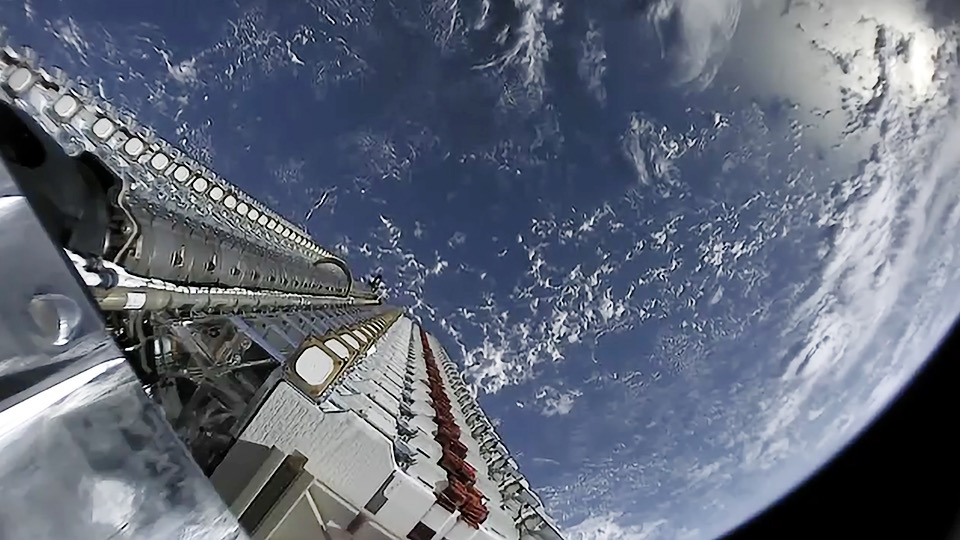
- From Space Launch Complex 40, Cape Canaveral Space Force Station, FL, USA (08:00 UTC) A batch of 29 Starlink V2 Mini Optimized satellites launching to low Earth orbit. Booster 1090 will land on drone ship A Shortfall of Gravitas in the Atlantic Ocean. Watch Live Launch Preview
-
China Aerospace Science and Technology Corporation Long March 6A: Unknown Payload
- From Launch Complex 9A, Taiyuan Satellite Launch Center, People’s Republic of China (11:31 UTC) Details to be determined — likely SpaceSail Polar Orbit LEO communication satellites. The Long March 6A is China’s first rocket with solid rocket boosters, featuring two YF-100 engines on the first stage augmented by four solid rocket boosters, with a launch mass of 530 tonnes. Launch Preview
-
Blue Origin New Glenn: Amazon Leo (LN-01)
- From Launch Complex 36A, Cape Canaveral Space Force Station, FL, USA (17:21 UTC) The New Glenn will carry 48 satellites for Amazon Leo (formerly Project Kuiper), a planned 3,276-satellite broadband internet mega-constellation in low Earth orbit. Satellites will be distributed across three orbital shells at 590 km, 610 km, and 630 km altitude, targeting underserved and remote communities globally.
June 5
- China Aerospace Science and Technology Corporation Long March 8: Unknown Payload
- From Commercial LC-1, Wenchang Space Launch Site, People’s Republic of China (06:25 UTC) Details to be determined — likely SpaceSail Polar Orbit LEO communication satellites. The Long March 8 is capable of lifting up to 5,000 kg to a 700 km sun-synchronous orbit and is based on the Long March 7 first stage, with a liquid hydrogen upper stage derived from the Long March 3A series. Launch Preview
June 7
- SpaceX Falcon 9 Block 5: Starlink Group 17-43
- From Space Launch Complex 4E, Vandenberg Space Force Base, CA, USA (02:00 UTC) A batch of 21 Starlink satellites for SpaceX’s broadband mega-constellation, with 2 US military Starshield satellites also on board. Watch Live
June 8
-
Agency for Defense Development South Korean ADD Solid-Fuel SLV: Demo Flight
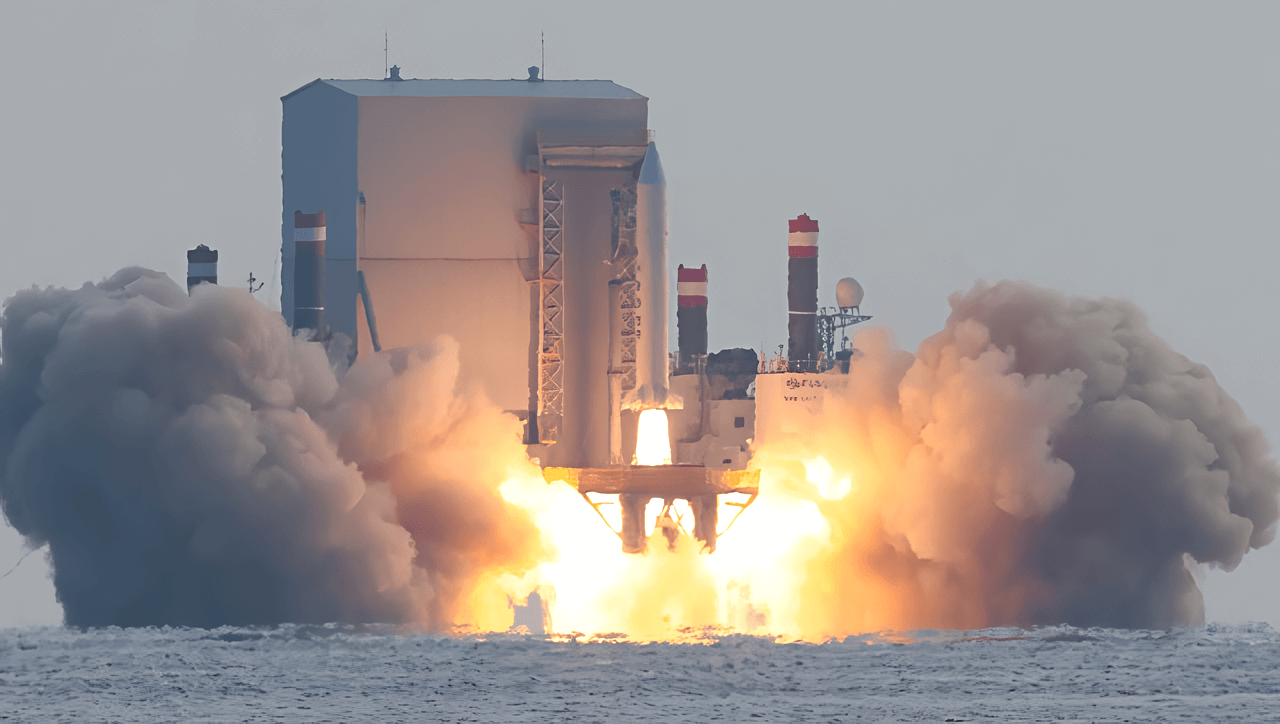
- From ADD Offshore Launch Platform, Sea Launch (05:00 UTC) Test flight of South Korea’s solid-fuel small launch vehicle, targeting low Earth orbit. This is a demonstration mission for the Agency for Defense Development’s orbital launch capability. Launch Preview
-
SpaceX Falcon 9 Block 5: Starlink Group 10-35
- From Space Launch Complex 40, Cape Canaveral Space Force Station, FL, USA (10:07 UTC) A batch of 29 Starlink V2 Mini Optimized satellites launching to low Earth orbit. Booster 1090 will land on drone ship A Shortfall of Gravitas in the Atlantic Ocean. Watch Live
June 10
-
Indian Space Research Organization GSLV Mk II: GISAT-1A (EOS-05)
- From Satish Dhawan Space Centre Second Launch Pad, Satish Dhawan Space Centre, India (time TBD) GISAT-1A is an Indian geostationary earth-observation satellite designed for continuous imaging of the Indian subcontinent and rapid monitoring of natural hazards and disasters. The GSLV Mk II is India’s largest operational launch vehicle, featuring an indigenous cryogenic upper stage.
-
Mitsubishi Heavy Industries H3-30: H3-30 Test Flight
- From Yoshinobu Launch Complex LP-2, Tanegashima Space Center, Japan (00:53 UTC) Test flight of the H3-30 variant, featuring three LE-9 engines on the first stage and no solid rocket boosters. The mission carries the Vehicle Evaluation Payload 5 (VEP-5) dummy payload along with several small hitchhiking satellites: PETREL, STARS-X, BRO-22, VERTECS, and HORN-L/R. The H3 is an expendable liquid-propellant rocket developed jointly by Mitsubishi Heavy Industries and JAXA.
-
China Rocket Co. Ltd. Smart Dragon 3: Unknown Payload
- From Haiyang Offshore Launch Location, Haiyang Oriental Spaceport (00:30 UTC) Details to be determined. Smart Dragon-3 is a solid-fuel commercial orbital rocket developed by a subsidiary of state-owned CASC, with a launch mass of 140 tonnes. First flown in December 2022.
-
China Aerospace Science and Technology Corporation Long March 5: Unknown Payload
- From Launch Complex 101, Wenchang Space Launch Site, People’s Republic of China (06:00 UTC) Details to be determined. The Long March 5 is China’s heavy-lift workhorse with a capacity of up to 25,000 kg to low Earth orbit, comparable to the Delta IV Heavy. Launch mass is approximately 867 tonnes.
-
SpaceX Falcon 9 Block 5: Starlink Group 17-44
- From Space Launch Complex 4E, Vandenberg Space Force Base, CA, USA (14:00 UTC) A batch of 29 Starlink V2 Mini Optimized satellites launching to low Earth orbit. Watch Live
Schedule Changes
- New Addition: SpaceX Falcon 9 Block 5 | Starlink Group 17-43 has been added to the manifest, scheduled for June 7, 2026 at 02:00 UTC from Vandenberg Space Force Base. The mission carries 21 Starlink satellites and 2 US military Starshield satellites.
- Status Update: SpaceX Falcon 9 Block 5 | Starlink Group 17-47 has been removed from the upcoming launches calendar following a successful launch.
Note: Launch dates and times are subject to change due to technical or weather considerations.

Maurice Stellarski