publishDate: 2026-07-12T09:01:25Z title: ‘FCC Approves First Reflect Orbital Satellite | KeepTrack Space Brief’ excerpt: “FCC clears Reflect Orbital’s debut satellite to test beaming sunlight into nighttime regions, over objections from astronomers.” image: ~/assets/images/space-brief/image-2026-07-12.jpg category: space-brief tags:
- space news
- satellite tracking
- FCC
- Reflect Orbital
- Space Force
- Starlink
- cubesats
Top Stories
FCC Clears Reflect Orbital’s First Sunlight-Reflecting Satellite
The FCC approved Reflect Orbital’s first satellite, a demonstration mission designed to bounce sunlight down to specific ground targets after dark. The company wants to sell illumination as a service - think extending solar power generation hours or lighting disaster zones at night.
Astronomers have pushed back hard. Reflective satellites in low Earth orbit already complicate observations by streaking across long-exposure images; a satellite built specifically to be bright makes that worse. Environmental groups have raised concerns about effects on nocturnal wildlife. The FCC approval covers only the first test article, not a full constellation, so expect more regulatory fights if Reflect Orbital moves to scale.
Read the full story: SpaceNews
White House Taps Avi Loeb to Run New UAP Study Group
Harvard astrophysicist Avi Loeb has been named head of a new White House group tasked with studying unidentified anomalous phenomena - the government’s current term for what used to be called UFOs. Loeb built his public profile investigating ‘Oumuamua and pushing for more rigorous data collection on unexplained aerial and orbital objects.
This puts a working astronomer in charge of a process that’s historically been run by intelligence and defense officials. Loeb has said publicly he wants better sensor data and less classification friction - both of which matter to anyone doing space domain awareness work, since UAP reporting increasingly overlaps with satellite tracking datasets.
Read the full story: Space.com
Space Force Backs Parabilis Hybrid Propulsion for Maneuverable Cubesats
Parabilis Space Technologies is testing a hybrid propulsion system meant to give small satellites real maneuvering capability, with Space Force funding behind the development. Hybrid engines combine solid fuel with a liquid or gaseous oxidizer, giving cubesats more thrust control than typical cold-gas or electric propulsion without the complexity of a full liquid bipropellant system.
Maneuverable cubesats are a Space Force priority because current tracking and threat-response doctrine assumes small satellites are mostly passive. A cubesat that can dodge, rendezvous, or reposition on short notice changes what analysts need to watch for in conjunction assessments.
Read the full story: SpaceNews
Starlink Direct-to-Mobile Now Powers a Dog Collar
A new pet tracking collar uses SpaceX’s Starlink direct-to-mobile network to report a dog’s location from areas with no cellular coverage. It’s marketed as the first satellite-connected dog collar, riding on the same direct-to-cell infrastructure Starlink built for text messaging with unmodified phones.
This is a small example of a bigger trend: direct-to-device satellite links are moving past emergency SOS features into everyday consumer hardware. Every one of these devices adds load to the Starlink direct-to-cell satellite fleet, which now numbers in the hundreds.
Read the full story: Space.com
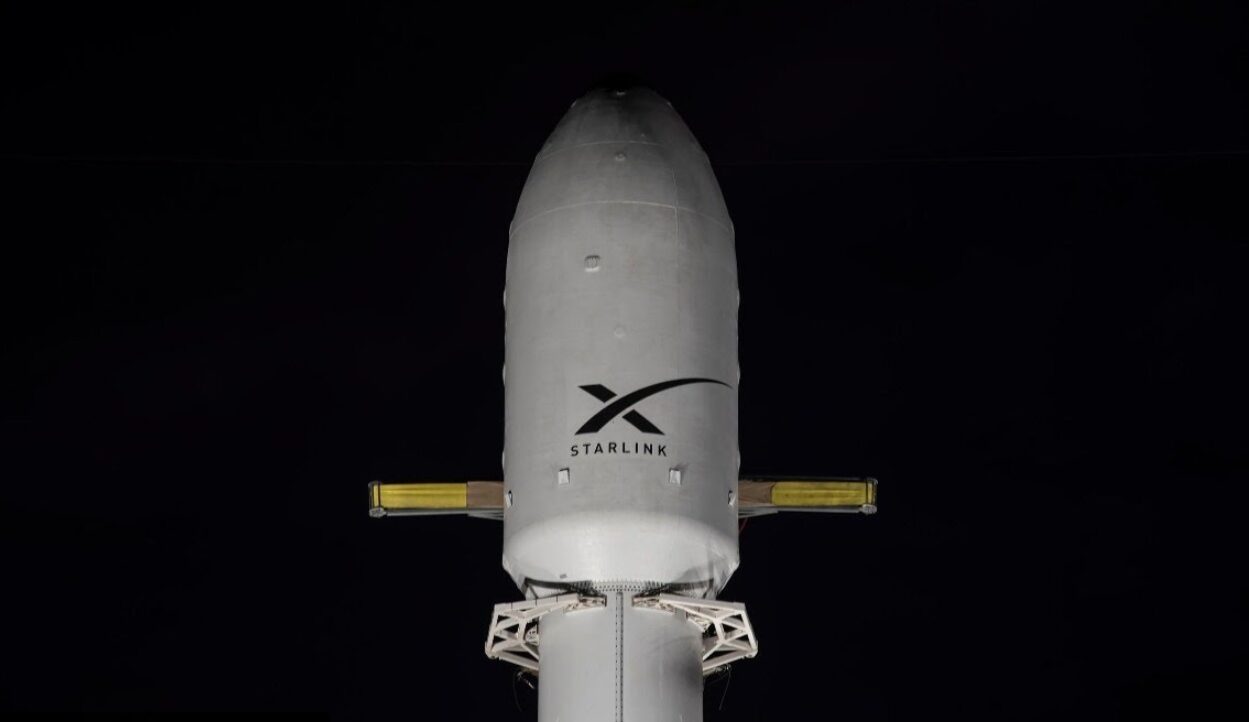
Falcon 9 Flies 35th Mission, Delivers 29 Starlink Satellites
SpaceX launched a Falcon 9 booster on its 35th flight July 10, carrying 29 Starlink satellites to low Earth orbit. The booster’s flight count keeps pushing SpaceX’s reuse record higher, with turnaround times now routinely under two weeks for its most-flown cores.
At this cadence, Starlink’s total on-orbit count keeps climbing week over week, which is why conjunction alerts and reentry tracking for the constellation stay a constant background workload for anyone running space situational awareness tools.
Read the full story: Space.com
Satellite of the Day
EUTELSAT 10B
EUTELSAT 10B is a commercial telecommunications satellite operated by Eutelsat (AESP) and built by Airbus Defence and Space. Launched aboard an Ariane 5ECA+ rocket from French Guiana on June 22, 2022, this satellite delivers high-capacity connectivity services across Europe, the Middle East, and Africa. With a launch mass of 440 kg, EUTELSAT 10B is positioned in geostationary orbit to provide fixed satellite services and contribute to Eutelsat’s growing constellation of C-band and Ku-band resources.
As part of Eutelsat’s fleet modernization efforts, EUTELSAT 10B represents the company’s continued investment in reliable, wide-beam coverage for broadcasting and broadband applications. The satellite’s low inclination orbit (5.87°) is typical for geostationary spacecraft designed for long-term service life in stable positions above the equator. Its positioning makes it a key asset for regional connectivity demands across three continents.
| Detail | Value |
|---|---|
| NORAD ID | 52905 |
| Operator | Eutelsat (AESP) |
| Launch Date | June 22, 2022 |
| Orbit | Geostationary, 5.87° inclination |
| Launch Vehicle | Ariane 5ECA+ |
| Launch Site | French Guiana |
| Manufacturer | Airbus Defence and Space |
| Launch Mass | 440 kg |
| Purpose | Fixed satellite services, broadcasting, broadband |
| Status | Active |
Track this satellite in real-time: Track EUTELSAT 10B
Upcoming Space Launches
July 14
- SpaceX Falcon 9 Block 5:
- Starlink Group 15-14 from Space Launch Complex 4E, Vandenberg Space Force Base (01:16 UTC) Batch of 24 Starlink V2 Mini Optimized satellites to low Earth orbit; booster B1082 flying for a 23rd time will land on the drone ship ‘Of Course I Still Love You.’ Watch Live
- Starlink Group 10-45 from Space Launch Complex 40, Cape Canaveral Space Force Station (07:15 UTC) Batch of 24 Starlink V2 Mini Optimized satellites to low Earth orbit; booster B1082 flying for a 23rd time will land on the drone ship ‘Of Course I Still Love You.’ Watch Live
- Russian Federal Space Agency (ROSCOSMOS) Soyuz 2.1a:
- Soyuz MS-29 from Site 31/6, Baikonur Cosmodrome (14:47 UTC) Crewed mission to the International Space Station carrying Roscosmos cosmonauts Pyotr Dubrov and Anna Kikina, along with NASA astronaut Anil Menon, as part of the International Space Station program’s ongoing crew rotation. Watch Live
July 16
- SpaceX Falcon 9 Block 5:
- SDA Tranche 1 Transport Layer E from Space Launch Complex 4E, Vandenberg Space Force Base (20:22 UTC) One of six missions for the U.S. Space Force Space Development Agency’s Proliferated Warfighter Space Architecture (PWSA) Tranche 1 Transport Layer constellation, providing resilient, low-latency military data connectivity via optical inter-satellite links in low Earth orbit.
- SpaceX Starship:
- Flight 13 from Orbital Launch Pad 2, SpaceX Starbase, Texas (22:45 UTC) 13th test flight of the two-stage Starship vehicle and second flight of Starship V3. For the first time, Starship will deploy 20 V3 Starlink satellites, six of which carry cameras to image the heat shield - including tiles painted white to simulate missing tiles - to evaluate readiness for return-to-launch-site missions.
July 17
- Rocket Lab Electron:
- LOXSAT 1 from Rocket Lab Launch Complex 1, Mahia Peninsula, New Zealand (00:00 UTC) Demonstration of a complete cryogenic oxygen fluid management system developed by Eta Space under NASA’s Tipping Point program, integrated on a Rocket Lab Photon-LEO bus to validate in-space cryogenic storage and transfer technology over a 9-month mission.
- China Aerospace Science and Technology Corporation Long March 7A:
- Unknown Payload from Launch Complex 201, Wenchang Space Launch Site (11:00 UTC) Details to be confirmed.
July 18
- Skyroot Aerospace Vikram-I:
- Demo Flight from Satish Dhawan Space Centre First Launch Pad (05:00 UTC) Maiden launch of Skyroot Aerospace’s Vikram-I orbital vehicle, carrying several cubesats with payload identities still to be determined. Launch Preview
- SpaceX Falcon 9 Block 5:
- Starlink Group 17-39 from Space Launch Complex 4E, Vandenberg Space Force Base (14:00 UTC) Batch of 24 Starlink V2 Mini Optimized satellites to low Earth orbit; booster B1082 flying for a 23rd time will land on the drone ship ‘Of Course I Still Love You.’ Watch Live
July 23
- China Aerospace Science and Technology Corporation Long March 3B/E:
- Unknown Payload from Launch Complex 2 (LC-2), Xichang Satellite Launch Center (11:00 UTC) Details to be confirmed. The Long March 3B/E is a heavy-lift variant of the CZ-3 series specially developed for transporting heavy communications satellites into geostationary transfer orbit.
Schedule Changes
- A new launch has been added: Long March 3B/E carrying an unspecified payload from Xichang Satellite Launch Center, currently scheduled for July 23.
- Starship Flight 13’s status has been upgraded from “To Be Confirmed” to “Go for Launch.”
Note: Launch dates and times are subject to change due to technical or weather considerations.