· space terms · 4 min read
C-Band
The workhorse frequency band that quietly powers satellite communications, weather radar, and Wi-Fi around the world
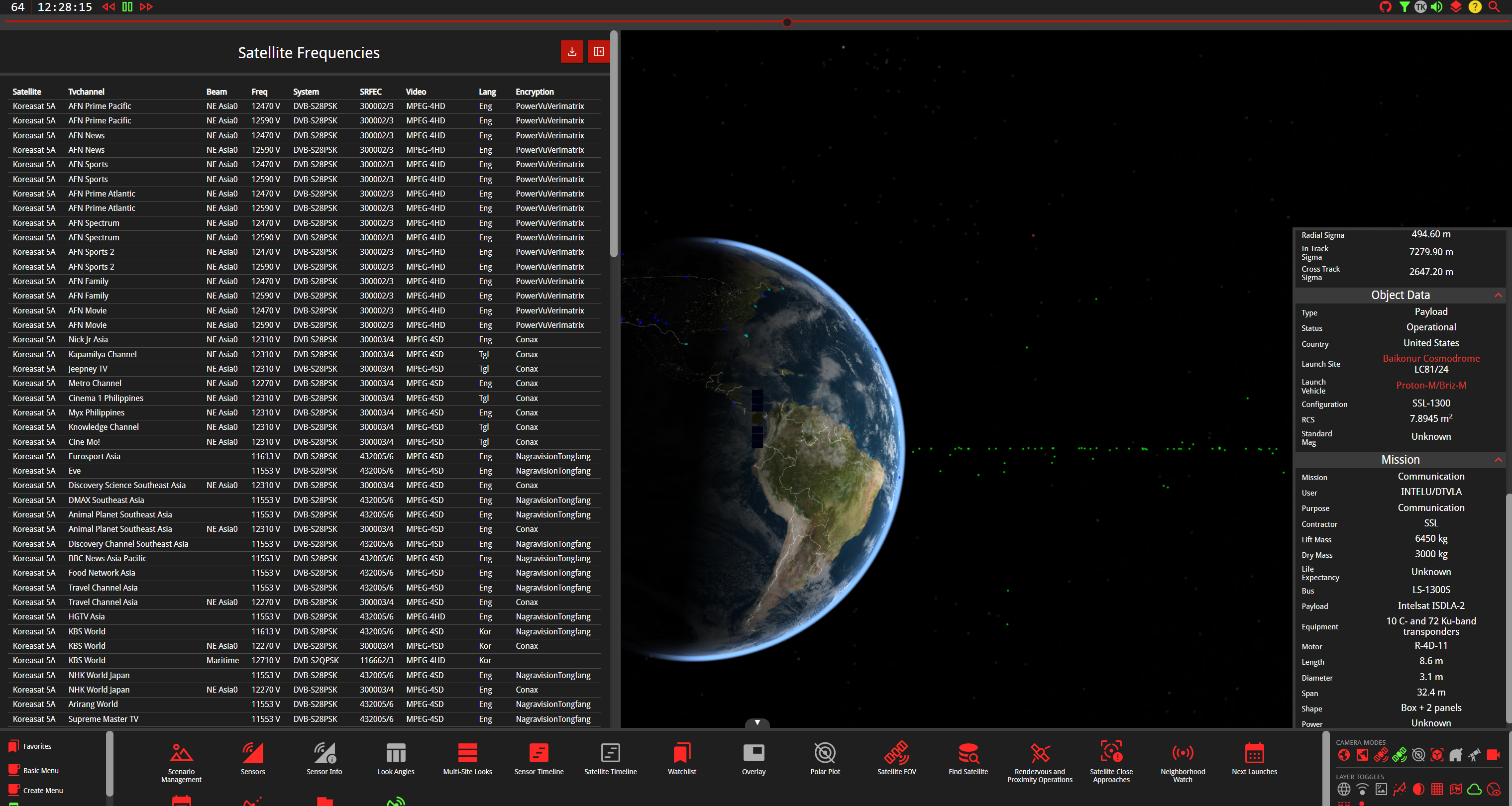
You’ve probably never thought about it, but C-band signals are all around you. Every time you check the weather forecast based on Doppler radar, watch a live international broadcast, or even use certain Wi-Fi networks, there’s a good chance C-band frequencies are doing the heavy lifting behind the scenes.
The Technical Bits
C-band refers to a portion of the electromagnetic spectrum in the microwave range, typically spanning 4 to 8 GHz. In satellite communications specifically, C-band is split into two segments:
- Uplink (Earth to satellite): 5.925–6.425 GHz
- Downlink (satellite to Earth): 3.7–4.2 GHz
The “C” designation comes from the band’s historical origins during World War II, when radar frequency bands were given letter codes as a form of secrecy. The naming stuck, and today these letter codes are an international standard used across the entire telecommunications industry.
Why It Matters
C-band was the first frequency band widely used for commercial satellite communications, and it remains one of the most reliable. Here’s why it’s still a go-to choice decades later:
- Rain fade resistance: C-band signals are relatively unaffected by rain, snow, and atmospheric moisture compared to higher-frequency bands like Ku-band. This makes it the preferred choice for tropical regions where heavy rain is common.
- Wide coverage: A single C-band transponder can cover a large geographic footprint, making it ideal for broadcasting across entire continents.
- Proven reliability: Satellites like INTELSAT 511 (NORAD ID 15873) carried 26 C-band transponders, and variants of this architecture have been the backbone of global communications since the 1970s.
C-band satellites handle services including:
- International television distribution (the feed that gets CNN to cable headends worldwide)
- Maritime and aviation communications
- Weather radar systems (Doppler radar operates in C-band)
- Military communications and data relay
- Rural telephony and internet backhaul in developing nations
What Most People Mix Up
The biggest source of confusion is between C-band for satellites and C-band for 5G. In 2020, the U.S. Federal Communications Commission auctioned off a portion of the C-band spectrum (3.7–3.98 GHz) to wireless carriers for 5G mobile service. This created a massive headache because that spectrum had been used by satellite operators for decades.
The result? Satellite operators had to migrate their services to a narrower slice of spectrum, and wireless carriers had to install filters near airports to prevent interference with aircraft radio altimeters that operate nearby at 4.2–4.4 GHz. So when you hear “C-band” in the news, always check whether they’re talking about satellites or cell towers — it’s often the latter these days.
Fun Fact Space Nerds Might Not Know
The very first commercial communications satellite, Intelsat I (nicknamed “Early Bird”), launched in 1965, carried just two C-band transponders. Each could handle either 240 telephone circuits or one television channel — not both at the same time. Today, a modern C-band satellite can carry dozens of transponders, each capable of handling thousands of simultaneous data streams. That’s roughly a millionfold increase in capacity in just 60 years, all on the same fundamental frequency band.
C-Band vs. Other Bands
How does C-band stack up against other common satellite frequency bands?
- C-band (4–8 GHz): Large antennas (2–3 meter dishes), excellent rain resistance, wide coverage, lower bandwidth per transponder.
- Ku-band (12–18 GHz): Smaller dishes (0.6–1.2 meters), more susceptible to rain fade, higher bandwidth, commonly used for direct-to-home TV.
- Ka-band (26–40 GHz): Even smaller terminals, very high bandwidth, but severely affected by rain and atmospheric absorption. Used for high-throughput broadband satellites.
The trade-off is straightforward: lower frequencies mean bigger antennas but better weather performance; higher frequencies mean smaller antennas but more signal degradation in bad weather.
Think of C-band as the dependable sedan of the satellite spectrum — it may not be the flashiest option, but when you need something that works reliably everywhere, rain or shine, C-band has been delivering for over half a century.

Theodore Kruczek