· today in space history · 6 min read
Today in Space History 2025
From Apollo's darkest days to humanity's first transmission from Venus, we spent 2025 remembering the missions that made modern spaceflight possible. Here's what we covered - and why we're committed to keeping this series going.

Space history isn’t just about nostalgia. Every satellite we track today, every launch we monitor, every orbital maneuver we calculate - they all stand on the shoulders of missions that came before. In January 2025, KeepTrack launched “Today in Space History” to tell those stories, connecting the pioneers of the Space Age to the practitioners watching the skies right now.
The series ran hard for about five weeks. Then life happened, and the storm slowed to a stop, with the winds picking up once more in December.
Here’s what we covered this year, and our commitment to keeping the momentum going in 2026.
January Through February
The series debuted on January 25, 2025, and came out swinging with stories that didn’t shy away from tragedy or triumph. The timing of these works wasn’t accidental, as across the past 70 years, late January held some of spaceflight’s most sobering anniversaries.
It opened with Opportunity’s 14-year Martian marathon, a 90-day mission that didn’t know when to quit. The next two days brought Apollo 1 and Challenger - back-to-back anniversaries that still define NASA’s outlook on safety. Both disasters share a throughline that goes beyond faulty hardware, illuminating how organizational failures can kill as surely as cabin fires or O-rings. The Rogers Commission’s findings about schedule pressure overriding engineering concerns at Morton Thiokol could have been written about North American Aviation’s rushed Apollo command module. Richard Feynman’s ice water demonstration at the Challenger hearings might be the most devastating piece of technical testimony ever given, but it was really an indictment of institutional culture.
January closed with Apollo 14, the mission that proved NASA could bounce back from Apollo 13’s near-disaster. Alan Shepard finally walking on the Moon, years after an inner ear condition grounded America’s first astronaut, made for a story about persistence that felt earned.
February explored how unexpected discoveries reshape our understanding of the cosmos. Explorer 1’s cosmic ray detector returned data so strange that scientists assumed the instrument was broken - the “blank” readings turned out to be radiation belts nobody knew existed. A mission launched to prove America could compete with Sputnik ended up discovering something fundamental about Earth itself.
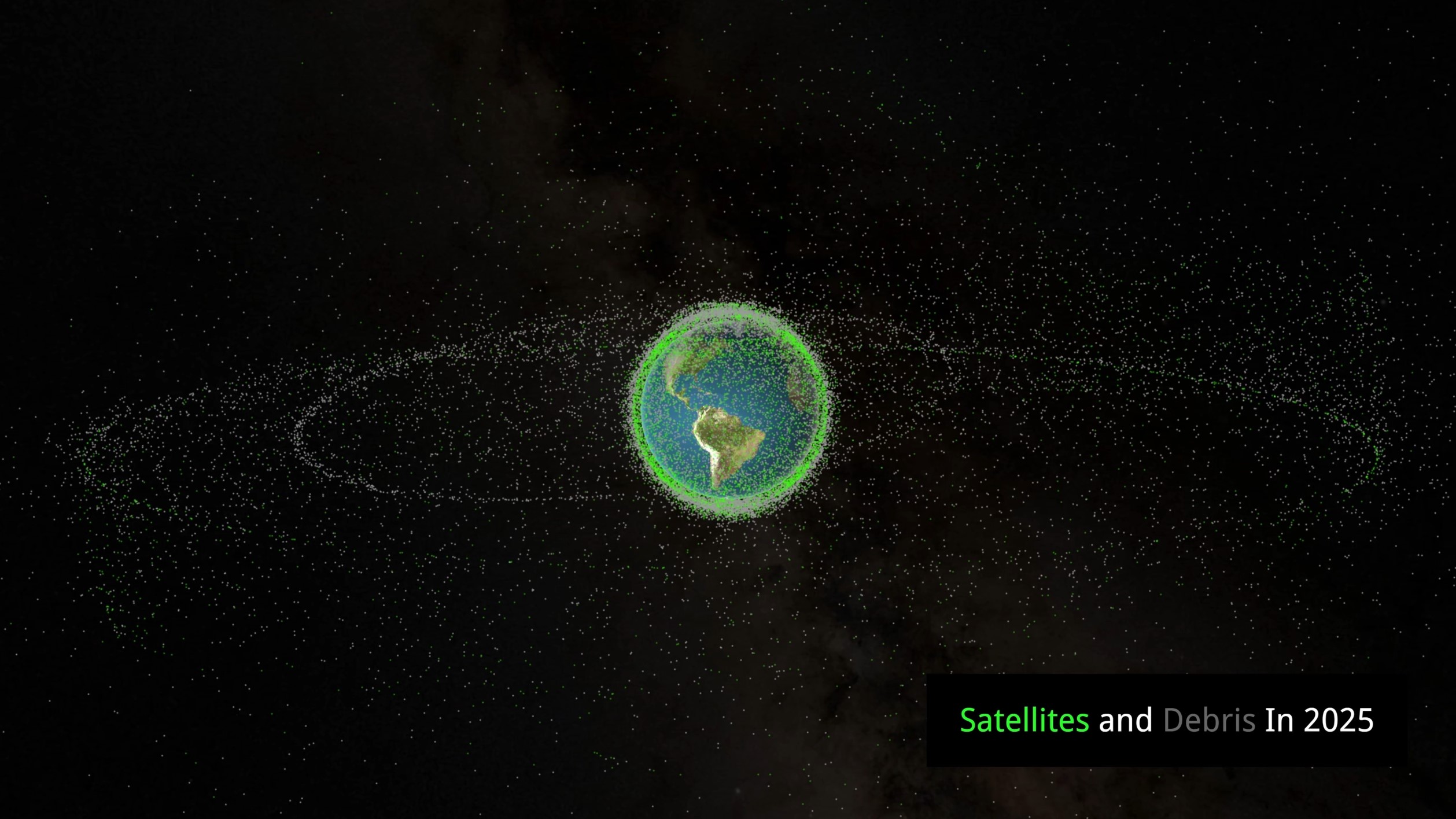
The series also covered the day space got crowded. PSLV-C37’s 2017 launch deployed 104 satellites from a single rocket, told through the eyes of someone who was actually there: a lieutenant on radar duty whose tracking workload increased fivefold in an instant. Anyone working in space situational awareness today sees the value of that launch being beyond a broken record, but as a preview of the operational environment we still navigate today.
Then the series went dark. We got busy with other things and let Today in Space History slide. March came and went without an article. Then April. By summer, the series had effectively been shelved. Not canceled, just dormant as the rest of KeepTrack developed. It’s the kind of thing that happens to side projects. We’re not proud of it.
December Revival
December’s articles shared a theme we hadn’t planned - how failure and improvisation built the foundations of modern spaceflight. When an Agena target vehicle exploded before Gemini 7 could rendezvous with it, NASA improvised by using Gemini 7 itself as the target for Gemini 6A. The resulting formation flight validated the orbital mechanics Apollo would depend on, born from scrambling to salvage a mission, not from a master plan.
Vanguard TV-3 in 1957 rose four feet off the pad before collapsing into a fireball - “Flopnik” in the headlines - but the institutional reform that followed created NASA itself. Venera 7 was built to survive conditions so extreme that engineer Georgy Babakin’s team had to rethink what a spacecraft needed to be. Twenty-three minutes of data from Venus’s surface, transmitted through a sweltering and unforgiving atmosphere, represented a complete reimagining of what was possible.
Even Soyuz 13, flying in Skylab 4’s shadow, captured something about operating in a world where your achievements get overshadowed by whoever has better PR. While American astronauts were inadvertently photographing Area 51, Soviet cosmonauts Klimuk and Lebedev conducted ultraviolet stellar observations that couldn’t be done from Earth’s surface. Sometimes the most important work happens without fanfare.
Looking Ahead
Twelve articles across two bursts of activity isn’t a comprehensive space history archive. But it’s a start, and we learned something about what matters: maintaining momentum beats starting strong. Getting history right takes work. Every article went through fact-checking against primary sources. Details matter when the whole point is accuracy.
We’re not going to promise daily posts - that’s not realistic for a side project, and overpromising is how we ended up with a nine-month gap in the first place. What we can commit to is more regular coverage throughout the year, not just in bursts.
The calendar is full of vibrant anniversaries worth covering. January brings the Challenger and Apollo 1 memorials. February has NEAR Shoemaker’s asteroid orbit insertion turning 25. March marks 60 years since Alexei Leonov’s first spacewalk. We’ll be picking the stories that matter most and telling them right.
Thank You
To everyone who read the January and February articles and wondered where the series went, we hear you. To everyone who engaged with the December revival, we appreciate you giving us another chance.
The missions we covered in 2025 were conducted by people who didn’t know if what they were attempting was possible. They did it anyway. Understanding their stories reminds us that the work being done today will become someone else’s history tomorrow.
See you in 2026.

Mariana Mokhova