· today in space history · 11 min read
The Day Two Satellites Said Hello at 26,000 Miles Per Hour
Seventeen years ago today, an operational American communications satellite and a dead Russian military relay crossed paths over Siberia. What happened next created more than 2,000 pieces of trackable debris - and fundamentally changed how the world thinks about space traffic.
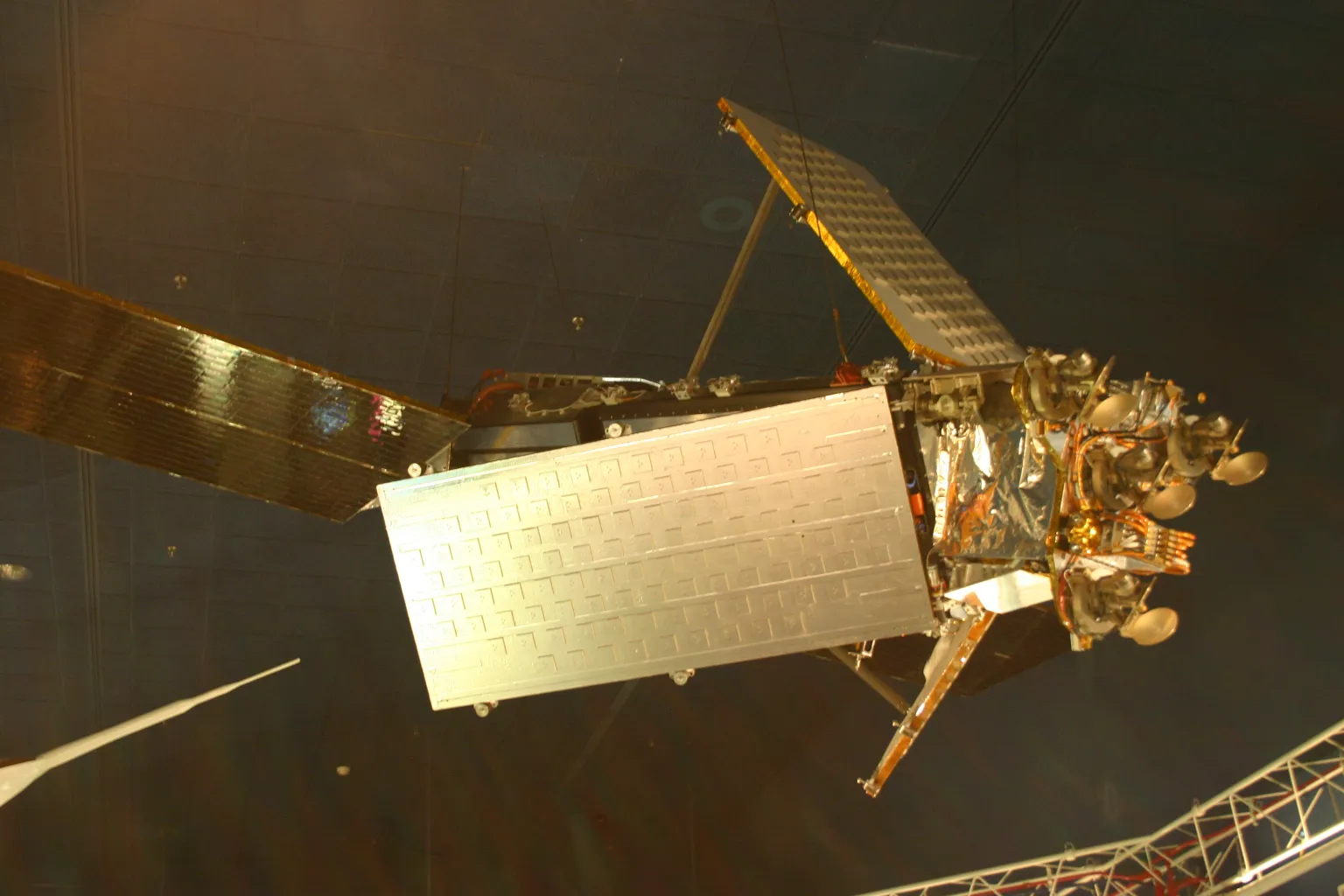
At 16:56 UTC on February 10, 2009, approximately 789 kilometers above the Taymyr Peninsula in northern Siberia, two spacecraft that had spent years peacefully circling Earth finally ran out of room. Iridium 33, an operational American communications satellite dutifully serving the global phone network that had once promised to revolutionize telecommunications, slammed into Cosmos 2251, a defunct Russian military satellite that had been drifting uselessly through space since Bill Clinton’s first term.
The collision happened at a relative velocity of 11.7 kilometers per second - roughly 26,000 miles per hour. At that speed, you could travel from New York to Los Angeles in about six minutes. At that speed, two spacecraft weighing a combined 1,500 kilograms don’t so much collide as annihilate each other.
Within milliseconds, the Iridium satellite’s carefully engineered solar panels, its three reflective main mission antennas, and its Lockheed Martin spacecraft bus were transformed into a rapidly expanding cloud of debris. Cosmos 2251, a cylinder of Soviet-era engineering that had been tumbling silently through space for fourteen years, contributed its own mass to the chaos. When the flash faded and the physics settled, both satellites had ceased to exist as coherent objects. In their place: more than 2,000 pieces of trackable debris, each one a potential collision hazard for anything else in low Earth orbit.
It was the first time in history that two intact spacecraft had accidentally collided in orbit. It would not, experts warned, be the last.
The Unlucky Pair
The two satellites that met above Siberia could hardly have been more different. One represented the ambitious future of commercial space; the other, the fading remnants of Cold War military infrastructure.
The Collision Partners
| Iridium 33 | Cosmos 2251 | |
|---|---|---|
| Launch Date | September 14, 1997 | June 16, 1993 |
| Mass | 560 kg | 950 kg |
| Orbital Altitude | 780 km | 790 km |
| Inclination | 86.4° | 74.0° |
| Status at Collision | Operational | Defunct since 1995 |
| Operator | Iridium LLC (U.S.) | Russian Space Forces |
| Design Life | 5-7 years | 5 years |
| Actual Service | 11+ years | ~2 years |
| Propulsion | Yes (hydrazine) | None |
- Launch Date
- September 14, 1997
- Mass
- 560 kg
- Orbital Altitude
- 780 km
- Inclination
- 86.4°
- Status at Collision
- Operational
- Operator
- Iridium LLC (U.S.)
- Design Life
- 5-7 years
- Actual Service
- 11+ years
- Propulsion
- Yes (hydrazine)
- Launch Date
- June 16, 1993
- Mass
- 950 kg
- Orbital Altitude
- 790 km
- Inclination
- 74.0°
- Status at Collision
- Defunct since 1995
- Operator
- Russian Space Forces
- Design Life
- 5 years
- Actual Service
- ~2 years
- Propulsion
- None
Iridium 33 was part of an audacious dream hatched in a Motorola research lab in Arizona back in 1987. Three engineers - Bary Bertiger, Ray Leopold, and Ken Peterson - envisioned a constellation of satellites that could provide phone service anywhere on Earth, from the peaks of Everest to the middle of the Pacific Ocean. The network would be named Iridium, after the element with atomic number 77, reflecting the original plan for 77 satellites. Engineers later determined that only 66 were needed for global coverage, but the name stuck - after all, nobody wanted to rebrand to Dysprosium.
The first Iridium satellites launched in 1997, and at its peak the program was producing a new satellite every 4.3 days. Motorola spent approximately $5 billion building out the constellation and its ground infrastructure. Commercial service launched on November 1, 1998, with Vice President Al Gore making the inaugural call to Gilbert Grosvenor, chairman of the National Geographic Society and great-grandson of Alexander Graham Bell.
Then it promptly went bankrupt.
The handsets were expensive. The service was pricey. Reception indoors was essentially nonexistent. By August 1999, nine months after launch, Iridium SSC was in Chapter 11. Motorola announced plans to deorbit the entire constellation and let billions of dollars worth of hardware burn up in the atmosphere. Only a last-minute rescue by a group of investors led by Dan Colussy - who secured a contract with the U.S. Department of Defense - saved the satellites from a fiery death.
So when Iridium 33 was destroyed in February 2009, it was in the peculiar position of being both a relic of a failed commercial venture and an active participant in a military communications backbone. It had outlived its original company, survived a near-deorbiting, and logged more than eleven years of service - twice its design life. Then it ran into a piece of Soviet-era space junk that nobody was watching.
A Collision Nobody Saw Coming (Sort Of)
The frustrating truth about the Iridium-Cosmos collision is that it was, in theory, predictable. The U.S. Space Surveillance Network tracks thousands of objects in Earth orbit and regularly publishes conjunction assessments - predictions of when two objects will pass close to each other. The publicly available SOCRATES system (Satellite Orbital Conjunction Reports Assessing Threatening Encounters in Space) flagged a close approach between Iridium 33 and Cosmos 2251 in each of its fourteen reports during the week leading up to the collision.
The predicted miss distance in the final report before impact? About 584 meters.
That’s actually quite close by conjunction standards - modern practices flag anything under one kilometer for attention, with maneuver thresholds typically triggered around 200 meters in the radial direction. But here’s the problem: SOCRATES was built on publicly available Two-Line Element (TLE) data, which is notoriously imprecise. Using TLE data, the predicted miss distance fluctuated wildly that week - one report predicted 117 meters, and the very next day it jumped to 1.2 kilometers. With that much uncertainty baked in, distinguishing this conjunction from thousands of others was essentially impossible.
The Iridium 33/Cosmos 2251 conjunction never even cracked the top ten list on SOCRATES. Over that week, Iridium 33 alone had between ten and fifteen predicted approaches within five kilometers. The entire constellation saw over a thousand such warnings. Trying to pick out which one would actually result in a collision was, as one analyst put it, like trying to find a needle in a stack of needles.
But the real tragedy wasn’t the limitations of public tracking data - it was the information gap between the people who had better data. Just eight hours before the collision, Iridium 33 performed two small station-keeping maneuvers, firing its hydrazine thrusters to raise its orbit by about eight meters. According to subsequent analysis, before those maneuvers, the satellites would have passed each other at roughly 230 meters - still close, but survivable. The adjustment put Iridium 33 directly in Cosmos 2251’s path.
Iridium didn’t know where Cosmos 2251 was with any precision. The Joint Space Operations Center (JSpOC), which maintained far more accurate tracking data than was publicly available, didn’t know that Iridium had maneuvered - because no mechanism existed for commercial operators to share their maneuver plans. Each party held half the puzzle. Together, they might have realized that a collision was imminent. Apart, they watched two satellites destroy each other.
The Debris Machine
When the debris cloud was first observed, the scope of the disaster became apparent. NASA initially estimated at least 1,000 trackable fragments larger than 10 centimeters. By July 2011, the official count exceeded 2,000. Radar observations suggested that an additional 70,000 fragments larger than one centimeter had been created - pieces too small to catalog reliably but perfectly capable of destroying another satellite.
Collision
Iridium 33 and Cosmos 2251 collide at 789 km altitude over Siberia at 11.7 km/s relative velocity.
Initial Debris Count
NASA estimates at least 1,000 trackable fragments. Radar observations suggest 70,000+ pieces larger than 1 cm.
Iridium Replacement Complete
Iridium moves spare satellite (Iridium 91) into position to replace destroyed Iridium 33.
ISS Shelter-in-Place
ISS crew takes refuge in Soyuz spacecraft as Cosmos 2251 debris passes within 120 meters of the station.
Debris Assessment
Space News reports 1,141 Cosmos debris and 364 Iridium debris pieces remain in orbit - second-largest fragmentation event in history.
15-Year Status
U.S. Space Surveillance Catalog lists 916 Cosmos debris and 212 Iridium debris pieces still in orbit.
The collision was classified as the second-worst fragmentation event in space history, surpassed only by China’s intentional destruction of the Fengyun-1C weather satellite in a 2007 anti-satellite weapons test. Together, these two events increased the tracked debris population in low Earth orbit by approximately 40% in just two years.
The debris didn’t stay where it was created. High-altitude fragments were kicked into even higher orbits where they will remain for centuries. Low-altitude fragments began decaying toward Earth, some burning up within months, others persisting for years. The debris cloud spread along the orbital planes of both satellites, creating a shotgun blast of hazards at altitudes from 200 to 1,800 kilometers - precisely the region where the International Space Station orbits, where Starlink and OneWeb operate their constellations, and where most Earth observation satellites do their work.
On March 24, 2012, a small piece of Cosmos 2251 debris passed within 120 meters of the International Space Station. As a precaution, the six-person crew sheltered inside two docked Soyuz spacecraft, ready to undock and return to Earth if the debris struck. It didn’t - this time. But the fact that debris from a 2009 collision was still threatening the ISS three years later illustrated the persistence of the problem.
The Awakening
The Iridium-Cosmos collision didn’t create the space debris problem. That honor goes to decades of rocket launches, explosions, and anti-satellite tests. But the collision did something arguably more important: it made the problem impossible to ignore.
Before February 2009, space situational awareness was largely a military concern, classified and compartmentalized. Conjunction warnings were produced by the U.S. military and shared sparingly, if at all, with commercial operators. There was no systematic process for satellite owners to share their maneuver plans with the tracking community, and no obligation for anyone to do anything about defunct spacecraft except let them drift.
After February 2009, everything changed. The U.S. Strategic Command began sharing more detailed conjunction data with commercial and foreign satellite operators. Iridium implemented a formal collision avoidance process, sharing its maneuver plans with the military and receiving warnings about potential conjunctions in return. The framework that evolved from those early agreements - Conjunction Data Messages, screening volumes, and shared ephemerides - became the foundation for modern collision avoidance operations.
The collision also reignited interest in the Kessler Syndrome, a theoretical runaway cascade first described by NASA scientist Donald Kessler in 1978. The idea is straightforward and terrifying: at some critical density of objects in orbit, collisions begin to create debris faster than natural decay can remove it. Each collision produces more debris, which produces more collisions, until certain orbital bands become essentially unusable - choked with fragments that make any satellite operation too dangerous to attempt.
Are we there yet? Experts disagree. Some models suggest that certain altitude bands - particularly around 800-900 kilometers - are already past the tipping point, and that even without any new launches, the debris population in those regions will continue to grow through self-collision. Others argue that active debris removal could stabilize the environment. What nobody disputes is that the Iridium-Cosmos collision pushed us closer to the edge.
Seventeen Years Later
As of early 2024, approximately 1,128 trackable pieces of debris from the Iridium-Cosmos collision remained in orbit. The Iridium debris is decaying faster - most of it orbited at lower altitudes and has experienced more atmospheric drag. The Cosmos debris, starting from a slightly higher orbit, will persist longer. Some fragments are expected to remain in orbit through the end of the century.
Iridium itself has moved on. The original constellation, which had far exceeded its design life, was completely replaced between 2017 and 2019 with 75 next-generation satellites launched by SpaceX. The new constellation provides faster data, better coverage, and supports services from aviation safety to global IoT connectivity. When the last first-generation Iridium satellites were deorbited, they took with them the famous “Iridium flares” - brilliant glints of sunlight reflected off their main mission antennas that had delighted sky-watchers for two decades.
Cosmos 2251’s siblings in the Strela-2M constellation have all followed different paths. Some have decayed and burned up; others remain in orbit, tumbling ghosts of a military communications network that ceased to matter decades ago. The successor Strela-3 system operated until 2010; its satellites, too, are now defunct. In 2018, Austrian counterintelligence discovered a Russian spy using a small radio hidden in a suitcase to communicate via Strela-3 satellites - proving that even dead military hardware can have uses nobody anticipated.
The debris cloud itself has become a case study, endlessly analyzed in academic papers and orbital mechanics textbooks. Every piece that burns up is noted; every piece that survives is tracked. The collision that created it all happened in roughly a millisecond, but its consequences will persist for generations.
Meanwhile, low Earth orbit has only gotten more crowded. SpaceX’s Starlink constellation alone comprises thousands of satellites at altitudes not far from where Iridium 33 and Cosmos 2251 met. OneWeb, Amazon’s Project Kuiper, and numerous other mega-constellations are adding to the population. The tracking infrastructure has improved enormously since 2009, and conjunction avoidance is now standard practice for any responsible operator. But the fundamental problem remains: space is big, but certain orbital bands are not, and everything in orbit is going very, very fast.
On February 10, 2009, the world learned what happens when you stop paying attention to the traffic. Seventeen years later, we’re still cleaning up the mess.
References(8)
- 2009 satellite collision - Wikipedia
- Subsequent Assessment of the Collision between Iridium 33 and COSMOS 2251 - AMOS 2023
- The Collision of Iridium 33 and Cosmos 2251: The Shape of Things to Come - NASA NTRS
- Analysis of Debris from the Collision - Science & Global Security
- Avoiding Orbital Mayhem - Royal Aeronautical Society
- Iridium satellite constellation - Wikipedia
- The Rise and Fall and Rise of Iridium - Air & Space Magazine
- CelesTrak: Iridium 33/Cosmos 2251 Collision

Theodore Kruczek