· today in space history · 10 min read
The Day a Rocket Changed Space Policy Forever
Thirty years ago, a Chinese rocket veered off course two seconds after liftoff, destroyed a village, and triggered a political scandal that reshaped how the United States controls space technology to this day
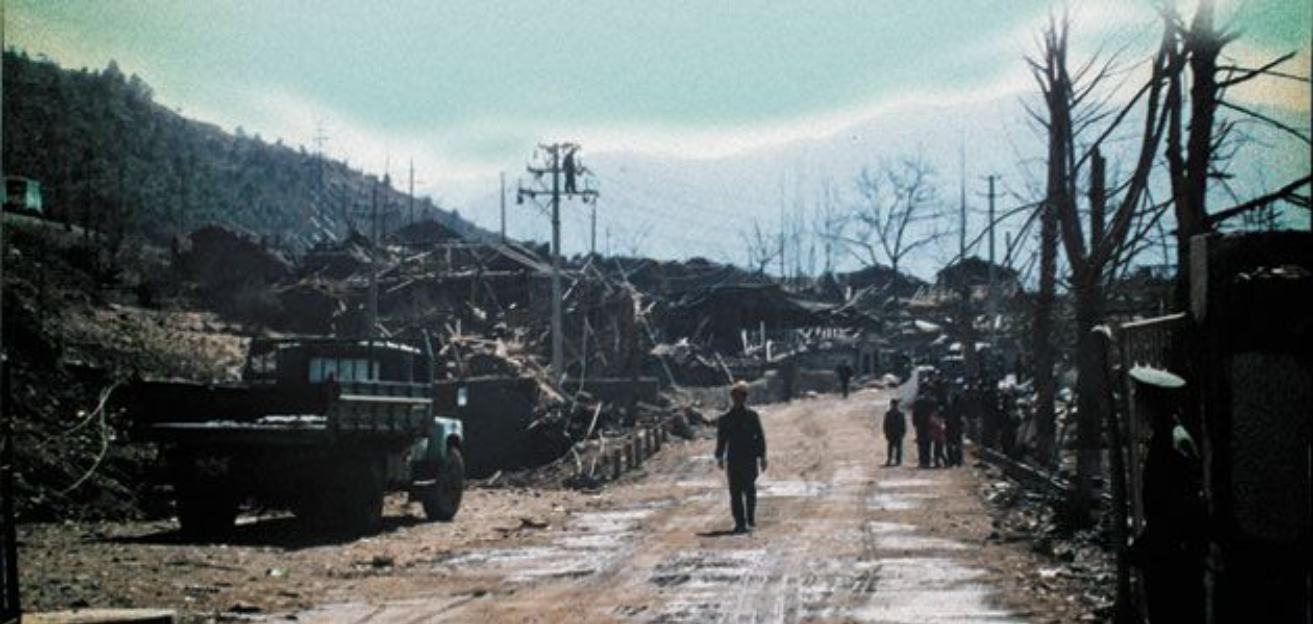
At 3:01 AM local time on February 15, 1996, China’s newest and most powerful rocket began its maiden flight from the Xichang Satellite Launch Center in Sichuan Province. The Long March 3B, carrying an American-built Intelsat communications satellite, rose slowly from the pad on a column of flame. Two seconds later, something went catastrophically wrong.
The 426-ton rocket pitched sideways before it had even cleared the umbilical tower. It flew horizontally over the launch complex, tumbled through the night sky, and slammed into a hillside 22 seconds after ignition. The impact triggered a massive explosion that flattened a nearby village, started fires across the mountainside, and killed an unknown number of people - officially six, though Western witnesses reported scenes suggesting the toll was far higher.
The disaster at Xichang would ripple outward for years. It sparked a political scandal in Washington, fundamentally restructured American export control law, and effectively ended China’s ambitions to become a major player in the commercial launch market. Three decades later, no American satellite has launched on a Chinese rocket, and the regulations that disaster inspired continue to shape how the United States controls space technology worldwide.
The Deal That Went Wrong
The story begins in the aftermath of the Space Shuttle Challenger disaster. After the 1986 accident killed seven astronauts and grounded the shuttle fleet, the Reagan administration decided that commercial satellites would no longer fly on NASA’s spacecraft. American satellite manufacturers suddenly needed alternative launch providers, and launch capacity worldwide was limited.
China saw an opportunity. Its Long March rockets had been launching satellites since 1970, and the country was eager to earn hard currency while showcasing its technological capabilities. Starting in the late 1980s, American companies began contracting with China Great Wall Industry Corporation to launch their satellites at prices that significantly undercut European and American alternatives.
In 1992, Intelsat - then a global consortium providing satellite communications services - contracted with China to launch an advanced communications satellite called Intelsat 708. The price was approximately $56 million, about half what a European Ariane launch would cost. The satellite itself, built by Space Systems/Loral in California, represented the state of the art in commercial communications technology, complete with sophisticated encryption systems.
For the launch, China would use its brand-new Long March 3B - an enhanced version of earlier rockets, capable of lifting 5,100 kilograms to geostationary transfer orbit. The vehicle had never flown before. Intelsat 708 would be its maiden voyage.
”Lucky” Launch Time
American engineers and security personnel had been arriving at Xichang for weeks before the launch, preparing the satellite and coordinating with their Chinese counterparts. The launch complex, nestled in mountains about 64 kilometers northwest of the city of Xichang, had hosted foreign satellites before, but there had been warning signs that things at Xichang didn’t always go according to plan.
In January 1995, a Long March 2E rocket carrying the Apstar 2 satellite had exploded 50 seconds after liftoff, scattering debris across the countryside. That failure had prompted Intelsat and Loral managers to forbid their employees from watching the Intelsat 708 launch from the hotel roof - even though the pad was several miles away and not directly in the expected flight path.
The most puzzling thing about the launch that night was the timing. The original schedule called for a 2:51 AM launch, but it was delayed to 3:00 AM - a “luckier” number in Chinese numerology. The magic of numbers didn’t work.
On the eve of the launch, all non-essential personnel were ordered to the satellite preparation building, located south of the launch pad and separated from it by steep mountains. Several young local women who worked at the hotel pleaded to be allowed to stay behind to sleep, exhausted from a long workday. Loral managers refused to make exceptions. That decision likely saved their lives.
The countdown proceeded smoothly. At 3:01 AM, the engines ignited. The Long March 3B began rising from the pad. Then, before the rocket had climbed higher than the umbilical tower, it started pitching to the east - toward the residential areas of the launch center.
Twenty-Two Seconds
What happened next unfolded with terrifying speed. The guidance system had failed. A short circuit in the inertial measurement platform - the system that tells the rocket which way is up and which way it’s pointed - caused the vehicle to lose all sense of its orientation at the moment of liftoff. The rocket’s engines continued burning at full thrust, but without guidance, the vehicle had no way to know it was flying sideways.
Flight controllers watching the telemetry realized immediately that something was wrong, but there was little they could do. Twenty-two seconds after liftoff, with the rocket now flying nearly horizontal and heading toward populated areas, they sent the self-destruct command. The rocket detonated a few seconds before it would have hit the ground anyway.
The impact point was approximately 1.2 kilometers from the launch pad - close enough that the shockwave shattered windows in the Technical Center where American engineers had been watching on monitors. A massive fireball rose into the night sky, its glow visible for miles. The hypergolic propellants - dinitrogen tetroxide and unsymmetrical dimethylhydrazine - created a toxic cloud that lingered over the crash site.
Within hours, the area was flooded with ambulances and military trucks. Western eyewitnesses reported seeing vehicles “loaded with what could have been human remains” heading toward the local hospital. American security personnel from Loral, despite the toxic environment, ventured into the crash site to recover the satellite’s encryption equipment - returning with bulging eyes and severe headaches that required oxygen therapy.
The Official Story
Two weeks after the disaster, China’s official Xinhua news agency issued a brief statement: six people had been killed and 57 injured. The cause was identified as a malfunction in the inertial measurement unit caused by “changes of inertial baseline after lift-off.”
American observers were skeptical of both claims. On the night before the launch, witnesses had seen crowds gathering near the launch center’s main gate - the same area where the rocket would crash hours later. Chinese practice since the 1980s had been to evacuate villages near the launch complex before each flight, but whether this evacuation was complete, or whether it extended to the areas that were actually struck, remains unclear.
Launch and Failure
Long March 3B lifts off and immediately veers off course. Twenty-two seconds later, it crashes into a hillside near Mayelin Village.
Independent Review Committee
Under pressure from insurers, China allows American engineers from Loral and Hughes to participate in the failure investigation.
DTSA Assessment
U.S. Defense Technology Security Administration concludes that the review provided 'significant benefit' to China's missile program.
Satellites Reclassified
Congress returns satellite technology to the State Department's ITAR munitions list, ending Commerce Department jurisdiction.
Cox Report Released
Congressional investigation concludes that technology transfers endangered U.S. national security. The political fallout continues for years.
Loral Settlement
Space Systems/Loral pays $20 million to settle charges of violating export control regulations during the failure investigation.
The insurance underwriters who had covered the $204.7 million satellite demanded an independent investigation. In April 1996, China Great Wall Industry Corporation reluctantly agreed to allow a team of American engineers to participate in the review. The Independent Review Committee included experts from Loral, Hughes Space and Communications, Daimler-Benz Aerospace, Intelsat, British Aerospace, and General Dynamics.
What happened next would transform American space policy.
The Technology Transfer Scandal
The Independent Review Committee’s findings largely confirmed China’s initial assessment: the guidance system had failed, causing the rocket to lose attitude control immediately after liftoff. But the report didn’t stop there. It identified multiple problems with the Long March 3B’s design and manufacturing processes, including poor soldering in the guidance system electronics.
Under normal circumstances, such technical recommendations would have been unremarkable - the kind of information that any launch provider receives after a failure investigation. But these were not normal circumstances. China’s Long March rockets shared technology with its military ballistic missiles. Recommendations that improved the reliability of one could potentially improve the accuracy of the other.
The American companies had participated in the review without obtaining explicit approval from the State Department, which controlled exports of satellite technology under the International Traffic in Arms Regulations. When the Defense Technology Security Administration reviewed what had been shared, it concluded that China had received “significant benefit” from the investigation - benefit that could improve Chinese “launch vehicles… ballistic missiles and in particular their guidance systems.”
The political fallout was immediate and severe. Congress launched multiple investigations, culminating in the 1999 “Cox Report” - a 700-page document that accused American companies of effectively helping China improve its nuclear missile capabilities. While subsequent reviews found some of the report’s more alarming claims to be overstated, the damage was done.
In 1998, Congress reclassified commercial satellites and related components as munitions under ITAR, transferring export control authority from the relatively permissive Commerce Department back to the State Department. The move effectively ended American companies’ ability to launch satellites on Chinese rockets. No U.S.-built satellite has launched from China since.
The Industry That Wasn’t
The consequences extended far beyond politics. China had hoped to capture a significant share of the global commercial launch market. The Long March 3B disaster - and the export restrictions that followed - largely ended those ambitions.
The rocket itself recovered from its inauspicious debut. After an 18-month stand-down while engineers traced and corrected the guidance system fault, the Long March 3B returned to flight in August 1997 and has since become one of China’s most reliable launch vehicles, with over 100 successful flights. An enhanced version, the Long March 3B/E, entered service in 2007 with even greater capability.
But almost none of those flights have carried Western payloads. American export restrictions made it effectively impossible for U.S. satellite manufacturers to work with Chinese launch providers, and the restrictions created enough legal uncertainty that even non-American companies became hesitant to use components that might have U.S. origins.
The restrictions remain in force today. In 2016, twenty years after the disaster, a State Department official emphasized the policy’s absolute nature: “No U.S.-origin content, regardless of significance, regardless of whether it’s incorporated into a foreign-made item, can go to China.”
What We Still Don’t Know
Three decades after the disaster, fundamental questions remain unanswered. The true death toll has never been established. Official Chinese accounts cite six fatalities; Western observers who were present suggest the number could have been dozens or even hundreds. The village that was destroyed has been erased from the landscape, and China has never permitted independent investigation of what happened that night.
The technical failure itself is better understood. The short circuit in the guidance platform was traced to poor manufacturing quality - a problem that reflected broader issues with Chinese aerospace production in the 1990s. Those issues have largely been resolved, as the Long March family’s subsequent track record demonstrates.
But the policy consequences have proven harder to unwind. In 2014, Congress partially relaxed ITAR restrictions on commercial satellites, moving some items back to Commerce Department jurisdiction. However, the specific prohibition on Chinese launches remains intact. The accident of February 15, 1996, continues to shape the legal framework governing space commerce more than a generation later.
For the people of Mayelin Village - whoever they were, however many there were - there is no memorial. The Chinese government has never publicly acknowledged them. The foreign engineers who witnessed the aftermath are now retired, their memories fading. The village itself no longer exists.
What remains is a policy framework built on tragedy, a regulatory structure that still defines what American companies can and cannot do in space. Thirty years on, the Long March 3B disaster is no longer just a story about a rocket failure. It’s a story about how one night of technological catastrophe reshaped an entire industry - and how some consequences, once set in motion, prove almost impossible to reverse.
References(7)
- Intelsat 708 - Wikipedia
- Long March 3B - Wikipedia
- Disaster at Xichang - Air & Space Magazine
- Mist around the CZ-3B disaster - The Space Review
- Intelsat-708: Accident, Aftermath, Controversy - China in Space
- Xichang Satellite Launch Center - Wikipedia
- Keep the Facts of the Cox Report in Perspective - Arms Control Association

Theodore Kruczek