· x report · 7 min read
GPS III SV-10 Moves to Falcon 9 After Vulcan Grounded | KeepTrack X Report
SpaceX claims a 2nd GPS III launch as ULA's Vulcan investigation stalls, while ESA charters a Crew Dragon ISS mission and Starlink hits 30 launches in 2026.

Latest Developments
The U.S. Space Force has transferred a second GPS III satellite launch — GPS III SV-10 — from ULA’s grounded Vulcan Centaur to SpaceX’s Falcon 9, deepening SpaceX’s grip on national security launch as the Vulcan anomaly investigation drags on with no clear return-to-flight timeline. The reassignment underscores a structural shift in the military launch market, with Falcon 9’s proven reliability record making it the de facto backstop for critical government payloads. Meanwhile, SpaceX continued routine constellation expansion on March 20, executing the Starlink 17-30 mission from Vandenberg SFB — the company’s 30th Starlink launch of 2026 — lifting 25 additional satellites toward a network that now counts 10,097 spacecraft in orbit, of which 10,087 are operational. ESA also announced plans to charter a dedicated Crew Dragon flight to the ISS, broadening commercial human spaceflight demand beyond NASA.
Space Safety
Current SOCRATES data indicates a manageable near-term conjunction threat environment for Starlink, with one HIGH-risk event requiring continued monitoring. STARLINK-36658 faces a critical conjunction with SITRO-AIS 37 on Mar 20, 2026 at 06:23 UTC with a minimum range of just 9 meters and maximum collision probability of 1.0, though the latter metric warrants validation given the extremely close approach distance. Beyond this singular high-risk event, one MODERATE-risk conjunction involves two Starlink satellites, while seven additional events present LOW collision risk. Concurrently, TIP reentry predictions show nine Starlink objects expected to decay between Mar 21-23, 2026, with most featuring 14-48 hour prediction windows; no high-interest objects are flagged in the current decay forecast.
| Risk | Starlink Sat | Other Object | Status | Min Range (km) | Rel Speed (km/s) | Max Prob | Time of Closest Approach |
|---|---|---|---|---|---|---|---|
| HIGH | STARLINK-36658 | SITRO-AIS 37 | Operational | 0.009 | 12.215 | 1.0 | Fri, 20 Mar 2026 06:23:04 UTC |
| MODERATE | STARLINK-1434 | STARLINK-32609 | Operational | 0.026 | 9.314 | 0.327 | Fri, 20 Mar 2026 23:05:34 UTC |
| LOW | STARLINK-32899 | PEGASUS DEB | Non-operational | 0.031 | 11.675 | 0.089 | Sun, 22 Mar 2026 03:26:55 UTC |
| LOW | STARLINK-30494 | STARLINK-32745 | Operational | 0.081 | 3.211 | 0.060 | Sat, 21 Mar 2026 21:22:35 UTC |
| LOW | STARLINK-5267 | UM5-EOSAT | Operational | 0.044 | 5.655 | 0.059 | Tue, 24 Mar 2026 02:22:19 UTC |
| LOW | STARLINK-3741 | SL-16 DEB | Non-operational | 0.048 | 2.794 | 0.053 | Mon, 23 Mar 2026 16:16:39 UTC |
| LOW | STARLINK-32673 | LIZZIESAT-2 (LS-2) | Operational | 0.054 | 2.323 | 0.042 | Sun, 22 Mar 2026 00:39:18 UTC |
| LOW | STARLINK-32435 | ARIANE 40 R/B | Non-operational | 0.093 | 6.339 | 0.030 | Fri, 20 Mar 2026 21:50:54 UTC |
| LOW | STARLINK-3704 | YAOGAN-36 03A | Operational | 0.058 | 10.617 | 0.029 | Sat, 21 Mar 2026 03:45:30 UTC |
| Satellite | NORAD ID | Predicted Decay | Window (min) | Inclination | Lat | Lon |
|---|---|---|---|---|---|---|
| STARLINK-1587 | 46157 | Mar 21, 05:19 UTC | 840 | 53.0° | 12.2° | 70.5° |
| STARLINK-3050 | 49180 | Mar 21, 10:38 UTC | 840 | 70.0° | -45.6° | 229.2° |
| STARLINK-1955 | 47556 | Mar 21, 17:12 UTC | 900 | 53.0° | -3.9° | 8.8° |
| STARLINK-6201 | 56486 | Mar 22, 02:27 UTC | 1320 | 70.0° | 24.6° | 30.6° |
| STARLINK-1484 | 45756 | Mar 22, 14:47 UTC | 1440 | 53.0° | -47.0° | 181.0° |
| STARLINK-31299 | 59080 | Mar 22, 16:41 UTC | 1440 | 43.0° | 6.3° | 214.8° |
| STARLINK-3149 | 49423 | Mar 22, 17:20 UTC | 2880 | 53.2° | -25.9° | 53.3° |
| STARLINK-1726 | 46362 | Mar 23, 06:26 UTC | 2880 | 53.0° | -50.1° | 209.3° |
| STARLINK-3258 | 50206 | Mar 23, 19:26 UTC | 1440 | 53.2° | 49.2° | 100.7° |
Detailed Coverage
Space Force Hands SpaceX a Second GPS Contract as Vulcan Stays Grounded
The U.S. Space Force has officially moved GPS III SV-10 from ULA’s Vulcan Centaur to SpaceX’s Falcon 9, marking the second GPS mission redirected to SpaceX amid a continuing investigation into a Vulcan anomaly that has halted the rocket’s flight operations. The reassignment is not merely a scheduling adjustment — it reflects growing institutional confidence in Falcon 9 as the only launch vehicle capable of reliably servicing high-priority national security timelines. With Vulcan’s return-to-flight date unconfirmed, further contract migrations remain a real possibility, and SpaceX’s manifest is absorbing the slack without apparent strain.
The broader strategic picture is striking: SpaceX is consolidating its position as the U.S. military’s primary — and increasingly sole — operational heavy-lift provider for critical payloads. Analysts tracking national security space launches note that each Vulcan delay tightens SpaceX’s leverage in future procurement negotiations, particularly as the Space Force works to maintain GPS constellation replenishment schedules. From a tracking perspective, GPS III satellites occupy high-altitude MEO slots far above the Starlink shell, making their timely deployment essential to orbital navigation architecture that supports both civilian and military users globally.
Read the full story: SpaceNews
SpaceX Becomes the Pentagon’s Only Reliable Rocket — By Default
TESLARATI’s analysis frames the GPS SV-10 reassignment not as an isolated contracting decision but as a symptom of a deeper structural reality: SpaceX is quietly absorbing the U.S. military’s launch needs by virtue of being the only provider that keeps flying. The Vulcan Centaur’s anomaly investigation has removed ULA from the active roster at a time when the Space Force cannot afford delays to GPS, missile-warning, or communications satellite deployments. Falcon 9’s unmatched cadence — 30 Starlink missions alone through March 2026, alongside numerous government and commercial flights — gives it an operational tempo no other vehicle currently matches.
The piece raises a pointed question about launch market competition: if ULA cannot maintain flight rate, the dual-provider policy underpinning national security launch strategy begins to erode in practice even if it remains policy on paper. For SpaceX, each reassigned mission is both revenue and precedent, strengthening its argument for sole-source consideration on time-critical payloads and potentially reshaping how future launch service agreements are structured.
Read the full story: TESLARATI
ESA to Charter Dedicated Crew Dragon Mission, Expanding Commercial ISS Access
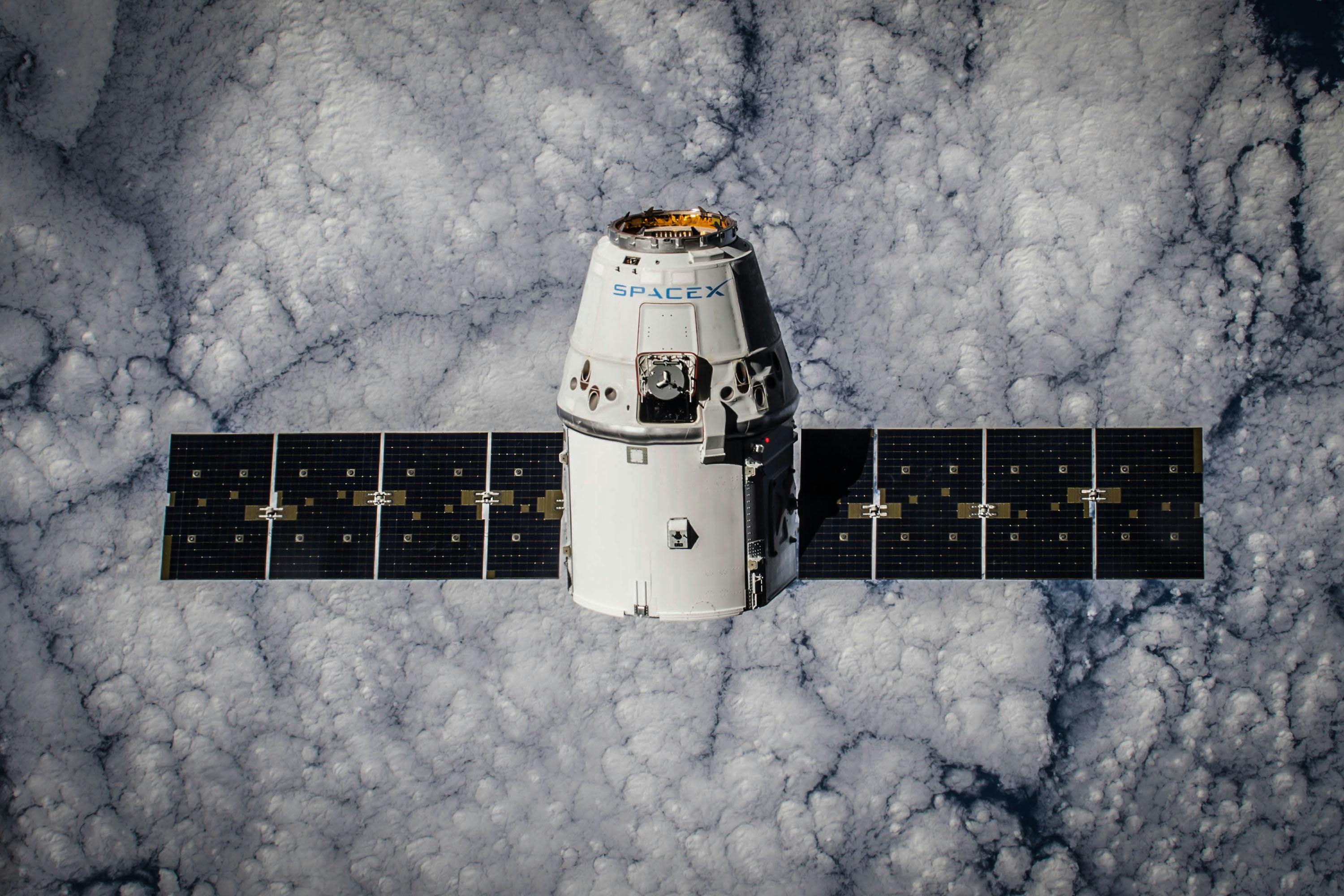
The European Space Agency has announced plans to purchase a dedicated SpaceX Crew Dragon mission to the International Space Station, giving ESA astronauts additional flight opportunities beyond the seats allocated through existing NASA agreements. The decision reflects both the maturity of the commercial crew market and ESA’s desire to maintain an independent pathway to the ISS as the station enters its final operational decade. Chartering a full Crew Dragon vehicle rather than purchasing individual seats signals a meaningful step up in ESA’s commercial spaceflight ambitions.
For SpaceX, the contract diversifies Crew Dragon’s customer base and validates the spacecraft as a platform agencies can book independently, much like a commercial charter service. The mission would join a Dragon manifest that already includes NASA CRS cargo flights, private astronaut missions, and the Axiom Space station visits — demonstrating that Crew Dragon has transitioned fully from a NASA development program into a multi-customer operational asset.
Read the full story: SpaceNews
Starlink 17-30 Lifts 25 More Satellites in SpaceX’s 30th Constellation Mission of 2026
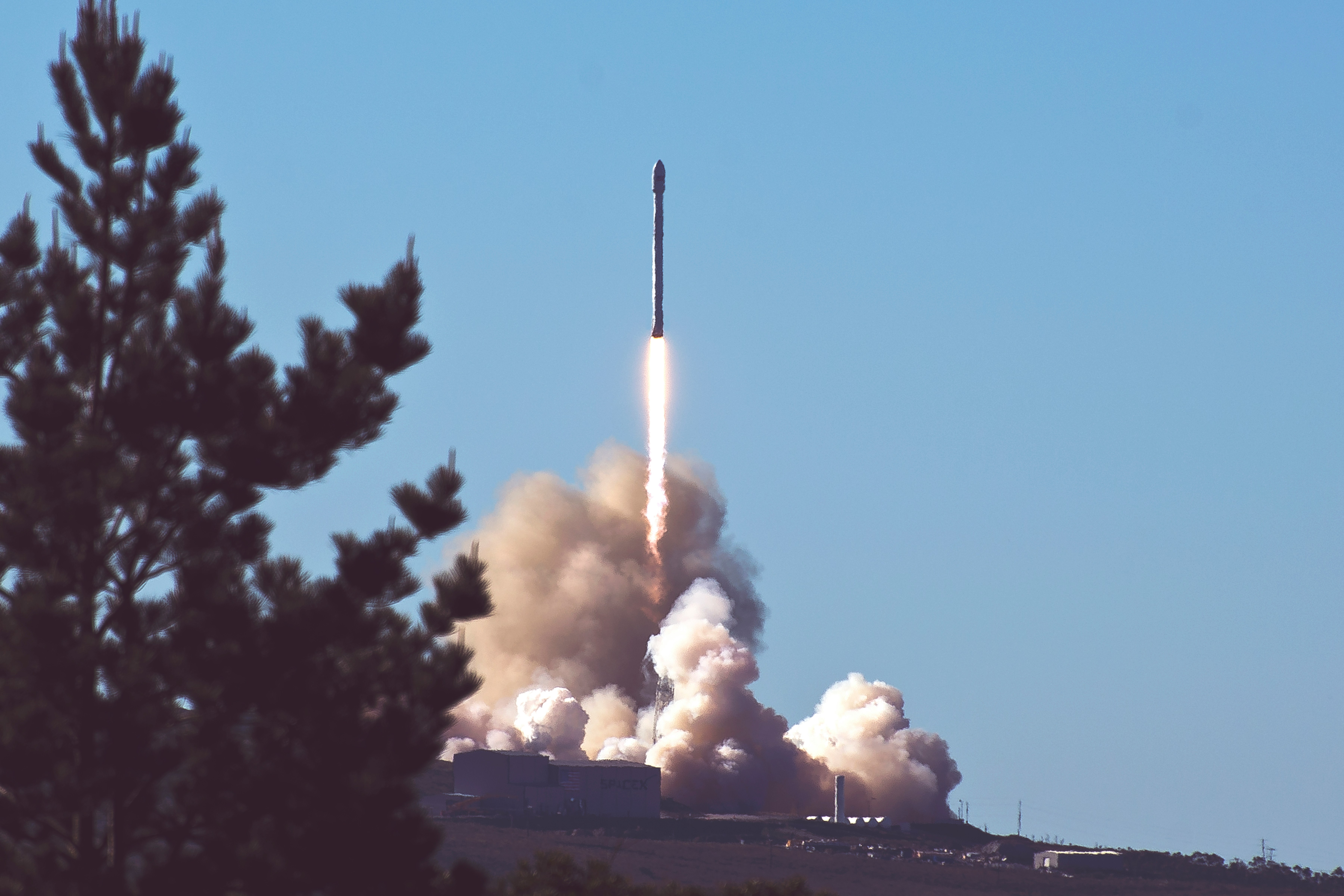
SpaceX executed the Starlink 17-30 mission on March 20, launching 25 satellites from Pad 4 East at Vandenberg Space Force Base at 2:51:49 p.m. PDT. The flight marks the company’s 30th Starlink launch of the calendar year — a pace that, if sustained, would push annual Starlink launch totals well beyond prior records. The booster successfully returned to its designated landing zone, continuing SpaceX’s near-perfect recovery record for this mission type.
With 11,612 Starlink satellites launched to date, 10,097 in orbit, and 10,087 confirmed operational, each additional 25-satellite batch represents an incremental but compounding improvement in coverage density and service redundancy. Shell 17 satellites augment mid-inclination coverage, and the rapid cadence of Group 17 launches suggests SpaceX is prioritizing the completion of that shell before pivoting launch resources to newer orbital planes. Trackers monitoring Vandenberg traffic should expect continued high tempo from Pad 4 East through Q2 2026.
Read the full story: Spaceflight Now
From SSA to SDA: SpaceX’s Million-Satellite Vision Forces a Rethink of Space Observation
SpaceNews examines a quiet but consequential shift in how the space community conceptualizes orbital awareness — from Space Situational Awareness (SSA), focused on tracking discrete objects, to Space Domain Awareness (SDA), a holistic, intelligence-driven understanding of activity, intent, and risk across the entire orbital environment. The catalyst is SpaceX’s proposal to deploy up to one million satellites in LEO, paired with a vision of AI-enabled autonomous orbital infrastructure that would make traditional catalog-based tracking approaches fundamentally insufficient.
Whether or not a million-satellite Starlink ever materializes, the directional signal is clear: orbital density is increasing faster than legacy SSA systems were designed to handle, and the community must evolve its frameworks accordingly. SDA approaches that fuse sensor data with behavioral analytics, intent modeling, and AI-driven anomaly detection are increasingly viewed as the only viable path forward. For KeepTrack users, this shift is directly relevant — the tools and mental models used to interpret orbital data today will need to scale and adapt as the cataloged population grows by orders of magnitude over the coming decade.
Read the full story: SpaceNews
Constellation Status
There have been no changes to the Starlink constellation since the last check. As of March 21, 2026, SpaceX maintains 11,612 total satellites launched, with 10,097 currently in orbit, of which 10,087 are operational, while 1,515 have decayed from orbit.
- Total Launched: 11612
- Total On Orbit: 10097
- Total Working: 10087
Track Starlink satellites in real-time: Track Starlink

B1049