


· x report · 3 min read
Transporter 16 Carries 119 Payloads to SSO | KeepTrack X Report
SpaceX's Transporter 16 rideshare mission targets Sun-synchronous orbit with 119 payloads aboard, launching from Vandenberg SFB in California.
Latest Developments
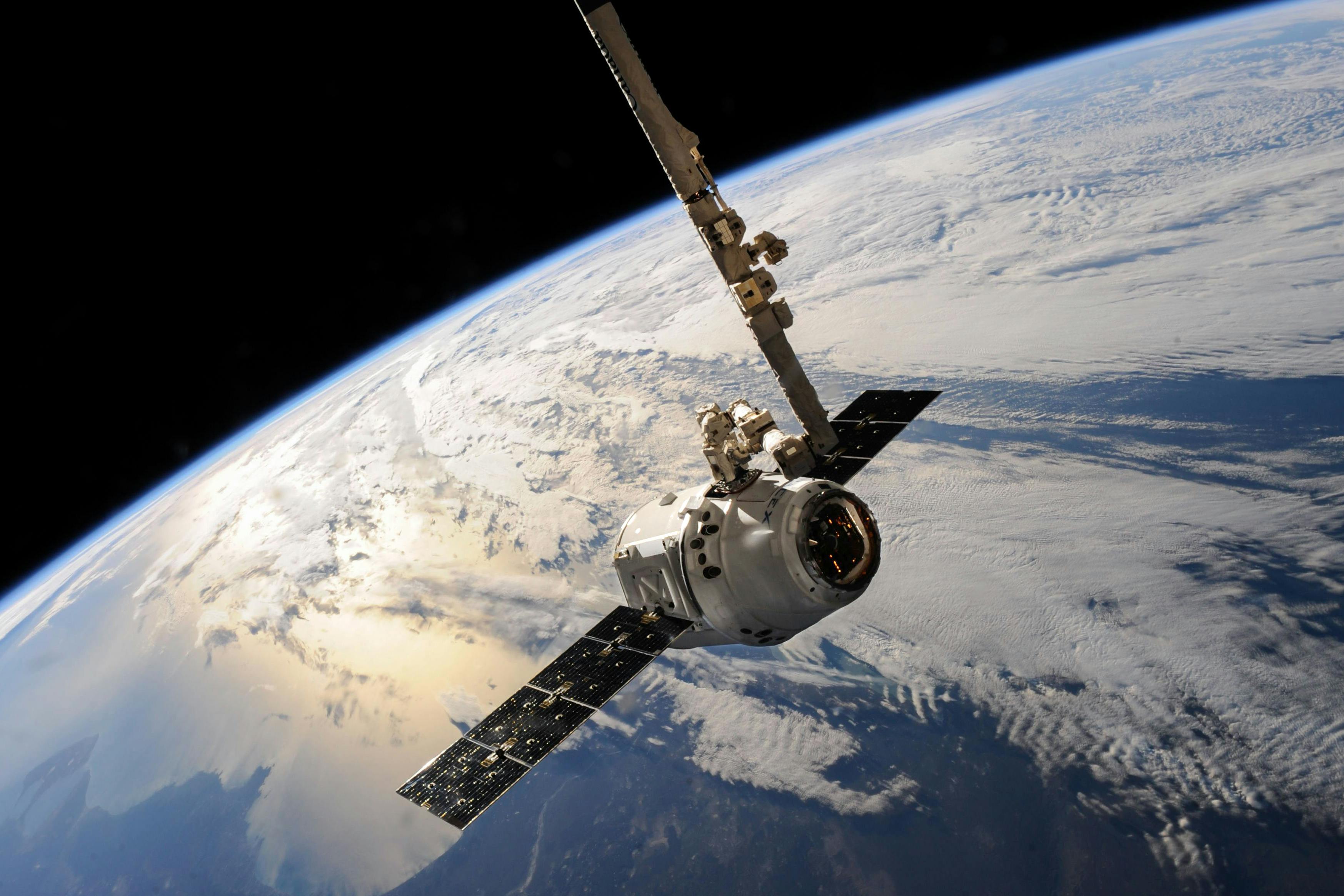
SpaceX is preparing to launch Transporter 16, a dedicated smallsat rideshare mission carrying 119 payloads to Sun-synchronous orbit from Vandenberg Space Force Base in California. The mission represents yet another high-density rideshare deployment in SpaceX’s increasingly busy manifest, underscoring the company’s dominance in the commercial launch market. With the Starlink constellation now standing at 11,666 satellites launched — 10,139 of which are in orbit and 10,130 actively working — SpaceX continues to balance its own megaconstellation operations alongside robust third-party payload services. Transporter 16 will add a fresh wave of tracked objects to an already crowded low Earth orbit environment, making precise orbital cataloging critical for operators worldwide.
Space Safety
The current Starlink conjunction threat picture shows three MODERATE-risk events within the early April 2026 timeframe, with no HIGH-risk conjunctions currently identified. The highest-risk event involves STARLINK-5741 and OBJECT B on Mar 31, 18:17 UTC, presenting a 36% collision probability at just 13 meters minimum range. Meanwhile, the reentry prediction pipeline indicates 8 Starlink satellites in decay phase, concentrated between Mar 28-31, with STARLINK-1752 presenting the tightest decay window (±2 hours) and earliest reentry on Mar 29, 01:11 UTC. The conjunction data shows relatively recent TLE ages (2-5 days), suggesting moderate confidence in positional accuracy, though the reentry predictions carry larger uncertainty windows typical of the decay phase.
| Risk | Starlink Sat | Other Object | Status | Min Range (km) | Rel Speed (km/s) | Max Prob | Time of Closest Approach |
|---|---|---|---|---|---|---|---|
| MODERATE | STARLINK-5741 | OBJECT B | Operational | 0.013 | 9.819 | 0.3605 | Mar 31, 22:17 UTC |
| MODERATE | STARLINK-31896 | TYVAK-0130 | Operational | 0.025 | 10.022 | 0.1423 | Apr 1, 03:15 UTC |
| MODERATE | STARLINK-2063 | YAOGAN-43 01G | Operational | 0.027 | 8.636 | 0.1256 | Apr 2, 08:54 UTC |
| LOW | STARLINK-30069 | STARLINK-36463 | Operational | 0.068 | 9.737 | 0.06969 | Mar 30, 20:25 UTC |
| LOW | STARLINK-34138 | STARLINK-36554 | Partially Operational | 0.071 | 9.829 | 0.06457 | Mar 31, 08:10 UTC |
| LOW | STARLINK-30454 | LYNK TOWER 6 | Operational | 0.042 | 7.186 | 0.06212 | Mar 30, 04:11 UTC |
| LOW | STARLINK-34113 | STARLINK-36554 | Partially Operational | 0.088 | 3.893 | 0.05045 | Mar 31, 08:32 UTC |
| LOW | STARLINK-30756 | OTTER | Operational | 0.036 | 14.138 | 0.04766 | Mar 30, 14:00 UTC |
| LOW | STARLINK-4649 | LEMUR-2-KREMPEL-BRO2 | Operational | 0.040 | 13.680 | 0.04208 | Apr 1, 11:15 UTC |
| LOW | STARLINK-5039 | GEOSCAN 1 (RS92S1) | Operational | 0.041 | 14.097 | 0.0375 | Mar 30, 11:20 UTC |
| Satellite | NORAD ID | Predicted Decay | Window (min) | Inclination | Lat | Lon |
|---|---|---|---|---|---|---|
| STARLINK-34411 | 65414 | Mar 28, 22:13 UTC | 1440 | 53.1° | 52.4° | 39.6° |
| STARLINK-1752 | 46338 | Mar 29, 01:11 UTC | 120 | 53.0° | 0.0° | 203.3° |
| STARLINK-1765 | 46344 | Mar 29, 15:29 UTC | 1440 | 53.0° | -32.1° | 350.0° |
| STARLINK-4038 | 53150 | Mar 29, 19:22 UTC | 2880 | 53.2° | 32.4° | 50.7° |
| STARLINK-1298 | 45413 | Mar 29, 21:02 UTC | 840 | 53.0° | 44.2° | 299.5° |
| STARLINK-1648 | 46533 | Mar 30, 16:19 UTC | 1440 | 53.0° | 13.2° | 315.3° |
| STARLINK-31023 | 58522 | Mar 30, 23:52 UTC | 1440 | 43.0° | 37.6° | 273.1° |
| STARLINK-30960 | 58456 | Mar 31, 10:37 UTC | 1440 | 43.0° | 6.9° | 358.9° |
Detailed Coverage
SpaceX Transporter 16 to Loft 119 Payloads in Packed SSO Rideshare Run
SpaceX’s Transporter 16 mission is shaping up to be one of the more densely loaded rideshare flights in the program’s history, with 119 payloads manifested for deployment into Sun-synchronous orbit. The mission launches from Space Launch Complex 4E at Vandenberg Space Force Base, the same pad that has supported dozens of polar and SSO missions for both Starlink and commercial customers. Customers on Transporter missions range from small CubeSat operators and defense contractors to in-space transportation providers who use the flight as a bus to reach their final operational orbits.
The sheer number of objects released during a single Transporter flight creates significant tracking demands for agencies like the Space Force’s 18th Space Control Squadron and commercial tracking networks. Once deployed, each payload must be individually cataloged and monitored, a process complicated by the close spacing of objects at release. KeepTrack users can expect a surge of new TLE sets associated with the Transporter 16 deployment in the days following launch, with object identification — distinguishing customer satellites from dispenser hardware — typically taking several days to resolve fully.
Read the full story: NASASpaceFlight
Constellation Status
There have been no changes to the Starlink constellation since the last check. The constellation currently consists of 11,666 total satellites launched, with 10,139 remaining in orbit, 10,130 of which are operational, and 1,527 that have decayed from orbit.
- Total Launched: 11666
- Total On Orbit: 10139
- Total Working: 10130
Track Starlink satellites in real-time: Track Starlink

B1049


