· x report · 6 min read
Falcon Heavy Returns After 18-Month Hiatus for ViaSat-3 | KeepTrack X Report
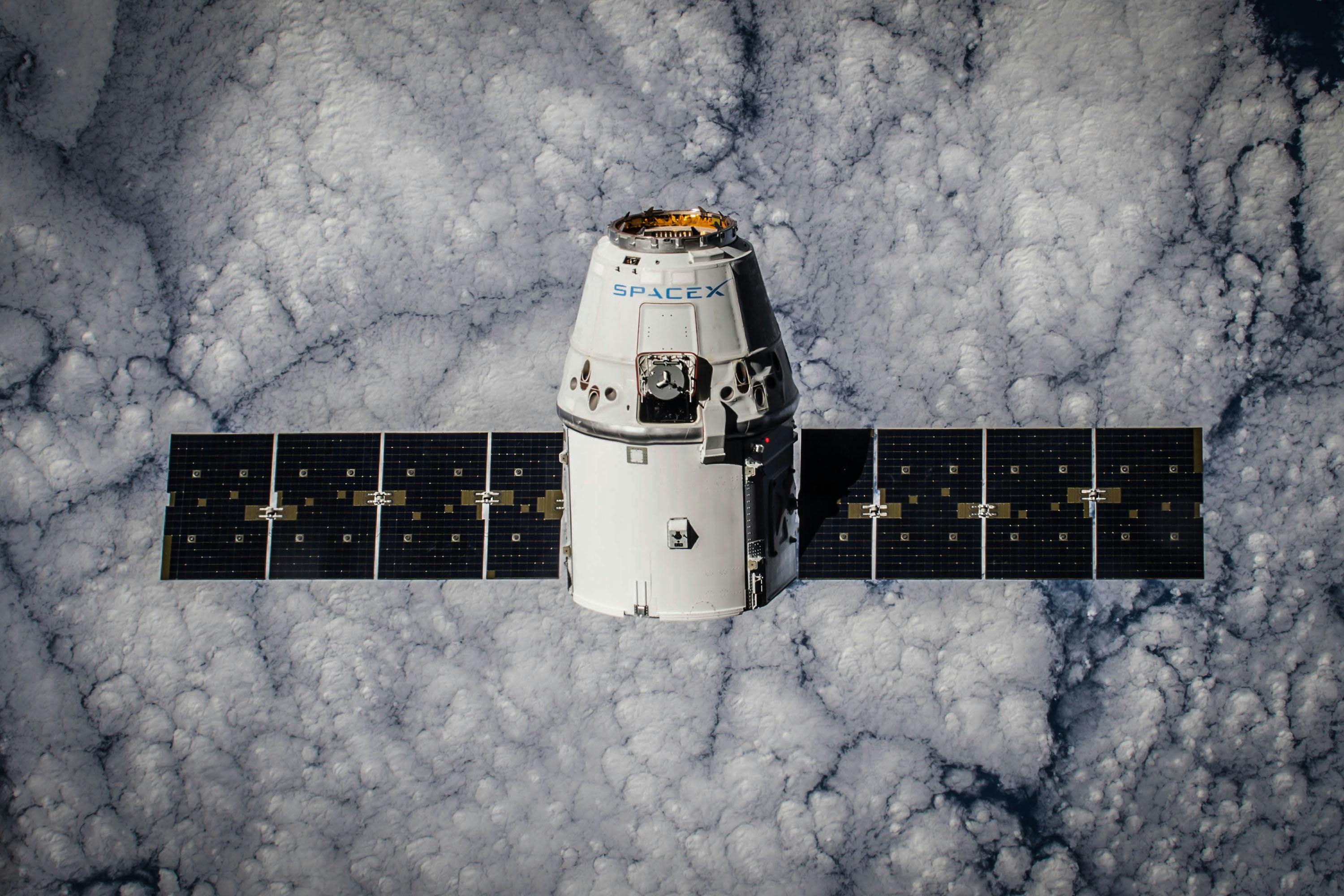
SpaceX's Falcon Heavy lifts off for the 12th time after 18 months grounded, delivering the final ViaSat-3 satellite from LC-39A at 10:21 a.m. EDT.

Latest Developments
SpaceX’s Falcon Heavy is back in action today after an 18-month standdown, targeting a 10:21 a.m. EDT liftoff from Launch Complex 39A at Kennedy Space Center to deliver the final ViaSat-3 broadband satellite — a payload so heavy only Falcon Heavy could handle it. This marks the rocket’s 12th flight overall and will debut a historic dual simultaneous booster landing at Landing Zone 2 and Landing Zone 40 for the first time. Meanwhile, on the regulatory front, the FCC has dealt SpaceX a setback in its bid to secure direct-to-device spectrum access that would allow Starlink satellites to connect natively to standard smartphones — a capability that, if approved, could dramatically expand the reach of the 10,280-working-satellite constellation. The pairing of a hardware milestone and a regulatory hurdle makes this one of the more consequential weeks for SpaceX’s long-term commercial ambitions.
Space Safety
The current Starlink conjunction threat picture shows four moderate-risk events within a ten-day window (April 7-14, 2026), with the highest-risk conjunction involving STARLINK-33563 and COSMOS 2251 debris on April 13, 2026, at a closest approach of 12 meters and collision probability of 0.40. Meanwhile, three Starlink satellites are predicted to reenter the atmosphere within a 48-72 hour window starting April 28, 2026, presenting manageable reentry risk with predicted impact zones over open ocean and remote landmasses. No HIGH-risk conjunctions are currently flagged, though operators should monitor the COSMOS 2251 DEB event closely given its proximity parameters and the high-velocity relative motion environment.
| Risk | Starlink Sat | Other Object | Status | Min Range (km) | Rel Speed (km/s) | Max Prob | Time of Closest Approach |
|---|---|---|---|---|---|---|---|
| MODERATE | STARLINK-33563 | COSMOS 2251 DEB | Non-operational | 0.012 | 11.318 | 0.3973 | Apr 13, 21:44 UTC |
| MODERATE | STARLINK-5601 | DELTA 1 DEB | Non-operational | 0.014 | 8.499 | 0.3479 | Apr 11, 06:26 UTC |
| MODERATE | STARLINK-33680 | FLOCK 4G-17 | Operational | 0.024 | 12.627 | 0.1287 | Apr 9, 13:55 UTC |
| MODERATE | STARLINK-35339 | THEA | Operational | 0.022 | 14.11 | 0.1272 | Apr 11, 01:33 UTC |
| LOW | STARLINK-32841 | YAOGAN-43 01D | Operational | 0.038 | 9.497 | 0.0672 | Apr 11, 14:30 UTC |
| LOW | STARLINK-36431 | WT 1B | Unknown | 0.052 | 1.153 | 0.04499 | Apr 14, 13:45 UTC |
| LOW | STARLINK-32376 | OBJECT AD | Operational | 0.046 | 11.243 | 0.04409 | Apr 12, 08:38 UTC |
| LOW | STARLINK-30245 | SL-19 R/B | Non-operational | 0.037 | 14.371 | 0.04406 | Apr 7, 16:55 UTC |
| LOW | STARLINK-35657 | ION SCV-008 | Operational | 0.041 | 13.969 | 0.03903 | Apr 12, 19:09 UTC |
| LOW | STARLINK-31383 | TEVEL2-7 | Operational | 0.038 | 14.746 | 0.03837 | Apr 8, 19:55 UTC |
| Satellite | NORAD ID | Predicted Decay | Window (min) | Inclination | Lat | Lon |
|---|---|---|---|---|---|---|
| STARLINK-1681 | 46559 | Apr 28, 00:04 UTC | 1440 | 53° | 24.4° | 126.3° |
| STARLINK-34268 | 64496 | Apr 28, 01:27 UTC | 1440 | 53.2° | -9.7° | 356.9° |
| STARLINK-33851 | 63683 | Apr 28, 21:16 UTC | 2880 | 43° | -26.1° | 136.4° |
Detailed Coverage
FCC Denies SpaceX Direct-to-Device Spectrum Bid — For Now
In a significant regulatory blow, the FCC has rejected SpaceX’s current application to access spectrum that would enable Starlink satellites to communicate directly with unmodified mobile phones. The coveted direct-to-device (D2D) capability is seen as the next frontier for satellite broadband, and SpaceX has been racing competitors like AST SpaceMobile to lock in the necessary spectrum rights. Without FCC approval, Starlink’s ambitions to embed itself inside every smartphone on Earth remain on hold.
The denial is framed as a “for now” setback rather than a permanent door closure, but it hands rivals valuable time. SpaceX is expected to challenge or refile, and the outcome of this spectrum fight could shape whether Starlink’s 10,296-satellite constellation becomes the backbone of global mobile connectivity or remains tethered to dedicated hardware. Analysts will be watching the FCC’s next docket closely for any signs of a negotiated path forward.
Read the full story: TESLARATI
Falcon Heavy Roars Back for 12th Flight After 18-Month Absence
SpaceX’s triple-core Falcon Heavy rocket returns to the pad today for its first launch since late 2024, targeting a 10:21 a.m. EDT liftoff from LC-39A with an 85-minute window to work with. The mission carries ViaSat-3 F3, the third and final satellite in ViaSat’s next-generation broadband constellation — a spacecraft too large and heavy for SpaceX’s workhorse Falcon 9 to lift to the required geostationary transfer orbit.
The Falcon Heavy’s unique capability to loft outsized payloads to high-energy trajectories remains unmatched among currently operational Western rockets, and today’s mission underscores why the vehicle retains strategic value even amid infrequent flight cadence. The expended center core and dual side-booster recovery at Landing Zones 2 and 40 simultaneously will also mark a first for the program, giving SpaceX a fresh opportunity to demonstrate its reusability infrastructure at scale. Tracking assets will have a busy window as the two boosters execute near-simultaneous supersonic retropropulsion descents on Florida’s Space Coast.
Read the full story: Spaceflight Now
Only One Rocket on Earth Could Fly This Mission
The ViaSat-3 F3 satellite is not just the capstone of a three-satellite broadband constellation — it is a demonstration of Falcon Heavy’s continued irreplaceability for the heaviest commercial GEO payloads. As NASASpaceFlight details in its pre-launch coverage, the 18-month gap between Falcon Heavy flights reflects the relatively sparse market for such heavy-lift missions rather than any technical grounding, and SpaceX has kept the vehicle flight-ready through that period.
ViaSat’s completed three-satellite network is designed to deliver high-capacity broadband across the Americas, Europe, and the Middle East, putting it in direct competitive tension with Starlink’s low-Earth-orbit architecture. The irony of SpaceX launching a rival broadband constellation is not lost on industry observers — but for SpaceX, the launch contract revenue and the operational exercise of Falcon Heavy are valuable regardless of the payload’s ultimate market positioning.
Read the full story: NASASpaceFlight
The Rocket That Launched a Tesla Is Back — and Still One of a Kind
When Falcon Heavy debuted in February 2018 with Elon Musk’s personal Tesla Roadster aboard, it cemented itself as one of the most memorable moments in modern spaceflight. Eight years on, the rocket is still flying missions that no other U.S. vehicle can readily replicate, and today’s ViaSat-3 launch is a reminder that despite the excitement around next-generation heavy-lift vehicles, Falcon Heavy remains operationally dominant in its class today.
TESLARATI notes that the 18-month turnaround between missions is not unusual for Falcon Heavy given market dynamics, but each flight sharpens SpaceX’s operational proficiency with the complex triple-core configuration. For satellite trackers, the ViaSat-3 F3 spacecraft will be a prominent new addition to the geostationary belt, its high-altitude orbit making it easily distinguishable from the dense low-Earth-orbit shells where SpaceX’s own 11,877-launched Starlink satellites operate.
Read the full story: TESLARATI
Watch History: Dual Simultaneous Booster Landings Set for Today
Beyond the payload itself, today’s Falcon Heavy mission carries a procedural milestone that deserves its own attention: for the first time, SpaceX will attempt to land both side boosters simultaneously at Landing Zone 2 and Landing Zone 40 — two distinct pads at Cape Canaveral Space Force Station. Previous dual-booster recoveries have used the same general landing area configuration, but the explicit simultaneous use of LZ-2 and LZ-40 as a paired recovery operation represents a new operational data point for SpaceX’s reusability teams.
Space.com highlights that the visual spectacle of twin booster landings is among the most dramatic in all of rocketry, with the characteristic double sonic boom punctuating the Florida sky moments after separation. For those tracking the mission live, the booster descent phase will be the first major checkpoint following the Falcon Heavy’s clean separation from the center core, which will be expended downrange over the Atlantic. Liftoff remains targeted for 10:21 a.m. EDT.
Read the full story: Space.com
Constellation Status
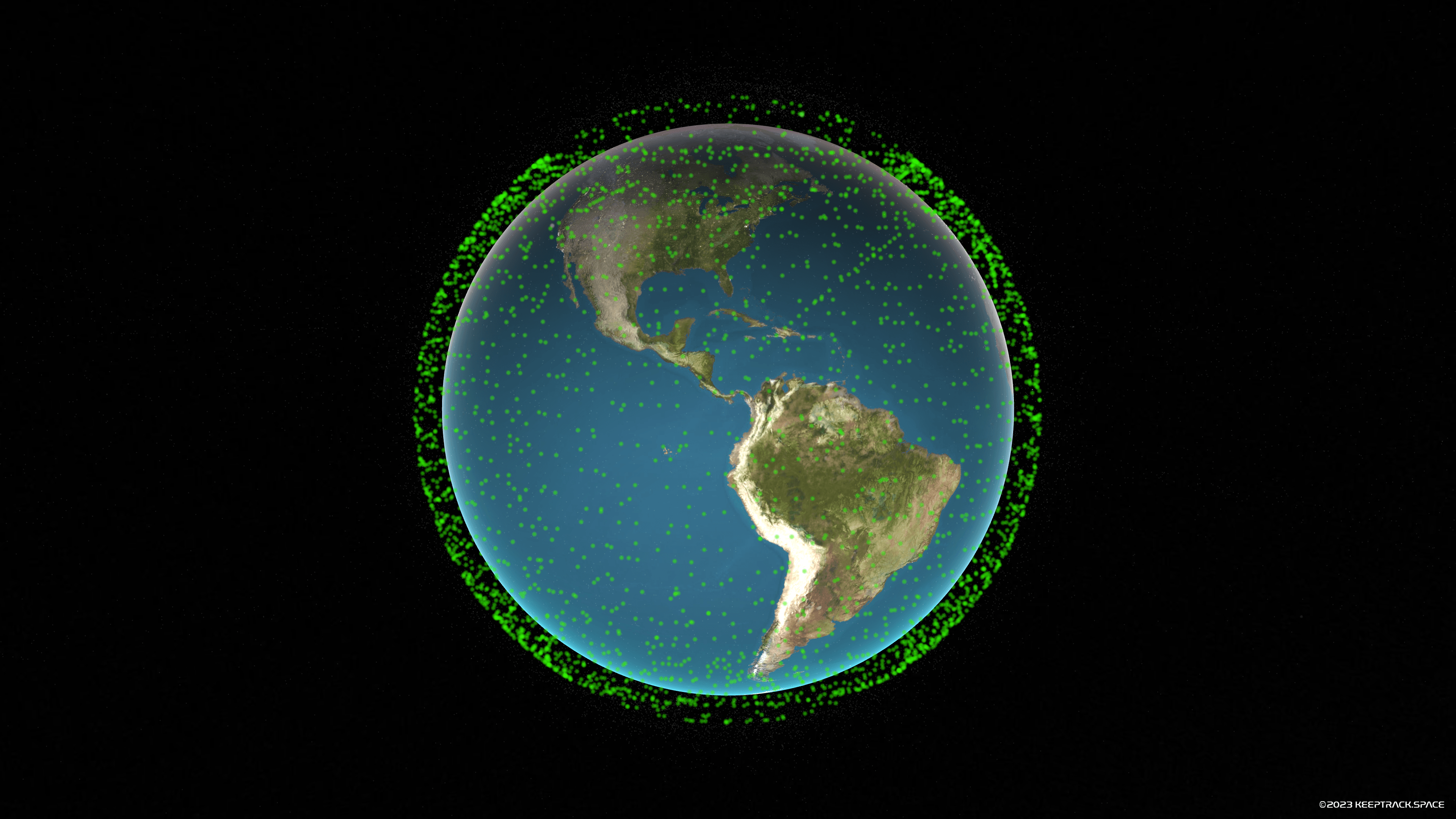
There have been no changes to the Starlink constellation since the last check. The constellation currently consists of 11,877 total launched satellites, with 10,296 remaining in orbit, of which 10,280 are operational and 1,581 have decayed.
- Total Launched: 11877
- Total On Orbit: 10296
- Total Working: 10280
Track Starlink satellites in real-time: Track Starlink

B1049