· x report · 5 min read
Starship V3 Debuts Flight 12 With First-Ever Self-Imaging Maneuver | KeepTrack X Report
SpaceX's Starship V3 targets Flight 12 with an unprecedented self-inspection maneuver, while Delta Air Lines walks away from Starlink inflight Wi-Fi.

Latest Developments
SpaceX is preparing to debut its next-generation Starship V3 megarocket on Flight 12, marking the first time the upgraded vehicle — extensively redesigned to bring humans closer to a lunar landing — will attempt an in-space self-imaging maneuver never before performed on a Starship mission. The milestone arrives as SpaceX’s Starlink constellation continues its record-setting expansion, with 11,979 satellites launched, 10,370 currently in orbit, and 10,354 actively working to deliver broadband globally. On the commercial aviation front, a high-profile deal between SpaceX and Delta Air Lines has collapsed, with Elon Musk publicly explaining that Starlink’s non-negotiable service terms were the sticking point — a rare public glimpse into the hardball dynamics shaping inflight connectivity contracts. Together, these developments underscore a week in which SpaceX is simultaneously pushing its deep-space hardware to new limits while defending its fast-growing commercial internet empire.
Space Safety
The current Starlink conjunction risk picture shows four moderate-risk events concentrated in mid-April 2026, with no high-risk conjunctions presently identified. The highest-probability event involves STARLINK-33563 approaching debris from COSMOS 2251 on Apr 13, 2026, with a 39.73% collision probability and only 12 meters minimum separation. Current reentry predictions for Starlink objects show zero imminent decay events, indicating the constellation’s operational status remains stable across all tracked vehicles.
| Risk | Starlink Sat | Other Object | Status | Min Range (km) | Rel Speed (km/s) | Max Prob | Time of Closest Approach |
|---|---|---|---|---|---|---|---|
| MODERATE | STARLINK-33563 | COSMOS 2251 DEB | Non-operational | 0.012 | 11.318 | 0.3973 | Apr 13, 21:44 UTC |
| MODERATE | STARLINK-5601 | DELTA 1 DEB | Non-operational | 0.014 | 8.499 | 0.3479 | Apr 11, 06:26 UTC |
| MODERATE | STARLINK-33680 | FLOCK 4G-17 | Operational | 0.024 | 12.627 | 0.1287 | Apr 9, 13:55 UTC |
| MODERATE | STARLINK-35339 | THEA | Operational | 0.022 | 14.110 | 0.1272 | Apr 11, 01:33 UTC |
| LOW | STARLINK-32841 | YAOGAN-43 01D | Operational | 0.038 | 9.497 | 0.0672 | Apr 11, 14:30 UTC |
| LOW | STARLINK-36431 | WT 1B | Unknown | 0.052 | 1.153 | 0.0450 | Apr 14, 13:45 UTC |
| LOW | STARLINK-32376 | OBJECT AD | Operational | 0.046 | 11.243 | 0.0441 | Apr 12, 08:38 UTC |
| LOW | STARLINK-30245 | SL-19 R/B | Non-operational | 0.037 | 14.371 | 0.0441 | Apr 7, 16:55 UTC |
| LOW | STARLINK-35657 | ION SCV-008 | Operational | 0.041 | 13.969 | 0.0390 | Apr 12, 19:09 UTC |
| LOW | STARLINK-31383 | TEVEL2-7 | Operational | 0.038 | 14.746 | 0.0384 | Apr 8, 19:55 UTC |
| Satellite | NORAD ID | Predicted Decay | Window (min) | Inclination | Lat | Lon |
|---|---|---|---|---|---|---|
| No predicted reentries | — | — | — | — | — | — |
Detailed Coverage
Starship V3 Flight 12: The World’s Most Powerful Rocket Will Photograph Itself in Space
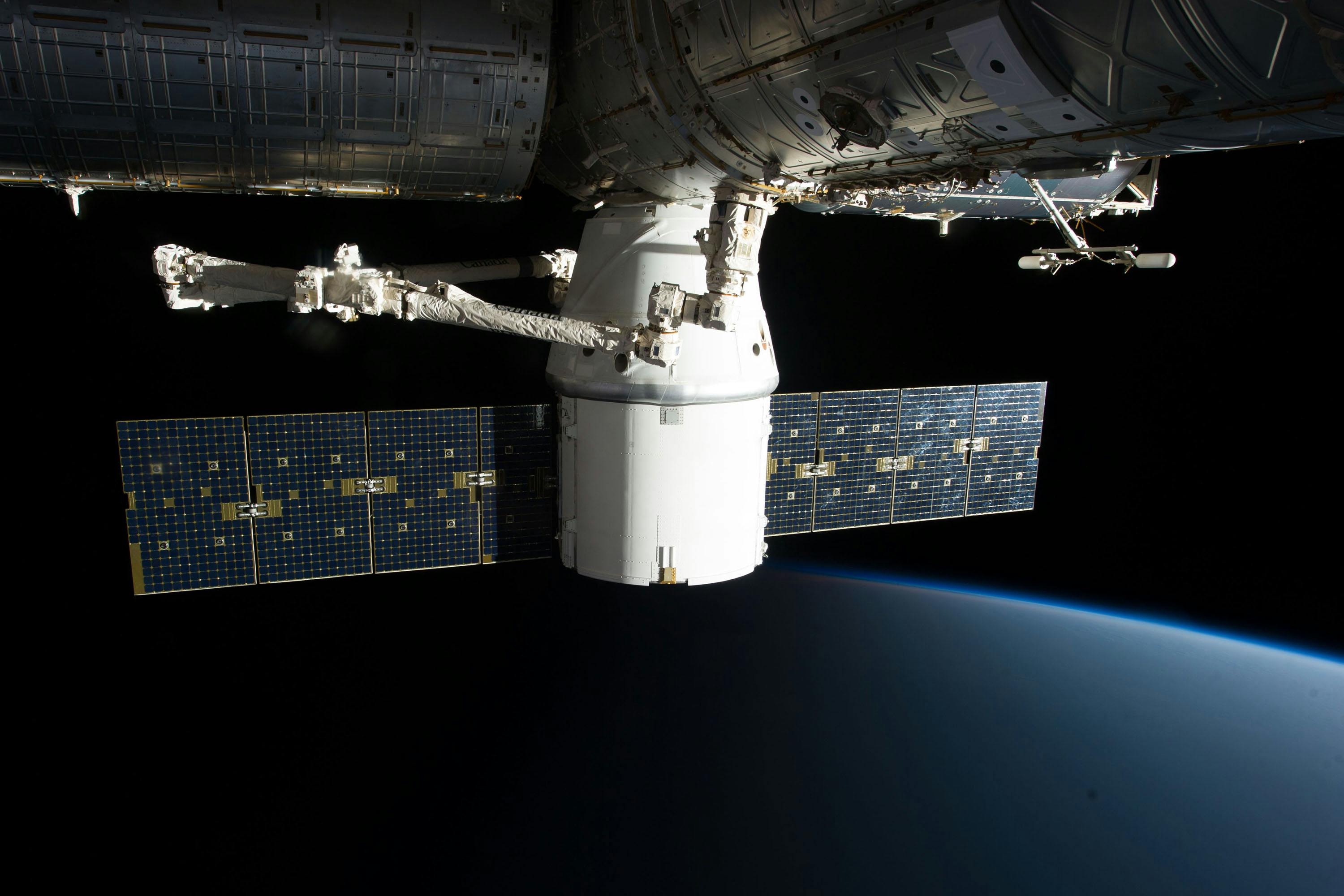
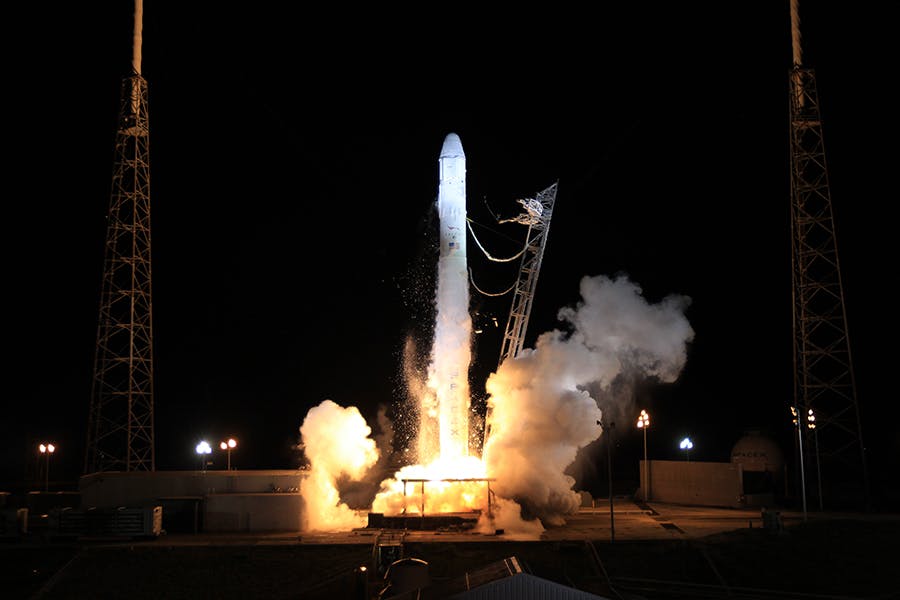
SpaceX’s brand-new Starship V3 configuration is slated to make its maiden flight on Flight 12, and the mission profile includes something genuinely unprecedented for the program: the vehicle will perform a dedicated in-space self-inspection sequence, effectively turning its own cameras on itself to document structural and thermal behavior in the harsh conditions of low Earth orbit. This is more than a publicity stunt — engineers stand to gain high-fidelity real-time imagery of the ship’s exterior during the most demanding phases of flight, data that ground-based telemetry alone cannot capture. For satellite trackers, the flight will also provide new radar cross-section and orbital insertion data points as SpaceX pushes the V3 stack through its first full-duration mission profile.
The self-imaging capability reflects a broader maturation of the Starship program, where each flight iteration introduces operational techniques that will eventually be critical on crewed Artemis lunar missions. Flight 12 is expected to stress-test V3’s overhauled thermal protection system, upgraded Raptor 3 engines, and revised propellant management architecture — all changes designed to improve reusability margins and ultimately reduce cost-per-kilogram to orbit. The KeepTrack community should watch for updated TLE entries in the hours following launch as the vehicle’s trajectory is confirmed.
Read the full story: Space.com
How Starship V3 Was Rebuilt From the Ground Up for the Moon — and Beyond
Beyond the Flight 12 mission profile, SpaceX has detailed the sweeping engineering changes that separate V3 from its predecessors. The vehicle is taller, heavier at liftoff, and produces meaningfully more thrust than the already-record-setting V2 stack, consolidating SpaceX’s claim to operating the most powerful rocket in history by a considerable margin. Internal changes include a redesigned payload volume, structural mass reductions across both the Super Heavy booster and Ship upper stage, and propulsion refinements that target higher specific impulse across all 33 booster engines and the six Raptor vacuum engines on Ship.
Critically for NASA’s Artemis program, V3’s expanded propellant capacity directly addresses one of the key challenges of the Human Landing System architecture: performing multiple on-orbit refueling operations before a crewed lunar descent. Each incremental improvement in tank volume or engine efficiency reduces the number of tanker flights required, shrinking mission complexity and cost. With Flight 12 serving as V3’s engineering shakedown, SpaceX will be gathering the performance benchmarks that feed directly into NASA mission planning timelines.
Read the full story: Space.com
Delta Air Lines Walks Away From Starlink: Elon Musk Says Terms Were Non-Negotiable
One of the most commercially significant Starlink stories of the month is not a launch — it is a deal that never closed. Delta Air Lines, one of the largest carriers in the world and a potential flagship customer for Starlink’s aviation service, has rejected the partnership, and Elon Musk used X to explain why in unusually direct terms. According to Musk, SpaceX refused to allow Delta to impose usage restrictions or throttling conditions on passengers, a stance rooted in SpaceX’s position that compromised service undermines the Starlink brand’s core value proposition of high-speed, low-latency connectivity without asterisks.
The fallout has meaningful implications for Starlink’s aviation roadmap. Delta’s fleet represents thousands of daily flights and millions of premium passengers — a lucrative addressable market that will now remain served by competitors such as Viasat and Intelsat’s Gogo unit, at least in the near term. Analysts watching the inflight connectivity sector will note that SpaceX’s willingness to walk away from a deal of this scale signals confidence that other carriers will eventually accept Starlink’s terms, but it also highlights the tension between SpaceX’s engineering-first culture and the commercial realities of airline procurement. For Starlink’s constellation utilization metrics, the absence of Delta’s fleet represents a non-trivial gap in projected aeronautical bandwidth demand.
Read the full story: Teslarati
Constellation Status
No changes have occurred in the Starlink constellation since the last check. The constellation remains stable with 11,979 total satellites launched, 10,370 currently in orbit, 10,354 operational satellites, and 1,609 that have decayed from orbit.
- Total Launched: 11979
- Total On Orbit: 10370
- Total Working: 10354
Track Starlink satellites in real-time: Track Starlink

B1049