· x report · 7 min read
Starship V3 Scrubbed & SpaceX Files $18.7B IPO | KeepTrack X Report
SpaceX scrubbed Starship Flight 12's V3 debut due to a hydraulic pin fault, then filed an $18.7B IPO S-1 targeting Nasdaq under ticker SPCX.

Latest Developments
SpaceX’s most consequential week in years delivered two headline-grabbing events in rapid succession: the last-minute scrub of Starship Flight 12 — the Block 3 vehicle’s long-awaited debut — and the company’s landmark S-1 IPO filing with the SEC, disclosing $18.67 billion in 2025 revenue driven by more than $11 billion from Starlink alone. Engineers traced the May 21 abort to a hydraulic pin fault in the ship’s quick-disconnect system at Pad 2 in Starbase, Texas, with a second attempt targeted as soon as Friday evening. With 11,979 Starlink satellites launched and 10,354 actively working on orbit, the financial muscle behind that constellation is now fully visible to public markets for the first time. The twin stories underscore just how tightly SpaceX’s operational cadence and its trillion-dollar valuation ambitions are intertwined.
Space Safety
The current Starlink conjunction and reentry threat picture shows a moderate risk environment with no HIGH-risk events projected over the next ten days, but four MODERATE-risk conjunctions warrant monitoring. The most significant threat involves STARLINK-33563 approaching COSMOS 2251 DEB on Apr 13, 2026 at 21:44 UTC with a 39.73% collision probability; two additional MODERATE events involve debris encounters with STARLINK-5601 and operational satellite conjunctions with STARLINK-33680 and STARLINK-35339. Meanwhile, seven Starlink satellites are predicted to reenter between May 22–24, 2026, with decay windows ranging from 24 to 48 hours, presenting manageable but notable reentry operations considerations.
| Risk | Starlink Sat | Other Object | Status | Min Range (km) | Rel Speed (km/s) | Max Prob | Time of Closest Approach |
|---|---|---|---|---|---|---|---|
| MODERATE | STARLINK-33563 | COSMOS 2251 DEB | Non-operational | 0.012 | 11.318 | 0.3973 | Apr 13, 21:44 UTC |
| MODERATE | STARLINK-5601 | DELTA 1 DEB | Non-operational | 0.014 | 8.499 | 0.3479 | Apr 11, 06:26 UTC |
| MODERATE | STARLINK-33680 | FLOCK 4G-17 | Operational | 0.024 | 12.627 | 0.1287 | Apr 9, 13:55 UTC |
| MODERATE | STARLINK-35339 | THEA | Operational | 0.022 | 14.110 | 0.1272 | Apr 11, 01:33 UTC |
| LOW | STARLINK-32841 | YAOGAN-43 01D | Operational | 0.038 | 9.497 | 0.0672 | Apr 11, 14:30 UTC |
| LOW | STARLINK-36431 | WT 1B | Unknown | 0.052 | 1.153 | 0.0450 | Apr 14, 13:45 UTC |
| LOW | STARLINK-32376 | OBJECT AD | Operational | 0.046 | 11.243 | 0.0441 | Apr 12, 08:38 UTC |
| LOW | STARLINK-30245 | SL-19 R/B | Non-operational | 0.037 | 14.371 | 0.0441 | Apr 7, 16:55 UTC |
| LOW | STARLINK-35657 | ION SCV-008 | Operational | 0.041 | 13.969 | 0.0390 | Apr 12, 19:09 UTC |
| LOW | STARLINK-31383 | TEVEL2-7 | Operational | 0.038 | 14.746 | 0.0384 | Apr 8, 19:55 UTC |
| Satellite | NORAD ID | Predicted Decay | Window (min) | Inclination | Lat | Lon |
|---|---|---|---|---|---|---|
| STARLINK-1816 | 46714 | May 22, 08:23 UTC | 1440 | 53.0° | -42.0° | 136.2° |
| STARLINK-11664 | 63666 | May 22, 10:48 UTC | 2880 | 43.0° | -10.9° | 133.8° |
| STARLINK-31725 | 59538 | May 22, 18:57 UTC | 2880 | 43.0° | -7.1° | 61.3° |
| STARLINK-32335 | 61703 | May 22, 22:17 UTC | 1440 | 53.1° | 11.1° | 97.5° |
| STARLINK-32823 | 62823 | May 23, 05:44 UTC | 1440 | 53.2° | -24.8° | 329.7° |
| STARLINK-11462 [DTC] | 62412 | May 23, 23:18 UTC | 2880 | 43.0° | 42.3° | 272.5° |
| STARLINK-5369 | 54837 | May 24, 20:36 UTC | 2880 | 43.0° | -10.3° | 201.3° |
Detailed Coverage
Hydraulic Pin Fault Halts Starship V3’s Debut Flight at the Last Minute
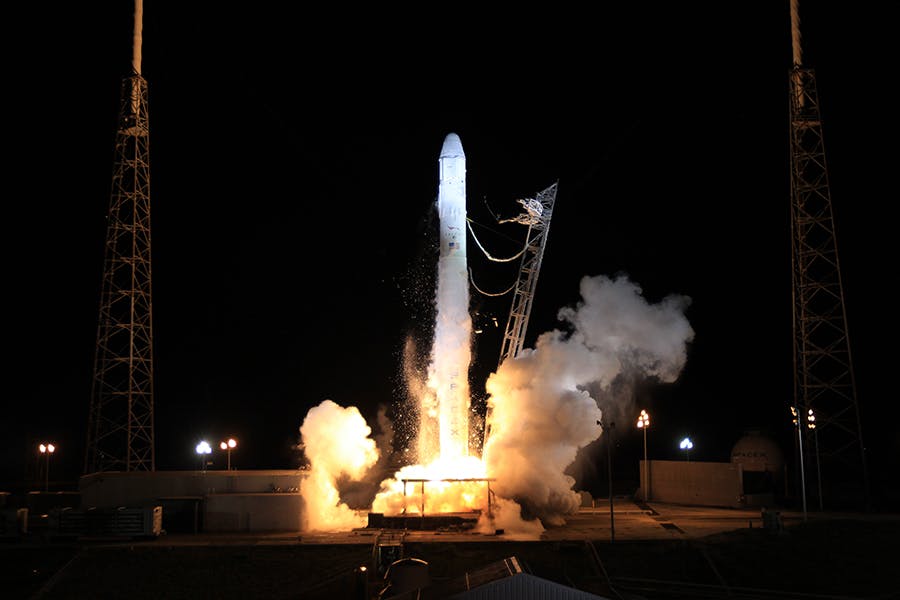
In the final minutes of the May 21 launch window, SpaceX controllers at Starbase called a scrub on Flight 12 after a problem with a hydraulic pin in the ship’s quick-disconnect mechanism prevented safe vehicle separation from the ground support system. The abort marked a deflating end to a heavily anticipated milestone: the first flight of the Block 3 Starship, which features redesigned Raptor 3 engines and a suite of structural upgrades aimed at supporting crewed lunar missions under NASA’s Artemis program. SpaceX confirmed the issue via webcast and set the next attempt for no earlier than Friday evening, saying the fix was straightforward once the ground team could access the hardware.
The stakes surrounding Flight 12 are unusually high. NASA’s Human Landing System contract hinges on Starship demonstrating reliable in-space propellant transfer and reentry performance, and every delay ripples through the agency’s Artemis schedule. Satellite trackers and range safety observers had already noted elevated activity at Boca Chica in the days prior, with Ship 36 and Booster 14 stacked and fully fueled during a wet dress rehearsal earlier in the week.
Read the full story: NASASpaceFlight
SpaceX Files S-1 for What Could Be the Largest IPO in History
SpaceX submitted its S-1 prospectus to the SEC on May 20, formally kicking off an initial public offering that analysts say could be the largest ever when the company lists on Nasdaq under the ticker SPCX. The filing discloses $18.67 billion in 2025 revenue — with Starlink contributing more than $11 billion of that total — alongside a net loss exceeding $4.9 billion and capital expenditures that surged to $20.7 billion, up from $11.2 billion in 2024. The document describes SpaceX’s ambition in sweeping terms, claiming the company has “identified the largest total addressable market in human history” across satellite broadband, launch services, and eventual Mars colonization.
The prospectus runs 330 pages and is notable as much for what it reveals about Elon Musk’s broader corporate network as for SpaceX’s own numbers. References to xAI appear 356 times and Tesla 87 times, illuminating the tangled financial relationships between Musk’s ventures that investors will now need to scrutinize. Musk himself is listed as a material risk factor — a rare and pointed disclosure reflecting governance concerns that have grown alongside his public profile.
Read the full story: Ars Technica
Starlink’s $11B Revenue Makes It the Engine Powering SpaceX’s Growth Story
The IPO filing lays bare what industry observers have long suspected: Starlink is the financial backbone of SpaceX’s entire enterprise. The service generated more than $11 billion in 2025 revenue, funding the capital-intensive Starship development program and the company’s accelerating launch cadence. With 10,354 satellites actively working on orbit out of 10,370 currently in space, the constellation is operating at near-full capacity, and SpaceX’s S-1 signals plans to dramatically expand both the satellite count and ground terminal addressable market in coming years.
The filing also positions Starlink as infrastructure for an orbital AI computing layer — a forward-looking pitch that places SpaceX in direct competition with hyperscale cloud providers. That framing is central to how SpaceX intends to justify its valuation to public market investors, though the Grok AI service’s mixed competitive showing against established large language models introduces credibility questions the company will need to answer on its roadmap.
Read the full story: The Verge
Elon Musk Flagged as a Risk Factor in SpaceX’s Own IPO Prospectus
In an unusual act of corporate candor, SpaceX’s S-1 explicitly names Elon Musk as a risk factor for prospective investors, citing the potential for his attention, reputation, and entanglements across Tesla, xAI, X, the Boring Company, and Neuralink to create conflicts of interest or reputational harm for SpaceX. The document’s extensive cross-referencing of those entities — xAI alone mentioned 356 times — gives regulators and investors a rare look at how money and resources flow between Musk’s companies, including arrangements that have previously drawn scrutiny from Tesla shareholders. The disclosure reflects pressure from SEC staff to be transparent about key-person dependencies given Musk’s singular role in SpaceX’s strategy and culture.
Read the full story: The Verge
SpaceX Pitches Orbital AI Data Centers as Grok Lags Competitors
Buried inside SpaceX’s IPO prospectus is an ambitious bet that may surprise investors focused solely on rockets and broadband: the company intends to build orbital data centers powered by Starlink infrastructure, positioning itself as a future competitor to Amazon Web Services, Microsoft Azure, and Google Cloud for AI compute workloads. The pitch hinges on Starlink’s low-latency global coverage and SpaceX’s ability to deliver hardware to orbit at a cost no other operator can match. However, the strategy faces a credibility headwind — xAI’s Grok assistant, which SpaceX’s filing references extensively as a partner technology, has publicly underperformed rival AI services from OpenAI and Anthropic on widely used benchmarks.
Read the full story: Ars Technica
Crypto Investor Chun Wang Books Starship for Lunar Flyby — and Eyes Mars
Chinese-born cryptocurrency entrepreneur Chun Wang announced during a SpaceX webcast on May 21 that he has contracted with SpaceX for a flight around the Moon aboard Starship, with a stated long-term goal of a Mars flyby mission. Wang, who made his fortune in Bitcoin mining, joins a short list of private individuals — including Yusaku Maezawa before him — who have publicly committed to dearMoon-style lunar trajectories on the vehicle. SpaceX confirmed the arrangement, though no launch date was disclosed. The announcement adds commercial passenger pressure to the Starship flight cadence at a moment when the program is already stretched across NASA obligations, Starlink v2 deployment, and the IPO narrative.
Read the full story: CosmicLog
Starship’s Role in SpaceX’s Future Is Now a Matter of Public Record
With the S-1 filed, SpaceX has formalized what insiders have long known: Starship is not merely a launch vehicle but the structural foundation of the company’s entire long-term business model. The prospectus frames Starship as the key enabler of Starlink’s next-generation satellite deployment at scale, NASA’s Artemis lunar landing, point-to-point Earth transport, and eventually Mars colonization — all revenue streams cited to justify the company’s valuation to public market investors. Analysts note the document’s candor about how much capital the program is consuming, with total capex of $20.7 billion in 2025 alone, making a successful and rapid Flight 12 recovery all the more commercially urgent.
Read the full story: SpaceNews
Constellation Status
There have been no changes to the Starlink constellation since the last check. The constellation currently consists of 11,979 launched satellites, with 10,370 remaining in orbit, of which 10,354 are operational and 1,609 have decayed.
- Total Launched: 11979
- Total On Orbit: 10370
- Total Working: 10354
Track Starlink satellites in real-time: Track Starlink

B1049