· deep dive · 8 min read
Andøya Spaceport
Europe's Arctic gateway to orbit. How Norway's Andøya Spaceport is positioning itself as the continent's answer to launch congestion - and what the failed Isar Aerospace test flight means for the road ahead.
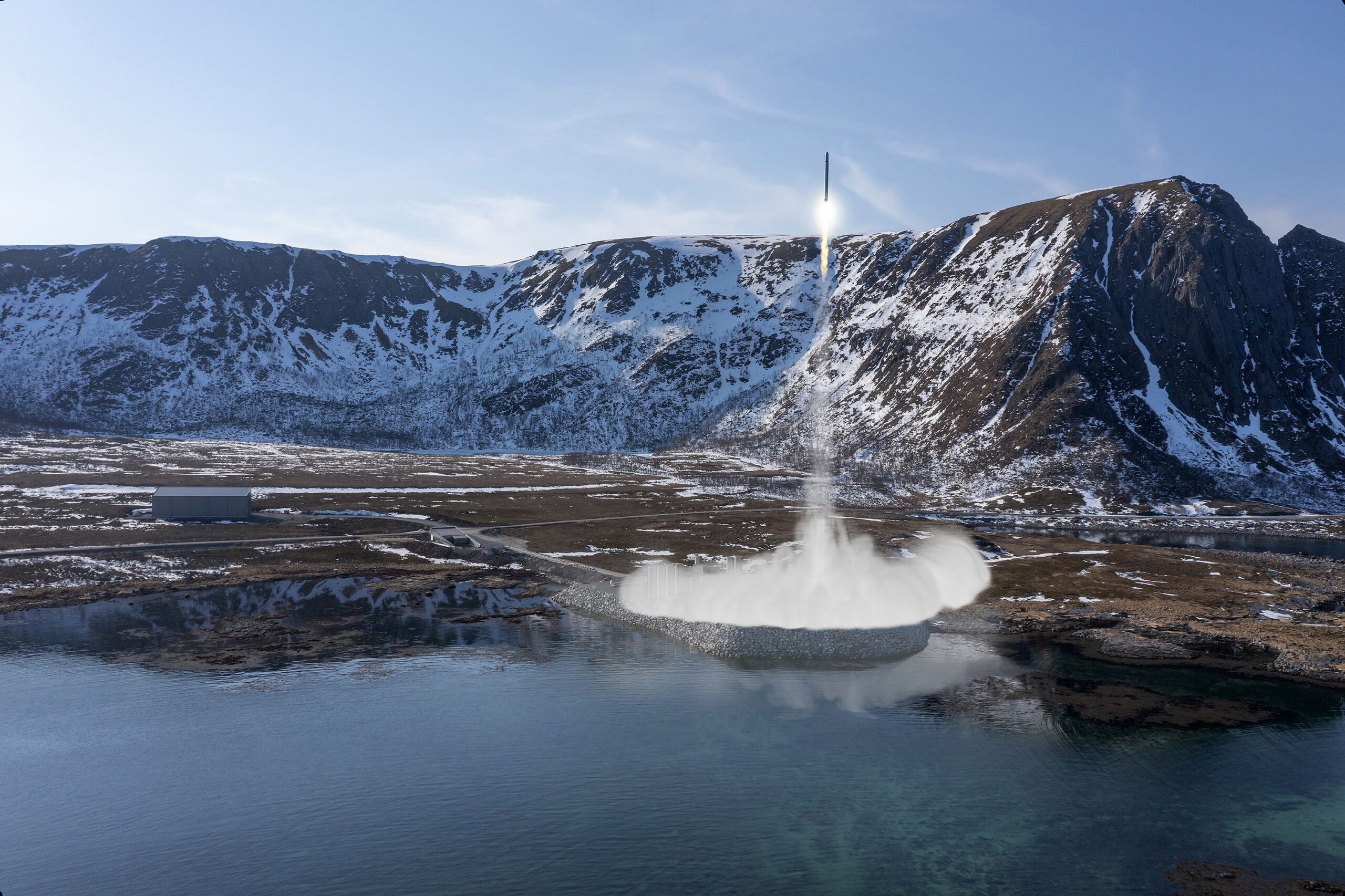
On March 30, 2025, something historic happened 200 kilometers north of the Arctic Circle: Europe’s first orbital launch attempt from mainland continental Europe. About 30 seconds later, Isar Aerospace’s Spectrum rocket was deliberately terminated, falling back to earth in an explosive conclusion to what everyone involved is still calling “a great success.” Welcome to the high-stakes, high-latitude world of Andøya Spaceport.
The thing about rocket failures is that they’re rarely failures in the traditional sense. Isar’s test flight generated mountains of telemetry data, validated ground infrastructure, and proved that Norway’s brand-new orbital launch site works exactly as designed. The rocket didn’t make it to orbit, but the spaceport passed its real-world exam with flying colors.
This is normal rocket development. Everyone forgets how many times SpaceX failed before becoming routinely successful - Falcon 1 failed three times before reaching orbit, and early Falcon 9 landing attempts produced spectacular fireballs that now seem quaint. Isar is walking the same path every successful launch company has walked. A subsequent investigation identified an unintended vent valve opening and loss of attitude control during the roll maneuver as the culprits. The March termination does raise questions about whether they’ll meet their 2028 contract deadline with the Norwegian Space Agency, but that’s a scheduling concern, not an existential one.
Geography as Destiny
Andøya’s pitch starts with a map. Sitting at 69° north latitude on Norway’s Vesterålen archipelago, the spaceport offers something genuinely valuable: direct, efficient access to polar orbits without overflying populated areas. Launch north, and your rocket travels over the Arctic Ocean and Norwegian Sea. No inhabited islands to dodge, no complex trajectory adjustments burning fuel, no diplomatic headaches.
For Earth observation satellites, reconnaissance birds, and weather monitoring constellations, polar orbits are essential. Currently, most European operators either launch from French Guiana and accept the orbital mechanics penalties, or queue up at increasingly congested American facilities. Andøya promises a European alternative purpose-built for these mission profiles.
That’s not SpaceX-level throughput, but it’s meaningful capacity for a continent that’s been struggling with launch availability.
Six Decades of Practice
Unlike many new spaceport ventures, Andøya brings genuine operational heritage to the table. The facility has been launching sounding rockets since 1962 - over 1,200 of them. NASA, ESA, JAXA, and DLR have all conducted campaigns from Andøya.
This matters. Andøya isn’t learning to be a launch facility; it’s learning to be an orbital launch facility. The ground infrastructure, range safety protocols, and institutional knowledge accumulated over six decades provides a foundation that greenfield spaceports simply don’t have. The staff know how to run launch campaigns. They understand weather patterns, logistics, and the thousand small details that determine whether a mission succeeds.
Ferdinand 1 Launch
Norway's first rocket reaches 102 km altitude from Andøya
ALOMAR Observatory Opens
Arctic Lidar Observatory for Middle Atmosphere Research begins operations
Operator License Granted
Andøya becomes formal Launch Site Operator under Norwegian law
First Orbital Attempt
Isar Aerospace Spectrum rocket terminated after ~30 seconds; infrastructure validated
AOS Satellite Contract
Target date for Norwegian Space Agency Arctic Ocean Surveillance launches
When Andøya received its operator license in August 2024, becoming a formal Launch Site Operator under Norwegian law, it wasn’t starting from scratch. The orbital capability is new; the launch expertise isn’t.
The Isar Partnership
German rocket developer Isar Aerospace is Andøya’s anchor tenant, with exclusive access to the first orbital launch pad under a 20-year agreement signed in 2021. The relationship makes strategic sense for both parties. Isar gets a launch site purpose-built to their specifications, avoiding the traffic jam at American facilities. Andøya gets a funded, committed customer with a two-stage liquid rocket designed for exactly the missions the spaceport was built to serve.
The March 2025 test flight, despite its abbreviated duration, demonstrated this partnership in action. Isar’s Spectrum rocket lifted off, flew for approximately 30 seconds before losing attitude control during a roll maneuver, and was terminated by Andøya Spaceport’s range safety systems. Both organizations emphasized the data gathered and the validation of integrated operations. The launch pad emerged unscathed.
Isar still needs to achieve orbit, and the test failure creates legitimate timeline pressure. But the Norwegian Space Agency’s contract for Arctic Ocean Surveillance satellites by 2028 suggests continued confidence. That timeline acknowledges remaining development work while maintaining commitment to the partnership.
Broadening the Customer Base
Andøya isn’t putting all its eggs in one German basket. In August 2025, the spaceport signed a term sheet with Astrobotic, the American lunar logistics company. Astrobotic plans to conduct Xodiac lander campaigns from Andøya starting in 2026, bringing reusable rocket operations to Norway for the first time.
The Astrobotic partnership signals Andøya’s ambition to become more than a single-tenant facility. Troels Sandreid, who took over as the spaceport’s president in June 2025, has emphasized the “strategic importance” of serving both commercial and government customers. A partnership with Exolaunch for satellite integration services, announced in March 2025, adds another capability layer - Exolaunch’s expertise will help design a state-of-the-art satellite processing facility in the Spaceport Village at Nordmela.
The Competitive Landscape
Norway isn’t the only European country building Arctic launch capability. Several northern European facilities are competing for the same market segment.
Northern European Spaceports
| Andøya | Esrange | SaxaVord | Santa Maria | |
|---|---|---|---|---|
| Location | Norway (69°N) | Sweden (68°N) | UK Shetlands (60°N) | Portugal Azores (37°N) |
| Anchor Tenant | Isar Aerospace | Firefly/Perigee | Multiple providers | TBD |
| Status | First orbital attempt Mar 2025 | Orbital capability in development | First launch pending | Early development |
| Advantage | 6+ decades sounding rocket heritage | TSA signed with US (June 2025) | Multi-tenant model | Mid-Atlantic positioning |
- Location
- Norway (69°N)
- Anchor Tenant
- Isar Aerospace
- Status
- First orbital attempt Mar 2025
- Advantage
- 6+ decades sounding rocket heritage
- Location
- Sweden (68°N)
- Anchor Tenant
- Firefly/Perigee
- Status
- Orbital capability in development
- Advantage
- TSA signed with US (June 2025)
- Location
- UK Shetlands (60°N)
- Anchor Tenant
- Multiple providers
- Status
- First launch pending
- Advantage
- Multi-tenant model
- Location
- Portugal Azores (37°N)
- Anchor Tenant
- TBD
- Status
- Early development
- Advantage
- Mid-Atlantic positioning
This raises uncomfortable questions about market fragmentation. Europe has historically supported one orbital launch site - French Guiana. Can it sustain multiple competing facilities in its northern regions?
Andøya’s advantages in this competition include government backing (90% ownership by Norway’s Ministry of Trade, Industry and Fisheries, with the remaining 10% held by Kongsberg Defence & Aerospace), established infrastructure, and the Isar partnership. Its disadvantages include weather constraints inherent to Arctic operations and the lingering uncertainty around when regular orbital flights will actually begin.
The NATO Angle
Sweden’s March 2024 NATO membership adds a strategic dimension that pure commercial logic can’t capture. NATO allies want responsive launch capabilities for military satellites, and relying entirely on American facilities creates obvious dependencies.
The U.S. Space Force demonstrated what rapid response can look like in September 2023, when Firefly Aerospace deployed a satellite on 24-hour notice from Vandenberg Space Force Base in California. That kind of capability from European soil would be valuable for NATO operations, potentially justifying higher costs that commercial customers might reject.
Defense is one of the biggest satellite use cases, but predicting which NATO countries will use northern European sites versus developing their own capabilities is difficult. The question is whether military demand alone can sustain a launch facility. Defense contracts provide stability but limited growth potential. Andøya will need commercial success to reach the scale necessary for long-term viability.
What Observers Should Watch
For those tracking European launch traffic, Andøya represents several considerations worth monitoring.
Launches from 69° north will use flight corridors we haven’t tracked regularly before. Initial trajectories heading over the Norwegian Sea require different sensor coverage than equatorial or mid-latitude launches. Range instrumentation at Andøya will contribute data, but external tracking assets will need to adjust.
Andøya’s stated goal of 30 missions per year at maturity would meaningfully increase European launch traffic. That’s probably optimistic for the 2025-2028 timeframe, but even 5-10 annual missions would represent significant new activity.
The Isar test flight termination means orbital operations are delayed, but by how long? Track announcements carefully. The Norwegian Space Agency’s AOS satellite contract suggests 2028 as a hard deadline, but earlier attempts seem likely. And weather windows matter - Arctic operations mean weather sensitivity. Expect launch delays and compressed windows, particularly during winter months.
The 2028 Horizon
Andøya’s near-term trajectory is reasonably clear. Isar will attempt another Spectrum flight, hopefully reaching orbit. Additional suborbital and technology demonstration missions will continue building operational experience. The Astrobotic campaigns will bring international customers and reusability testing. Infrastructure expansion, including additional launch pads, will proceed as demand materializes.
By 2028, we should have answers to the key questions: Can Isar achieve reliable orbital access? Will Andøya attract the customer diversity needed for sustainability? Does northern European geography create enough competitive advantage to justify multiple regional spaceports?
The Norwegian government is clearly betting yes on all three. They’ve invested heavily in infrastructure and regulatory frameworks - including a Technology Safeguards Agreement with the United States signed in January 2025. They’re positioning Andøya as critical NATO-relevant capability, not just commercial infrastructure. And they’re patient enough to accept early setbacks as learning experiences rather than failures.
That patience matters. Andøya isn’t going away regardless of individual mission outcomes. The question is how quickly it becomes a routine contributor to global launch traffic. The answer is probably “slower than announced, but faster than skeptics expect.”
That’s usually how these things go.
References(7)
- Inaugural Isar Aerospace Spectrum Flight Ends in Failure - European Spaceflight
- Isar Aerospace's First Spectrum Launch Fails - SpaceNews
- Isar Aerospace Wins Norwegian Space Agency Launch Contract - SpaceNews
- Andøya Space & Astrobotic Partnership Announcement
- Andøya Spaceport and Exolaunch Strategic Partnership
- Norway's Andøya Spaceport Receives Launch Site Operator License - European Spaceflight
- Andøya Space - Wikipedia

Theodore Kruczek