· deep dive · 11 min read
Kulasekarapattinam SSLV Launch Complex
India's second spaceport solves a geometry problem. How ISRO is building a dedicated small satellite facility that eliminates the costly dogleg maneuvers plaguing polar launches from Sriharikota.
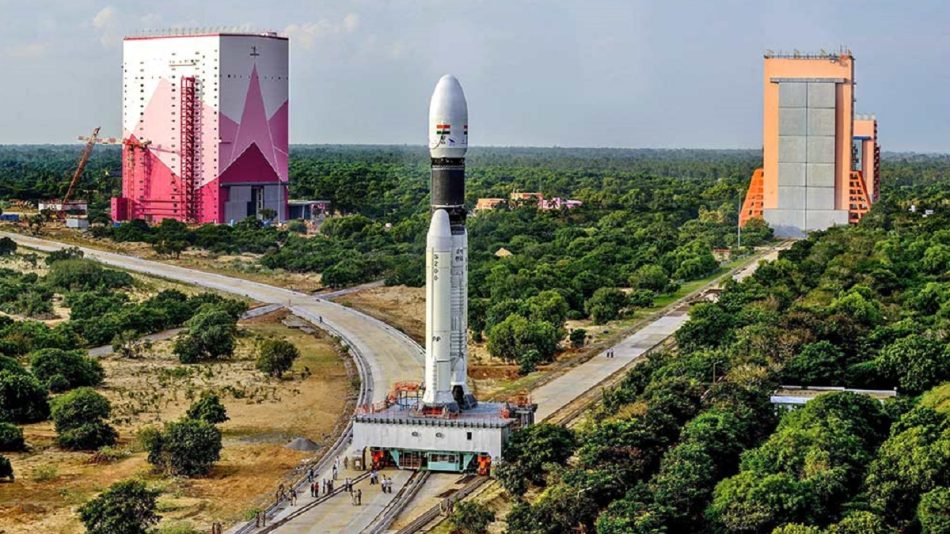
For decades, ISRO has been launching polar orbit satellites the hard way - curving trajectories around Sri Lanka and burning fuel that could have carried payload. The new SSLV Launch Complex at Kulasekarapattinam solves this problem the old-fashioned way: by finding a better spot on the map. Construction is underway, and the implications for India’s commercial small satellite ambitions are substantial.
The story of Kulasekarapattinam is fundamentally a story about orbital mechanics meeting political geography. India’s primary launch site, the Satish Dhawan Space Centre (SDSC) at Sriharikota, sits on the Bay of Bengal’s western coast. It’s an excellent location for most missions - water to the east for safe debris zones, established infrastructure, decades of operational experience.
But there’s a problem. Sri Lanka sits directly south of Sriharikota. For rockets heading to polar orbits - the sun-synchronous and Earth-observation trajectories that small satellites typically need - a southward launch from Sriharikota means flying over another country’s territory. International safety protocols don’t allow that. So ISRO’s rockets perform a “dogleg maneuver,” launching eastward first, then curving south to avoid Sri Lankan airspace.
Dogleg maneuvers work, but they’re expensive. Every kilometer of curved trajectory burns fuel that could have lifted additional payload. For India’s workhorse PSLV, this penalty is manageable. For the smaller SSLV, it’s often mission-critical.
The SSLV Efficiency Problem
ISRO’s Small Satellite Launch Vehicle is designed for a specific market: rapid-turnaround missions carrying payloads up to 500 kg to low-Earth orbit. The vehicle promises launch-on-demand capability with minimal infrastructure requirements - far faster than traditional vehicles requiring weeks of preparation. It’s meant to compete with the responsive launch services that small satellite operators increasingly demand.
But the SSLV’s efficiency advantages evaporate when it launches from Sriharikota toward polar orbits. In a written reply to the Lok Sabha, Minister of State for Science and Technology Dr. Jitendra Singh stated that the SSLV’s payload capability to sun-synchronous polar orbits from Kulasekarapattinam is about 300 kg, while the capability from SDSC SHAR is “inadequate for a useful payload.”
That’s worth sitting with for a moment. Not reduced. Not compromised. Inadequate. The dogleg penalty doesn’t just cut SSLV capacity for polar missions from Sriharikota - it essentially eliminates it. That’s why Kulasekarapattinam exists.
Geography as Solution
Kulasekarapattinam sits on Tamil Nadu’s southeastern coast, south of Sri Lanka’s position. A rocket launching due south from this location travels over the Indian Ocean with no inhabited landmass for thousands of kilometers. No dogleg required. Direct injection into polar orbits with full payload capacity.
The site selection wasn’t spontaneous. Tamil Nadu parliamentarians first proposed Kulasekarapattinam in 2013, citing favorable geography, weather patterns, and proximity to existing ISRO facilities including the Propulsion Complex and Liquid Propulsion Systems Centre. Programmatic delays pushed the project back for years, but the underlying logic remained compelling.
Prime Minister Modi laid the foundation stone via video conference on February 28, 2024, with ISRO marking the occasion by launching an RH-200 Rohini Sounding Rocket from the site - the first rocket ever launched from Kulasekarapattinam. Construction officially began on March 5, 2025. ISRO Chairman V. Narayanan laid the foundation stone for the launch pad itself on August 27, 2025. The facility is taking shape on 2,233 acres of coastal land at an allocated budget of ₹985.96 crore (approximately $118 million USD).
What’s Being Built
The SSLV Launch Complex isn’t a full-service spaceport competing with Sriharikota - it’s a specialized facility optimized for a specific vehicle class. The complex will house 35 facilities in total, anchored by the SSLV Assembly Facility (SAF) for vertical rocket integration, a Satellite Preparation Facility (SPF) with cleanroom capabilities for payload handling and encapsulation, and a Non-Destructive Testing Facility for inspecting solid motor segments via radiography. Two Upper Stage Assembly Facilities will prepare the SSLV’s second and third stages in parallel, feeding into the main integration building.
The launch pad itself will feature rail systems for transporting assembled vehicles from integration to launch position, along with a Mobile Launch Structure designed in-house at SDSC SHAR. A dedicated Launch Control and Mission Control Centre rounds out the operational infrastructure.
Notably, the facility won’t be ISRO-exclusive. Post-commissioning, the spaceport will also accommodate launches from Non-Government Entities - including private Indian launch companies like Skyroot Aerospace with its Vikram I vehicle and Agnikul Cosmos with Agnibaan. Both companies have been developing small-lift rockets that could benefit from Kulasekarapattinam’s polar-optimized trajectory just as much as the SSLV does. This makes the facility a potential hub for India’s emerging private launch sector, not just an ISRO outpost.
The planned capacity is 20-25 launches annually - a significant increase in India’s small satellite launch throughput, though early operations will almost certainly start well below that ceiling.
Timeline and Progress
ISRO is targeting December 2026 for construction completion, with the first SSLV launch planned for 2027. Chairman Narayanan stated at the August 2025 groundbreaking that “all the work will be over by December 2026 - that is our target. We are planning a rocket launch by fourth quarter of next year.” He added that the Prime Minister would announce the specific launch date at the appropriate time.
Site Proposed
Tamil Nadu parliamentarians propose Kulasekarapattinam as a launch facility location
Foundation Stone
PM Modi lays foundation stone via video conference; RH-200 sounding rocket launched from site
Construction Begins
Ground-breaking ceremony for three major facilities; construction officially commences
Launch Pad Foundation
ISRO Chairman Narayanan lays foundation stone for the launch pad at ₹100 crore
Target Completion
Construction completion target; launch pad commissioning targeted for August 2026
First SSLV Launch
Planned first orbital launch from the facility
Most publicly stated completion dates in the space industry are optimistic - that’s simply the nature of complex infrastructure projects. That said, this isn’t India’s first launch facility. ISRO has built and operated Sriharikota for decades, expanding it multiple times with additional pads and integration facilities. As of July 2025, site development work was complete, and roughly ₹390 crore of the ₹986 crore budget had been spent - indicating steady progress. The main outstanding land issue is acquiring the parcel needed to reroute the East Coast Road, which isn’t blocking construction of the core facilities.
The December 2026 construction target should be treated as somewhat optimistic but not unrealistic given ISRO’s institutional experience. First launch in 2027 is the more operationally meaningful date.
The SSLV Track Record
Before assessing Kulasekarapattinam’s prospects, it’s worth examining the rocket that will launch from there. The SSLV completed its three-flight development program in 2024, and the trajectory tells a fairly typical story for a new launch vehicle.
The first developmental flight (SSLV-D1) on August 7, 2022, failed to reach orbit. A software malfunction during the upper stage’s velocity trimming module prevented proper orbital insertion - onboard accelerometers detected anomalies during second stage separation, and the mission software failed to identify and correct the sensor fault. The satellites entered an unstable orbit and were lost on reentry.
SSLV-D2 on February 10, 2023, succeeded, placing EOS-07, Janus-1, and AzaadiSAT-2 into their intended 450 km orbit. Design modifications made after D1 - including changes to the separation mechanism, navigation system, and onboard fault detection - all performed as intended.
SSLV-D3 on August 16, 2024, also succeeded, delivering EOS-08 and the SR-0 Demosat into a 475 km orbit. ISRO declared the SSLV Development Project complete after this flight, clearing the way for operational missions managed by industry.
Two successes out of three developmental flights is a solid result. The first-flight failure and subsequent correction is a normal development pattern - what matters is that ISRO identified the problem, implemented fixes, and demonstrated repeatable performance across D2 and D3. The vehicle is now in the process of technology transfer to industry for production, with Hindustan Aeronautics Limited (HAL) awarded the contract in June 2025 to manufacture, market, and launch the SSLV. Multiple other companies and consortia have expressed interest in bidding for manufacturing rights as well.
| Flight | Date | Payload | Result | Notes |
|---|---|---|---|---|
| SSLV-D1 | Aug 7, 2022 | EOS-02, AzaadiSAT | Failure | VTM software malfunction; incorrect orbit |
| SSLV-D2 | Feb 10, 2023 | EOS-07, Janus-1, AzaadiSAT-2 | Success | Design corrections validated; 450 km orbit |
| SSLV-D3 | Aug 16, 2024 | EOS-08, SR-0 Demosat | Success | Development program complete; 475 km orbit |
Commercial Implications
The SSLV’s transition from ISRO development program to industry-produced vehicle is a significant shift. HAL’s manufacturing contract means the rocket’s future isn’t solely dependent on ISRO’s internal production capacity - it’s being positioned as a commercially available platform. NewSpace India Limited (NSIL), ISRO’s commercial arm, will coordinate launch services, but the production side is moving into industrial hands.
The target market includes microsatellites and nanosatellites for Earth observation, Internet of Things connectivity, and technology demonstration missions. These are growing markets globally, with demand constrained partly by launch availability and cost. Kulasekarapattinam’s projected 300 kg polar orbit capacity positions the SSLV competitively against dedicated small-lift vehicles, and Indian launch costs have historically undercut Western alternatives. Specific SSLV commercial pricing hasn’t been published, but estimates suggest approximately ₹30-35 crore per launch - which would make it one of the cheapest launchers in its class.
The private launch angle adds another dimension. Skyroot’s Vikram I and Agnikul’s Agnibaan are both in development, and both would benefit from Kulasekarapattinam’s polar-optimized geography. If the facility becomes a multi-provider launch site rather than an SSLV-only pad, the commercial case strengthens considerably. India’s 2023 Space Policy explicitly supports this direction, allowing non-government entities to use national spaceport facilities.
What Could Go Wrong
How confident should we be in Kulasekarapattinam’s timeline and capabilities?
Construction risk is low to moderate. ISRO has successfully built launch infrastructure before, and the spending profile (40% of budget deployed by mid-2025 with site prep complete) suggests a project that’s tracking rather than stalling. The December 2026 target is tight but achievable for an organization with this experience.
Vehicle risk is low. The SSLV completed its development program with a 2-for-3 record, the development phase is officially complete, and HAL has the manufacturing contract. This isn’t a paper rocket - it’s a flight-proven vehicle entering production. The remaining question is whether production-build SSLVs maintain the reliability demonstrated in D2 and D3, which is a normal concern for any vehicle transitioning from development to operations.
Regulatory risk is minimal. India’s space activities are government-led, with no external licensing uncertainties or third-party approval bottlenecks.
Timeline risk is low to moderate. The most honest assessment is that Kulasekarapattinam will likely achieve operational status in 2027, with early launch rates well below the 20-25 annual target while operational procedures are established and SSLV production ramps up. Something closer to 5-10 missions annually in the first few years is realistic. The facility represents genuine new capability rather than aspirational announcement - the money is being spent, the concrete is being poured, and the rocket exists.
New Launch Corridor
For anyone tracking objects in orbit, Kulasekarapattinam introduces several planning factors worth noting. Southward trajectories from Tamil Nadu’s coast represent a new flight path for Indian launches, distinct from established Sriharikota patterns. The facility will primarily inject payloads into sun-synchronous and polar orbits - already well-tracked orbital regimes, but additional launch activity increases the workload for conjunction assessment.
SSLV payloads will be small. CubeSats and microsatellites can be challenging to distinguish and track immediately post-deployment, particularly when multiple payloads separate in quick succession. The SSLV’s multi-satellite deployment capability means a single launch could add several small objects to the catalog simultaneously.
India will also be operating two active launch sites for the first time, which adds scheduling complexity. ISRO has historically been reasonably transparent about mission parameters and planned orbits, which helps with tracking preparation - though as with any launch, published parameters are a starting point, not a guarantee. An unexpected trajectory, a failed insertion, or an anomaly can always change the picture.
The Bigger Picture
Kulasekarapattinam represents India’s commitment to capturing small satellite launch market share. The facility solves a real geometric constraint, enabling missions that weren’t practical from existing infrastructure. Government investment of nearly ₹986 crore and steady construction progress suggest serious intent rather than aspirational announcement.
The timing aligns with broader shifts in India’s space sector. The 2023 Space Policy opened the door to private participation. HAL’s SSLV manufacturing contract moves rocket production into industrial hands. Multiple private launch startups are developing vehicles that could fly from the new facility. Kulasekarapattinam isn’t just an ISRO project - it’s infrastructure for an emerging Indian launch ecosystem.
India’s space program has consistently delivered on infrastructure commitments, even when timelines slip modestly. Kulasekarapattinam will likely follow this pattern: operational perhaps a few months later than announced, but operational nonetheless. The small satellite market is growing, and India is building the facility to serve it.
References(10)
- SSLV Launch Complex at Kulasekarapattinam - ISRO Official Announcement
- Foundation Stone for SSLV Launch Pad - ISRO Press Release
- Parliamentary Question: Kulasekarapattinam Spaceport - Press Information Bureau
- Kulasekarapattinam Launch Complex Ready by December 2026 - Deccan Herald
- SSLV Launch Complex Overview - Wikipedia
- SSLV-D3/EOS-08 Mission Success - ISRO
- Small Satellite Launch Vehicle Development History - Wikipedia
- ISRO Lays Foundation of SSLV Launchpad - News9
- Additional Details on Kulasekarapattinam Spaceport - News9
- First SSLV Launch from Kulasekarapattinam in 2027 - The Week

Theodore Kruczek