· space terms · 6 min read
Sun-Synchronous Orbit
The clever trick that lets a satellite pass over the same spot on Earth at the same local time every day, giving remote sensing missions the one thing cameras love most: consistent lighting.

Imagine taking a photo of the same mountain every morning at 10 a.m., no matter what day it is. The shadows fall the same way. The light is the same color. Nothing in the frame changes except what you actually want to see. That is the gift a sun-synchronous orbit gives to a camera in space, and it is the reason most of the imagery you have ever seen of Earth from orbit was shot from one.
A sun-synchronous orbit (SSO) is a near-polar orbit that drifts at exactly the right rate to stay fixed relative to the Sun. As the Earth travels around its star over the course of a year, the satellite’s orbital plane rotates with it, keeping the geometry between Sun and spacecraft constant. The practical result is that a satellite in a sun-synchronous orbit crosses the equator at the same local solar time on every pass - morning after morning, afternoon after afternoon.
The Technical Bits
A satellite’s orbit is not a rigid structure. Earth is slightly fatter at the equator than at the poles (technically an oblate spheroid), and that bulge tugs on satellites in a way that slowly rotates their orbital planes. This effect is called nodal precession, and engineers normally have to fight it. In sun-synchronous orbits, they use it.
By choosing exactly the right combination of altitude and inclination, designers can make nodal precession happen at a rate of 360 degrees per year - exactly one full turn, exactly matching Earth’s motion around the Sun. The plane of the orbit effectively “follows” the Sun through the year.
The inclination required is slightly retrograde. For a typical 600-800 km altitude, a sun-synchronous orbit sits at roughly 97.8 to 98.7 degrees - a little past vertical. The satellite is technically moving against Earth’s rotation, which is why SSO launches from Vandenberg in California fly south over the Pacific instead of east like most missions.
The altitude and inclination are locked together. Go higher, and you need a slightly higher inclination to keep precession tuned. Go lower, and you can use a slightly less retrograde path. This is why most Earth observation satellites cluster between 600 and 800 kilometers - the geometry is well-understood, launch costs are reasonable, and the revisit rates are practical.
Why It Matters
Consistent lighting is everything for remote sensing. Changes in a field, a forest, or a glacier need to be measurable against a stable baseline. If every image was taken at a different solar angle, analysts would have to constantly correct for shadows, color shifts, and apparent changes that are just tricks of the light. Sun-synchronous orbits remove that problem by design.
NASA’s Landsat program is the classic example. Landsat satellites have been flying in sun-synchronous orbits since 1972, building what is now a half-century-long unbroken photographic record of Earth’s surface. Landsat 9, the current flagship, crosses the equator at about 10:00 a.m. local time on its descending pass. So does almost every Earth observation satellite you can name: Sentinel-2, PlanetScope, SkySat, CBERS, ICEYE, Capella, WorldView-3.
There are two popular flavors of sun-synchronous orbit. A “dawn-dusk” orbit crosses the equator near sunrise or sunset. Satellites in this orbit ride the terminator - the line between day and night - which means their solar panels always face the Sun and they never pass through Earth’s shadow. Radar satellites love this geometry because it simplifies power management. The other common flavor is a “morning” orbit with a 10:00 or 10:30 a.m. crossing, which gives the best light for optical imagery (long enough after sunrise for decent shadows, early enough that cumulus clouds have not built up).
The Tradeoffs
Sun-synchronous orbits are not free. The inclination has to be slightly retrograde, which costs more fuel to reach than a prograde orbit. Launches cannot benefit from Earth’s rotation the way an equatorial launch can, so payload capacity shrinks.
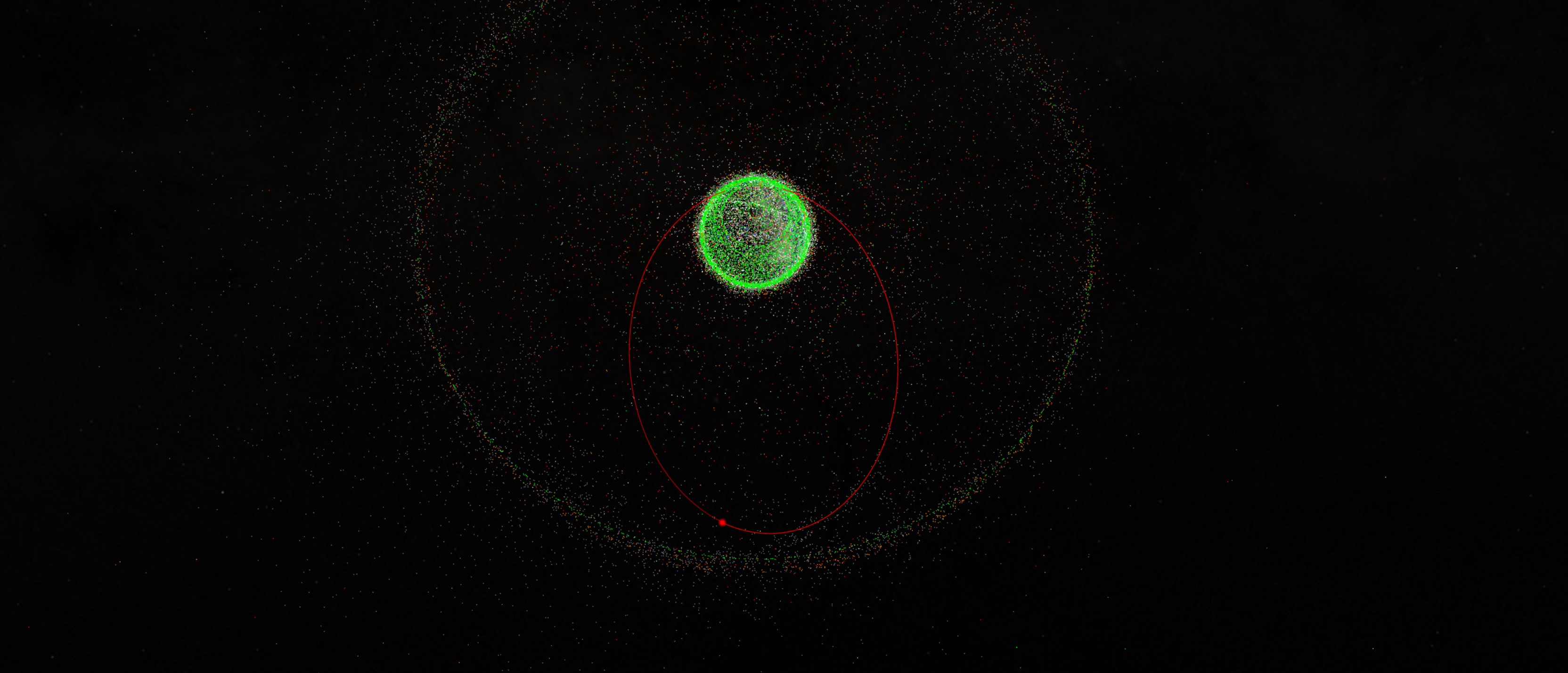
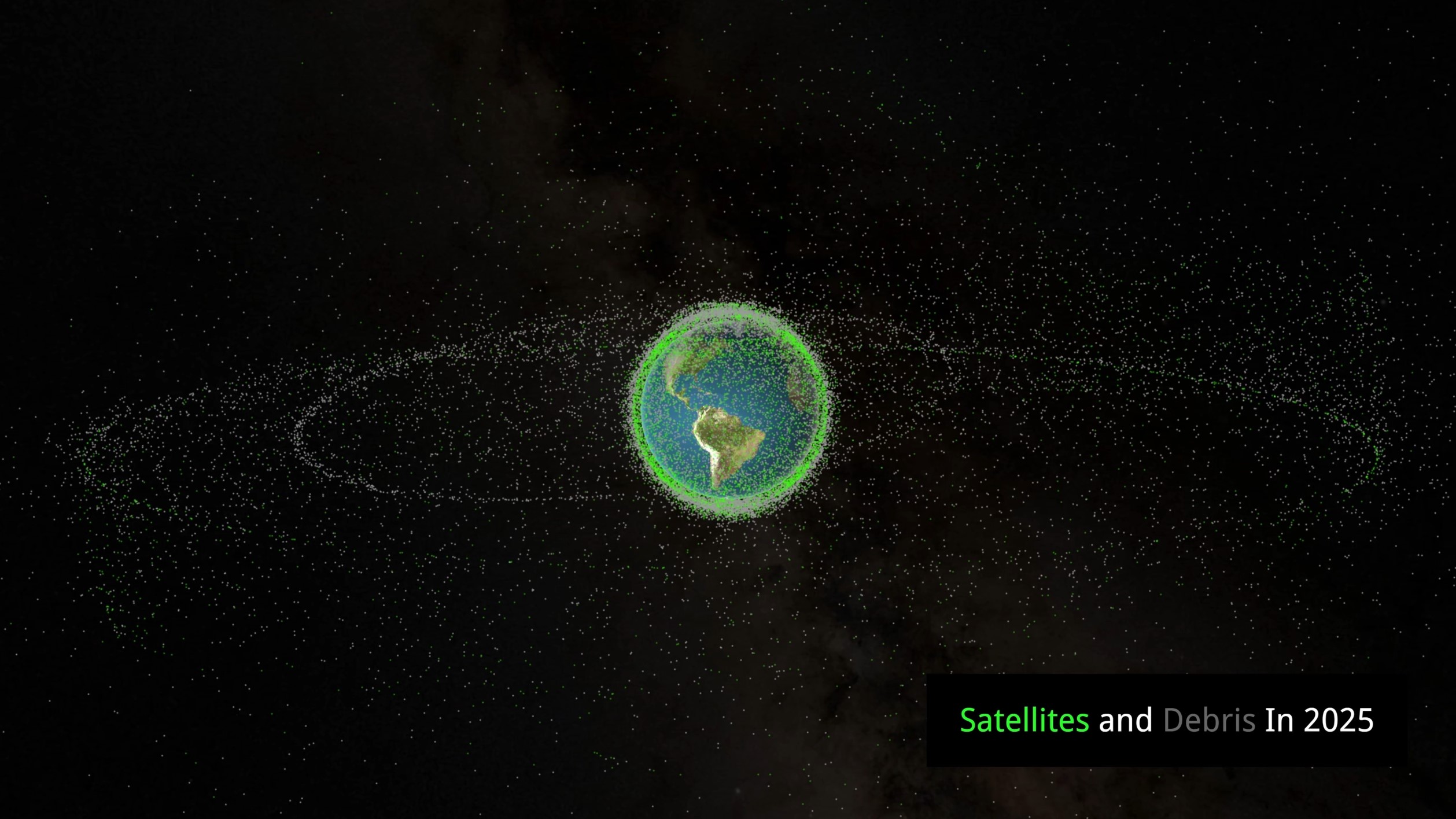
The orbit also puts satellites in heavily trafficked territory. Sun-synchronous altitudes around 600-800 km are the most crowded volume in space, home to thousands of active satellites and tens of thousands of pieces of debris. The problem compounds itself: everyone wants similar geometry, so everyone bunches up in the same altitude bands, increasing collision risk for everybody.
And because sun-synchronous orbits are retrograde, they are the worst possible geometry for encounters with prograde satellites. When two objects pass close at this inclination, they meet nearly head-on, with combined closing velocities of 15 kilometers per second or more. This is why the Iridium-Cosmos collision in 2009, between a retrograde Russian satellite and a prograde U.S. satellite, was so catastrophic and produced such a massive debris field.
Fun Fact Space Nerds Might Not Know
The sun-synchronous mathematics that makes Landsat possible was worked out in 1959 by William Kaula, a geodesist at what would soon become NASA Goddard. Kaula’s paper, “Statistical and Harmonic Analysis of Gravity,” laid out the theoretical framework for using Earth’s oblateness to design orbits that precessed at any desired rate. It was one of the founding texts of modern orbital mechanics, and the math has been quietly running ever since - behind every satellite image of a wildfire, every deforestation map, every sea-ice forecast.
Looking Forward
Sun-synchronous orbits are facing a crowding crisis. The explosive growth of small commercial imaging constellations - Planet Labs alone operates over 200 active Doves - has packed the 500-800 km altitude band with more spacecraft than anyone imagined two decades ago. Conjunction warnings for sun-synchronous operators have increased dramatically year over year.
The rise of on-orbit servicing and active debris removal has started a serious conversation about whether SSO orbits can continue to absorb indefinite growth without formal traffic management. The FCC, NOAA, and the Office of Space Commerce are all watching. China, Russia, and commercial operators are launching at record pace. And because of the retrograde geometry, a single major collision in this band would seed debris at closing speeds that guarantee chain reactions.
For KeepTrack users, sun-synchronous satellites are easy to spot: filter for satellites with inclinations between 97 and 100 degrees, and you will see a thick band of imaging, weather, and reconnaissance spacecraft all tracing nearly identical patterns across the globe. Zoom into any one of them and watch the ground track. The longitudinal drift between successive passes is almost uncanny - the Earth rotates underneath while the satellite’s relationship with the Sun stays locked.

Theodore Kruczek