· deep dive · 10 min read
China's Rocket Factory Finds a Second Gear
In 2024, China launched 68 orbital missions. In 2025, the number jumped to 97. In 2026, state media and Western analysts agree the target is 140 or more. Most of that growth is being driven by two state-backed mega-constellations, a half-dozen private launch companies hitting stride, and a deliberate national pivot toward commercial space. Beijing is no longer trying to catch SpaceX. It is trying to build an industrial base that outlasts one.
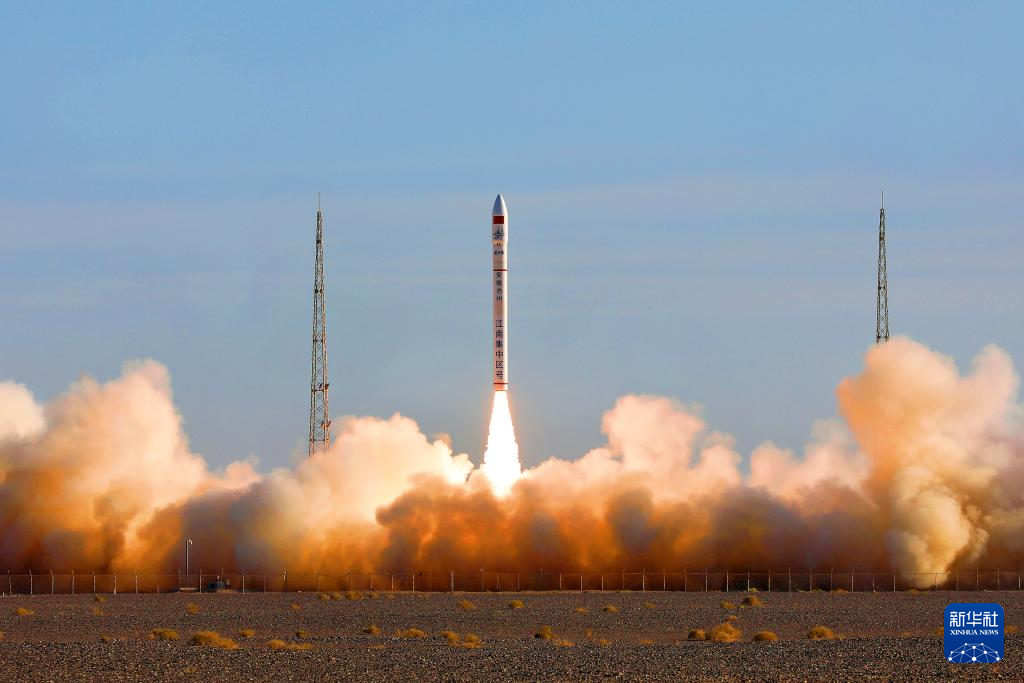
In the first week of January 2026, Chinese launch vehicles carried out six orbital missions from four different launch sites. That pace - roughly one orbital mission every twenty-eight hours - would have been a record for any nation-state on Earth as recently as 2018. By the end of March 2026, China had logged 34 successful orbital launches. By comparison, the United States reached 29 successful orbital launches by the same date, with SpaceX accounting for 22 of them. Europe had four. Japan had three. Russia had four. Everyone else, combined, had three.
The headline number tells you something, but it does not tell you the most interesting thing. The most interesting thing is how that cadence is being built.
| Year | Orbital Launches | Success Rate | Major Driver |
|---|---|---|---|
| 2018 | 39 | 95% | Beidou, commercial experiments |
| 2019 | 34 | 94% | Beidou completion |
| 2020 | 39 | 92% | Tianhe core module, commercial |
| 2021 | 55 | 96% | Tiangong station construction |
| 2022 | 64 | 94% | Shenzhou, Wentian, Mengtian |
| 2023 | 67 | 97% | First Qianfan, G60 test launches |
| 2024 | 68 | 96% | Qianfan deployment begins |
| 2025 | 97 | 96% | Guowang launches, full Qianfan tempo |
| 2026 (projected) | 140+ | - | Both megaconstellations, new commercial vehicles |
What changed between 2023 and 2026 was not Chinese rocket science. China has been building Long March vehicles at roughly the same technology level since the mid-2010s. What changed was industrial strategy. The State-owned Assets Supervision and Administration Commission, working with the State Administration for Science, Technology and Industry for National Defense, chose to align commercial launch policy, satellite manufacturing capacity, and state-backed broadband constellations into a single industrial push.
The Two Constellations That Eat Half the Launches
Most of China’s launch cadence growth since 2023 has been eaten by two mega-constellations: Guowang (国网, “State Network”) and Qianfan (千帆, “Thousand Sails”). Together they are planned to deliver more than 29,000 satellites to low Earth orbit by the mid-2030s.
Guowang, operated by China Satellite Network Group (a central-government state-owned enterprise directly chartered in 2021), is the strategic national system. Qianfan, operated by Shanghai Spacecom Satellite Technology Co. (with Shanghai municipal investment), is the commercial-first system with export ambitions. Both target broadband internet services to users outside China, and both are competing for the same ITU spectrum allocations and user base.
From 2023 through mid-2024, Qianfan led the deployment race. Its first eighteen-satellite batch launched in August 2024. By mid-2025, Qianfan had deployed more than 300 satellites, most launched on Long March 6A from the new commercial launch facility at Taiyuan.
Guowang’s deployment accelerated in late 2025 after delays in the first-generation satellite design. By early 2026, both constellations were launching batches roughly every two to three weeks, alternating between China’s four major launch sites. The cumulative effect on national cadence is significant: the two constellations together consumed an estimated 45 launches in 2025 and are projected to consume 70 or more in 2026.
The Commercial Launch Companies That Finally Work
The other half of the story is the maturation of China’s commercial launch sector. Between roughly 2018 and 2022, a generation of Chinese private launch companies ran through their opening funding rounds, built prototype vehicles, and launched mostly-small-payload demonstrators. Several failed loudly. Some went bankrupt. A few survived.
The survivors now include LandSpace (Zhuque series), Galactic Energy (Ceres-1), i-Space (Hyperbola-1 and follow-ons), CAS Space (Kinetica-1), Space Pioneer (Tianlong series), Orienspace (Gravity-1), and Deep Blue Aerospace (Nebula). Each of these companies has flown multiple orbital missions between 2023 and 2026. The combined commercial sector contributed an estimated 25 launches in 2025, a fraction that had been negligible before 2020.
Zhuque-2 first successful methalox orbital launch
LandSpace achieves first orbital success for any liquid-methane/liquid-oxygen vehicle, beating SpaceX Starship and Blue Origin New Glenn to orbit on this propellant combination.
Gravity-1 maiden launch
Orienspace debuts the most powerful solid-fueled commercial rocket in China, launched from a sea-based platform in the Yellow Sea.
Qianfan batch 1 launch
Long March 6A carries first eighteen Qianfan satellites. Upper stage breakup creates significant debris.
Zhuque-3 reusable first stage test
First vertical takeoff, vertical landing test of LandSpace's reusable methane engine stage.
CZ-12 first flight
China Academy of Launch Vehicle Technology's new medium-lift vehicle enters service with a Guowang batch delivery.
Zhuque-3 first orbital flight
First fully reusable Chinese orbital rocket reaches orbit and recovers the first stage at sea.
Long March 12A maiden success
CASC's first Starship-class super-heavy vehicle. Planned as Guowang's primary launcher from 2026 forward.
The decisive shift is reusability. For years, China pursued expendable systems while SpaceX refined reuse. That has now changed. Zhuque-3 (LandSpace, first full orbital mission late 2025) and Long March 12A (CASC, first success in March 2026) are both reusable, methane-fueled vehicles explicitly designed to compete on a per-kilogram cost basis with Falcon 9. Space Pioneer’s Tianlong-3 and Deep Blue Aerospace’s Nebula-2 are in various stages of development with the same architectural choices.
It is worth being specific about what “reusability” means for Chinese vehicles in 2026. Zhuque-3’s first recovered stage has flown twice. Long March 12A has recovered one stage successfully and is expected to refly that stage in mid-2026. None of these programs has achieved anything like SpaceX’s roughly 400 orbital recoveries by April 2026. But the gap has gone from “China does not do this” to “China does this at a rate that is growing fast.”
The Industrial Base
What makes the current Chinese launch cadence credible as something that will persist rather than spike and fall is the industrial base underneath it.
Satellite manufacturing has moved from small-batch, bespoke production into genuine volume manufacturing. Shanghai Microsatellite Innovation Research Institute (the Qianfan platform builder) has a production facility in Shanghai capable of producing several hundred Qianfan satellites per year. The Guowang platform, built by Changchun-based China Changguang Satellite, has announced a production target of over 400 satellites per year by 2026. Both facilities operate on modern assembly-line principles that were foreign to Chinese satellite programs a decade ago.
Propellant infrastructure has scaled. The four primary launch sites (Jiuquan, Taiyuan, Xichang, Wenchang) have each doubled or tripled their propellant handling capacity since 2020. A new launch facility at Hainan, the Hainan Commercial Spaceport, began operations in late 2024 and is now the primary pad for several commercial vehicles. Sea-based launch platforms (including the repurposed Ocean Oddyssey-class vessel Deyue and the purpose-built Dongfang Hangtiangang) have enabled equatorial-friendly launches that would otherwise require foreign assistance.
China’s 2025 national budget allocated an estimated $18 billion USD equivalent to civilian and commercial space programs, with roughly $5 billion of that flowing through state-owned enterprises supporting commercial launch activity. This was the largest single-year national space commitment China has ever made.
Spaceport infrastructure has expanded. The new Wenchang Commercial Launch Site, operated by the Hainan International Commercial Aerospace Launch Company, opened in November 2024 and supports a dozen or more launches per year independent of the original Wenchang military complex. Taiyuan’s commercial pad has been upgraded to handle Long March 6A’s rapid turnaround. Jiuquan hosts most of the private commercial vehicles.
The Quality Story Nobody Likes to Talk About
A genuine assessment of Chinese launch cadence has to address two issues that Western analysts are sometimes reluctant to discuss. The first is debris. The second is reliability.
On debris: Chinese upper stages have repeatedly caused serious orbital debris problems that no other spacefaring nation tolerates. The Long March 6A upper stage that deployed the first Qianfan batch in August 2024 broke apart in orbit shortly after payload separation, creating more than 300 trackable debris fragments at an altitude of 800-900 km. The breakup was not a one-off. Long March 6A upper stages have broken up on at least three subsequent missions. CASC has discussed internal investigations but has not publicly released root-cause findings. The debris will persist for decades.
On reliability: China’s launch success rate has been high, but it has not been uniform. Private commercial launchers have a noticeably higher failure rate than state-operated Long March vehicles. i-Space has lost multiple Hyperbola vehicles to launch failures. Space Pioneer’s Tianlong-3 had a static fire anomaly in June 2024 that saw the first stage break free from its test stand and fly several kilometers before crashing into a hillside outside Gongyi, narrowly missing populated areas. CAS Space’s Kinetica-1 has had mixed results. These are not fatal problems for the industry, but they are real, they happen in a regulatory environment with less public disclosure than in the U.S., and they matter when evaluating the cadence numbers.
What the Cadence Buys Beijing
From Beijing’s strategic perspective, the expanded launch capability buys four things.
It buys spectrum defense. ITU spectrum allocations for LEO mega-constellations are fought for on a first-come basis, and the primary metric for retaining a filing is actual deployment. Guowang and Qianfan are racing to protect their Ka-band allocations before the ITU starts questioning them.
It buys commercial export revenue. China’s commercial satellite broadband is being positioned as a Belt and Road offering, with anticipated customers in Africa, Central Asia, Southeast Asia, and parts of Latin America. This positions Qianfan as a direct competitor to Starlink in markets where pricing, regulatory compliance, or geopolitics favors a non-U.S. provider.
It buys military redundancy. The Chinese People’s Liberation Army has publicly stated that resilient space infrastructure is a priority. A cadence of more than 100 launches per year, distributed across multiple vehicles and multiple launch sites, delivers a baseline resilience no single-vehicle architecture can match. Even if one launch complex or one vehicle type is disabled, Chinese launch operations continue.
It buys domestic industrial capability. The supply chains now in place - from composite aerostructures to cryogenic tanks to satellite buses to ground stations - are Chinese. A national industrial base that can turn out this volume of space hardware is itself a strategic asset, independent of what individual satellites do.
What It Does Not Buy
The cadence does not buy global trust. Foreign governments and foreign commercial customers still prefer Western providers for sensitive payloads. The U.S. International Traffic in Arms Regulations framework still makes launching American-technology satellites on Chinese vehicles effectively illegal. European commercial operators have maintained cautious relationships with Chinese partners. Most U.S. commercial satellite operators will not touch Chinese launch services under any conditions.
The cadence does not buy breakthrough vehicles. Long March 12A and Zhuque-3 are impressive achievements, but they are not architecturally ahead of Falcon 9. Starship is a fundamentally different class of vehicle and China does not yet have a comparable vehicle operational - though the Long March 9 reusable super-heavy design is expected to fly in 2028 or 2029.
And the cadence does not buy complete reliability. The debris record is problematic. The private commercial launch reliability is not yet on par with state-operated vehicles. Upper stages regularly leave objects in problematic orbits. These issues limit how attractive Chinese launch services can be to foreign customers even where regulation permits it.
Where This Goes
The realistic trajectory for Chinese launch cadence through 2030 is something like 150-200 orbital missions per year. That projection assumes Guowang and Qianfan continue on their current deployment schedules, that a second generation of commercial reusable vehicles enters service by 2027-2028, and that no major Chinese launch failure triggers a multi-month fleet stand-down.
The global consequence is that the orbital launch market becomes visibly bipolar. The United States will continue to host the largest single launch operator (SpaceX, with Blue Origin, Rocket Lab, and ULA filling secondary roles). China will continue to host the largest national launch ecosystem, distributed across CASC, CASIC, and a growing commercial sector. Europe, Japan, India, and Russia will continue to operate smaller, specialized launch fleets.
From the perspective of KeepTrack and other satellite catalog systems, the practical effect is already visible: the orbital catalog is gaining thousands of Chinese-origin objects per year, spread across inclinations from 41 degrees to 97 degrees, at altitudes spanning 300 km to beyond 36,000 km. Understanding who owns what, which vehicle deployed it, and which payloads are still active is becoming materially harder - and this is before the cadence reaches its projected peak.
Beijing is not racing to match SpaceX launch by launch. It is building an industrial ecosystem that can sustain 150+ orbital missions per year with domestic hardware and domestic workforce, and it is planning for the 2030s rather than for the 2020s. Anyone who models the future of low Earth orbit without accounting for that trajectory is working from an outdated model.
References(10)
- GoTaikonauts Annual Launch Statistics 2025
- SpaceNews Coverage of Chinese Launch Cadence - Andrew Jones
- China's Mega-Constellations: Guowang and Qianfan - CSIS Aerospace Security Project, 2024
- The Chinese Commercial Space Sector - European Space Policy Institute Report 82, 2023
- Zhuque-3 Reusable First Stage Program - LandSpace Corporate Briefing, 2025
- Long March 6A Upper Stage Debris Events - ESA Space Environment Report 2024
- National Development and Reform Commission Space Strategy 2025-2030
- China's Space Industrial Base: An Assessment - U.S.-China Economic and Security Review Commission, 2024
- Hainan International Commercial Aerospace Launch Company Overview
- Private Chinese Launch Vehicles Database - Eurospace, 2025

Theodore Kruczek