


· deep dive · 8 min read
Your Phone Already Talks to Space
SpaceX quietly built the world's largest 4G network without a single cell tower. Over 650 satellites now connect standard smartphones directly from orbit, and most people carrying compatible phones don't know the service exists.
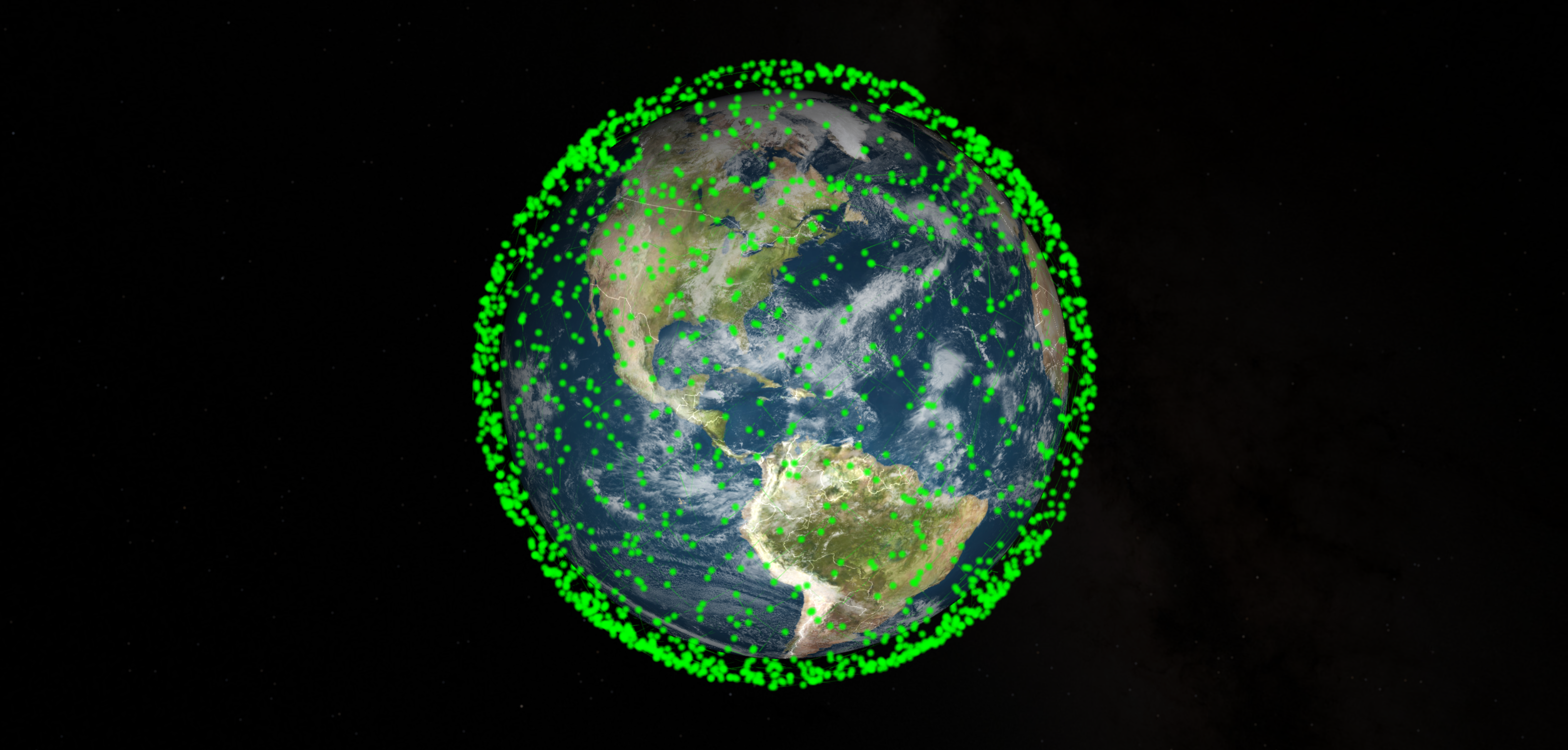
In August 2022, Elon Musk and T-Mobile CEO Mike Sievert stood on a stage in Texas and announced a plan that most of the telecommunications industry considered implausible: SpaceX would build satellites that could connect directly to standard smartphones, using T-Mobile’s existing mid-band spectrum, without requiring any special hardware or modified phones. No satellite phone. No bulky antenna. Just the phone already in your pocket, talking to a satellite 550 kilometers overhead.
Three and a half years later, it works. T-Mobile’s T-Satellite service launched commercially on July 23, 2025, initially offering text messaging from areas with no cellular coverage. By October 2025, it had added data capabilities. As of early 2026, Starlink has launched more than 650 direct-to-cell satellites, making it the largest 4G network by coverage area on the planet. The service is live in 22 countries. Over 400 million people have access to it. Most of the people carrying compatible phones in rural America don’t know the feature exists.
The technology behind this is less magical and more brute-force than the announcement suggested. Understanding how it works, and where it falls short, requires looking at the physics of the link budget, the economics of shared spectrum, and the competitor that claims to do it better.
How a Satellite Talks to Your Phone
The fundamental challenge of satellite-to-phone communication is power. A standard cell tower is a few hundred meters away and transmits at 20-40 watts. A Starlink satellite is 550 kilometers away and has to close a link budget across that distance to a phone transmitting at less than a quarter of a watt. The signal arriving at the satellite from your phone is extraordinarily faint.
650 +
Direct-to-Cell Satellites in Orbit
Each carries a 25-square-meter phased array antenna dedicated to cellular communication, using T-Mobile's mid-band spectrum to reach standard smartphones on the ground.
SpaceX’s solution is a large phased array antenna on each D2C-capable satellite, roughly 25 square meters in area. This antenna forms narrow beams that concentrate the satellite’s receiving sensitivity on small geographic areas, improving the signal-to-noise ratio enough to pick up a phone’s weak transmission. The satellite essentially creates moving “cells” on the ground, each one a few tens of kilometers across, that sweep across the surface as the satellite orbits.
The system operates on T-Mobile’s PCS spectrum in the 1900 MHz band. This is standard LTE spectrum that T-Mobile already holds licenses for. The satellites appear to phones as distant cell towers. When a phone can’t find a terrestrial tower, it connects to whichever D2C satellite is visible overhead. The handoff is managed by the phone’s existing LTE radio and T-Mobile’s network infrastructure. No firmware update is required for basic messaging on most phones from the last four years.
What It Actually Delivers
The marketing says “coverage everywhere.” The reality is more nuanced. Starlink D2C is a gap-filler, not a replacement for terrestrial cellular.
Starlink Direct-to-Cell in Practice
What Works
- Works with existing smartphones (about 60 models supported)
- Covers 500,000+ square miles of previously uncovered U.S. territory
- No special hardware, apps, or subscriptions beyond the carrier plan
- Emergency SOS messaging available even outside T-Mobile coverage
Limitations
- Messaging only at launch, data speeds are severely limited
- High latency compared to terrestrial cellular (satellite round-trip)
- Requires clear sky view to the satellite, doesn't work indoors
- Shared spectrum means capacity is split between satellite and tower users
Text messaging was the first capability because it has the lowest bandwidth requirements. A text message is a few hundred bytes. The D2C link can handle that reliably even with the constrained power budget. Voice and broadband data require sustained higher bandwidth, which is harder to deliver from 550 kilometers away to a phone antenna designed for towers a few hundred meters away.
T-Mobile began rolling out data service in October 2025, but throughput is measured in hundreds of kilobits per second at best. Enough for basic web browsing and email. Not enough for video calls or streaming. The physics of the link budget impose hard limits that no amount of software optimization can overcome: the phone’s transmit power is fixed by FCC regulations and battery constraints, and the distance to the satellite is fixed by orbital mechanics.
The pricing reflects the gap-filler positioning. T-Mobile’s premium Experience Beyond plan includes T-Satellite at no extra cost. Other T-Mobile customers and AT&T or Verizon subscribers can add it for $10 per month. It is cheap because it does not replace a phone plan. It extends one.
The Constellation
The D2C-capable Starlink satellites are a variant of the V2 Mini platform. Each weighs roughly 800 kilograms, measures about 4.1 by 2.7 meters before solar panel deployment, and generates power from 120 square meters of solar arrays. The critical difference from standard Starlink satellites is the 25-square-meter phased array antenna dedicated to cellular communication.
SpaceX deploys these satellites on standard Falcon 9 missions, typically 20-23 per launch alongside standard Starlink satellites. The initial direct-to-cell constellation target was around 840 satellites for full global coverage. As of April 2026, more than 650 are operational.
In January 2026, the FCC authorized SpaceX to deploy an additional 7,500 Gen2 Starlink satellites, bringing the total approved constellation to 15,000. Not all of these will carry D2C hardware, but the authorization gives SpaceX room to scale the cellular network as demand warrants.
The satellites orbit at approximately 530-550 kilometers altitude in shells at various inclinations. Each satellite’s D2C antenna creates multiple beams on the ground, and as the satellite moves, the beams sweep across the surface. The system needs enough satellites in orbit to ensure at least one is visible from any given point on Earth at any given time, with enough overlap to handle handoffs as satellites cross the sky in roughly four minutes.
The Other Approach
SpaceX is not the only company building satellite-to-phone capability. AST SpaceMobile, backed by strategic investments from AT&T, Verizon, Vodafone, and Google, is building a competing system with a fundamentally different architecture.
Where Starlink uses relatively small antennas on many satellites, AST SpaceMobile uses enormous antennas on fewer satellites. Each AST “BlueBird” satellite deploys an antenna array of roughly 64 square meters, more than double the size of Starlink’s D2C antenna. The larger antenna provides approximately 100 times the bandwidth per satellite compared to a Starlink D2C satellite. This means AST can deliver genuine broadband speeds to standard phones, not just messaging and basic data.
Direct-to-Cell Approaches
| Starlink D2C current | AST SpaceMobile proposed | |
|---|---|---|
| Satellites Launched | 650+ | 7 (as of early 2026) |
| Antenna Size | ~25 m² | ~64 m² |
| Per-Sat Bandwidth | Low (messaging/basic data) | High (broadband capable) |
| Constellation Target | ~840 for global coverage | 248 for global coverage |
| Carrier Partners | T-Mobile (primary) | AT&T, Verizon, Vodafone |
| Service Status | Commercial (Jul 2025) | Beta testing |
| Cost to User | $0-10/month add-on | TBD |
- Satellites Launched
- 650+
- Antenna Size
- ~25 m²
- Per-Sat Bandwidth
- Low (messaging/basic data)
- Constellation Target
- ~840 for global coverage
- Carrier Partners
- T-Mobile (primary)
- Service Status
- Commercial (Jul 2025)
- Cost to User
- $0-10/month add-on
- Satellites Launched
- 7 (as of early 2026)
- Antenna Size
- ~64 m²
- Per-Sat Bandwidth
- High (broadband capable)
- Constellation Target
- 248 for global coverage
- Carrier Partners
- AT&T, Verizon, Vodafone
- Service Status
- Beta testing
- Cost to User
- TBD
The tradeoff is deployment speed. SpaceX can manufacture and launch Starlink satellites at a pace no other company can match. AST SpaceMobile has launched only seven satellites as of early 2026, with plans for up to 60 in 2026. Building 248 satellites with 64-square-meter deployable antennas is a harder manufacturing problem than building Starlink V2 Minis, and AST doesn’t have its own launch vehicles.
The bet AST is making is that quality of service matters more than coverage speed. If AST can deliver real broadband from orbit while Starlink is limited to texting and basic data, carriers may prefer the AST network for premium services. If SpaceX reaches global coverage first while AST is still deploying, the head start may be insurmountable regardless of bandwidth advantages.
What This Means for the Catalog
From a space tracking perspective, the D2C constellation is significant for its sheer numbers and the regulatory complexity it introduces. Each D2C satellite operates as both an internet relay (standard Starlink function) and a cellular base station. The radio frequency environment in low Earth orbit is getting crowded, and the FCC authorization for 15,000 total Starlink satellites means the catalog will continue growing at a rate that challenges existing tracking infrastructure.
The operational altitude of 530-550 kilometers also places these satellites in a regime where atmospheric drag is non-trivial. Starlink satellites require periodic orbit-raising maneuvers to maintain their altitude, and the D2C variants, with their larger antenna structures, may experience slightly higher drag than standard Starlink satellites. This creates a constant churn in the catalog as satellites are launched, maneuvered, and eventually deorbited at end of life.
For KeepTrack users, filtering the catalog to show only D2C-capable Starlink satellites reveals the coverage pattern: dense bands at specific inclinations that ensure at least one satellite is visible from most populated areas at any time. The difference between the D2C constellation and the full Starlink constellation is visible in the orbital distribution, with D2C satellites concentrated in shells optimized for ground coverage rather than user terminal throughput.
Where This Goes
The direct-to-cell market is moving faster than most analysts predicted. Two years ago, the consensus was that satellite-to-phone communication would remain a niche emergency service for years. Instead, it is already commercially available in 22 countries with hundreds of millions of potential users.
The open questions are about capacity, not capability. Starlink has proven that messaging works. AST has demonstrated that broadband is possible. The question is whether either architecture can scale to serve millions of simultaneous users without degrading terrestrial cellular performance in shared spectrum bands. The physics of spectrum sharing are unforgiving: every megahertz used by a satellite is a megahertz that cannot be used by a tower in the same area at the same time. As D2C usage grows, the coordination problem between orbital and terrestrial networks will become the binding constraint.
The carriers know this, which is why T-Mobile positioned T-Satellite as a gap-filler and priced it as an add-on rather than a standalone service. The real disruption will come if and when satellite bandwidth is cheap enough to compete with towers in underserved areas, turning the gap-filler into a primary connection. That would require the next generation of D2C satellites, larger antennas, and more spectrum. All of which are being planned.
References(10)
- T-Mobile and Starlink Satellite Service to Officially Launch July 23 - Broadband Breakfast
- Starlink Direct to Cell & T-Satellite Guide 2026 - SatelliteInternet.com
- SpaceX Completes 1st Starlink Direct-to-Cell Constellation - Space.com
- Starlink Block V2-Mini-D2C - Gunter's Space Page
- How Many Starlink Satellites Are in Orbit April 2026 - Compare Internet
- AST SpaceMobile - Wikipedia
- Starlink vs AST SpaceMobile: Tortoise or Hare? - SatNews
- T-Mobile Launches Nationwide Satellite Service with Starlink - DCD
- T-Satellite with Starlink: Direct to Cell Satellite Phone Service - T-Mobile
- Starlink Direct to Cell Service Now Available - SpaceX Press Release

Theodore Kruczek


